



Library Stories
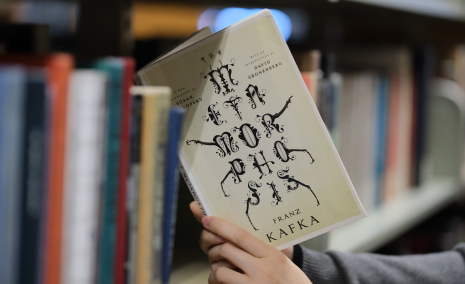
Summer induces the vibrancy of awareness. While we are gazing at the fiery blue sky, in the next breath, our faces are already dotted with raindrops from the gloom of dark clouds. There is nothing more absurd than that – uncontrollable, ever-changing, bizarre randomness. Absurdity is what you try to understand, yet far beyond your understanding. “The right understanding of any matter and a misunderstanding of the same matter do not wholly exclude each other.” In the summer of 1914, Franz Kafka began to write The Trial, yet left the ending of the story incomplete and unknown before his death. The trial of Josef K. never ends. Absurdity. Summer is associated with Kafka. On June 3, 1924, Kafka died in a sanatorium in Austria, just one month before his 41st birthday.
CollectionsPeople
Library Stories
Library Stories
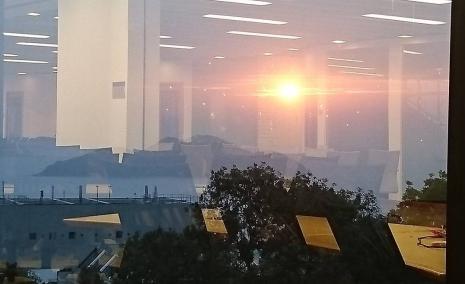
Sunrise, the start of a new day, usually symbolizes a fresh start, rising hope or a new beginning. However, for HKUST students who spend the whole night studying or working on assignments in the Learning Commons, witnessing the sunrise signifies a sleepless night or the looming deadline they are racing against.As a former HKUST student, the LC was also my haunt during the 4-year study. I also experienced late-night battles in the LC. This picture, taken in 2016, just a few hours before an exam, serves as a reminder of those intense moments.Now, being a library staff managing the LC, I still feel a strong connection with students burning the midnight oil to meet deadlines. Wish you all the best luck in your exams but don’t overburden yourself with too much overnight work!June ORAccess Serviceslbjune@ust.hk
Learning CommonsPeople
Library Stories
Library Stories
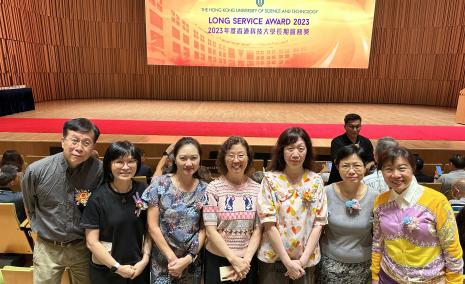
It is humbling to know that Library staff work here for so many years. On April 18, 2024, we gathered to honor our esteemed colleagues who have dedicated an impressive three decades of service to the University, or more – including seven staff from the Library. From left to right: Lin, Rose, Fiona, Irene Hui, Angie, Lina, and Clara. These colleagues emerged as the pioneers of our Library, embarking on our journey soon after our doors first opened in 1991. Whether assisting patrons at the Circulation counter, sourcing and processing books to enrich our shelves at the back office, managing our Special Collections in the University Archives, or overseeing our furnishings and equipment as part of the Facilities team, their influence has been felt across every corner of our Library's operations. Ms Clara Kwan Miss Lina L N Cheung Ms Angie Y S Chung Ms Irene S F Hui Mr Loi Tim Lin Ms Fiona W H Ma Ms Rose M K Tang Please join us in offering sincere congratulations and profound appreciation to these award recipients. Their unwavering commitment has built up an environment of warmth, knowledge, and belonging for everyone who came into the Library. Clara Kwan Head (Administrative Services) lbclara@ust.hk
People
Library Stories
Library Stories
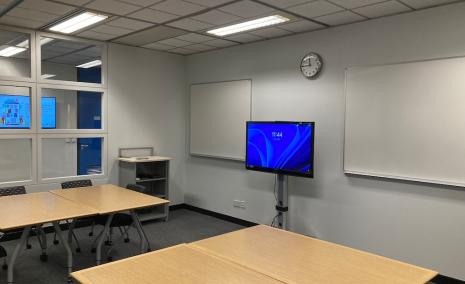
By moving the 3D Printing Service into the Learning Commons on LG1, we have freed up the old room to serve as a second IC Learning Space on the ground floor. Basically, we now have two IC Learning Spaces opposite Lift A on the ground floor – The existing Space has been in heavy use for a long time, and has a much larger and interactive screen. IC Learning Space B is on the other side of the shared glass wall, with a smaller regular monitor and some repurposed furniture. Both Spaces are optimised for larger meetings, seminars, and teaching. So they can be reserved by Faculty, Staff, and Postgraduate (PG) Students. The big question is whether having groups in both Spaces will work – will the glass wall be enough to prevent the two groups from bothering each other? If having both Spaces does work, we will plan to upgrade the equipment and furniture in Space B. So let us know what you think - good or bad! library@ust.hk Edward Spodick Associate Director of Library Services lbspodic@ust.hk
BuildingStudy Space
Library Stories
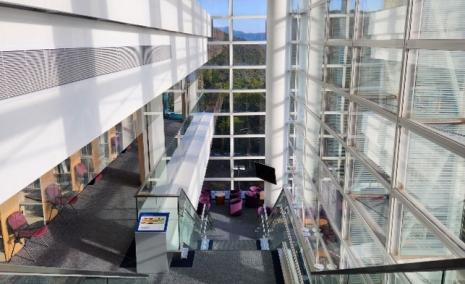
Are you a nostalgic person? Will you long for the chance to visit a place you stayed in before again? To me, HKUST library is the place I would never feel bored visiting again and again. As a patron… I am a HKUST 2017 alumnus with a Bachelor of Science degree in Physics. But before taking the 4-year bachelor’s degree, I have already been to the library and experienced the beauty of the 5-storey building. If you are familiar with HKUST Library history, you may know that the library was actually open to the public before 2016 – there were no entry gates! So before I was an official university student, I had already ‘sneaked' into the library on the UST Open Day. I remembered the amazement I had when I found out the shelves in LG3 and LG4 were actually movable. The enormous size of the building, and the view you have when you are walking along the staircases, were certainly stunning and to be honest, UST library was one of the reasons why I chose HKUST to have my tertiary education. As a worker… Starting this winter, my relationship with UST library has changed from a visitor to a staff member.
BuildingPeople
