

The HKUST Lee Shau Kee Library, School of Humanities and Social Science and Division of Humanities present
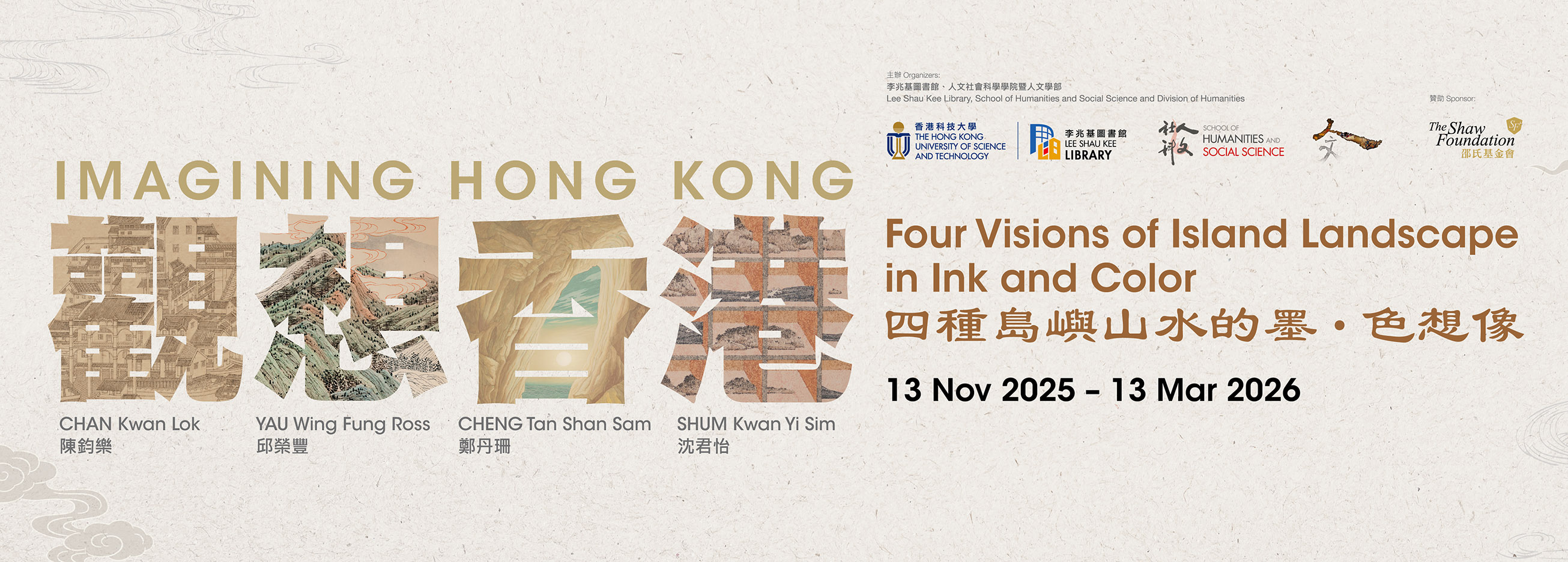
Imagining Hong Kong: Four Visions of Island Landscapes in Ink and Color invites four young ink artists from Hong Kong— Chan Kwan Lok, Sam Cheng, Shum Kwan Yi, and Ross Yau Wing Fung—to present their interpretations of Hong Kong's landscape, characterized by its various islands, peninsulas, and land surrounded by sea. They have employed techniques rooted in Chinese painting tradition, including ink and color, plain line drawing, and meticulous fine line and color. This exhibition can be seen as a continuation of the 2017 Picturing Hong Kong exhibition at the University Library. While the previous exhibition focused on artists' unique depictions of Hong Kong's scenery, this exhibition encourages them to explore their subjective perceptions, observations, and imaginations of Hong Kong’s distinctive landscapes, reflecting on the relationship between personal creation, ink art tradition, and the inspiration drawn from nature.
Landscape (shanshui) became the dominant subject in Chinese painting during the tenth century, when the diverse natural sceneries of the North and South inspired various masters to develop original styles and techniques that responded to their regions' varied geographies. As artistic schools emerged and techniques were passed down through generations, themes such as following one’s heart, emulating the ancient masters, or learning from nature became central to how artists defined their creative path. From Mi Fu’s notion of “painting as a product of mind” in the Northern Song, to Dong Qichang's assertion in the late Ming that “each brushstroke should have its own lineage” and questioning “How could one abandon ancient methods to create something entirely new?” to Shitao’s declaration that “Mountains and rivers made me their spokesperson… I draft by collecting extraordinary peaks” and “I use my own method,” the creative philosophies of different artists across various periods reflect their individual emphases and pursuits. In the early twentieth century, the pressures of modernization in China and the influence of Western painting shifted artists’ focus to critical issues such as the preservation or transformation of traditional painting and the rejection or integration of Western artistic traditions. This led to increasingly complex identities in artists’ creative positioning.
Entering the twenty-first century in Hong Kong, the debates surrounding tradition versus modernity and Chinese versus Western influences are no longer pressing issues. For the artists, choosing traditional ink painting as their creative medium is now a personal decision, allowing them to explore its various styles or techniques without the burden of preserving national culture or the anxiety of whether to adopt Western methods to improve Chinese painting. The four participating artists are all graduates from university art programs, where they received comprehensive training in both Chinese and Western art history and techniques. Mastering the brushwork traditions of classical Chinese painting serves as a solid foundation for their innovative departures. When considering how to depict the landscapes of Hong Kong, where they were born and raised, should they follow their hearts, emulate the ancient masters, or draw inspiration from nature? These questions, once contemplated by ancient painters, seem to resurface in the artists’ creative exploration, now infused with new meanings.
The incorporation of Hong Kong’s scenery into Chinese landscape painting gained significant momentum in the 1950s and 1960s, as traditional painters from the mainland turned their attention to their new home and discovered the city’s scenic beauty. This sparked a vibrant trend of landscape sketching in Hong Kong. As residents deepened their emotional connection to local culture, various hiking activities and sketching tours, along with exhibitions celebrating Hong Kong’s landscapes, have flourished to this day.
The focus of the four participating artists, however, is not on sketching from nature, nor do they concentrate on iconic views or landmark attractions shaped by tourist culture. Instead, they depict places where they have lingered, hidden corners of nature encountered during their hikes, cherished observations of locations preserved as fragments of memory, or perceptions of Hong Kong’s islands and seas that have been segmented and reconnected. The artists aim to transcend previous perspectives, merging their subjective imagination and emotions through a personal lens, thereby offering viewers a fresh visual experience of Hong Kong’s landscapes.
Chan Kwan Lok’s “Song of the Wanderers” series captures the unique perspective of a lone traveler exploring the secluded corners of the Chuen Long hiking trails in Tsuen Wan. Through his eyes, the lush vegetation and fallen leaves on the forest floor, as well as a waterfall cascading through the tree trunks, transform into surreal encounters with nature’s untamed power. Under his brush, the classical plain line drawing is imbued with greater variations and expressiveness, ranging from bold to subtle, rough to smooth, and delicate to soft. These lines intertwine to form twisting trunks and grasping boughs, cascade into waterfalls, float as dense mist, weave into fragile yet resilient spider webs, and scatter as leaves about to fade into dust. The diverse and dynamic linework resembles a symphony that is at times powerful, at times gentle, and at times melancholic, conjuring up the wild creativity of nature while revealing the insignificance and uncertainty of individual lives. In the “Kok Po” series, abandoned village dwellings, painted with freehand yet firm and regular line typical of architectural drawing, are stacked to form islands. On one side, dilapidated houses are overtaken by gnarled old trees and wild weeds, while on the other, renovated houses and empty boats await the return of their owners. This contrast highlights the destructive power of nature alongside the vitality of human renewal.
Sam Cheng’s small compositions broaden the traditional palette of fine-line-and-color technique, employing a rich variety of tones to evoke the poetic and emotional resonance of different times and spaces. In “Breezy Romance,” Crab Cave is depicted as a quiet seaside under a starry sky, where a solitary sailboat glides into a tidal pool framed by rugged rock walls. The hum of the motor and the gentle waves rolling in the night breeze resound in the isolated space, becoming absorbed into the intricate folds of the rocks. The dark tones of the mineral pigments enhance the feeling of tranquil solitude. In “The Vision,” the grotto near Cape D’Aguilar brings to mind the cave that the fisherman from Peach Blossom Spring has stumbled into. A curved opening allows beams of light from the sea and sky to pour in. Is this where he has come from, or does it beckon him toward his way home? Serene islands in “Sparkling Dawn” recede into the distance in shades of dark green, deep blue, and ink blue. Scattered white sails rest in the harbor of Hebe Haven, while the nearby houses remain asleep under the gentle glow of moonlight. The luminous colors of “The Morning Mist” brighten the shimmering sea, where the idyllic Ninepin Islands await the arrival of a new day.
Shum Kwan-Yi, who is captivated by the sea and boats, dissects her observations of the “Ninepin Group,” “Aberdeen Typhoon Shelter,” and “Off Shore of Sunny Bay” into various scenic elements rendered in delicate ink and color. These are organized into compartments in her landscape cabinets, some appearing relatively complete, others truncated, and some stretching across multiple sections, like fragments of memory that capture specific moments or details. The landscape cabinets remind one of the curio boxes of the Qing Palace, serving both as storage and display for the artist’s collection of miniature landscape treasures, allowing viewers to closely examine and appreciate them. They also function as a repository of sketches for painting, ready for the artist or viewer to recombine them into familiar landscape compositions. In the “Landscape Model Accessories,” the scenery of Kok Po is further deconstructed into parts from architectural model kits. Lighthouses, breakwaters, boats, buildings, and landscape elements remain attached to a board painted in dark ink wash, quietly awaiting assembly. This process mirrors the production of traditional landscape paintings, where motifs can be endlessly replicated, replaced, and reorganized through copying painting manuals. As she documents the Kok Po scenery, Shum also reflects on the learning processes in the production of traditional landscape art.
Traditional landscape painting emphasizes studying through copying. Since the early Qing period, as artists embraced fanggu, or “modelling after the old masters,” as advocated by Dong Qichang, it has often required a practiced eye to distinguish one artist’s work from another. This creative repetition is examined by Ross Yau. “Beyond the Echoes” utilizes as many as 75 different painting styles—ranging from literati brushwork and splashed ink to modern abstraction—constantly replicating the same landscape, much like echoes reverberating through time. In “Meta-5,” six hanging scrolls feature the same landscape composition as a backdrop, but with changing colors and brushwork styles, akin to different fanggu painters imitating the same ancient master’s work or various singers interpreting the same operatic piece. Is there still room for subjective creativity within this repetitive tradition? The tree trunk, extending vigorously across different panels in the foreground of “Meta-5,” serves as a powerful visual metaphor for the artist’s intense probing and contemplation of this question.
“Mirage Harmony” offers a profoundly creative response. This work unfolds as a long scroll composed of eighteen independent compositions, each representing the islands and mountains of Hong Kong’s eighteen districts. At first glance, the landscape images, rendered with a harmonious interplay of ink and color alongside plain line drawings, seem to echo the works of ancient masters. However, each mountain range and island can be mapped onto Hong Kong’s aerial views, with the varying dimensions of each segment reflecting the relative areas of their respective districts. The intentional absence of urban scenes allows viewers to immerse themselves in the beauty of nature and to appreciate the artist’s exquisite brushwork. While Dong Qichang found joy in recognizing the brush techniques of ancient masters within natural landscapes, “Mirage Harmony” invites viewers to experience the enchanting beauty of Hong Kong’s islands and mountains through traditional brushwork and motifs, creating a world that transports them from the familiar to the otherworldly.
The works featured in this exhibition highlight the distinctive perspectives and expressions of four artists as they engage with Hong Kong’s landscape, reflecting a rich and diverse dialogue with both nature and the tradition of Chinese painting. Through their creations, we not only experience Hong Kong’s natural beauty through the artists’ imaginations, but also witness the vibrant and innovative evolution of tradition in contemporary Hong Kong ink painting. Tradition is not just a reflection of the past; it also serves as a wellspring of inspiration for the future.
Curator
Li-tsui Flora Fu
Division of Humanities, HKUST
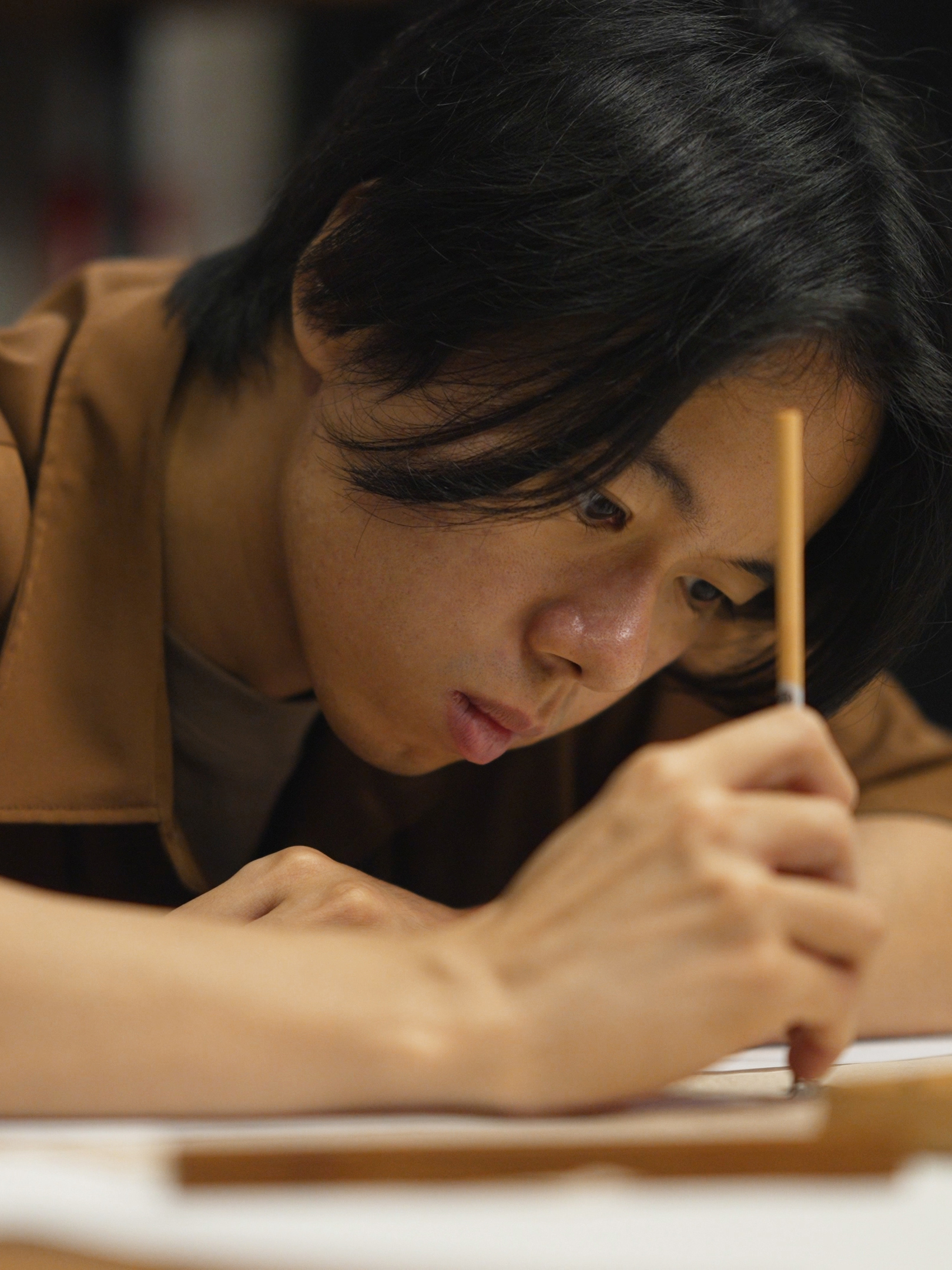
Born in Hong Kong in 1992, CHAN Kwan-lok graduated from the Department of Fine Arts at The Chinese University of Hong Kong in 2015. Chan Kwan Lok is keen on exploring the feasibility of ink lines through depictions of the motions of human and nature. Using rhythmic lines to construct a rigorous yet subtle framework, Chan portrays ordinary objects, people and marine animals to create a whimsical fantasy. He held several solo exhibitions in Hong Kong, and his works are part of the collection at the Hong Kong Museum of Art and are also held in private collections.
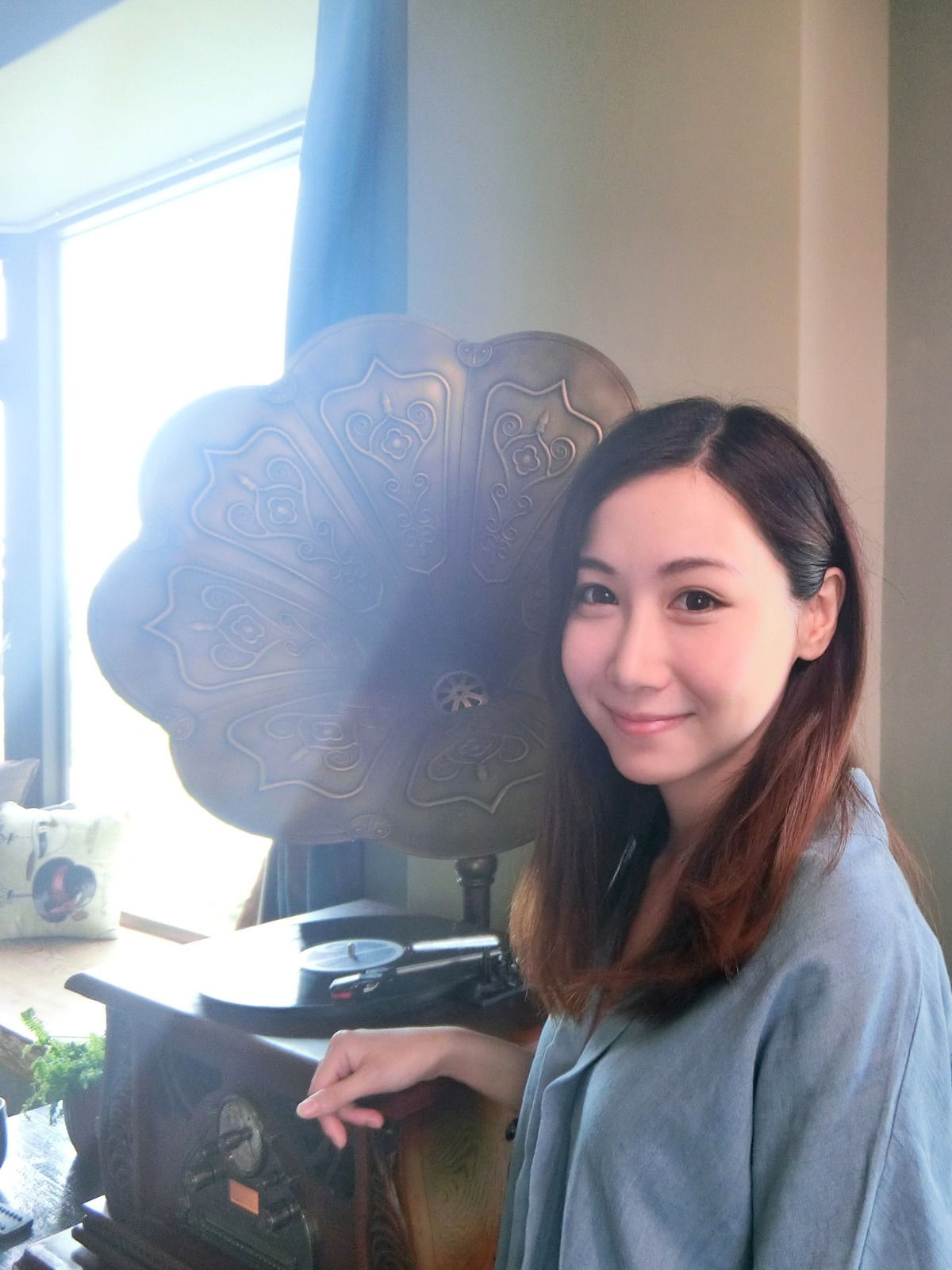
Sam Cheng, graduated from the Fine Arts Department of CUHK with BA first-class Honor, she specializes in still life and landscape paintings, in which she expresses her feelings towards daily objects.
When painting, she usually experience a kind of meditation, which is a process of self-precipitation and healing. By combining the precise and meticulous gongbi technique (traditional delineative painting) and the depiction of modern subjects to convey her personal feelings, there is a sentimental quality in her modernized ink paintings. She uses linear lines to define the subject forms in her stories; applies ink washes to render layers of feelings and varies the shades of colours to empower the expression of emotions. Cheng creates her own visual vocabulary for expression of feelings, presenting a trinity of harmony formed by contemplative ink strokes, pastel
shades and modulating lines.
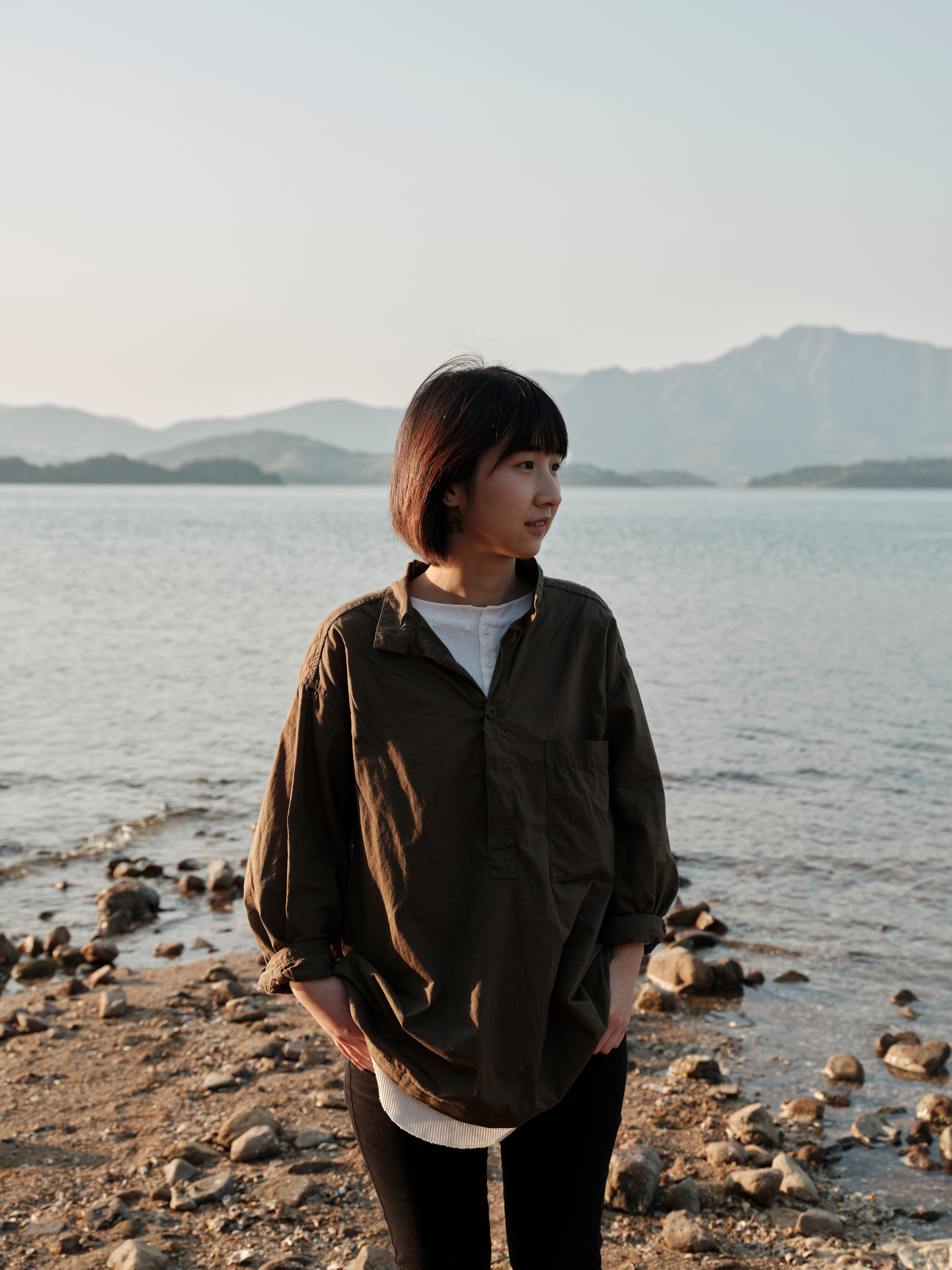
Shum Kwan Yi, Sim graduated with a Master of Philosophy (MPhil) and Bachelor of Arts (BA) from the Department of Visual Arts at Hong Kong Baptist University, and completed a semester exchange at Nagoya Zokei University of Art & Design, Japan. Shum’s practice focuses on ink art, through which she explores the contemporary relevance of traditional landscape painting, transforming it into a symbolic language. Her works weave together personal and collective social narratives, addressing themes of societal constraint and displacement.
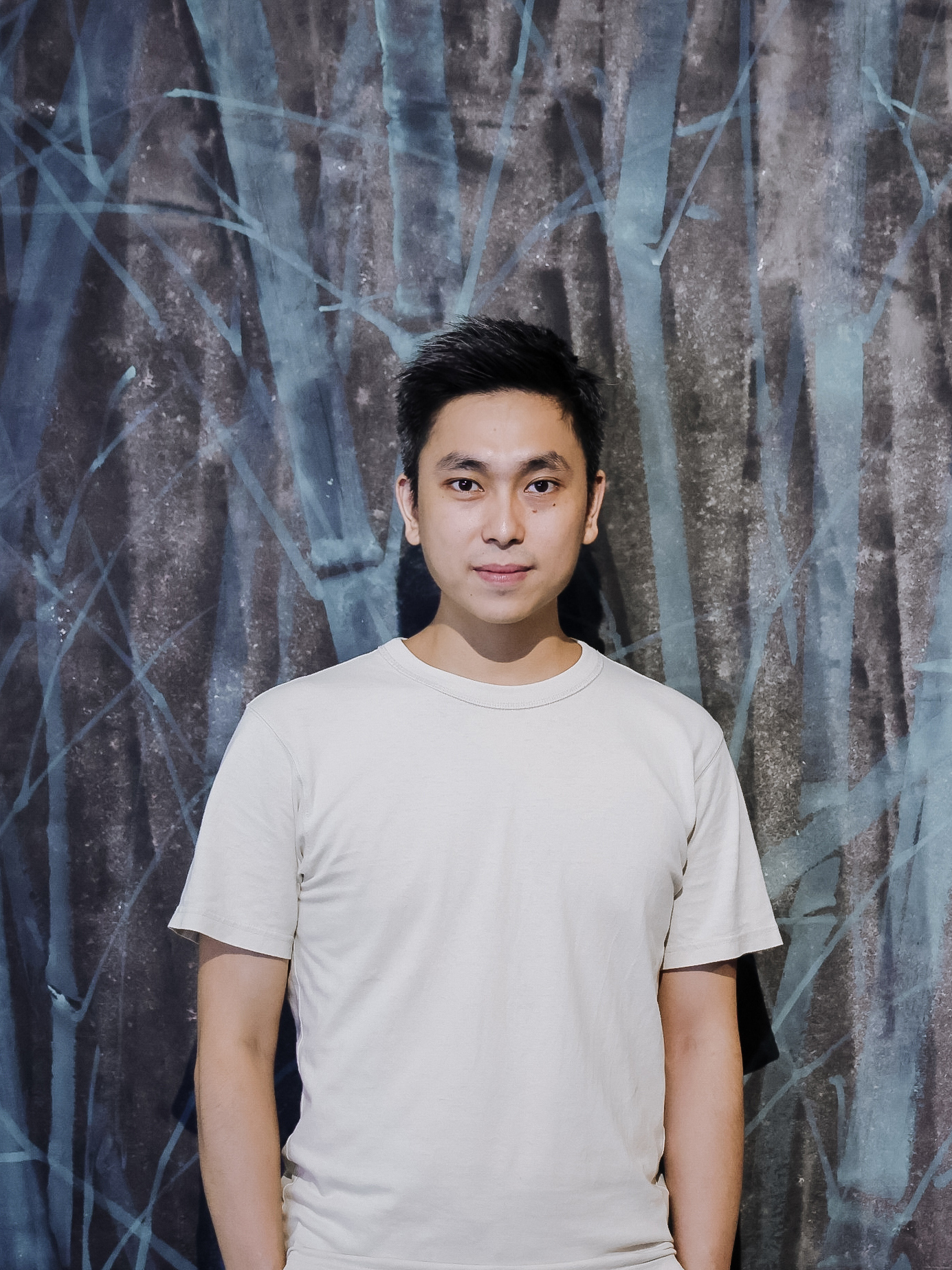
Yau Wing-fung, Ink Artist, is currently assistant professor at the Academy of Visual Arts of the Hong Kong Baptist University. He focuses on ink creations and research. His works consist in the transformation of visual experience, imagination and situationality while emphasising the potential interconnectedness of the visual content, the viewing mode and the external form. By merging the spatial aesthetics of ink with contemporary visual experience, his three-dimensional structures or installations create multi-dimensional spatial and temporal scenarios.
In recent years, Yau has held a number of solo exhibitions and projects in the USA, Mainland China, Hong Kong and Macao. He has also been commissioned by museums and institutions such as the Hong Kong Museum of Art, United Overseas Bank and Art Central to create large-scale ink installations. These works connect the viewers with the ink art and the spatial installation, creating an interactive viewing experience. His artworks have been exhibited in numerous international exhibitions and events, including the Los Angeles County Museum of Art and United Nations Secretariat Building in the USA, Shenzhen Art Museum, Zhengzhou Art Museum, National Taiwan Normal University Art Museum, Hong Kong Museum of Art, University Museum and Art Gallery of The University of Hong Kong, the art space Oi!, Art Basel and Fine Art Asia. His works are included in the collections of public institutions such as the Los Angeles County Museum of Art, the Ashmolean Museum, and M+, as well as in private collections.
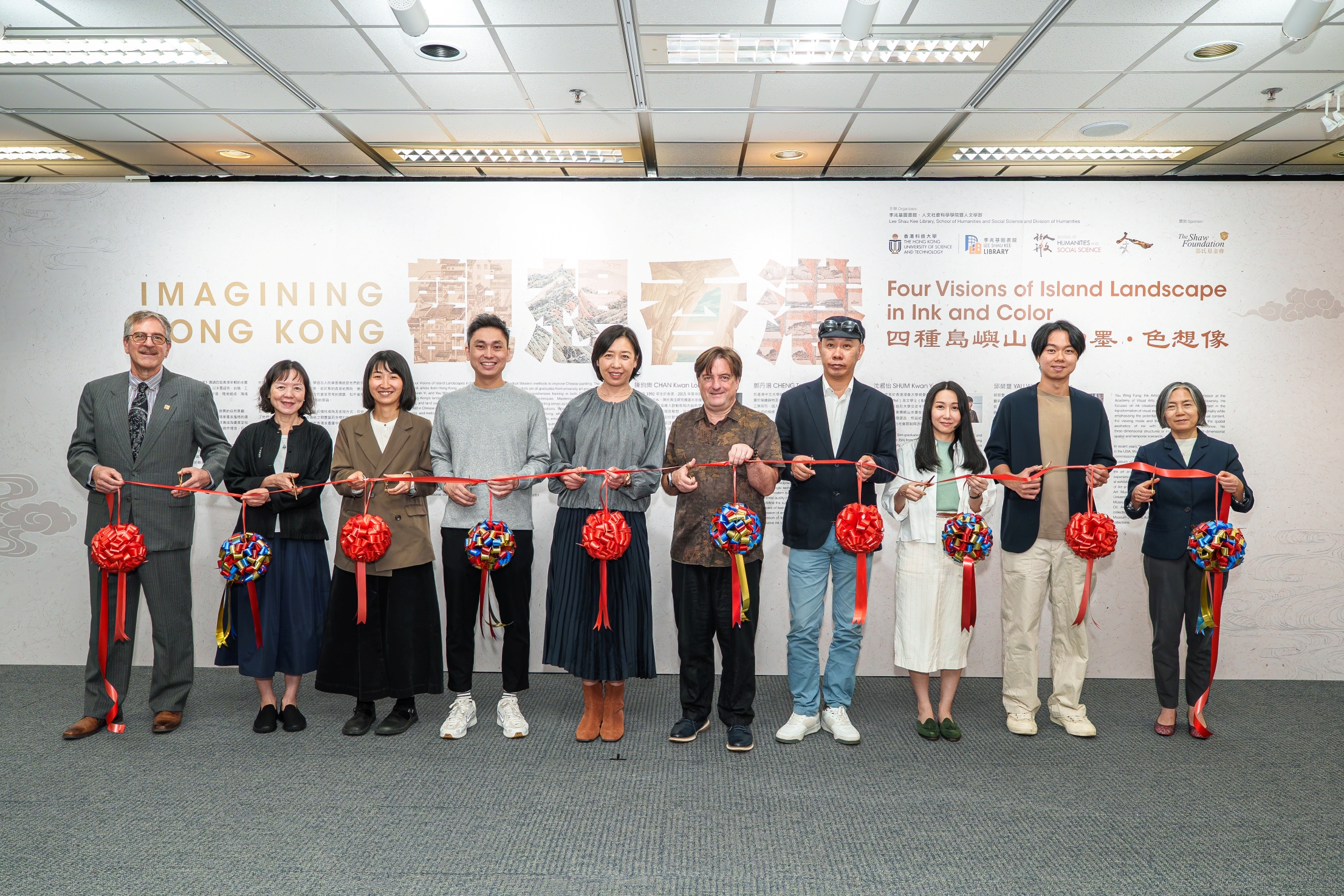
4:30pm Ceremony
5:00pm Tea Reception
5:15pm Guided Tour
Ping Yuan and Kinmay W Tang Gallery
English
Officiating Guests
- Professor Cameron Campbell, Acting Dean of Humanities and Social Science
- Ms Ellen Yeung, Senior Manager, The Shaw Foundation
- Master Guo Gan, Visiting Professor and Artist-in-Residence, School of Humanities and Social Science
- Chan Kwan Lok, Participating Artist
- Sam Cheng Tan San, Participating Artist
- Sim Sum Kwan Yi, Participating Artist
- Ross Yau Wing Fung, Participating Artist
- Professor Flora Fu, Associate Professor of Humanities Education, Division of Humanities
- Dr Anna KWONG, Senior Lecturer, Division of Humanities
- Edward Spodick, Associate University Librarian
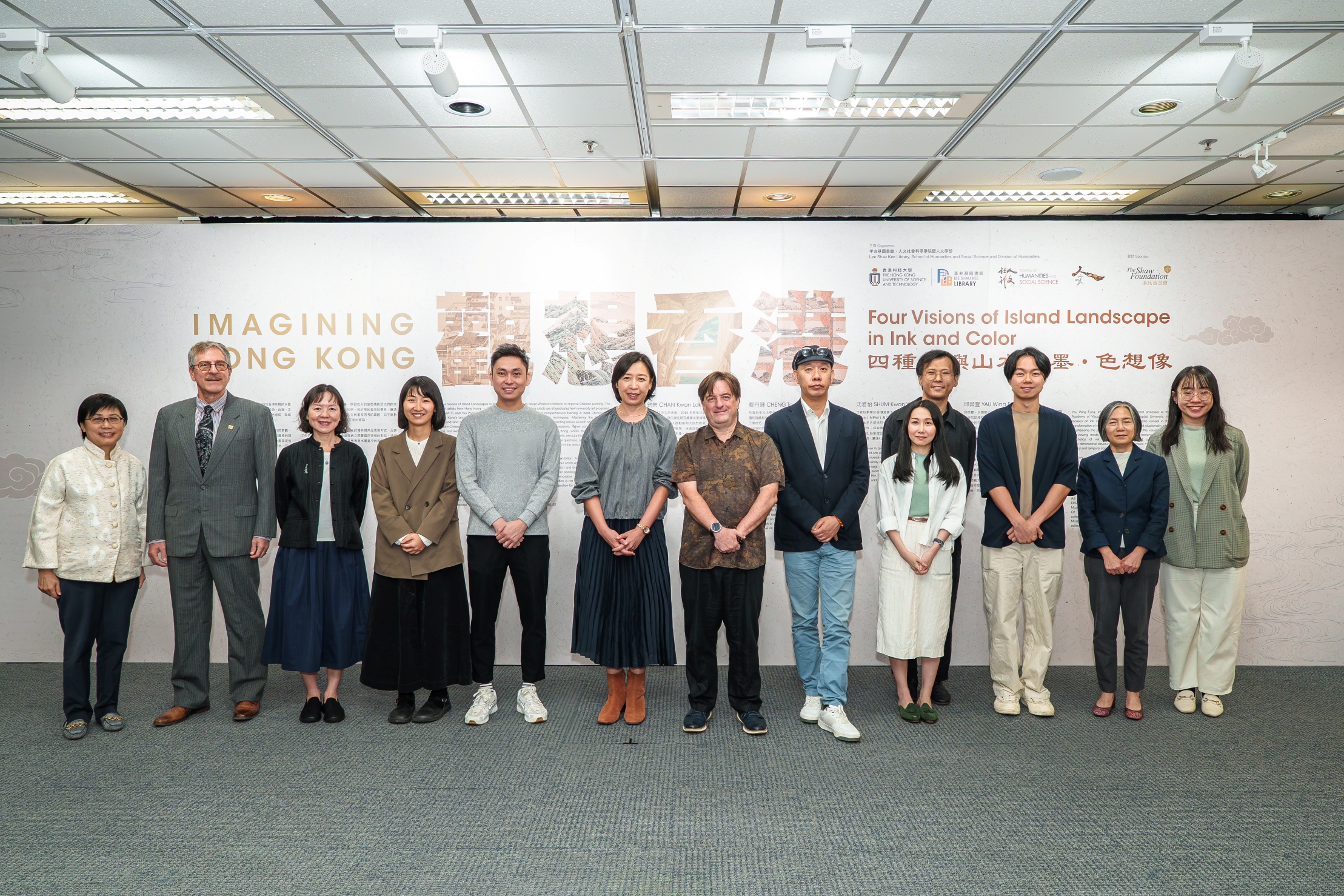
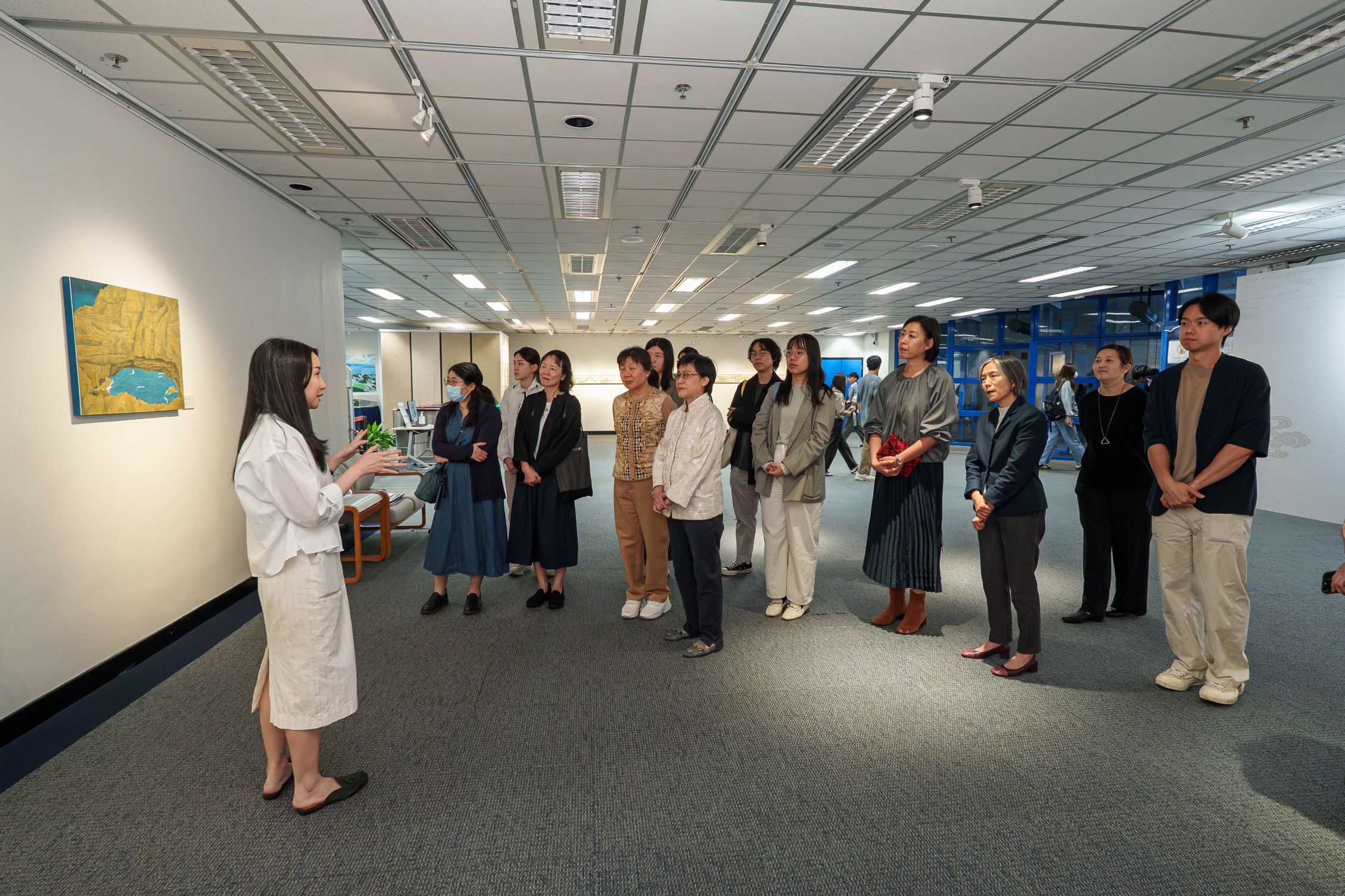
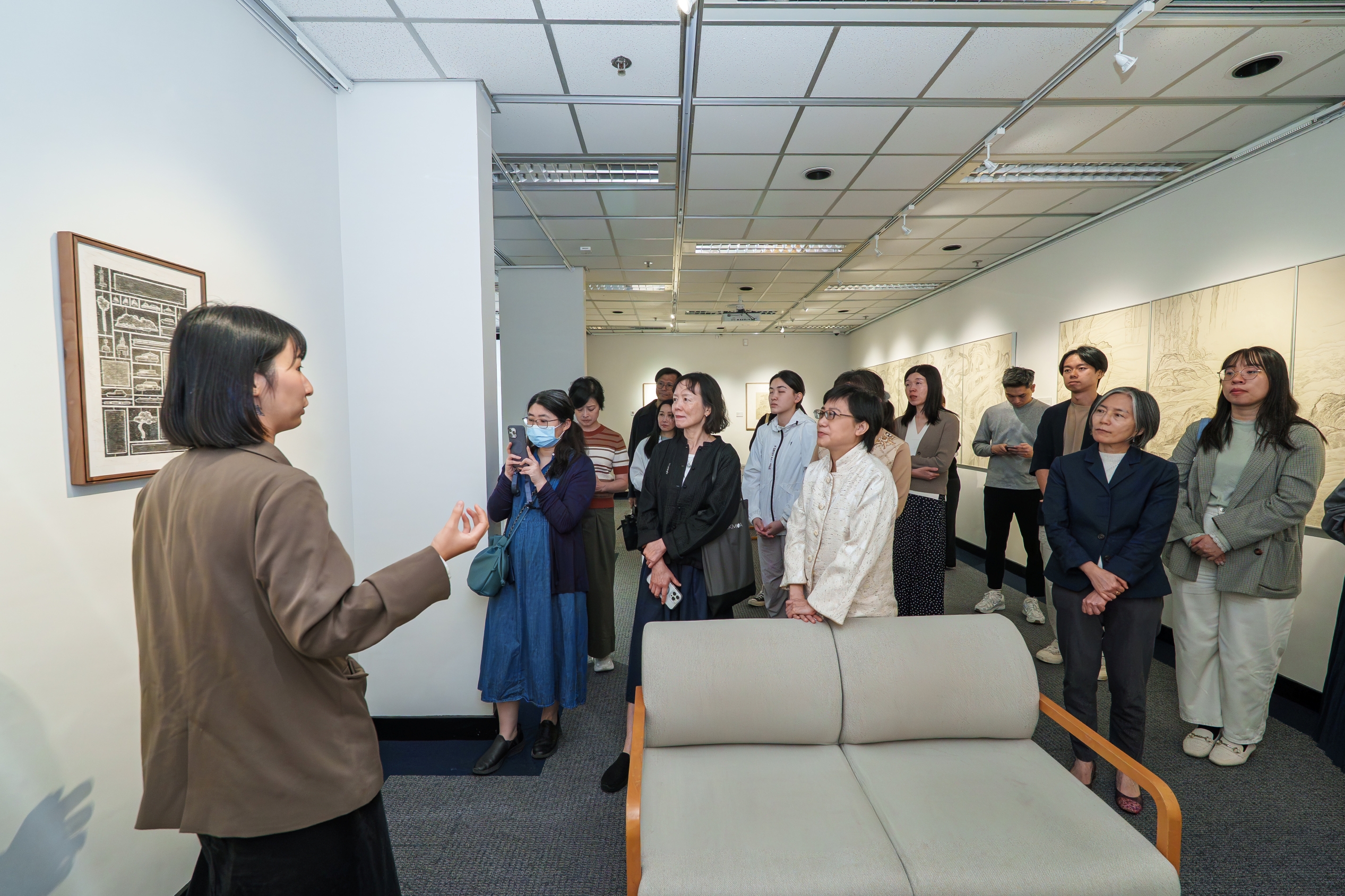
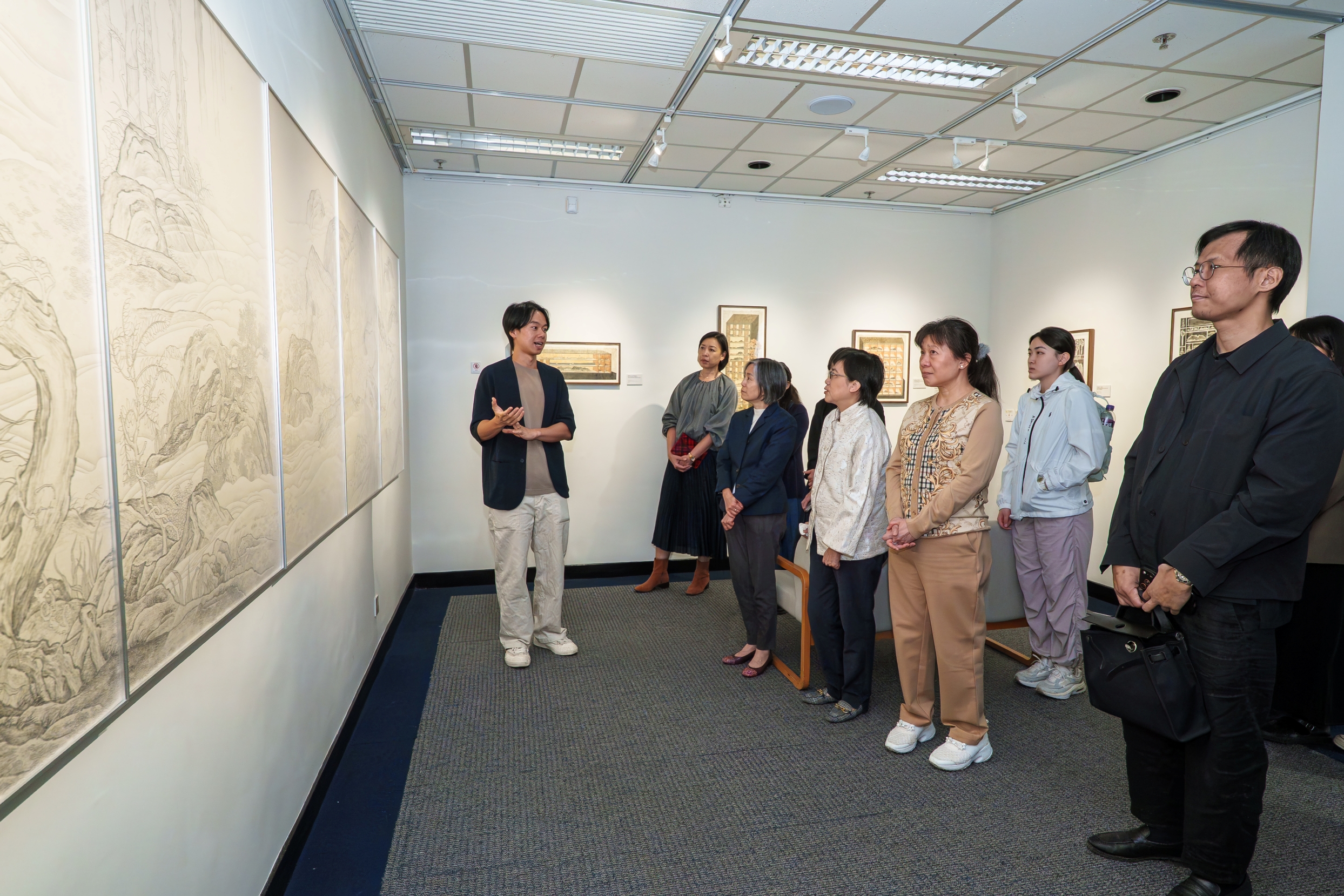
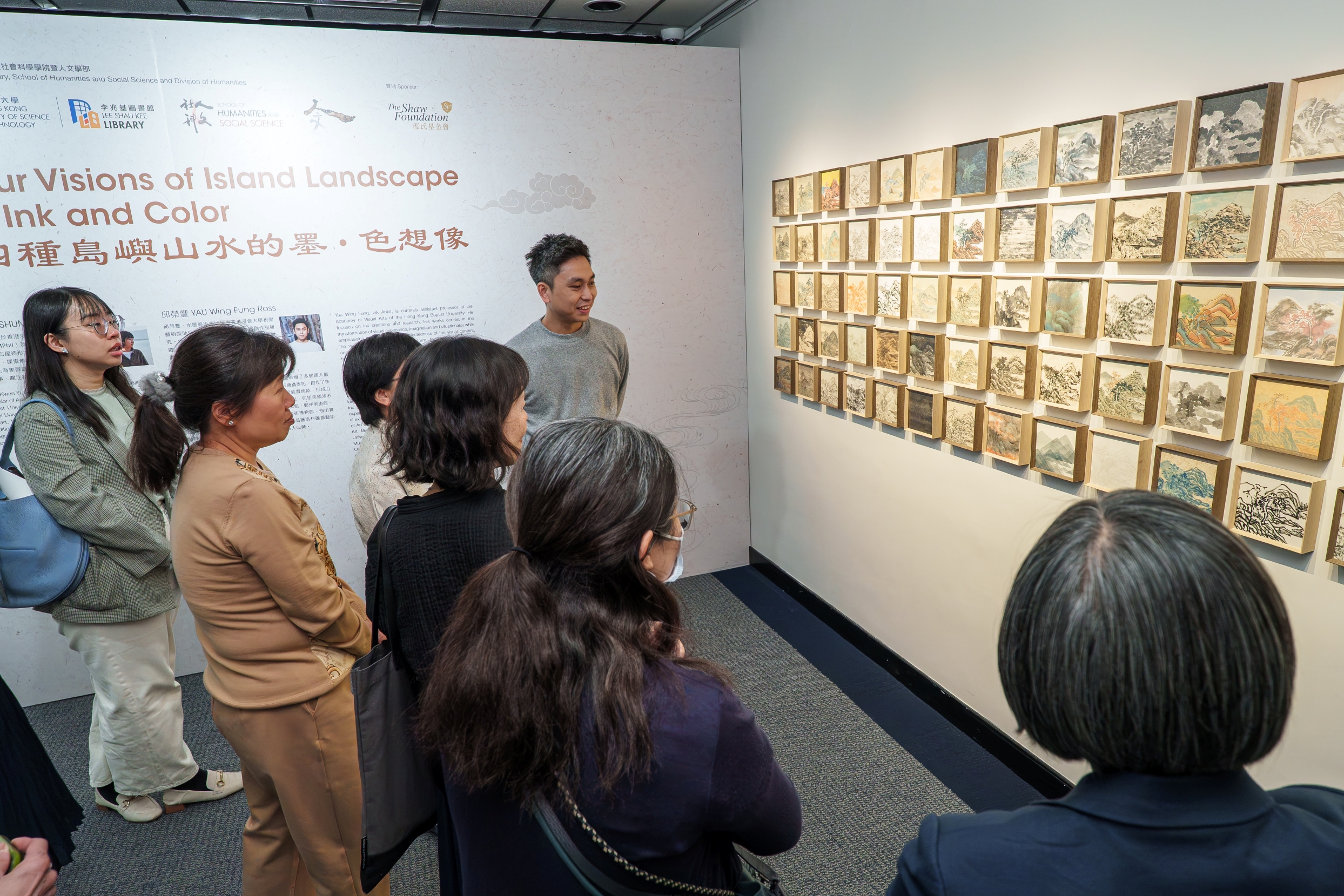
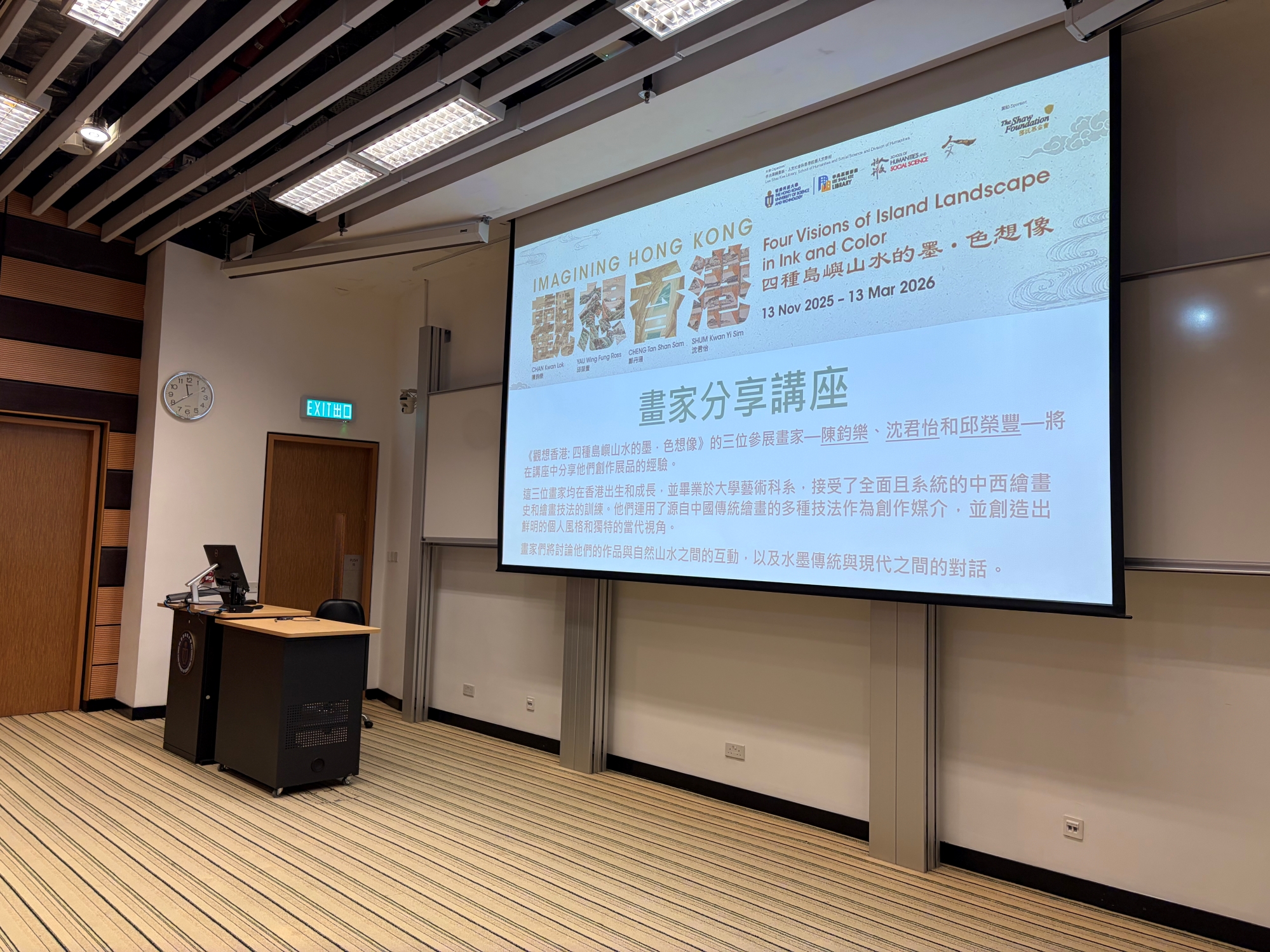
Imagining Hong Kong: Four Visions of Island Landscape in Ink and Color Artist Sharing Lecture
- Date: 14 November 2025 (Fri)
- Time: 12:00 – 1:30pm
- Venue: Kaisa Group Lecture Theater (IAS LT)
- Language: Putonghua supplemented with Cantonese
- Registration: https://lbcube.hkust.edu.hk/ce/index.php/event/11007/
- Moderator: Prof. Flora Fu, Division of Humanities, HKUST
The three participating artists in Imagining Hong Kong: Four Visions of Island Landscape in Ink and Color —Chan Kwan Lok, Sim Shum Kwan-yi, and Ross Yau Wing Fung—will share their experiences in creating works for the exhibition. All three artists were born and raised in Hong Kong and graduated from university art programs, where they received comprehensive training in both Eastern and Western art history and painting techniques. They have employed various techniques derived from traditional Chinese painting as their medium, creating distinct personal styles and unique contemporary perspectives. The artists will discuss how their works interact with the natural landscapes and explore the dialogue between traditional ink painting and modernity.
The talk will be recorded, and photos will be taken during the talk. By attending or participating in this event, you are giving your consent to be photographed and video recorded and you are waiving any and all claims regarding the use of your image by the University.
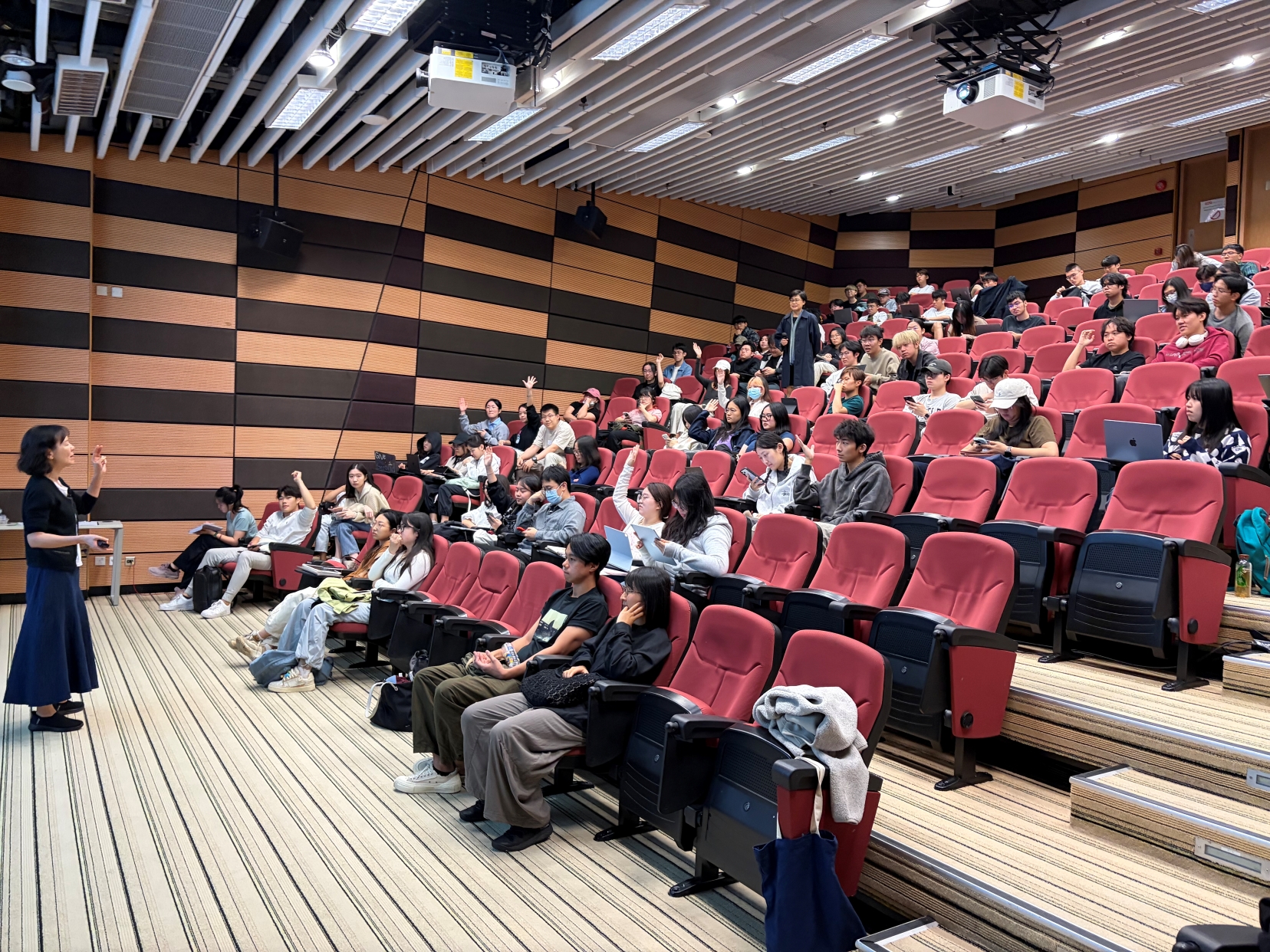
Landscape and Life: Contemporary Expressions in Ink Art
- Date: 18 November (Tue)
- Time: 12:30 – 1:30pm
- Venue: Library LG4 Multi-Function Room
- Speaker: Shum Kwan Yi, Sim
- Language: Putonghua
- Registration: https://lbcube.hkust.edu.hk/ce/event/11014
- Moderator: Prof. Flora Fu, Division of Humanities, HKUST
The lecture begins with traditional Chinese landscape painting, exploring how contemporary artists employ this aged-old language to respond to rapidly changing urban landscapes, social issues, and the expression of personal emotions. It will spotlight several ink artists who take landscape as their core creative practice, using their representative works to help the audience quickly grasp the context and framework of how tradition is reinterpreted and transformed. The speaker will then share her own creative journey: using landscape as a vehicle of expression to reflect social change and individual emotions, while probing how “landscape” evolves from a classical symbol into a medium for dialogue with the contemporary world. In the latter half of the session, the speaker will conduct a demonstration of the basic techniques for drawing trees, rocks, clouds, and steams in traditional landscape painting.
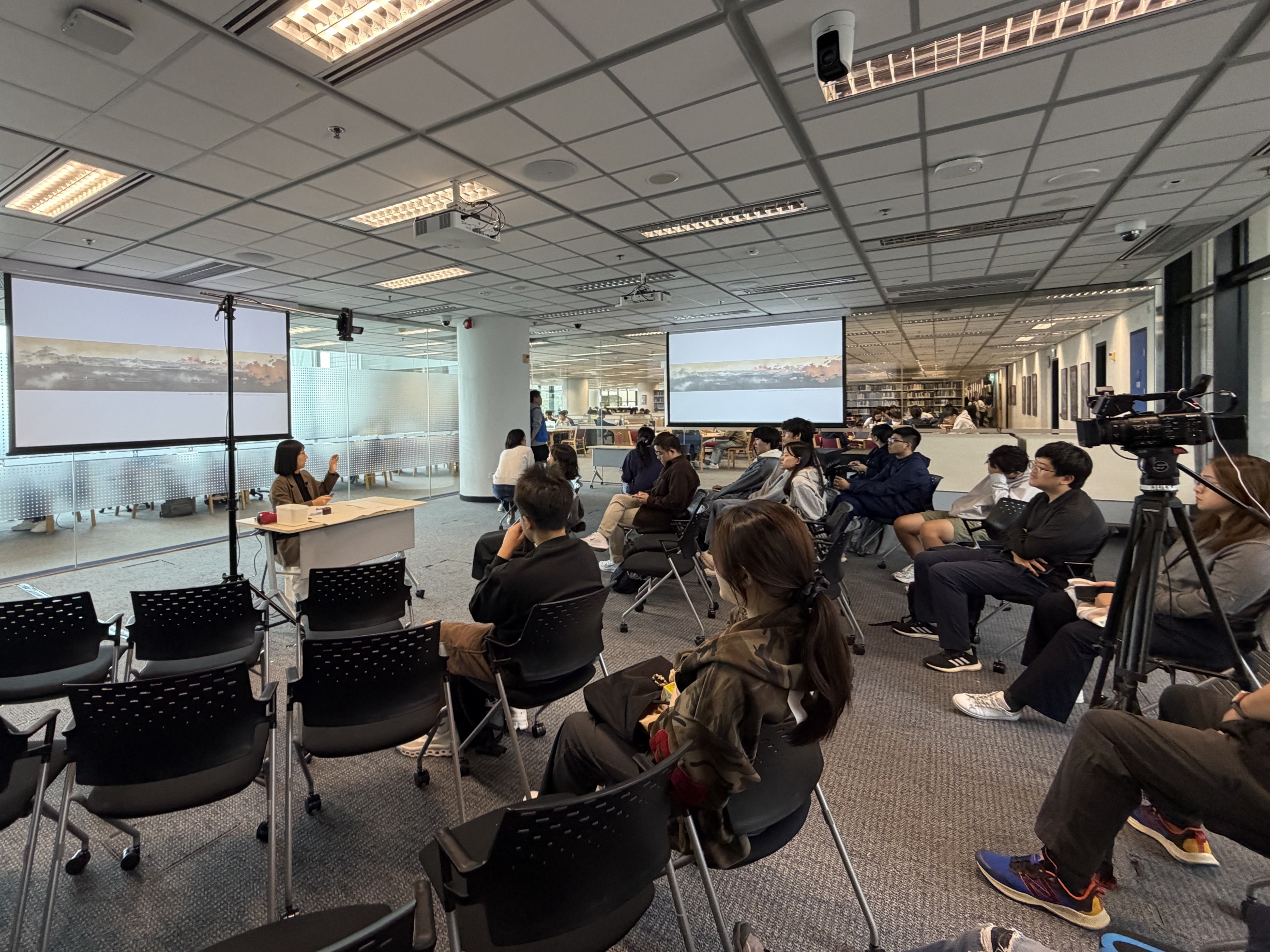
Depicting Mountains and Seas in Ink: Baimiao, Nature, and the Everyday
- Date: 20 November (Thu)
- Time: 12:30 – 1:30pm
- Venue: Library LG4 Multi-Function Room
- Speaker: Chan Kwan Lok
- Language: Putonghua
- Registration: https://lbcube.hkust.edu.hk/ce/event/11015
- Moderator: Prof. Flora Fu, Division of Humanities, HKUST
Hong Kong artist Chan Kwan Lok will share his creative journey of observing nature and everyday life through ink lines, presenting paintings from different periods and demonstrating baimiao techniques. His works range from underwater scenes to mountain hiking experiences, using brush and ink to explore the expressive possibilities of traditional baimiao.
Ping Yuan and Kinmay W Tang Gallery
library@ust.hk
