

Jointly presented by the Hong Kong University of Science and Technology Lee Shau Kee Library, Shaw Auditorium Unit, Center for the Arts and Media Technology and Publishing Center
Foreword
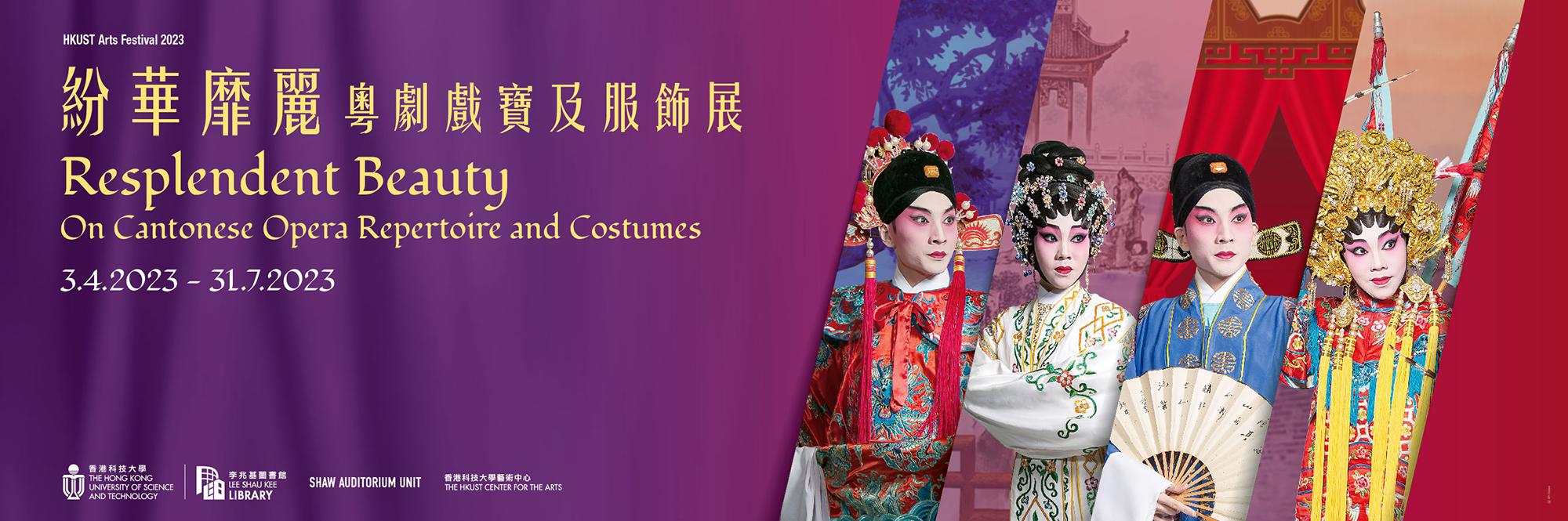
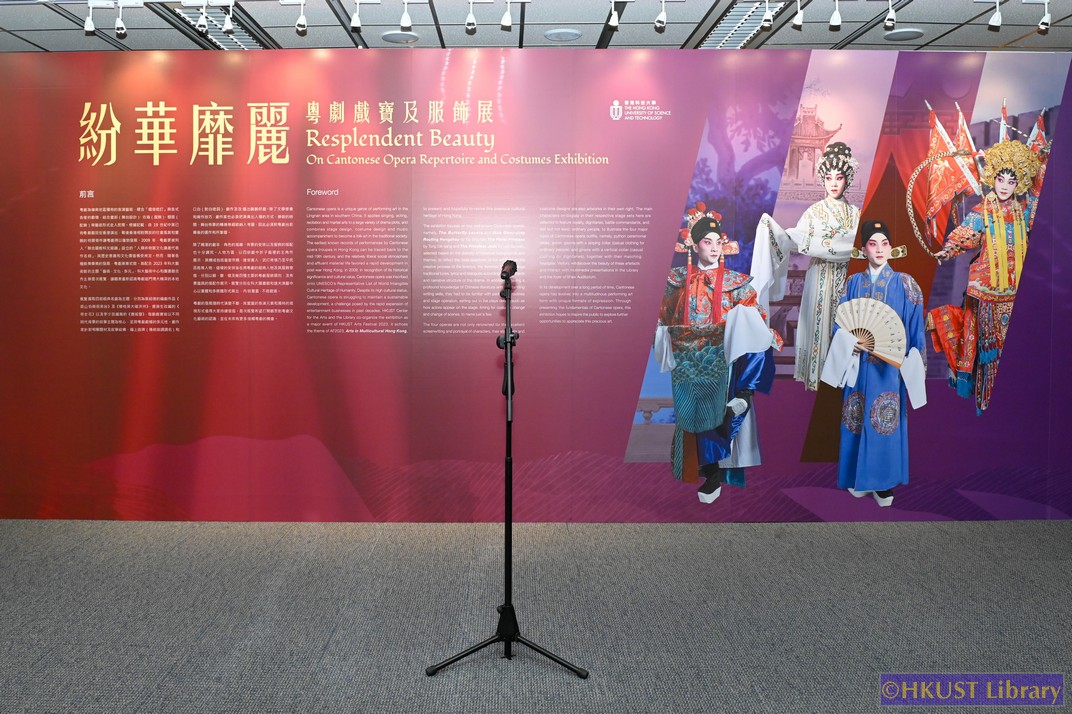
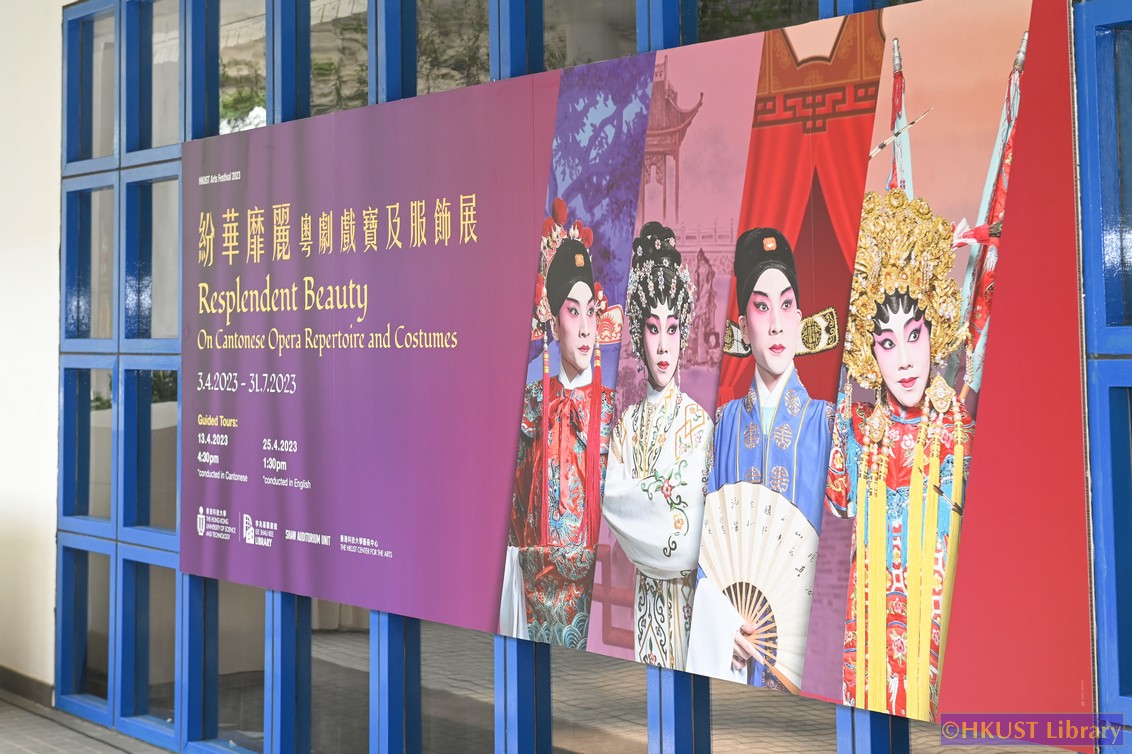
Cantonese opera is a unique genre of performing art in the Lingnan area in southern China. It applies singing, acting, recitation and martial arts to a large variety of drama plots, and combines stage design, costume design and music accompaniment to become a folk art in the traditional society. The earliest known records of performances by Cantonese opera troupes in Hong Kong can be traced back to the mid-19th century, and the relatively liberal social atmosphere and affluent material life favored a rapid development in post-war Hong Kong. In 2009, in recognition of its historical significance and cultural value, Cantonese opera was inscribed onto UNESCO’s Representative List of World Intangible Cultural Heritage of Humanity. Despite its high cultural status, Cantonese opera is struggling to maintain a sustainable development, a challenge posed by the rapid expansion of entertainment businesses in past decades. HKUST Center for the Arts and the Library co-organize the exhibition as a major event of HKUST Arts Festival 2023. It echoes the theme of AF2023, Arts in Multicultural Hong Kong, to present and hopefully to revive this precious cultural heritage of Hong Kong.
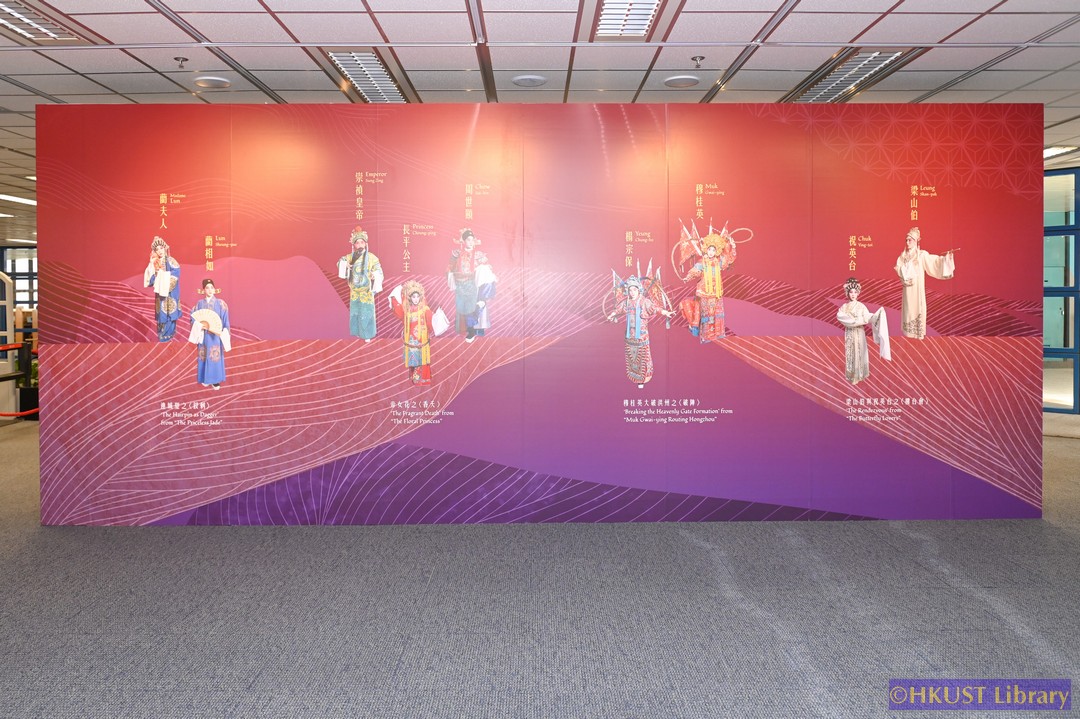
The exhibition focuses on four well-known Cantonese operas, namely, The Butterfly Lovers and Muk Gwai-ying Routing Hongzhou by Yip Shiu-tak, The Floral Princess by Tong Dik-sang and The Priceless Jade by Lee Siu-wan, selected based on the diversity of historical backgrounds and themes, to reflect the wide spectrum of the art form. In the creative process of the librettos, the librettists had to arrange traditional tunes, lyrics and dialogues according to the contents and narrative structure of the drama. In addition to having a profound knowledge of Chinese literature and outstanding writing skills, they had to be familiar with performing routines and stage operation, setting out in the plays details such as how actors appear on the stage, timing for costume change and change of scenes, to name just a few.
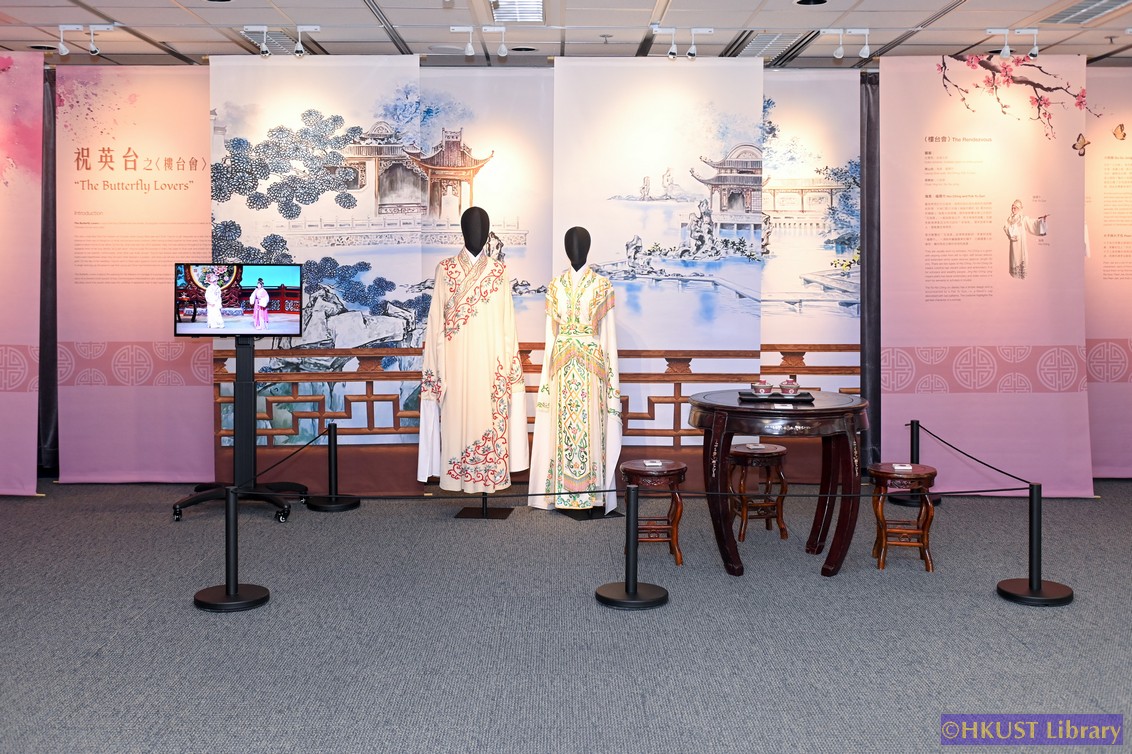
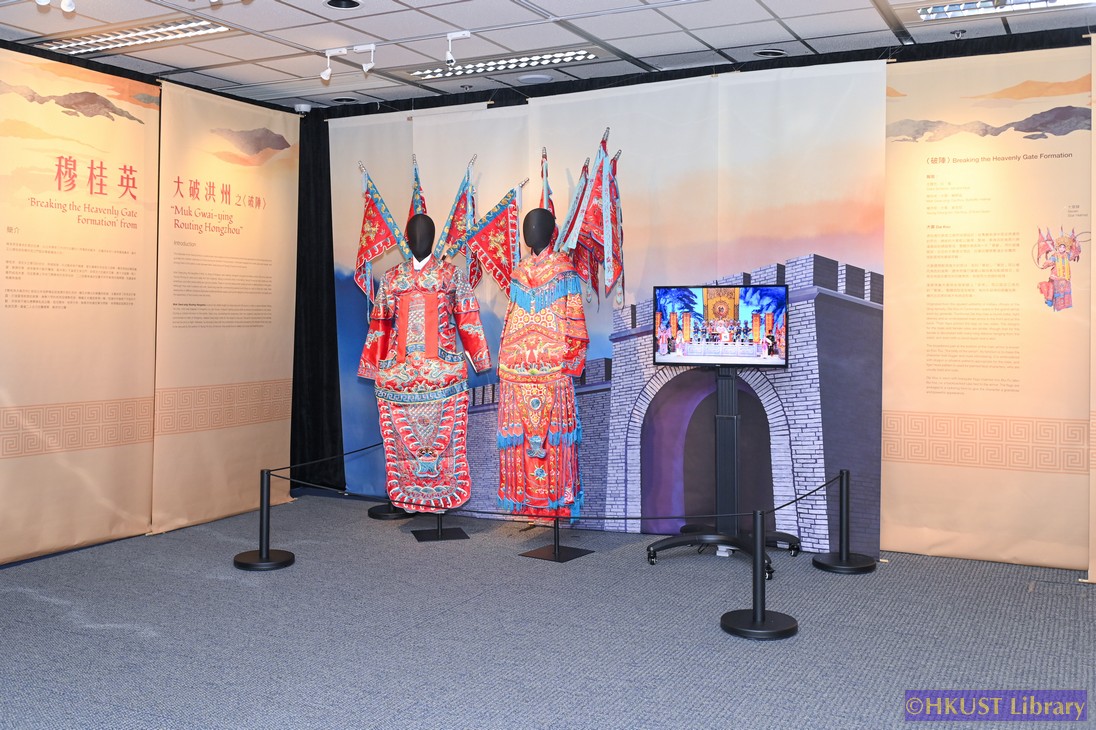
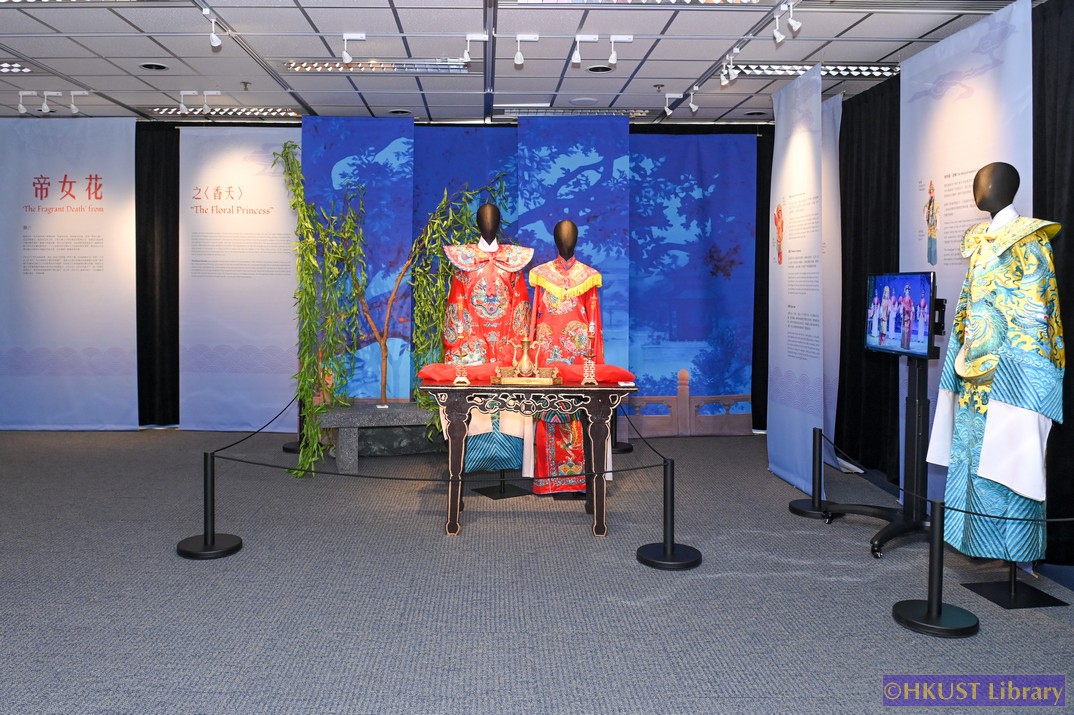
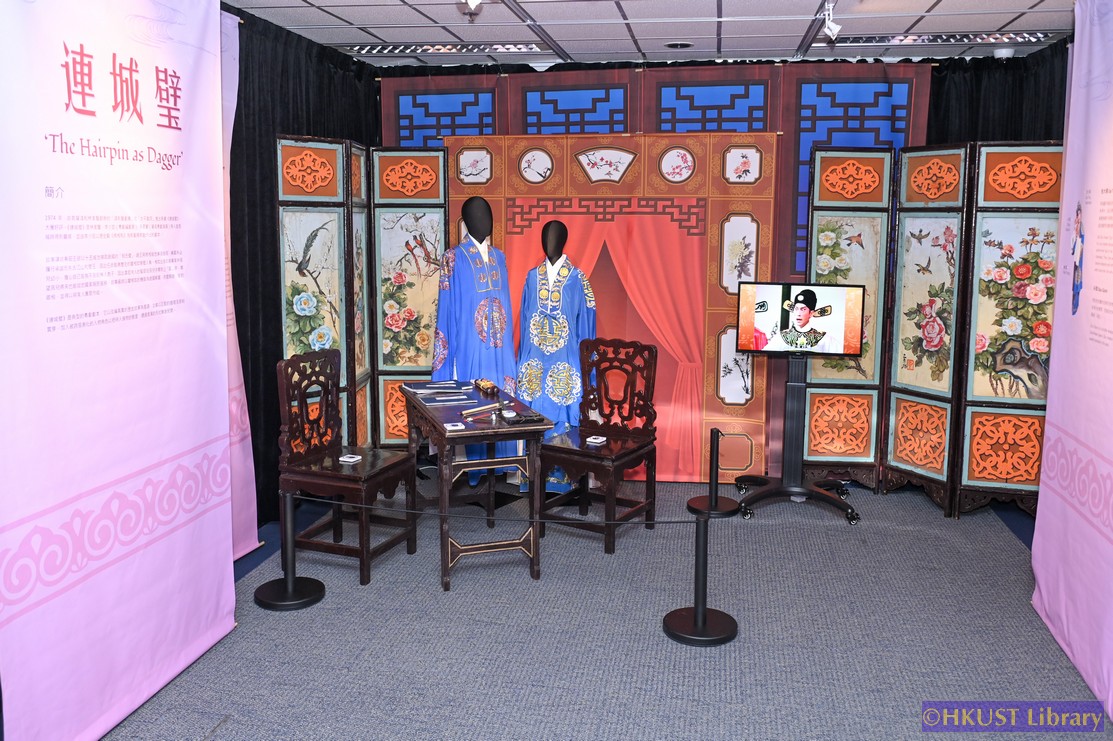
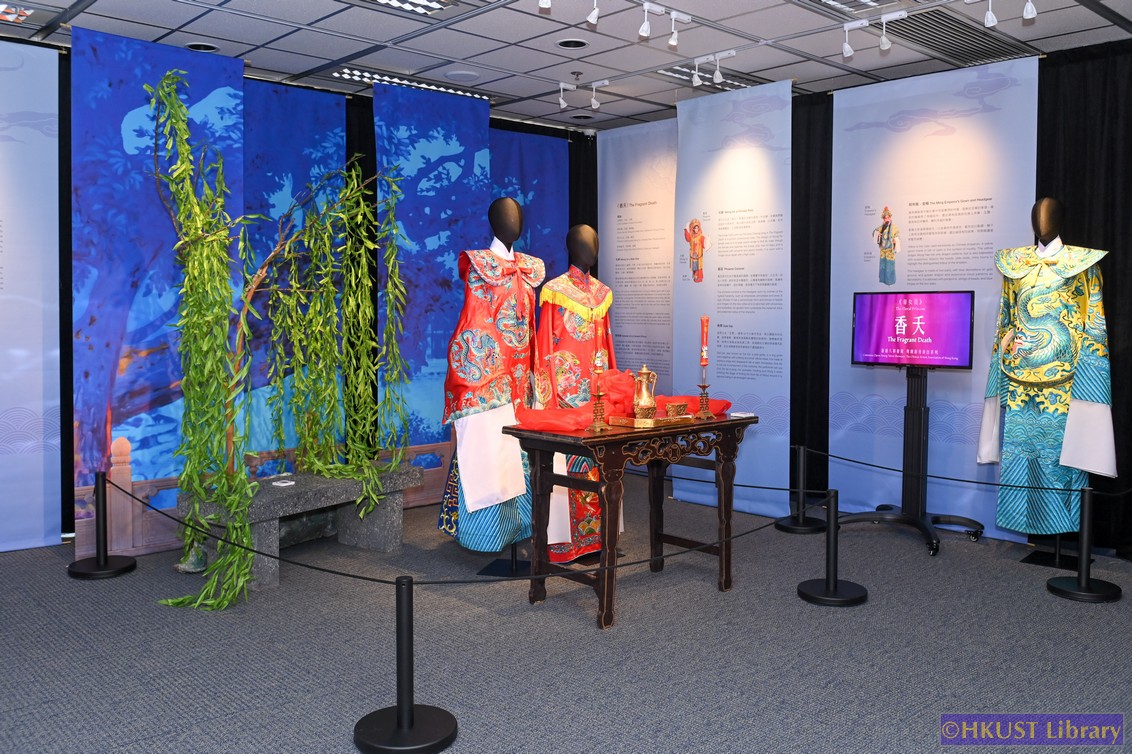
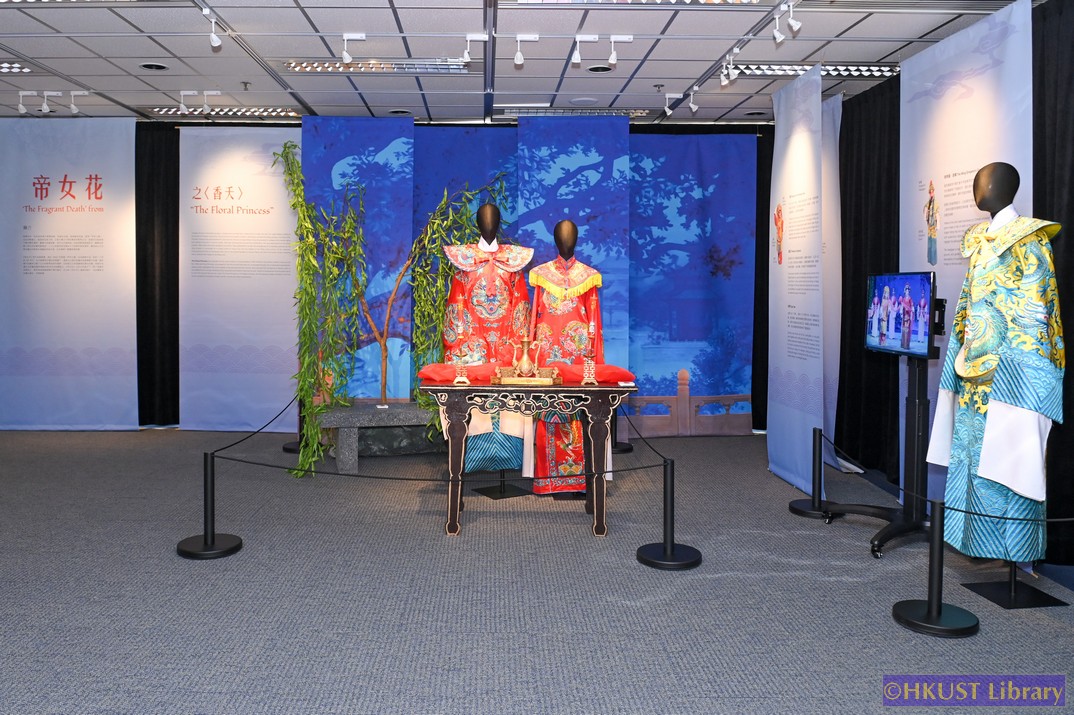
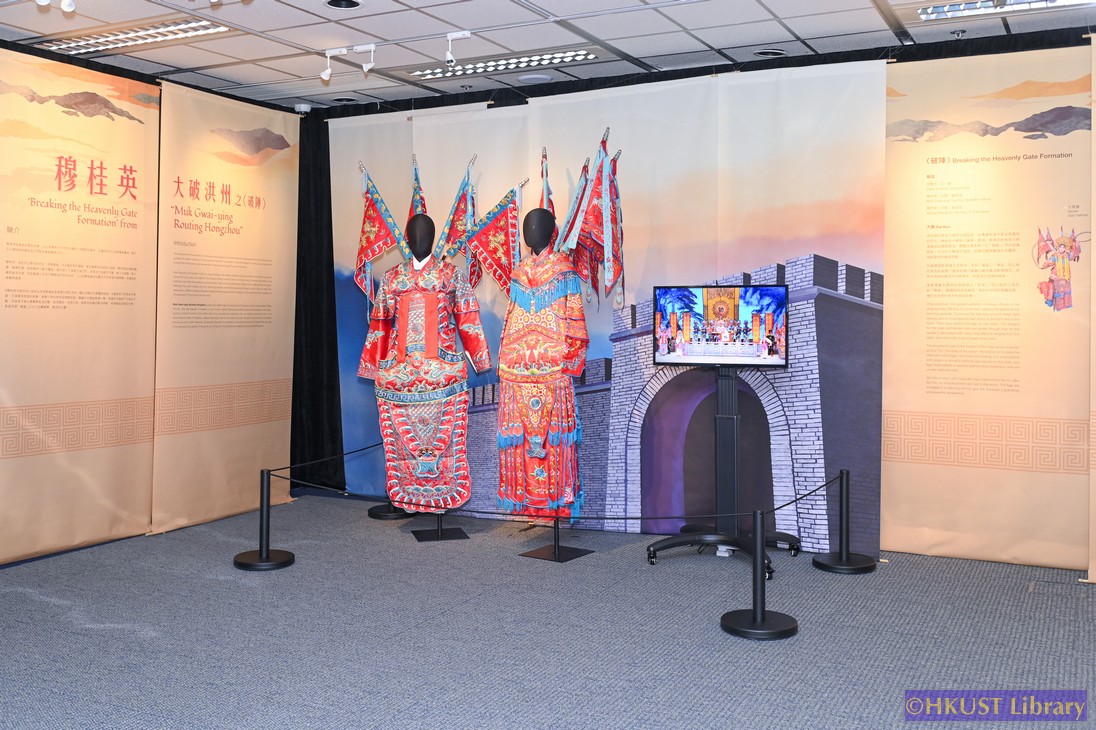
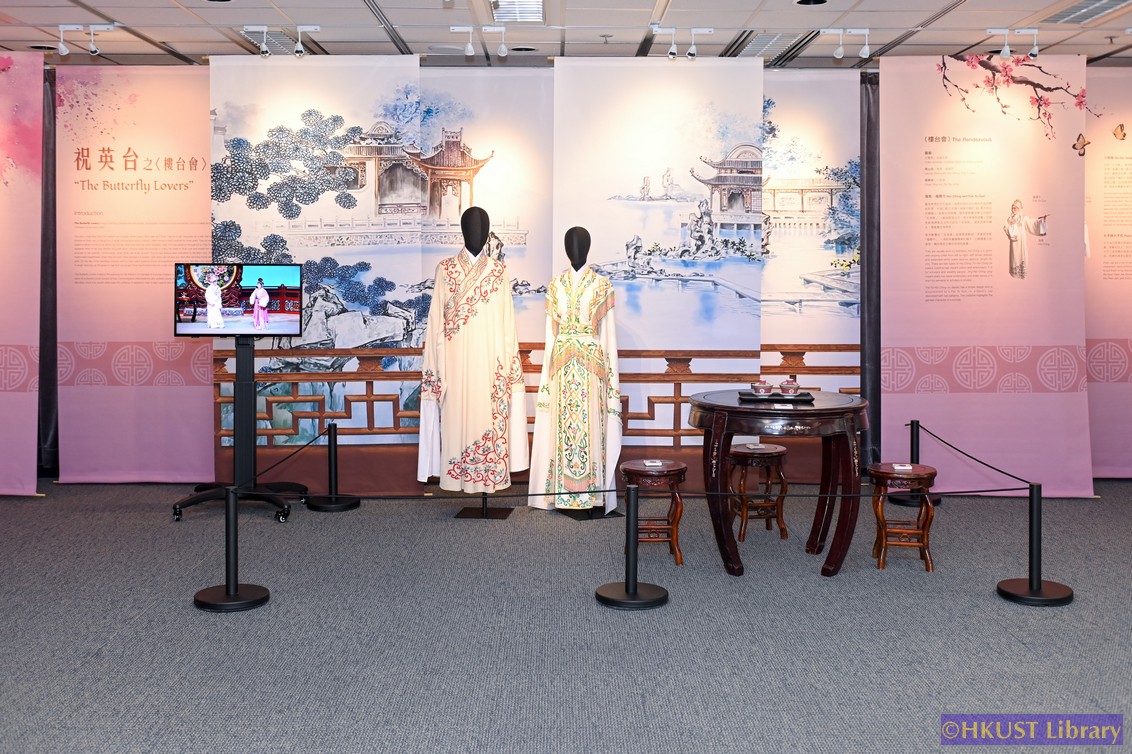
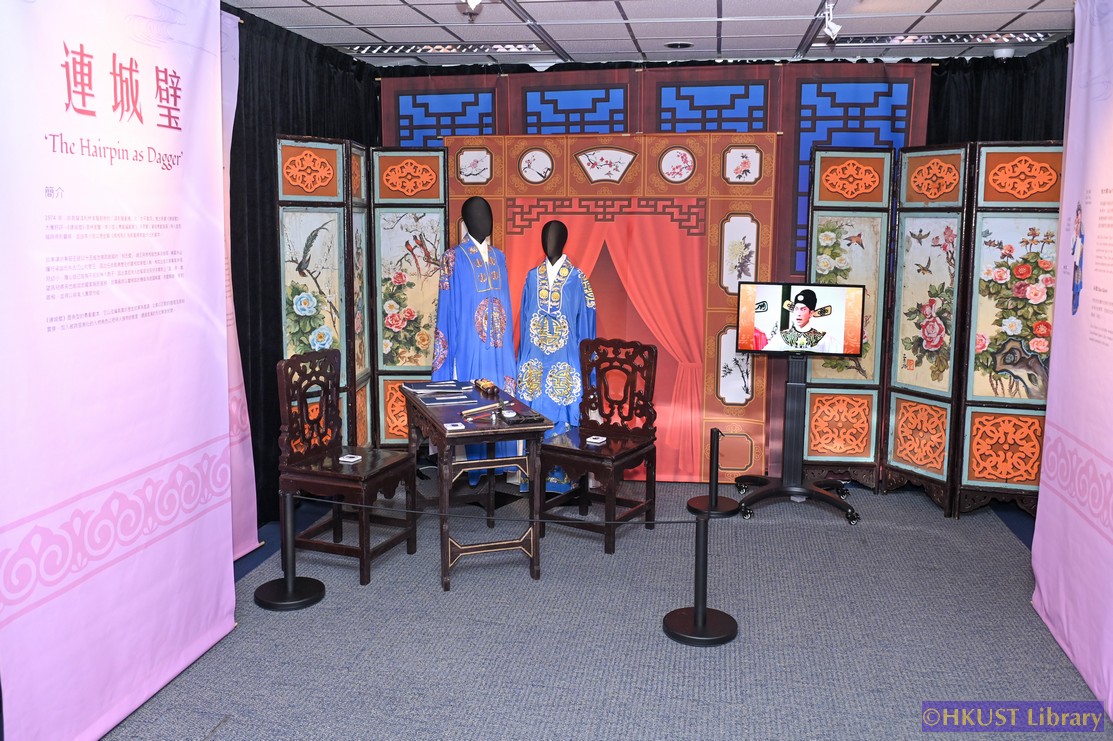
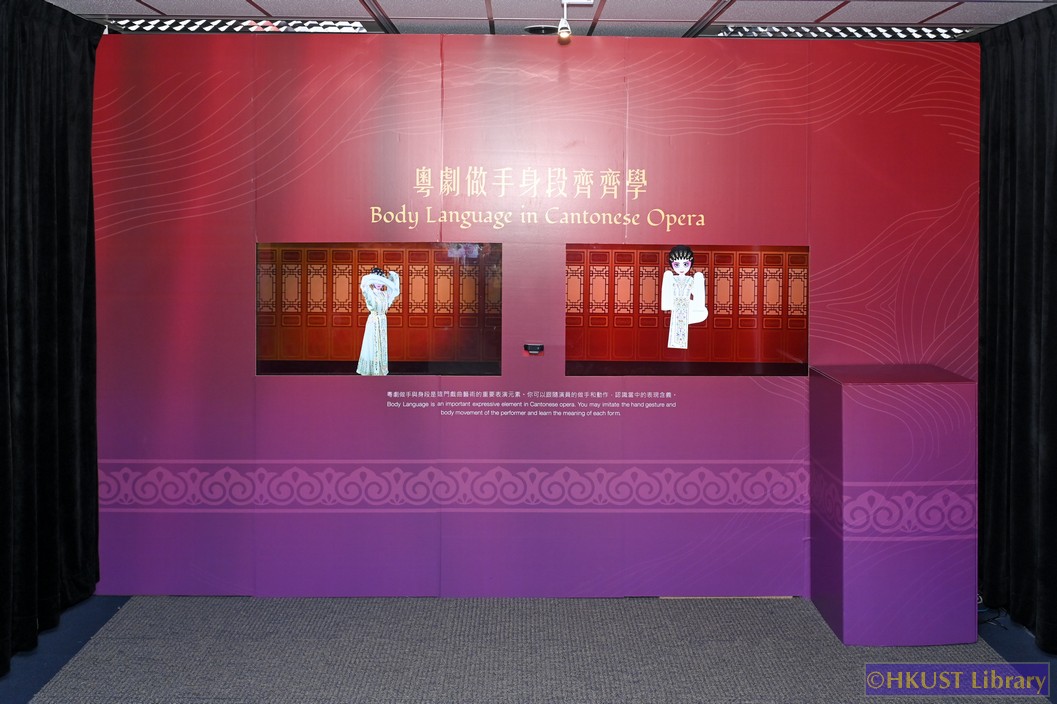
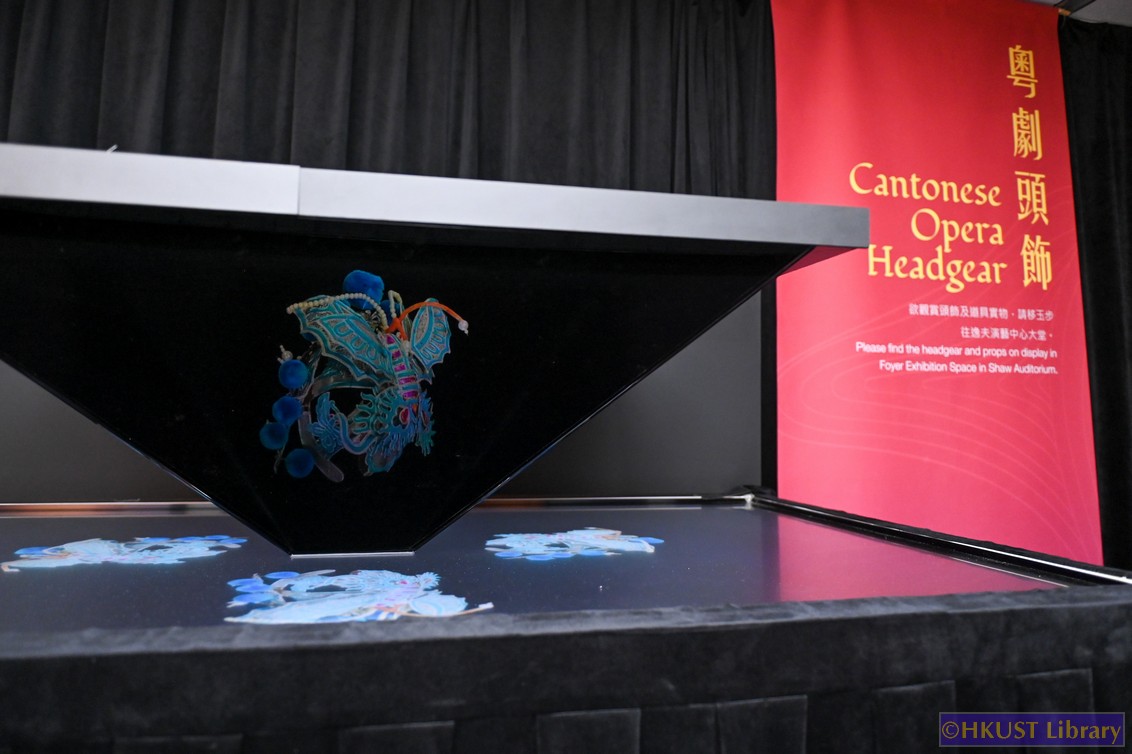
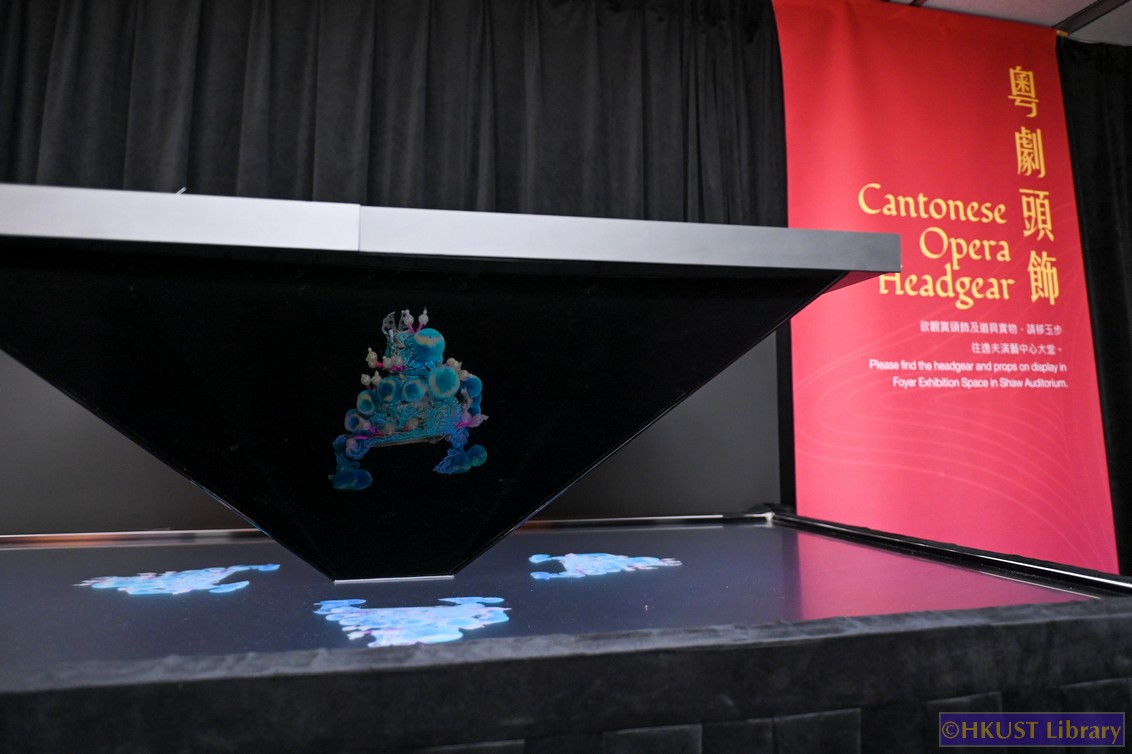
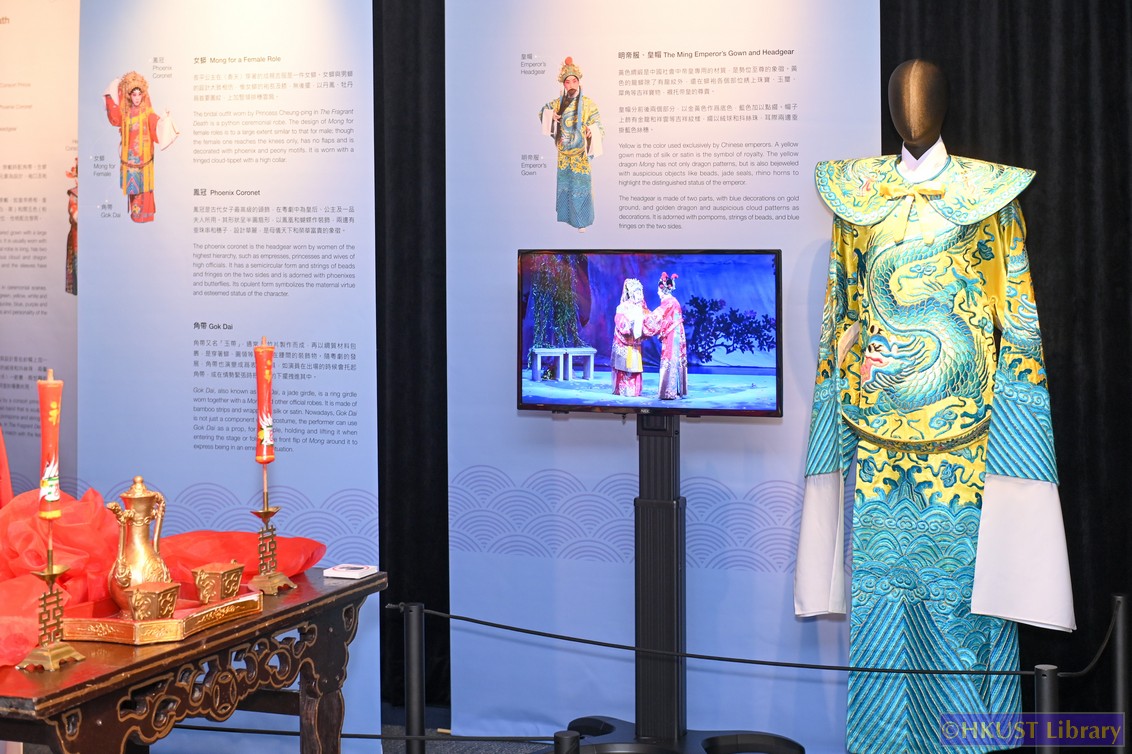
The four operas are not only renowned for the excellent screenwriting and portrayal of characters, their stage sets and costume designs are also artworks in their own right. The main characters on display in their respective stage sets here are selected to feature royalties, dignitaries, battle commandants, and last but not least, ordinary people, to illustrate the four major types of Cantonese opera outfits, namely, python ceremonial robes, armor, gowns with a sloping collar (casual clothing for ordinary people) and gowns with a vertical collar (casual clothing for dignitaries), together with their matching headgears. Visitors will discover the beauty of these artefacts and interact with multimedia presentations in the Library and the foyer of Shaw Auditorium.
In its development over a long period of time, Cantonese opera has evolved into a multitudinous performing art form with unique formats of expression. Through presenting the fundamentals of Cantonese opera, a UNESCO-recognized World Intangible Cultural Heritage, this exhibition aims to inspire the public to explore further opportunities to appreciate this precious art, and to safeguard our regional cultural heritage.
The Butterfly Lovers is one of the four Chinese folk love stories. Its poignant romance is world-renowned, and it is hailed as the “Chinese Romeo and Juliet”.
The story originated from the Eastern Jin Dynasty when Leung Shan-pak and Chuk Ying-toi (a girl disguised as a lad) met by chance on their way to Hangzhou to study and became sworn brothers. After having studied together for three years, Ying-toi was urged to return home by her father. On the trip, Shan-pak sent her off for eighteen miles, but was oblivious throughout to Ying-toi’s repeated hints of her true identity. As a last resort, Ying-toi made the promise to marry her sister to Shan-pak and invited him to propose to her parents. Unfortunately, when Shan-pak finally arrived, Ying-toi had already been betrothed to Ma Man-choi. The lovers were heartbroken when they bid each other farewell in a pavilion, and Shan-pak died of illness after returning home with grief. On the day of her wedding, Ying-toi went to Shan-pak’s grave to mourn and sacrificed herself for love. Ma Man-choi arrived in anger and dug up the grave to see that Leung and Chuk had transformed into a pair of butterflies. The lovers were finally united.
The Butterfly Lovers is about the yearning for the freedom of marriage of a young couple in a traditional society, and the touching story of a woman’s bold pursuit of love. Commonplace interpretations also praised Leung and Chuk for their moral integrity and filial piety, since they would rather bear the suffering of separation than to fight against fate and parental authority.
The Generals of the Yeung Family is a well-known story based on the achievements of the three generations of the Yeung family who guarded the northern territories of China during the Northern Song dynasty. It has been adapted into novels, plays and operas, and among them is the battle of wits between Muk Gwai-ying and Yeung Chung-bo most popular.
Muk Gwai-ying, the daughter of Muk Yu, King of Dingyao, was zealous, arrogant, and good at military tactics. She once captured Yeung Chung-bo alive and made him her husband. Being a favored child in the family, Yeung Chung-bo was impetuous and ambitious, and often acted rashly and got into trouble. There is much fun seeing them acting as rivals or battle partners in the opera. Although they were husband and wife, Gwai-ying was the commanding general and Chung-bo had to follow her order. Their relationship in different situations illustrates traditional ethical values, such as the hierarchy of the husband and wife in the family and the supremacy of the country over the family.
Muk Gwai-ying Routing Hongzhou is about the battle fought by Gwai-ying and Chung-bo in order to rescue General Yeung Yin-chiu, who was trapped in Hongzhou by Liao troops. Frequent fighting scenes build up tension and excitement in the opera. During a critical moment of the battle, Gwai-ying, concealing her pregnancy from her husband, assumed the role of the commander-in-chief. In Hongzhou, despite Gwai-ying’s order for the troops to stay put, Chung-bo was provoked by the enemies and led his army to fight. Defeated, he returned to face with the punishment of execution imposed by the infuriated Gwai-ying, only to be rescued by the petition of Yeung Yin-chiu. At the end, they joined force to defeat Liao troops and freed Hongzhou.
Towards the end of the Ming Dynasty, Li Zicheng led his Great Shun rebel army to invade and sack the capital Beijing, leading to the suicide of Emperor Sung Zing. This is known as the Jiashen Incident, which led to the fall of the Ming dynasty. Just before that, Princess Cheung-ping was betrothed to Chow Sai-hin, the son of a high official. Sung Zing wanted to safeguard the imperial dignity and ordered everyone to commit suicide. Although Cheung-ping survived the catastrophe, she was separated from the prince consort. After some time, they reunited in a nunnery. They pretended to accept the arrangement of a wedding ceremony by the Qing emperor in exchange for a proper burial for Sung Zing and the release of the Ming crown prince. At the ceremony, Cheung-ping and Sai-hin exchanged their vows in the imperial garden of Yuehua Palace and then took poison under a camphor tree to express their loyalty to the Ming court.
The Floral Princess was originally a Kunqu opera written by Huang Xieqing in 1832 based on the Jiashen Incident. It was not until the 1950s that Tang Dik-sang, encouraged by Yam Kim-fai and Pak Suet-sin, re-arranged the play into a Cantonese opera libretto. Tang’s version highlighted the moral integrity of the princess and her consort, and portrayed the princess as a heroine, which is very different from Huang’s rendering of the characters according to historical records. Tang’s re-arrangement and the performance by Yam Kim-fai and Pak Suet-sin made the Floral Princess an immediate success, and the growing media industries at that time further boosted its popularity through records, movies and radio broadcasting.
In 1974, Chung Sun Sing Opera Troupe, founded earlier by Lam Kar-sing and Yuen Yiu-hung, staged their new production The Priceless Jade in Tai Ping Theatre. The idea for the opera was born during a visit to the Great Wall of China by Lam Kar-sing, Lee Siu-wan (screenwriter) and Ng Kwan-lai (renowned Cantonese opera performer), and Lee Siu-wan eventually created The Priceless Jade based on the Peking opera The Reconciliation Between a General and the Chief Minister.
King Zhaoxiang of Qin offered the King of Zhao fifteen walled-cities in exchange for the invaluable Heshibi jade. As Qin was powerful and Zhao was weak, the King of Zhao and the ministers all reckoned that Zhaoxiang might not keep his promise, and Zhao would lose both the jade and the territories. The King delegated the brilliant Lun Sheung-yue to undertake the mission to deliver the jade to Qin. Before the departure, fearing his young son would be orphaned and lack a good upbringing if the mission failed, Sheung-yue wanted to tattoo the word “country” on his son’s arm, to remind him to follow his father’s step to serve the country. The story has a happy ending when Sheung-yue came home safe. He used his wit to return the jade to Zhao and was promoted to become the chief minister.
The Priceless Jade epitomizes the genre of Cantonese opera librettos. Using a historical episode as a plot, the librettist enriched the story with moral and ethical values, which are conveyed to the public through the idealization of the characters and their demeanor, and expressed in a folk performing art form.
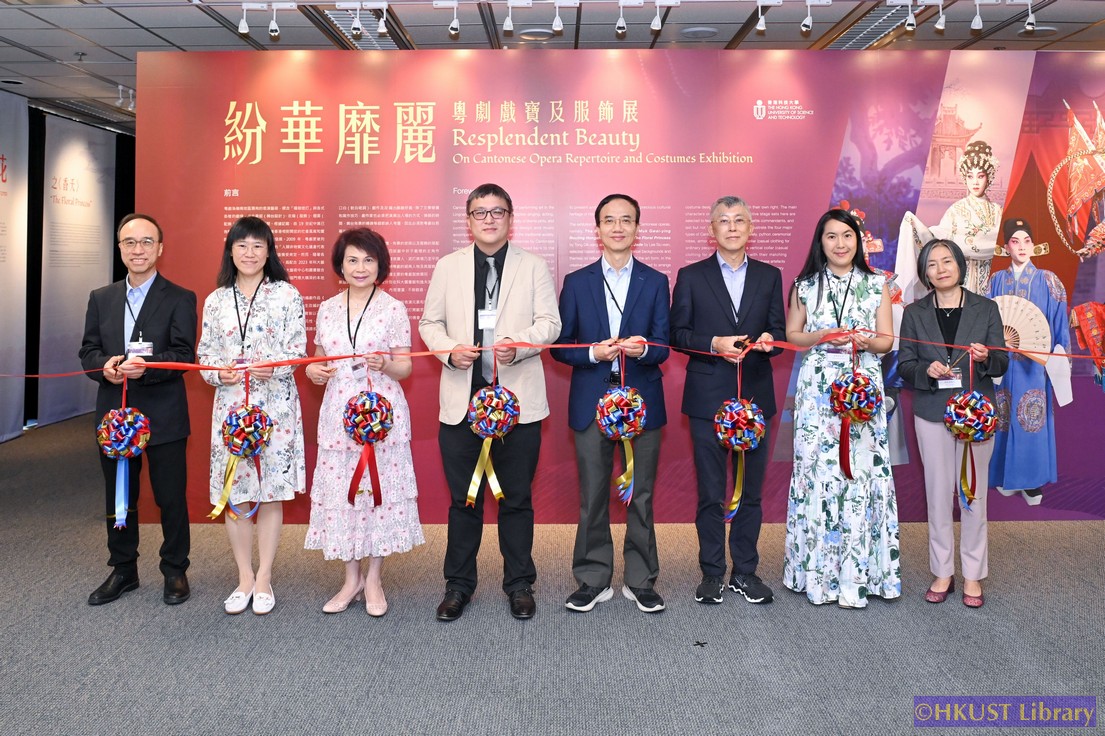
3:30 pm
Ceremony to be followed by a Singing Performance by Ms. Ling Yan and Mr. Boris Li
(Refreshments after Ceremony)
Ping Yuan and Kinmay W Tang Gallery
Guests:
Professor Martin LAU, Dean of Chinese Opera, the Hong Kong Academy for Performing Arts; Executive Chairman, Lam Kar Sing Foundation
Ms. LI Pui Yan, Deputy Director of Welfare Committee, the Chinese Artists Association of Hong Kong
Professor Jimmy FUNG, Associate Provost (Teaching and Learning), HKUST
Mr. Ernest CHAN, Associate Vice-President (Planning & Coordination), HKUST
Professor CHAN Sau Yan, Visiting Professor, Division of Humanities, HKUST
Dr. Gabi WONG, Director of Library Services, HKUST
Dr. Anna KWONG, Program Director, Shaw Auditorium Unit (Center for the Arts), HKUST
Mr. Thomas NG, Director, Media Technology & Publishing Center, HKUST
Ms. WONG Yee Man, Visiting Scholar, Division of Humanities, HKUST
Ms. Ling Yan, Professional Cantonese Opera Performer
Mr. Boris LI, Professional Cantonese Opera Performer
Ms. LAM Pui Ka Kali, Professional Cantonese Opera Performer
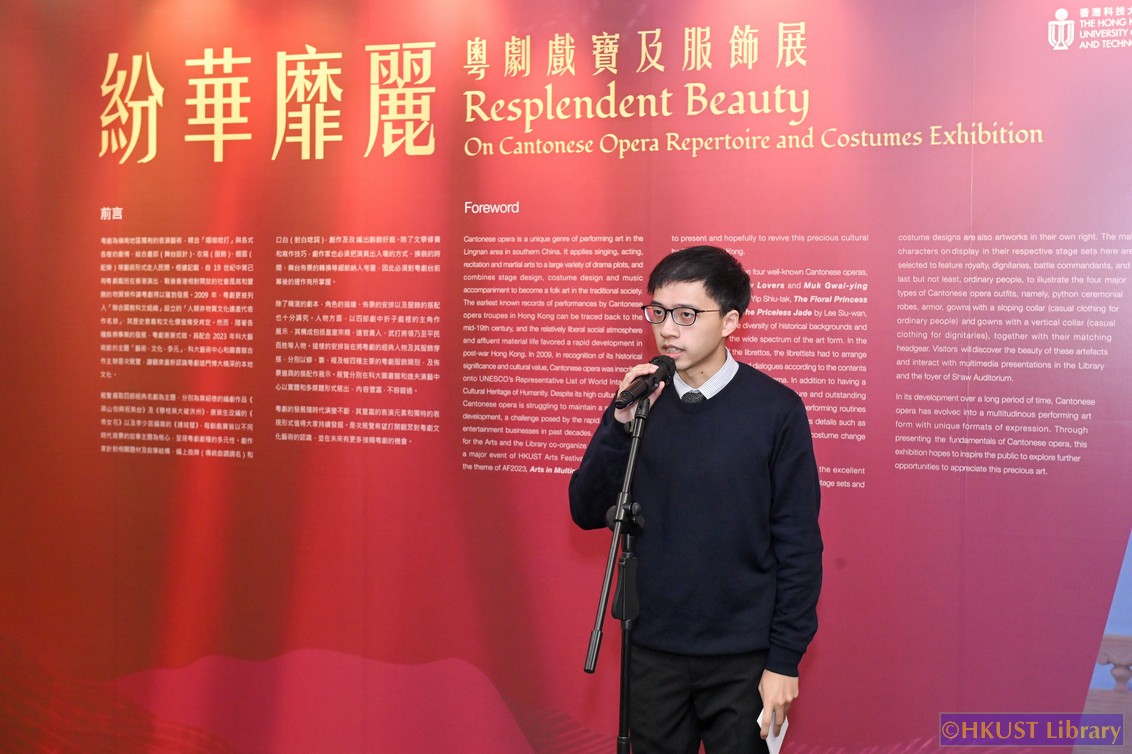
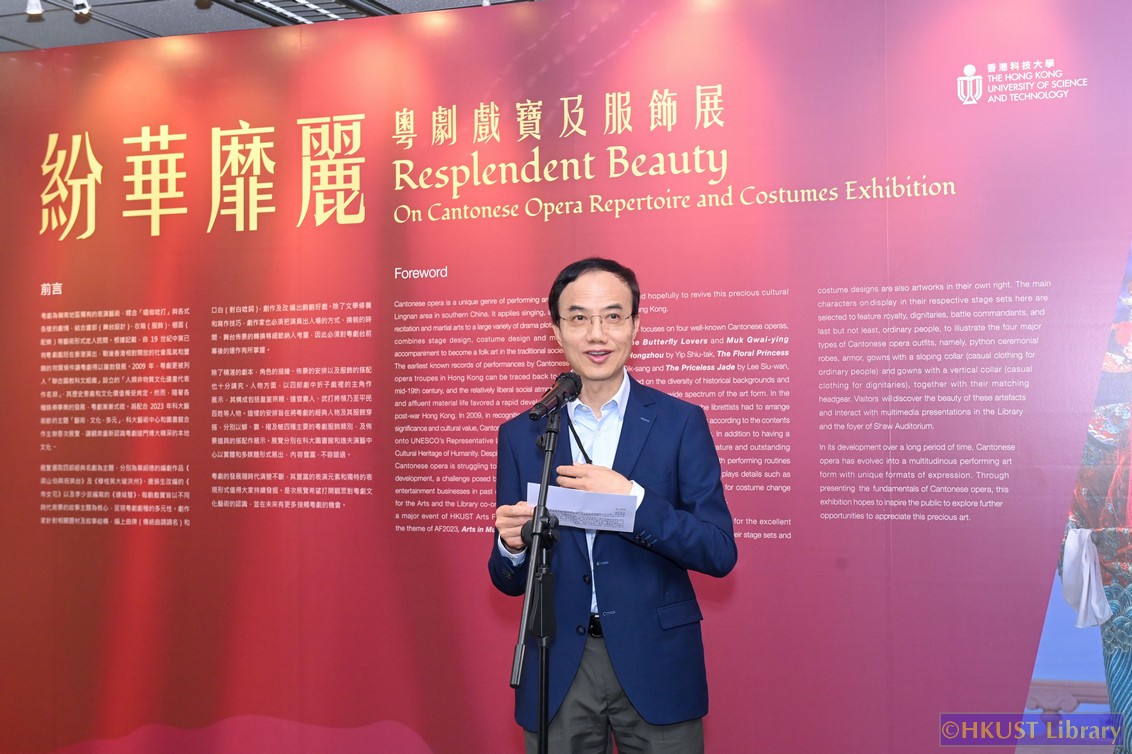
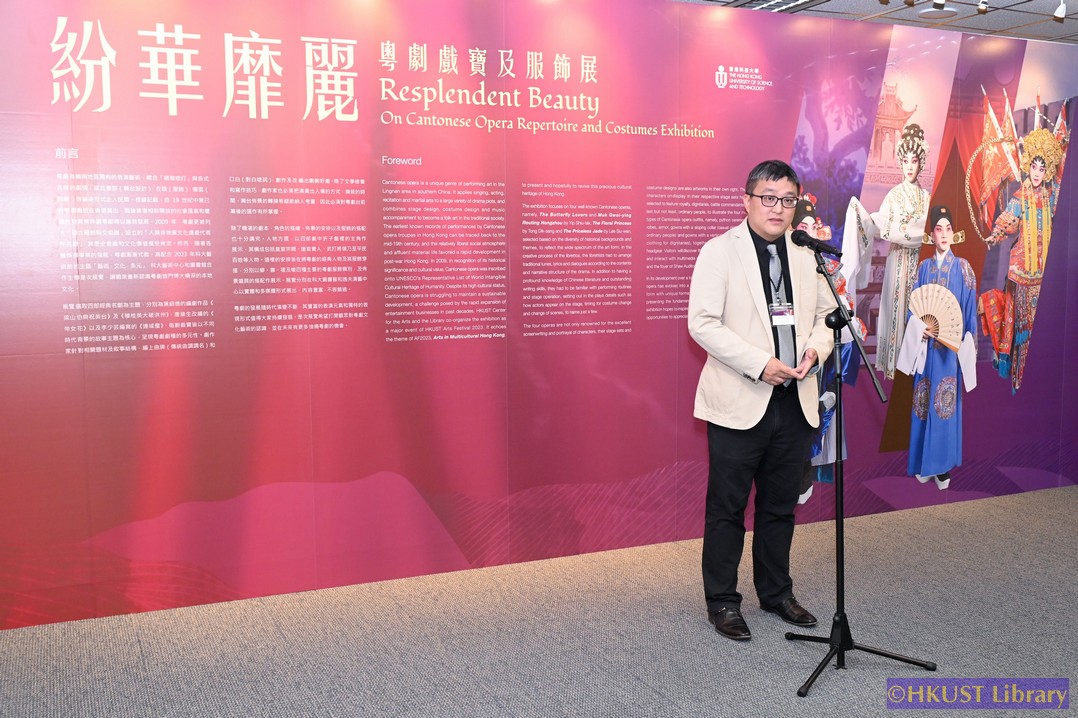
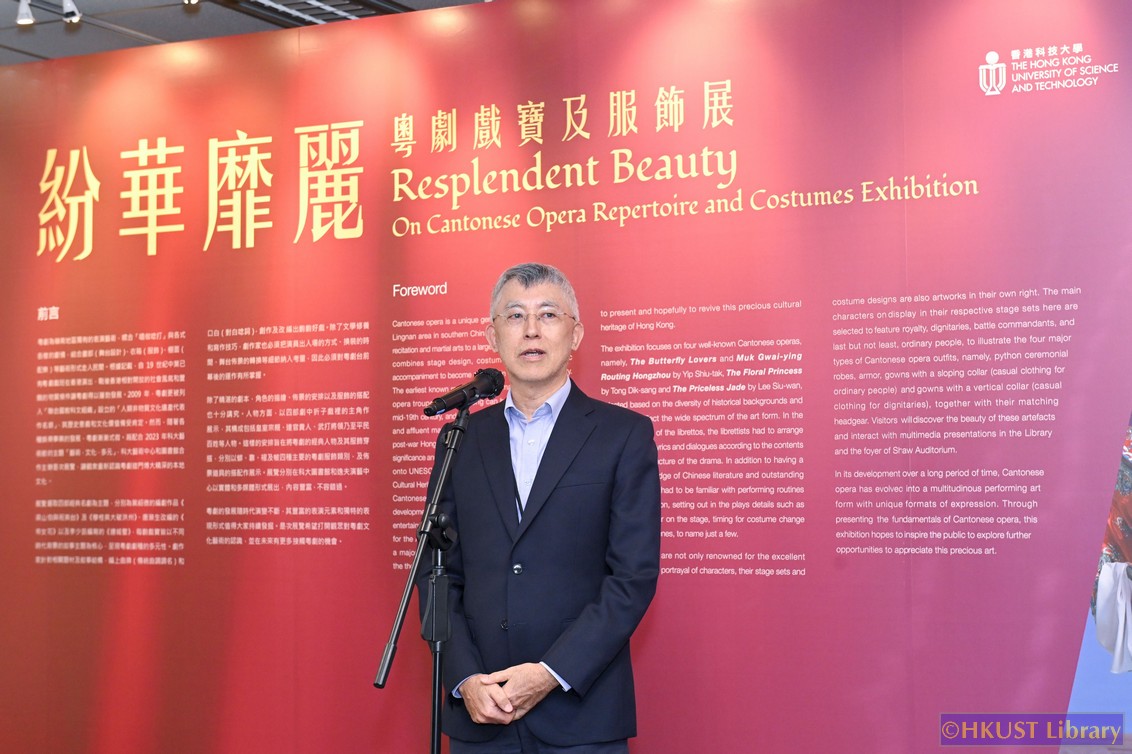
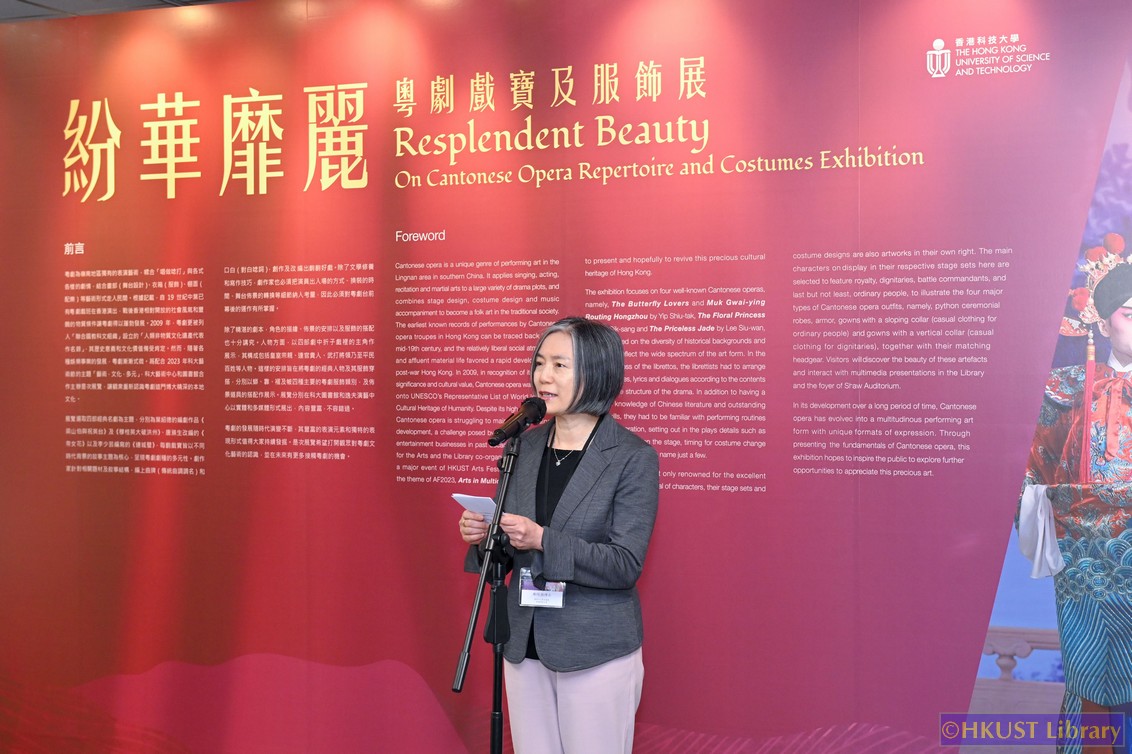
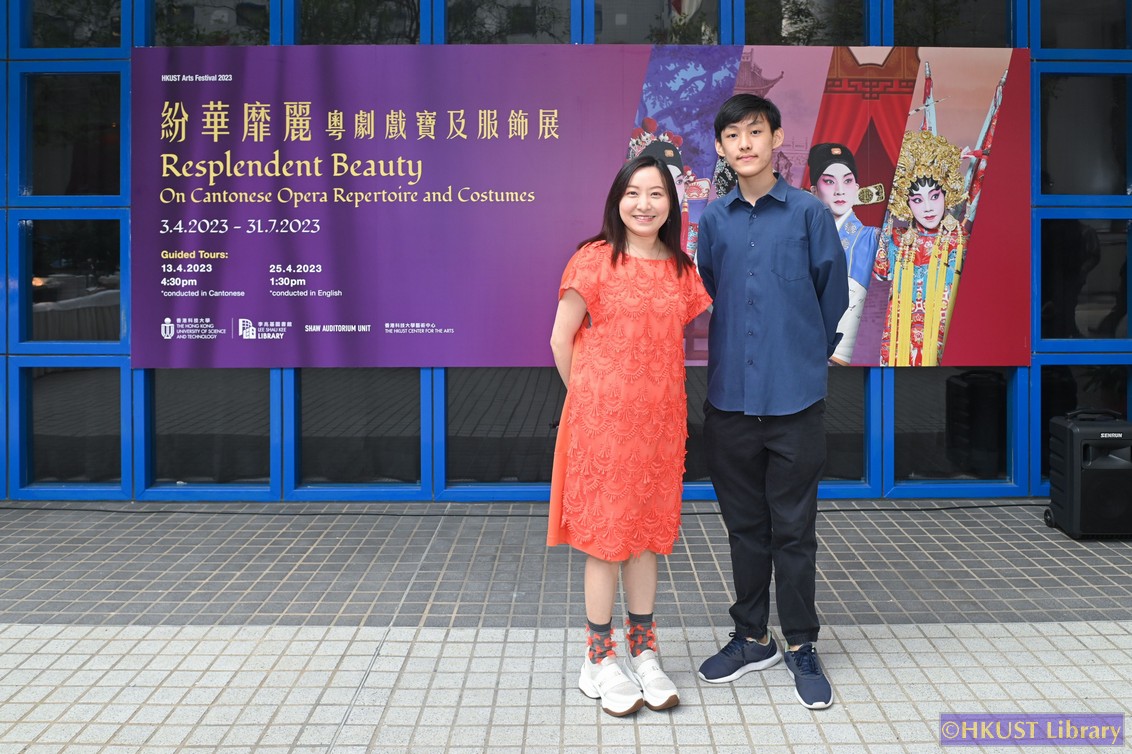
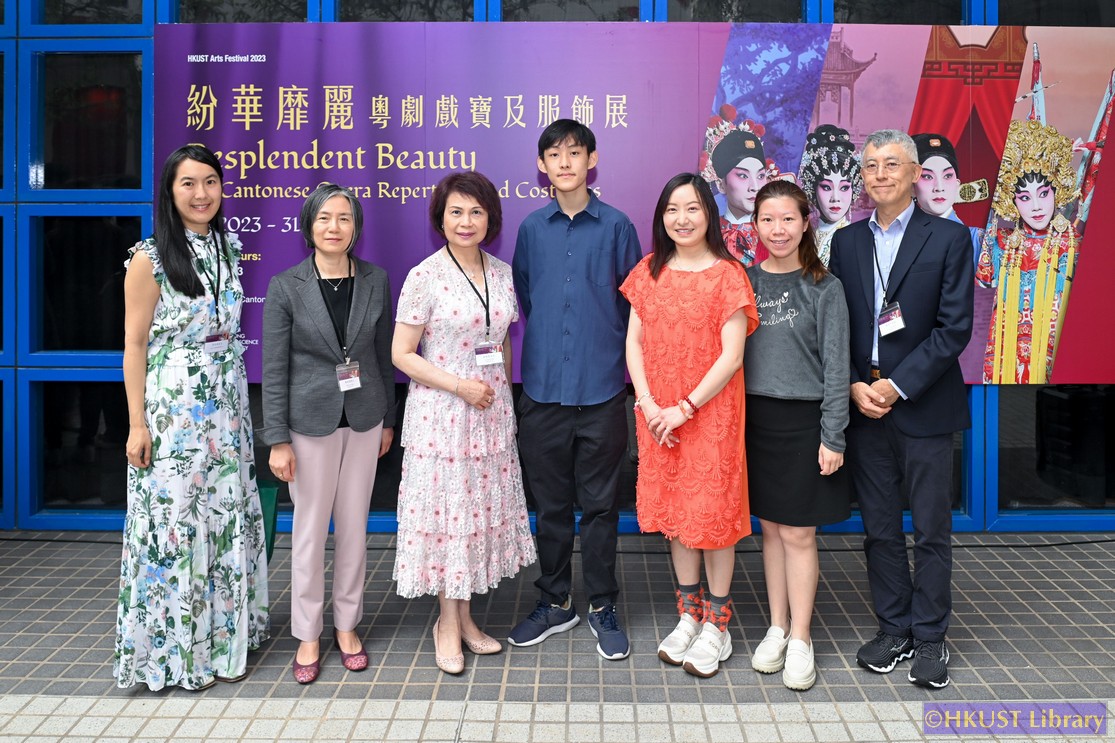
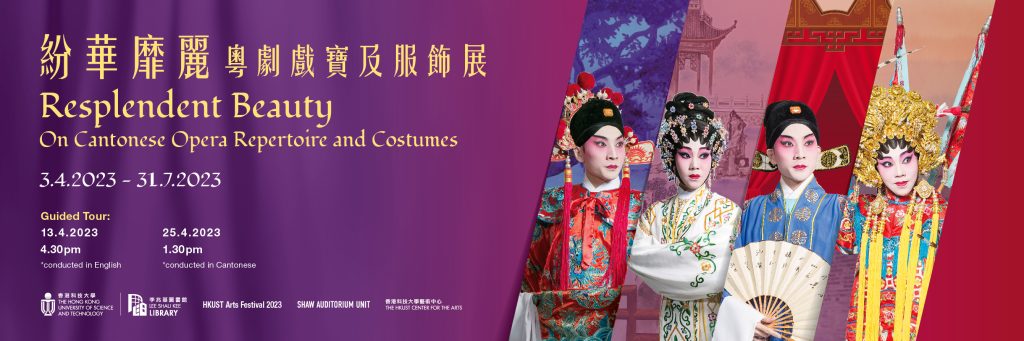
Dr. Anna Kwong will guide you through the tours to grasp the gallery highlights of the exhibition.
Each tour lasts for 30 minutes with limited quota on a first come, first served basis.
Guide Tour (Cantonese)
Date: April 13, 2023 (Thursday)
Time: 4:30 p.m.
Venue: HKUST Library Ping Yuan and Kinmay W Tang Gallery
Registration: Click here
Guided Tour (English)
Date: April 25, 2023 (Tuesday)
Time: 1:30 p.m.
Venue: HKUST Library Ping Yuan and Kinmay W Tang Gallery
Registration: Click here
Ping Yuan and Kinmay W Tang Gallery
Library’s Opening Hours
