


Foreword
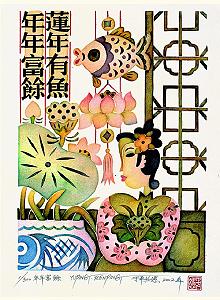
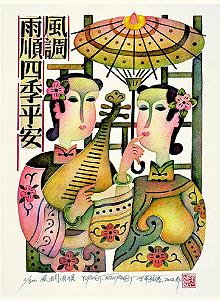
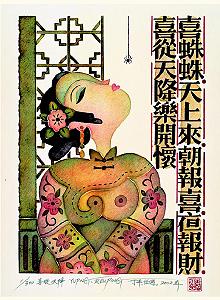
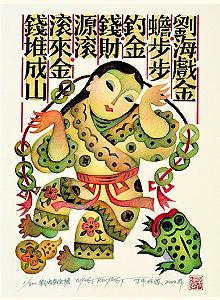
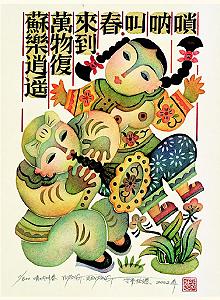
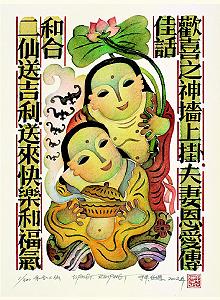
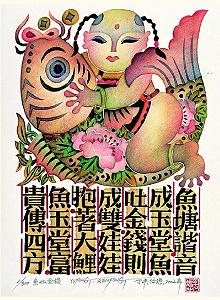
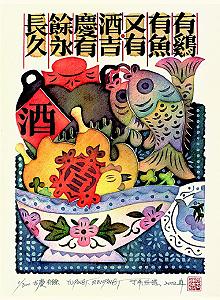
There is no better time to exhibit the paper-cuts and stencil prints of Yu Ping and Ren Ping than at the start of a new year: their artwork brims with the scent of spring, carrying nature’s message of renewal and growth.
I am most delighted to present to our readers this art catalog that encapsulates the colorful and deftly crafted world of these two artists. I hope that every time you look at this volume, it will
bring you joy and peace and the spirit to find goodness in life.
Min-min Chang
HKUST Library
Introduction
The art of paper-cutting originated in China during the Han (202 BC – 220 AD), gradually maturing and becoming more refined in the Southern and Northern Dynasties (420-589) and finally reached full blossom in the late Qing (1644-1911). To this day, you can see splendid displays of paper-cuts in many parts of the Chinese countryside. One could say that paper-cutting is the most popular, wide-spread, and regionally varied folk art in China.
Stencil printing uses a perforated board of non-absorbent material as a matrix (such as specially treated paper or, nowadays, plastic). Images are cut into the board and then printed directly on the receiving material, usually fabric. Several layers of color separation and stencil printing are used to press images onto the fabric, creating a colorful textile. While stencil printing has a long and popular tradition in the craft of dyeing and weaving, it is rarely used in the world of art prints.
Yu Ping and Ren Ping have been paper-cut artists for many years. With a strong foundation in traditional skills, they have experimented with many innovative and creative methods. Breaking the one-color and “continuous cutting” limitations, they boldly use multiple sheets of colored paper to cut the images and layer them into a single work. Using both knife and scissors, they find simple and natural designs for their artwork. While influenced by the colors of block prints and folk embroidery, they change the depths and tones to create more vivid images. In the three areas of shape, design, and color, Yu Ping and Ren Ping have elevated paper-cuts to a new level.
By chance Yu Ping and Ren Ping encountered the folk textiles of Jiaxiang, Shandong Province, where stencil printing is still a popular method for dyeing cloth to make fabric for clothes, curtains, table cloths, etc. The stencils are made by pasting four or five sheets of paper into a pile. An image is cut into the pile, which is then waxed and dipped in tung-tree oil. The best fabric for receiving stencil printing is hand-woven cotton.
Intrigued by the similarities between color paper-cutting and folk textile printing, they turned wholeheartedly to the creation of stencil prints. Their techniques derive from folk crafts, but modified and enhanced. On the foundation of folk arts, Yu Ping and Ren Ping create their unique artistic style, producing awe-inspiring new images for their viewers.
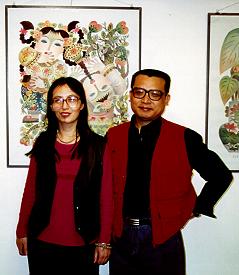
Mr. Yu Ping and Ms. Ren Ping were both born in 1962 in Shandong Province. Graduating from the Department of Decoration of the Shandong Institute of Light Industry, the couple taught at Yantai First Vocational School for many years. In 2001, they began their career as full-time artists.
Yu Ping and Ren Ping’s artworks have received many awards over the years: notably First Prize at the National Paper-cutting Grand Award Competition; First and Second Prize at the Folk Paper-cutting Grand Award Competition; First Prize at the National Elementary and High School Teachers’ Paintings Grand Competition; First Prize at the Century Paper-cut Retrospective Exhibition; and Gold Prize at the National Grand Exhibition of Folk Paper-cutting. Their works have been collected by the National Fine Arts Museum, the Capital Museum in Beijing, the Beijing Arts and Crafts Museum, and the Yantai Fine Arts Museum.
In recent years, the two artists have held exhibitions at the Beijing Arts and Crafts Museum, the Taiwan Provincial Art Museum, the Art Center of Taiwan Tsinghua University, and the Han Tang Yuefu Art Gallery in Taipei, Taiwan. They have published over 40 art catalogs.
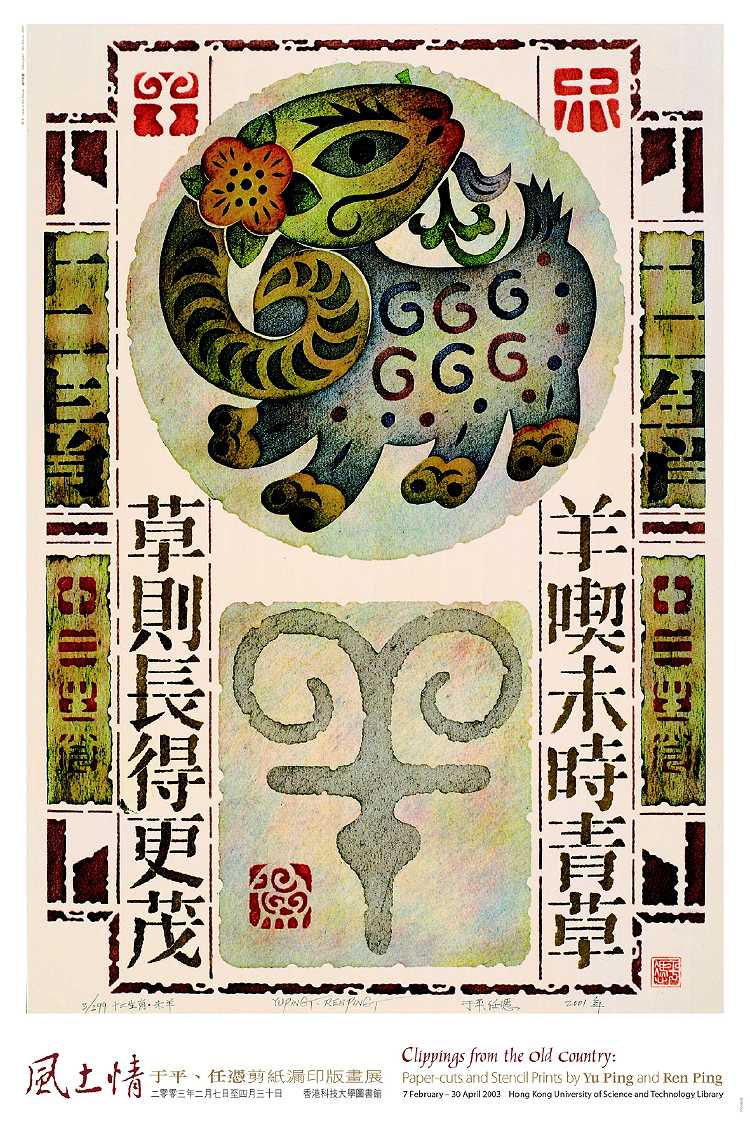
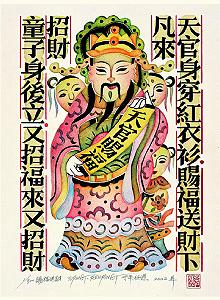
HKUST Library Exhibition Postcard Series, No. 7
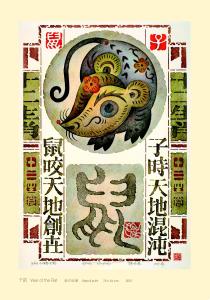
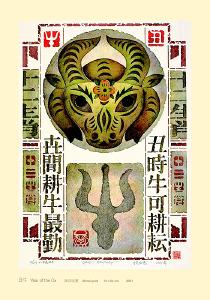
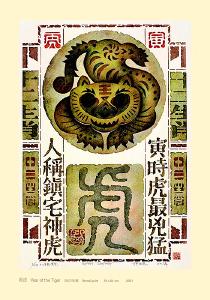
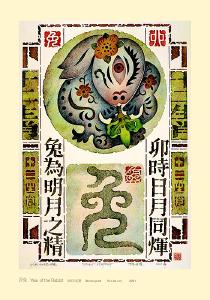
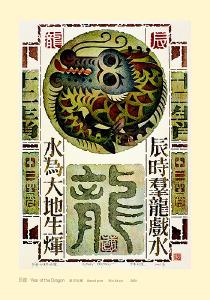
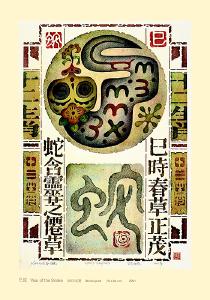
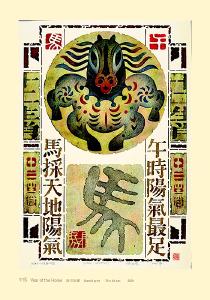
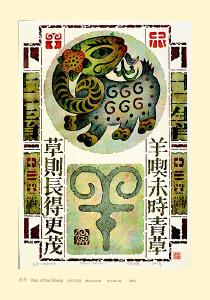
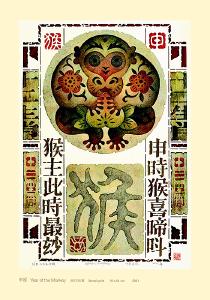
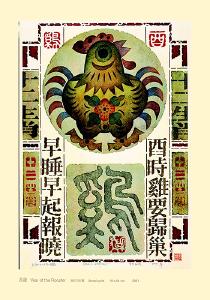
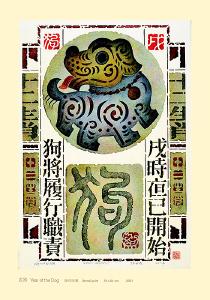
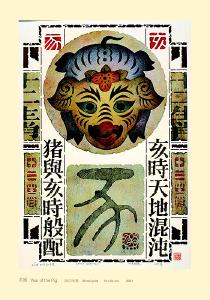
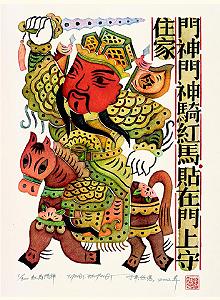
HKUST Library Exhibition Postcard Series, No. 8
Visitor Comments
(a selection from Guest Book)
Fantastic!
Great Work!
鬼斧神工。
Excellent!
Good!
Very good.
Great!!!!
So good!!!
好!
驚嘆!
Overlapping too much.
Awesome!
很欣賞用色 !作品表達很好,我很學習這技巧 !
色彩、線條俱佳。
Wonderful!
Good mix of color and lines!
Very attractive! But too artificial!
很好看!
真捧!
很可愛!
真漂亮。
風格獨特。
如入其景。
美妙。
具創意,有點子。
神手其技 , 鬼斧神工。
出神入化。
Very Nice.
Perfect! Impressive!
中西合壁。
改名恰當。
很特別,很細緻。
一流!
很特別,很喜歡!
好可愛,喜歡!
All are similar!
很美麗﹐真想擁有一幅。
好感人啊!!!鳴……
不錯 ﹐挺舒服 。
承先啟後﹐再創高峯。
Excellent! Wonderful color!
Soothing.
Relaxing.
Weird and funny.
繪畫細緻。
應多加宣傳﹐供諸同好!
Amazing. Excellent.
Very special!
Elegant!
在圖中運用良好平面設計語言 , 給合了水彩畫工和平面設計水準以上之作!強!
頗佳!尤其構圖簡潔的作品 , 異常出色!
我想要馬騮! 好想攞左佢地! 不如下次畫馬騮呀! 究竟什麼是漏印版畫呀?好靚呀!好有中國文化, 加上現代、古代、中西手法﹐好有待色呀! 我們都好鍾意呀!
很特別﹐很欣賞。
現代化更現代化–忘不了中國文化
好好好!
能帶出中國傳统﹐努力!
So nice.
用簡單線條及圖畫表達﹐good!
用唔同既圖畫構成美妙人像。
舒服!Good!
有趣!
好好笑!
好好玩。
好有趣。
很高興。
Funny.
好勁。
靚!
Interesting, 心曠神怡!
為你的成就高興。
很好看! 賞心悅目!
特別﹐目不暇给!
無面人﹐有特色!
畫中畫 , 妙 !顏色配 , 自然舒服 。
妙趣傳统風情。
白底的運用﹐有空間感!
很可愛!很美麗、很舒服!
非常美。
Great Art. Work impressive!!
Very well!
Lovely!
中華文化﹐源遠流長。
不俗!!
Perfect!
掂!
好得意!
希望可以再看到你的作品!!
用色好,落色都好。
構思好,巧,用筆細膩。”猎人與狗” 一畫中有些不妥,狗奔跑時的爪印應是前二個跟後個相距很短,而不是均勻的。
印賞你的Stretch point. 捕捉形態傳真。層次及顏色表達出色﹐非常傅真﹐有趣。
最愛鶴那一幅!
中國文化的精髓。
有不同Style, 佩服。
很想買一幅回家掛賞。
漂亮。
有中國風格。
清新!
My kids love them.
I like the animals and snow.
I like the words and color.
Modernization of traditional.
Very cute, peaceful and cheerful.
好靚﹐集合中西文化於一身。顏色配搭一絕。
Hard work and good work.
極具中國特色。
北方的冬天好似幾米既畫!好小朋友!
很有藝術感!
Uniquely good!
Beauty of life.
好看﹐美妙!
回味中國。
好開心﹐好睇。
十分欣賞對傳统民間藝術的創意。
雕功細緻﹐境況配合。
Impressive drawing.
Very good. 有意思!!有心思!!
活靈活現。
Special Posters.
I love them all!
簡單得又有中國的傳統﹐值得表揚的藝術。
令人耳目一新﹐回味無窮。
希望人生如此多彩多姿 ﹐美麗常駐。
好簡單的纸色﹐好深厚的情!
簡樸﹐繽紛。
能將傳統藝術以創新手法去延續﹐一種藝術的生命!
很特別﹐傳統韻味十足﹐有中國特色。
色彩形狀豐富。
將民間傳統藝術帶到另一個新領域。
宜古宜今。
簡單而不死板﹐令人看得舒服。
最愛動物係列圖。
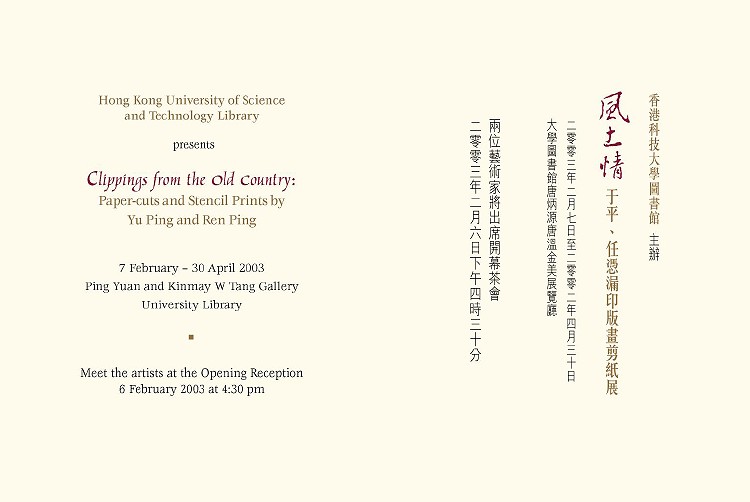
4:30 pm
Ping Yuan and Kinmay W Tang Gallery
Paper-cut Demonstration
Date: 6 February 2003
Time: 5:15 – 6:00 pm
Venue: Ping Yuan and Kinmay W Tang Gallery
Ping Yuan and Kinmay W Tang Gallery