


RDM Symposium 2021
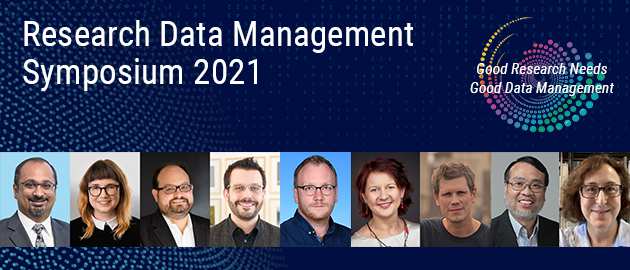
Your research data deserves your care! Research Data Management (RDM) is important for researchers as well as the university, because data is a valuable asset. Well-managed data can optimize it’s research value, re-usability and research reproducibility.
Good RDM requires new skills, supportive infrastructure, keen awareness and conducive culture. In this symposium, HKUST researchers will look into different aspects of RDM through four seminars, and learn practical skills in Data Management Plan writing from a workshop by Digital Curation Centre. The four seminars will cover:
- Research Data Integrity and Academic Publishing
- Research Data and Retraction
- Why Would You Care About Data Management?
- How to Manage Data: Data Stewardship and FAIR Skills
The seminars consist of speakers’ presentations as well as discussion sessions hosted by HKUST professors. This virtual symposium is organized by the Library. All HKUST staff and postgraduates are welcome to join. For enquiry, contact the Research Support Services team (lbrs@ust.hk).
Follow us on social media: #researchdataHKUST
Research Data Integrity and Academic Publishing October 4, 2021 3:00 pm - 4:30 pm |
Pulling Back the Curtain: Some (Anonymized, Deidentified) Reflections From a Former Editor-in-Chief (3:00pm - 3:25pm)
Abstract Integrity-related scandals hit the headlines with distressing regularity nowadays. The news breaks on social media and is inevitably followed by fanned flames of outrage. Retractions follow, if they do, much later. Sometimes, instead of a retraction, there is a corrigendum or an expression of concern. Sometimes the story dies away, only to be revived when the next scandal breaks and people wonder what happened to the previous one. In this talk, I share some first-hand experiences from five years as Editor, having to make “black and white decisions in areas of gray”. I hope to convey the importance of each decision one makes as a researcher, and how it may have consequences many years later. Open and Transparent: How Research Data Supports Research Integrity (3:25pm - 3:50pm), [PDF]
Abstract Researchers may have noticed increasingly stringent data sharing policies being implemented across journals and academic publishers – you may be asked to draft a data availability statement, deposit data into a repository, provide data for peer review, or even make data “FAIR.” But why are publishers enforcing these policies, and how are they connected to research integrity? Are there benefits for authors too? Using the F1000 Research publishing platform as a case study, we will explore what it means to publish in a maximally transparent way, and how it impacts you as an author. Panel Discussion (3:50pm - 4:30pm)
|
Research Data and Retraction October 5, 2021, 9:00 am - 10:00 am |
From Cancer to COVID-19, Does Science Self-Correct? (9:00am - 9:45am), [Video]
Abstract Rapid publication of results — particularly on preprint servers — has grown dramatically during the COVID-19 pandemic, and has forced researchers, health care professionals, journalists, and others to grapple with the concept of reliable and actionable information. The pandemic has given rise to nearly 150 retractions at the time of this writing. Is that cause for concern? My lens for this talk will be ten years of experience reporting on retractions for Retraction Watch, including creating the world’s most comprehensive database of retractions, with close to 30,000 and counting. Panel Discussion (9:45am - 10:00am)
|
Why Would You Care About Data Management? October 5, 2021, 5:00 pm - 6:30 pm |
Five Selfish Reasons to Work Reproducibly (5:00pm - 5:45pm), [Video]
Abstract In this talk, I present five reasons why working reproducibly pays off in the long run and is in the self-interest of every ambitious, career-oriented scientist. And so, my fellow scientists: ask not what you can do for reproducibility; ask what reproducibility can do for you! Panel Discussion (5:45pm - 6:30pm)
|
How to Manage Data: Data Stewardship and FAIR Skills October 13, 2021, 4:00 pm - 5:30 pm |
Becoming a Better Scientist with Open and Reproducible Research and Supporting the Scientist on this Journey (4:00pm - 4:45pm), [Video]
Abstract In this interactive talk Laurent Gatto and Marta Teperek will join forces to offer some concrete examples on improving research reproducibility and transparency. Laurent will speak from his own perspective as a researcher and will share some tips and tricks on how one can become a better scientist by applying open and reproducible research practices. Marta will speak from the perspective of a research institution and will offer several examples of how institutions can help researchers on the journey to make research more reproducible and more transparent. Various aspects including people, support, policies, training, rewards and community building will be covered in the talk. Panel Discussion (4:45pm - 5:30pm)
|
Data Management Plan Writing Workshops October 6 and 12, 2021, 4:00 pm - 7:00 pm |
Digital Curation Centre (DCC) is an internationally-recognized center of expertise in data management practices. Specialists from DCC are conducting two identical workshops online. Topics include:
[Video] Trainers
|
Acknowledgement
When organizing this event, we received very useful advice on programming from Ms. Sarah Jones and Dr. Marta Teperek. The Library would like to express heartfelt gratitude for their help.
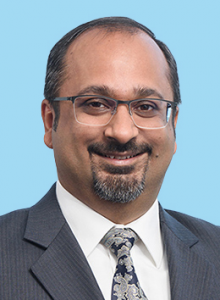
Anirban Mukhopadhya
Professor Anirban Mukhopadhyay assumed the role of Associate Provost (Teaching & Learning) at the Hong Kong University of Science and Technology (HKUST) on September 1, 2020. He joined HKUST in 2004 and is currently the Lifestyle International Professor of Business and Chair Professor of Marketing at the School of Business and Management.
Professor Mukhopadhyay is a consumer psychologist whose research examines the interplay between consumers’ lay beliefs, emotions, and self-regulatory decisions, with substantive interests including food-related decision making, field experimentation with policy implications, and the interplay of consumption and subjective wellbeing. He served as Editor-in-Chief of the Journal of Consumer Psychology (2018-2020), and has previously served as Co-Editor and Area Editor of the Journal of Consumer Psychology and Associate Editor at the Journal of Marketing Research. He is a past winner of the Early Career Award of the Society for Consumer Psychology and has been recognized as a Young Scholar and an MSI Scholar by the Marketing Science Institute.

Rebecca Grant
Dr. Rebecca Grant is Head of Data & Software Publishing at F1000. Her work in academic publishing has focused on the implementation of research data policies across journals and the development training and support for researchers to encourage best practices in data management and sharing. She has a background in data management for the humanities and social sciences, and was previously based at the Digital Repository of Ireland and the National Library of Ireland. She is a qualified Open Data trainer certified by the Open Data Institute. Her doctoral thesis explored the connections between archival theory and research data management practice, using Ireland as a case study.
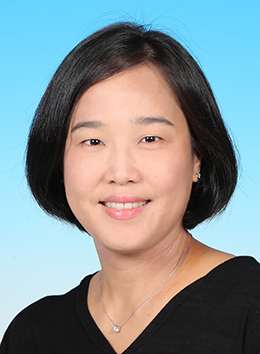
Jean Ji Yeon Hong
Jean Ji Yeon Hong is an Associate Professor at the Division of Social Science, Hong Kong University of Science and Technology. She obtained her Ph.D. degree in the Department of Politics at New York University. Professor Hong’s research interest centers on the political economy of authoritarian regimes, with particular attention to East Asia. She has various ongoing research projects related to resource-dependent economic development, the legacy of authoritarian past, and the long-term impact of political violence.
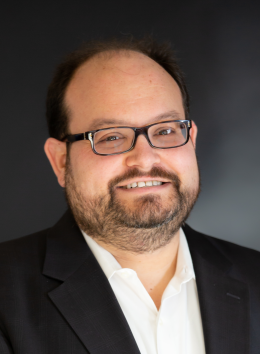
Ivan Oransky
Ivan Oransky, MD, is co-founder of Retraction Watch, editor in chief of Spectrum, and distinguished writer in residence at New York University’s Arthur Carter Journalism Institute. He also serves as president of the Association of Health Care Journalists. Ivan previously was vice president of editorial at Medscape, global editorial director of MedPage Today, executive editor of Reuters Health, and held editorial positions at Scientific American and The Scientist. A 2012 TEDMED speaker, he is the recipient of the 2015 John P. McGovern Medal for excellence in biomedical communication from the American Medical Writers Association, and in 2017 was awarded an honorary doctorate in civil laws from The University of the South (Sewanee). In 2019, the judges for the John Maddox Prize, which promotes those who stand up for science in the face of hostility, gave him a commendation for his work at Retraction Watch.

Victoria F. Caplan
Victoria F. Caplan is the Head of Information Instruction and Collection Services at the Hong Kong University of Science & Technology Library (since 2012). She joined HKUST Library in 1992 and since then has been highly involved in the library’s instruction and research services. In addition to teaching information literacy and research skills to both undergraduates and PGs, she serves on teams that develop the Library’s Institutional Repository, Scholarly Publication Database, and DataSpace. She particularly enjoys learning about and teaching students about scholarly publishing and sharing via formal and informal channels.

Florian Markowetz
Florian Markowetz is a Senior Group Leader at the Cancer Research UK Cambridge Institute. He is a Royal Society Wolfson Research Merit Award holder and received a CRUK Future Leader in Cancer Research prize. He holds degrees in Mathematics (Dipl. math.) and Philosophy (M.A.) from the University of Heidelberg and a Dr. rer. nat. (PhD equivalent) in Computational Biology from Free University Berlin, for which he was awarded an Otto-Hahn Medal by the Max Planck Society. His group at the CRUK Cambridge Institute combines computational work on cancer evolution and image analysis of the tumour tissue with experimental work on understanding key cancer mechanisms like the estrogen receptor.
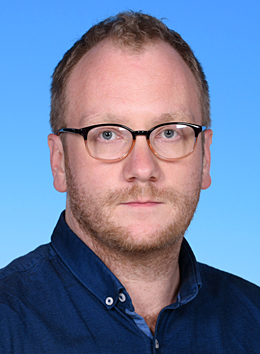
Stuart Gietel-Basten
Professor Stuart Gietel-Basten is Professor of Social Science and Public Policy. He is the Director of the university’s Center for Aging Science; and is Associate Dean (Research) of the School of Humanities and Social Sciences. Prior to joining HKUST in 2017, he was Associate Professor of Social Policy at the University of Oxford. He received his PhD in historical demography from the University of Cambridge in 2008.
Stuart’s research covers the interplay between changing population dynamics and public/social policy. His research is especially focused on (a) fertility transition; (b) conceptual approaches to ageing; (c) population policy. He is the co-ordinator of the GGS-Asia project, which seeks to run the Generations and Gender Survey in Asian settings – including Hong Kong.

Marta Teperek
Marta Teperek is Head of Research Data Services at TU Delft Library and Director of 4TU.ResearchData since June 2020. Between 2017 and 2020 she was the Data Stewardship Coordinator at TU Delft, where she built a team of disciplinary data stewards, providing data management support to researchers. Prior to joining TU Delft, Marta led the establishment and management of data support services at the University of Cambridge (2015-2017). Marta is a researcher by training and she completed her PhD in epigenetics and developmental biology at the University of Cambridge in 2014.
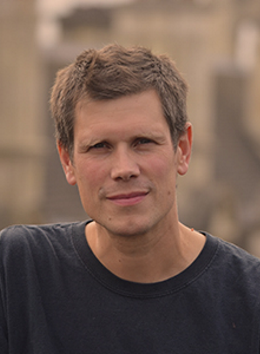
Laurent Gatto
Laurent Gatto is an Associate Professor of Bioinformatics at the de Duve Institute, UCLouvain, in Belgium. His research group focuses on the development and application of statistical learning for the analysis and comprehension of large scale biological data. The development and publication of scientific software is an integral part of his work, as reflected by his numerous contributions to the Bioconductor project. Laurent is an avid open research advocate, making his research outputs openly available. He is a Software Sustainability Institute fellow as well as a Data and Software Carpentry instructor.
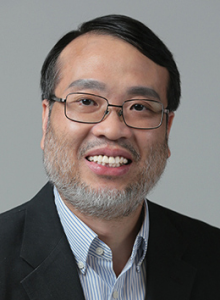
King L. Chow
King L. Chow is a Professor of Life Science and Biomedical Engineering at HKUST. He earned his PhD in Cell Biology from Baylor College of Medicine. He was a Belfer Fellow of Molecular Genetics at the Albert Einstein College of Medicine before joining HKUST upon his return to Hong Kong. He rose to the current rank in the following decade. His research work spans across a broad spectrum of biological sciences and interfaces with chemistry, physics, mathematics, engineering and clinical sciences through a number of intra- and inter-institutional collaborations. They cover areas like molecular and cell biology, genetics and genomics, developmental neurobiology, synthetic and evolutionary biology.
Joy Davidson
Joy Davidson is an information professional with more than 15 years of experience in securing, managing and delivering large-scale research projects relating to research data management and curation. Currently, she is Coordinator for the UK’s Digital Curation Centre – a research infrastructure that specialises in research data management planning, curation and facilitating Open Science. Joy currently co-leads WP3: Policy and Practice for the EC funded FAIRsFAIR project which aims to increase the production and use of FAIR data. She has been involved in reviews for two of the ESFRI roadmap updates and several H2020 research infrastructure funding programmes and was a member of the European Commission high-level expert group to assess ESFRI and OWCRIs towards implementation and long term sustainability.
Patricia Herterich
Patricia Herterich is a Research Data Specialist with the Digital Curation Centre and has extensive experience in working on large-scale multi partner projects on research data management and FAIR and open data (Horizon 2020 funded projects) and smaller collaborative projects on data science funded by the Alan Turing Institute, the UK’s national institute for data science and artificial intelligence. Her regular tasks include literature reviewing, carrying out interviews, focus groups and workshops, along with data analysis and writing up of findings in reports and other formats, such as academic publications, blogs, presentations and shorter posts for social media. As part of the FAIRsFAIR project, she is also providing support for selected repositories to achieve CoreTrustSeal certification. Patricia also has extensive expertise in organizing and hosting virtual events, such as training events and workshops. She is product managing DMPonline, a tool supporting the creation of Data Management Plans. She holds a MA in Library and Information Sciences from Humboldt-Universität zu Berlin (Germany).
Ryan O’Connor
Ryan O’Connor has an academic background in the humanities and social sciences. His undergraduate degree was completed at University College Cork, where he studied English literature and psychological sciences, before undertaking a master’s degree in modern English literature at the University of Edinburgh. Here, tying together the areas he studied during his undergraduate degree, Ryan’s research focused on reader and audience experiences of literature and drama.
Following graduation, he worked for a number of years at a media intelligence company in Edinburgh, where he was eventually responsible for the company’s media evaluation and analysis department. Ryan was involved in improving the department’s data curation and analysis procedures, while balancing this against the demands of a client facing role. Since joining the DCC in the summer of 2019, a large proportion of Ryan’s time has been focused on European Commission projects, including RDA Europe 4.0, FAIRsFAIR, and OpenAIRE Advance, while using his practical experience of data curation in the commercial sector to inform his input in the DCC’s training workshops and consultancy work.
Online via Zoom
English

