



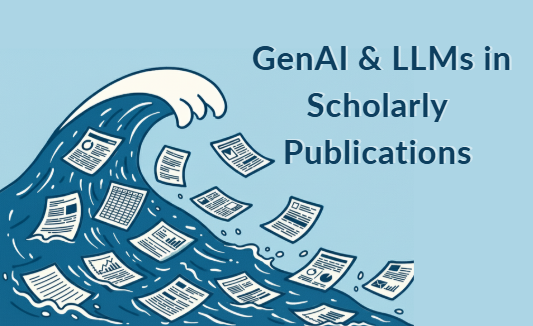
Late last week, arXiv updated its policy on posting review articles and position papers in the Computer Science category. Previously, such papers were accepted at the discretion of moderators.
Want to use AI for academic research with confidence? The HKUST Library’s “AI Tools for Academic Research” is a self-paced mini-course designed for busy students like you.
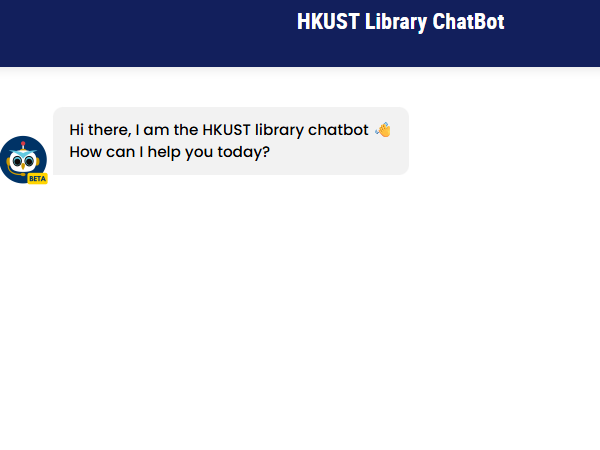
You may notice that starting from May 6, 2025, a little owl-like icon appears on our Library homepage. This is our new HKUST Library Chatbot (beta)! It is now on a two-month pilot program until the end of June. Developed through our DS CoLab initiative—where students team up with the Library staff to explore digital tools and AI applications—the chatbot uses ChatGPT technology to answer your general questions about library services.
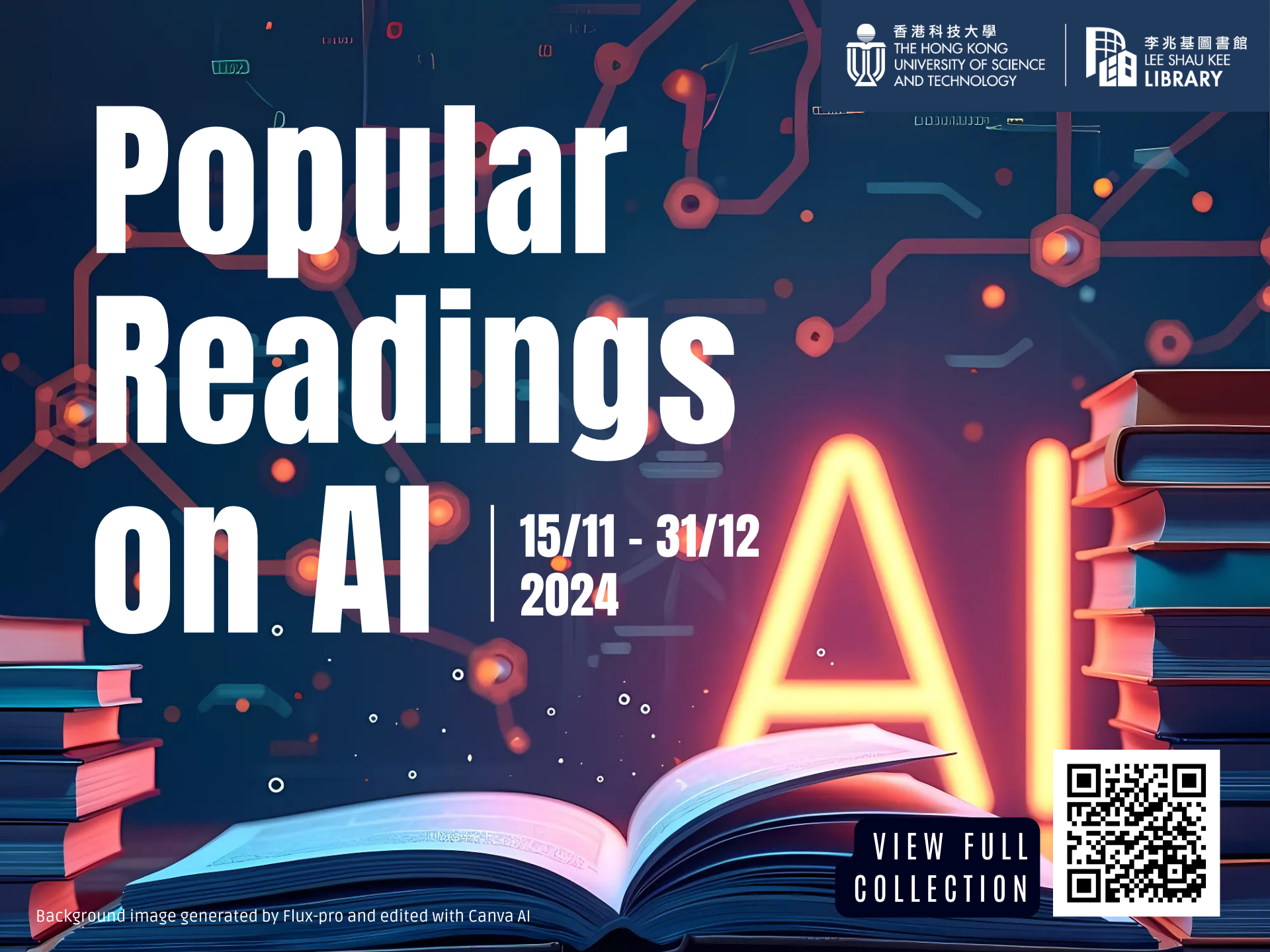
As ChatGPT celebrates its second birthday, we thought it was a good time to showcase our comprehensive collection of AI-related books that capture this transformative moment in history. Introducing our new book display: “Popular Readings on AI”—a curated selection of around 380 books, available in both print and e-format. From the latest in technology and education to the impact of AI on business, medicine and beyond, this collection is now on display at the G/F of the Library, ready for you to explore. Selecting the Books: A Fun Challenge Curating this display was both fun and challenging. We started with a giant list of over 6,000 AI-related books published after 2020, aiming to narrow it down to the best mix of popular, accessible, and informative reads—not too technical, not overly academic. As the subject librarian responsible for book selection, I spent quite some time digging into bestseller lists, reviews and recommendations from Amazon and other trusted sources. It wasn’t just about picking the top-rated books, but to represent a variety of perspectives and topics. Whether you are a tech newbie, a business leader, or interested in AI ethics, we wanted to make sure there’s something here for you. Setting Up the Display: A Team Effort Bringing this display to life was truly a collaborative effort, with colleagues from multiple teams in the library to make it happen. It all started with our Collection Development team, who compiled a comprehensive list of AI-related books from our collection for me to select the most relevant ones to feature.
As GenAI tools such as ChatGPT become increasingly integrated into academic work, the Library has seen a growing number of inquiries about their responsible use, particularly on copyright, licensing, and academic integrity.
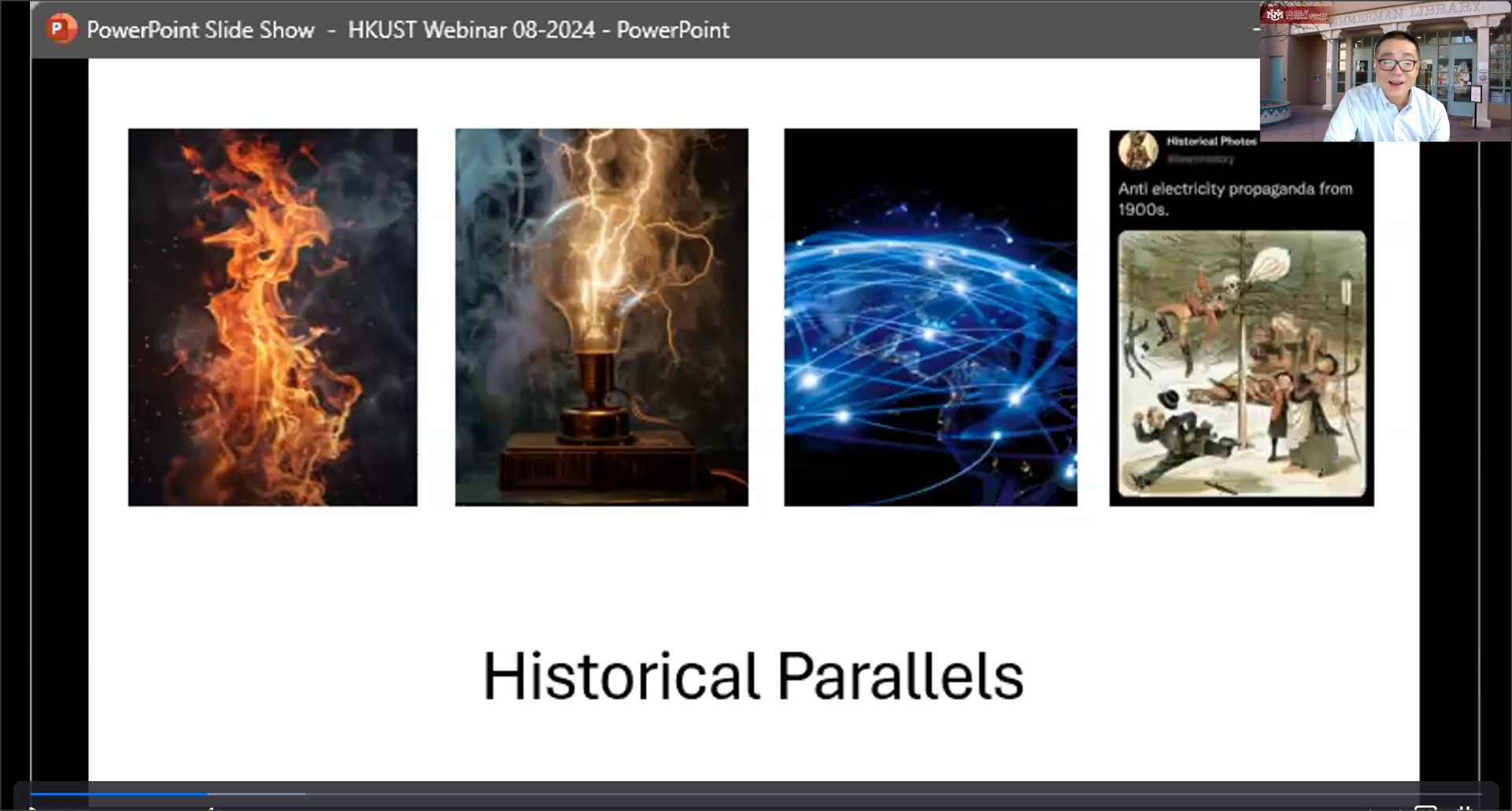
Just like you, we librarians are learning to use GenAI. But unlike you, we are interested not only in using the technology to lighten up our daily work. We are eager to watch how GenAI is changing teaching, learning, and research, and particularly, how students and scholars like you find and use information in this emerging technological environment. That’s why I invited Dr. Leo Lo from the University of New Mexico to give us this talk: "Empowering Educators through AI Literacy and Upskilling: Insights from the U.S. and UNM." Leo is actively working on AI literacy for librarians and speaks at numerous seminars and conferences about AI in higher education. You can view the recording of his webinar for HKUST. For me, one memorable point was his analogy projecting AI as a technological change akin to the leap from fire to electricity. Not only does electricity provide light and warmth, but it also turned out to be the foundation of almost all modern technologies. Leo mentioned how electricity enables new possibilities such as telecommunication and the internet.
Academic publishing is facing new challenges with the rise of generative AI tools. Retraction Watch, a platform that tracks paper retractions, has revealed a concerning trend: the emergence of papers potentially written by ChatGPT.
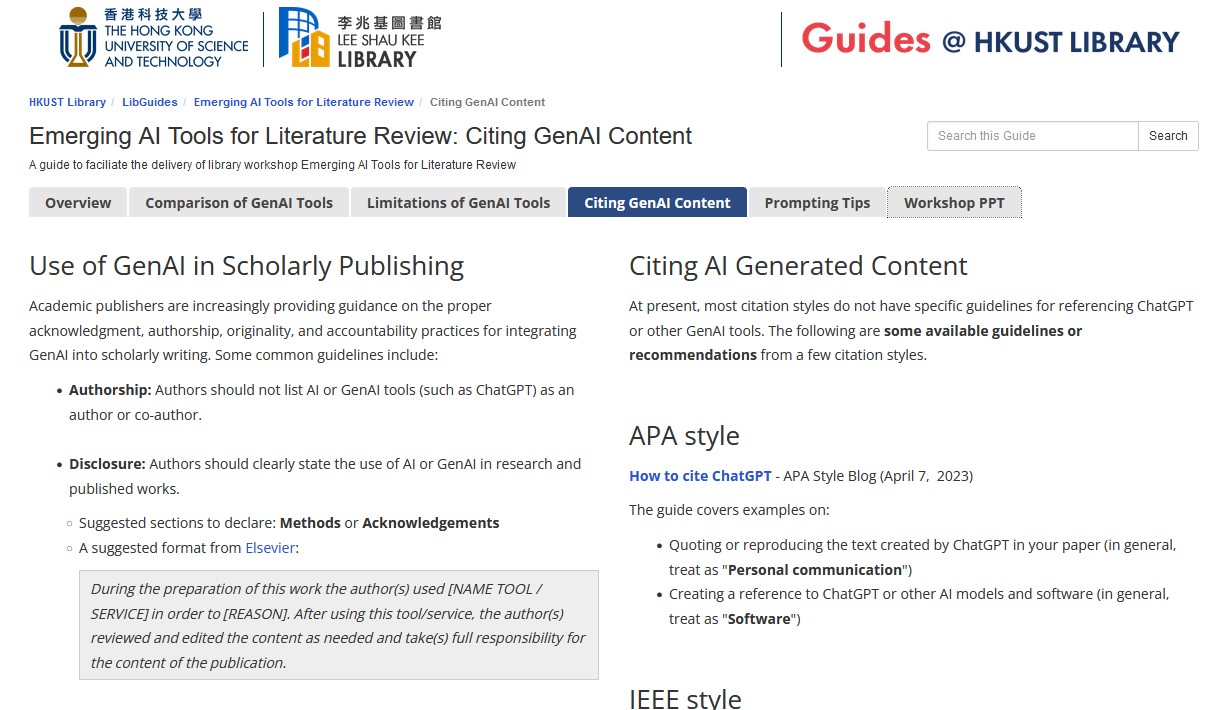
In the past year, using GenAI tools has become more common in universities. Everyone, from Year One undergraduates (beginning scholars) to advanced scholars, like professors are using it, or at least experimenting. One question many people have is: "How can I cite GenAI?" The answer is the dreaded, "Well, it depends....". What does it depend on? Rules set by your audience, whether it's a publisher you want to accept your article, or a professor who will assess your assignment. Will they accept GenAi material? How will they accept it (acknowledged, cited, as a co-author?) It can be a bit daunting, but don't worry. Librarians at HKUST provide workshops and library guides that can help. One guide was developed for a workshop for the Researchers Series, Emerging AI Tools for Literature Reviews: https://libguides.hkust.edu.hk/AI-tools-literature-review/cite-ai-content Another is in a general guide on referencing: https://libguides.hkust.edu.hk/referencing/citing-AI We also teach and share this in course-based library workshops and online modules like LANG 1403, LANG 1404, LANG 2010, LANG 2030, and LANG 2070. Do you want the library to create a workshop or a guide for your needs?
