





In a remarkable team effort, the University Archives recently completed installation of a memorial corner dedicated to our late founding president, Prof. Chia-Wei Woo. Did you know that it was Prof. Woo’s vision back in 1990 to establish a university archive for preserving historically significant materials relating to our university? This memorial corner could not showcase such valuable materials without his foresight and commitment to safeguarding our university's history. Within a week of announcing Prof. Woo's passing, our dedicated team collaborated to plan, design, prepare, and assemble a small display at the Library G/F Gallery to honor his memory. Our first step involved selecting items that best reflect Prof. Woo’s connection with the university and his visionary values. Among the treasures selected are three important letters from 1985 and 1987 that mark his appointment as founding president and the university’s founding years.
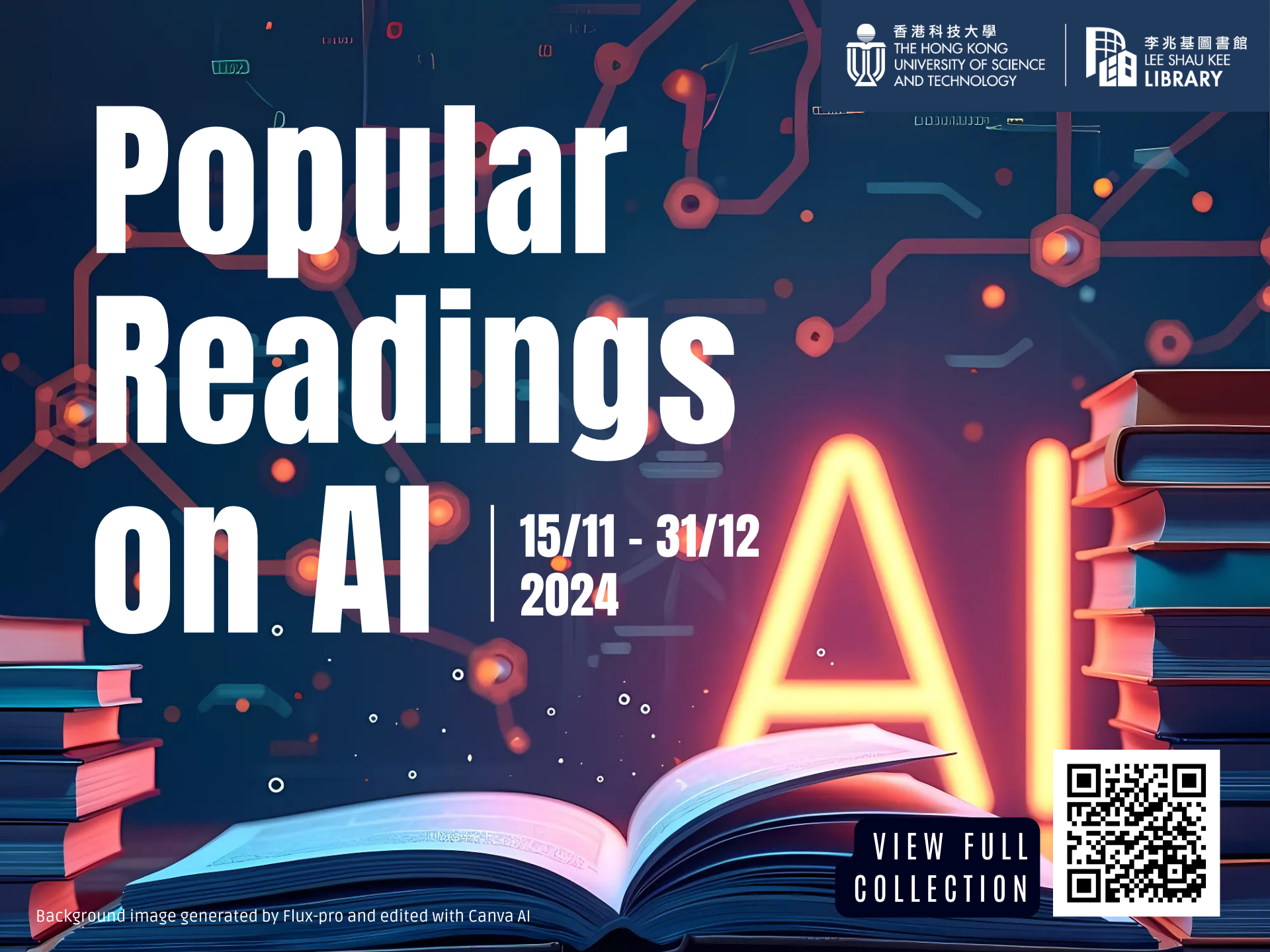
As ChatGPT celebrates its second birthday, we thought it was a good time to showcase our comprehensive collection of AI-related books that capture this transformative moment in history. Introducing our new book display: “Popular Readings on AI”—a curated selection of around 380 books, available in both print and e-format. From the latest in technology and education to the impact of AI on business, medicine and beyond, this collection is now on display at the G/F of the Library, ready for you to explore. Selecting the Books: A Fun Challenge Curating this display was both fun and challenging. We started with a giant list of over 6,000 AI-related books published after 2020, aiming to narrow it down to the best mix of popular, accessible, and informative reads—not too technical, not overly academic. As the subject librarian responsible for book selection, I spent quite some time digging into bestseller lists, reviews and recommendations from Amazon and other trusted sources. It wasn’t just about picking the top-rated books, but to represent a variety of perspectives and topics. Whether you are a tech newbie, a business leader, or interested in AI ethics, we wanted to make sure there’s something here for you. Setting Up the Display: A Team Effort Bringing this display to life was truly a collaborative effort, with colleagues from multiple teams in the library to make it happen. It all started with our Collection Development team, who compiled a comprehensive list of AI-related books from our collection for me to select the most relevant ones to feature.
Interested to know how many volumes of print books were added to the Library collection in the last academic year? Just 2,380 volumes. I say “just” because this is less than one tenth of the number of ebooks added within the same period. The Library has adopted e-preferred policy for some years, meaning we buy ebooks where possible. Where e-version is not available, we fall back on print. Let’s zoom into the 2,380 print volumes; half of them are Chinese language titles. For the other half, the majority are western titles that are only published in print, mainly from small publishers, or textbooks whose e-version can only be licensed to individuals for personal use or with very high subscription price. We also buy popular reading in print. We believe good thrillers or suspense novels, for instance, are compelling page turners, and people would enjoy having a paper book in hand. Do stop by the New Arrivals corner on Library G/F to check out our latest print books.
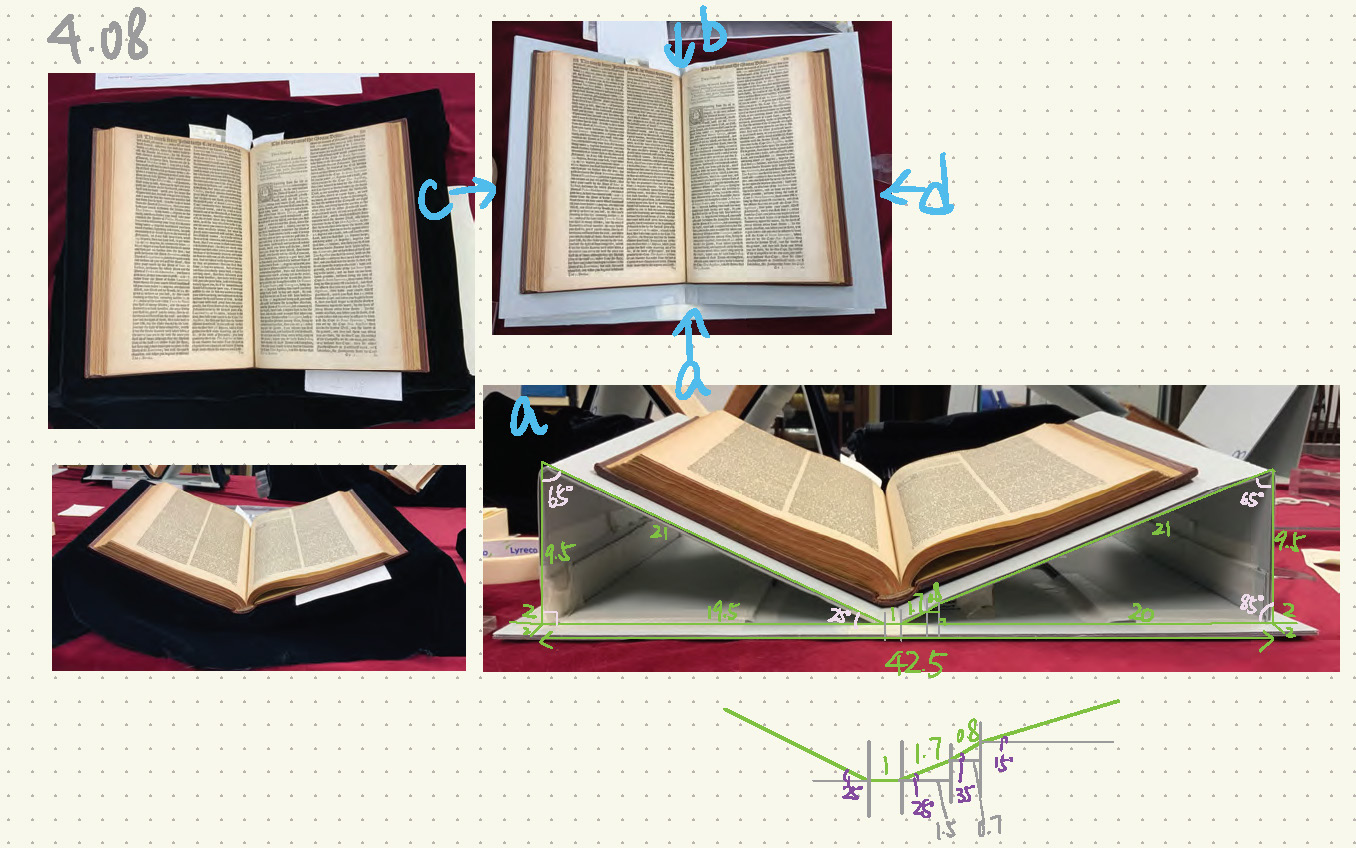
While visiting the map exhibition in the Library, you may not notice what is underneath the rare books on display. Guess what, it is more than just a stand! These rare books from our Special Collections have various ages; some older ones were published in the early 1600s, so they are almost 400 year old! To display them without hurting them is a huge challenge. Each book needs a custom-made support, called a cradle, that lets it stay open at the particular page and angle in the most comfortable way. In May 2023, library colleagues Fiona, Lu, and June worked together as the "cradle team" to tackle the challenge. For each book, they had to take these steps: 1. Determine the angle: they first had to figure out with the curators which page was to be shown; then they determined the best angle to let the book stay open. This was crucial to ensure that the book spine wouldn't be damaged while still allowing visitors to read the text and illustrations. 2.
