



Library Stories

Library Stories
Lots of people assume that if you're a librarian, or work in a library you must love to read. It's a stereotype and in my case a true one. :) I like to read and recommend stories, books, poems, plays and all sorts of things to others.This post is the first in what I hope will be a series on good reads. Ursula K. Le Guin (1929-2018) was an American novelist, essayist, poet and short-story writer. She first became well-known for her Wizard of Earthsea fantasy series, aimed at the young, but enjoyed by people of all ages. Her main genre was science fiction, but she also wrote fantasy, poetry, essays, and fiction set in the "real world" . One of the things I like about her books is how they explore human relations and societies in what to the reader are very unusual situations. To get a start with her work, let me recommend two nice ones that are short and easy entries into her writing. The Lathe of Heaven ( PS3562.E42 L3 2003). This short novel, first published in 1971 is set in a future Portland Oregon, beset by the problems of global warming and over-population. The main character, George Orr, has a problem: his dreams change reality in the waking world. If I tell you more, I'll be guilty of "spoiling". But I can say that the situation is fascinating and the writing is simple, yet poetic.
CollectionsPeople
Library Stories
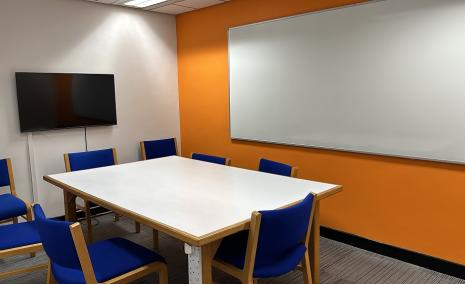
We are always looking for ways to enhance student study space, and sometimes we even manage to create more by repurposing space used by Library staff. So last term we were able to convert an office into another group study room – it's room 1-350 on 1/F This bookable study room can hold about 8 people, and has the usual table, white board, and large screen TV. I am looking at how to convert more staff spaces into study rooms for you in the future – wish me luck! Edward Spodick Associate Director of Library Services lbspodic@ust.hk
NewsStudy Space
Library Stories

Library Stories
LG5 Opening Now Scheduled for early March! When you come back for the Spring Term (or soon after), you will be able to enter the Library directly from LG5! We will have another study and event space at the far end of LG5, with a stairwell connecting to/from LG4. Or you can leave the Library there instead of going all the way back up to G/F – unless you need to check out a book. Edward Spodick Associate Director of Library Services lbspodic@ust.hk
BuildingNews
Library Stories
Library Stories
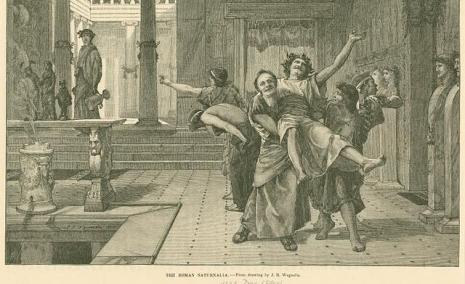
Winter solstice is the time of year when the pole is tilted furthest away from the sun. In the northern hemisphere (where Hong Kong is located) our winter solstice is in December. In 2023, it will be Friday, December 22nd. In many cultures this time of year, with the shortest days and longest nights, are a time of festivals and significance. Many celebrations have ancient roots and influences. 冬至 - (dung1 zi3 - Cantonese) | (dong1 zhi4 - Mandarin) Close to home: this is a straight forward festival, usually celebrated on the evening of the solstice. In Hong Kong, many businesses let staff out from work early to make it easier for them to gather with their family for a reunion meal. Often sweet dumplings called 湯圓 (tong1 jyun4-2 in Cantonese, tang1 yuan2) feature at the meal. There is a saying, ""冬大过年" - roughly translated as "Winter solstice is more important than New Year". The general reasons given are because for an agricultural people, solstice as the coldest and darkest part of the year made it more important, for example in this article 2021 article from the Zhejiang Daily "冬至了!为啥广东人说“冬大过年”?" and this 2022 one from HK01 "冬大過年!8項冬至習俗一定要知吃這些能添福招財帶旺桃花運". If you have trouble reading Chinese, try opening the articles in Chrome and use GoogleTranslate. ZHAO Rongguang states, "During the Tang and Song Dynasties, the winter solstice was regarded as important as the New Year. "*. Perhaps the influence of the Tang dynasty practices remained strong among the Cantonese? After all, the overseas settlements of ethnic Chinese were self-names as "唐人街".
News
Research Bridge

Research Bridge
In a collaborative effort to promote the linkability and citability of research data, STM, DataCite, and Crossref have released a joint statement on research data.
Research Data Management Tips
