



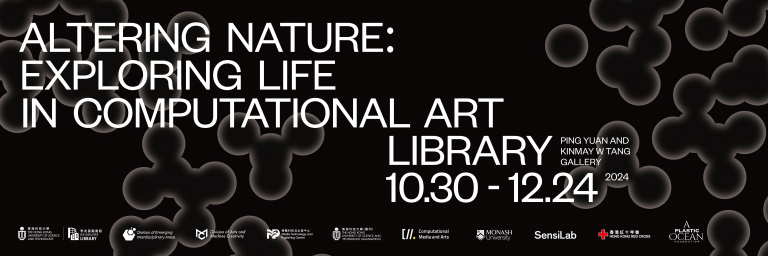
Altering Nature: Exploring Life in Computational Art 改變中的自然:在計算藝術中探索生命
Introduction
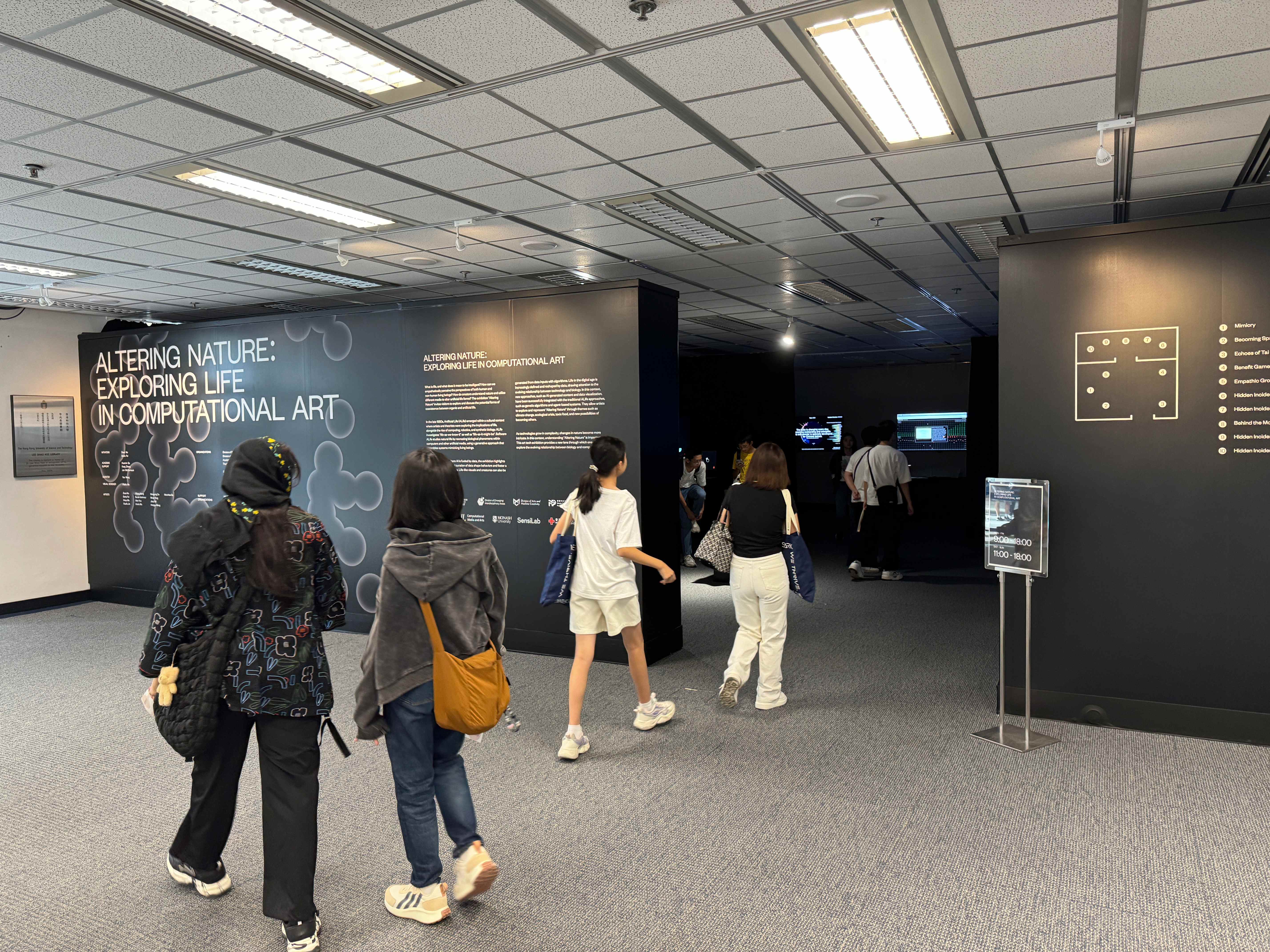
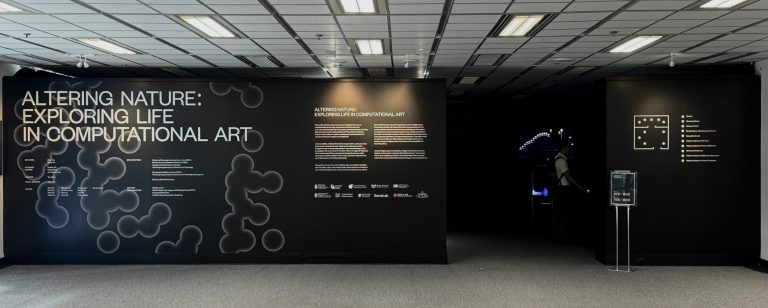
This exhibition is organized and funded by the Division of Emerging Interdisciplinary Areas (EMIA) and the Division of Arts and Machine Creativity (AMC) at HKUST, as well as the Computational Media and Arts (CMA) at HKUST (GZ). It offers new insights into the relationship between biology and computational art.
The participants are primarily PhD students and researchers from HKUST, HKUST (GZ), and Monash University, with academic support from Prof. Huamin Qu, Prof. Kang Zhang, and Prof. Jon McCormack. This exhibition is initiated by Ziwei Wu and Danlu Fei, with curator You Wang and designer Hanlu Ma, and features works by artists Ziwei Wu, Danlu Fei, Xinyu Ma, Xiaofu Jin, Yifang Wang, Burak Korkmaz, Wen You, Hanlu Ma, Mengying Du, Meng Yang, Jiagi Shi, Hengyu Meng, and Wanchao Su.
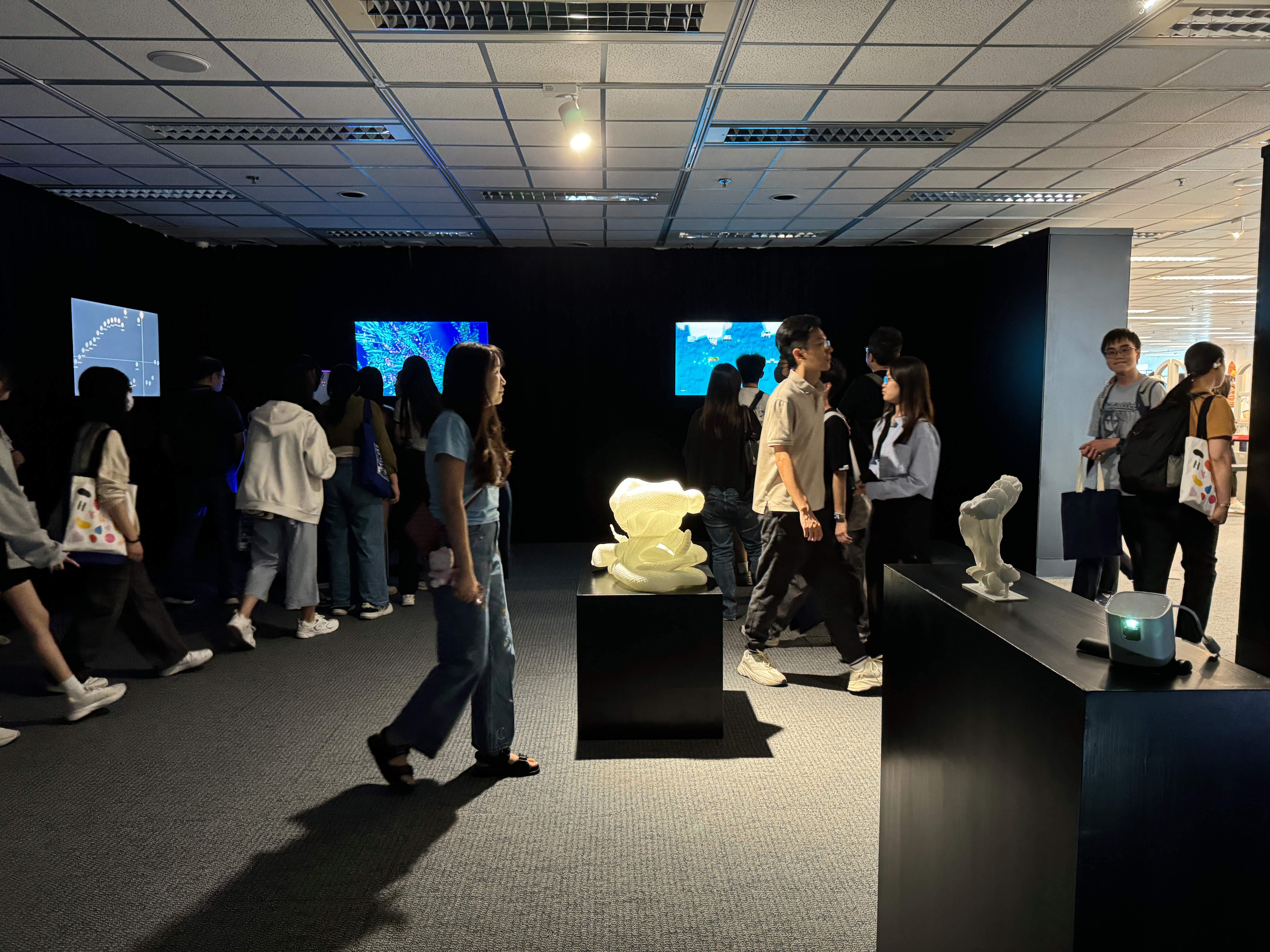
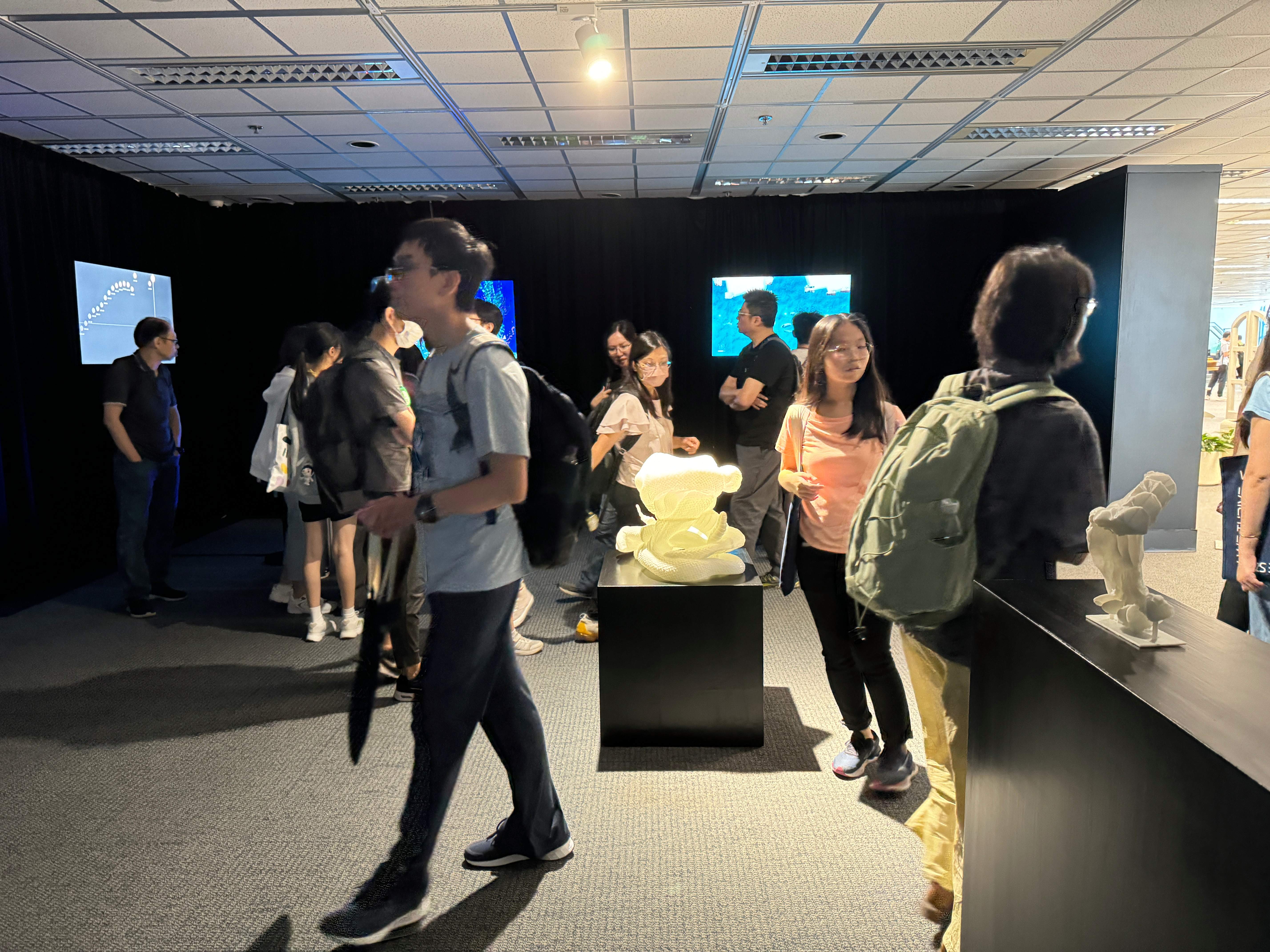
This exhibition features 10 artworks that combine cutting-edge approaches such as AI-generated content and data visualization with traditional artificial life (ALife) methods, including genetic algorithms and agent-based systems. Through diverse themes such as climate change, ecological crises, toxic food, and the possibilities of transformation and becoming “the other,” the artists explore and represent the concept of “Altering Nature.”
Foreword
What is life, and what does it mean to be intelligent? How can we empathetically perceive the perspectives of both human and non-human living beings? How do creators understand nature and utilize different media to alter artificial life forms? The exhibition “Altering Nature” invites visitors to explore and discuss the potential forms of coexistence between organic and artificial life.
In the late 1980s, Artificial Life (ALife) emerged within a cultural context where artists and theorists were exploring the implications of life, alongside the rise of computing, robotics, and synthetic biology. ALife investigates “life-as-we-know-it” as well as “life-as-it-might-be”. Software ALife studies natural life by recreating biological phenomena within computers and other artificial media, using a generative approach that assembles systems mimicking living beings.
Meanwhile, in an era where AI is fueled by data, the exhibition highlights how the quality, origin, and curation of data shape behaviors and foster a new understanding of nature. Life-like visuals and creatures can also be generated from data inputs with algorithms. Life in the digital age is increasingly defined and reshaped by data, drawing attention to the evolving relationship between technology and biology. For example, traditional ALife technologies, such as genetic algorithms and agent-based systems, alongside new technologies like AI-generated content and data visualization, allow artists to explore and represent “Altering Nature” through themes such as climate change, ecological crisis, toxic food, and new possibilities of becoming others.
As technologies grow in complexity, the changes in nature become more diverse and intricate. Understanding the “Altering Nature” is important. This art tech exhibition provides a new lens through which to consider the evolving relationship between technology and biological understanding through computational art.
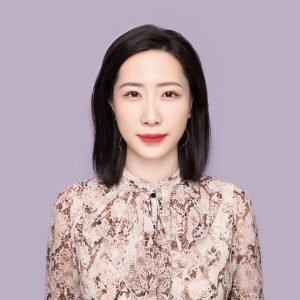
Ziwei WU
Ziwei Wu is a media artist and researcher born in 1996 in Shenzhen, China. She had an outstanding graduate bachelor’s degree from the China Academy of Art, School of Intermedia Art (SIMA), and a Master of Fine Art with distinction in Goldsmiths, the University of London in Computational Arts. She is a Ph.D. candidate in the Academy of Interdisciplinary Studies, majoring in Computational Media and Arts (CMA) at the Hong Kong University of Science and Technology.
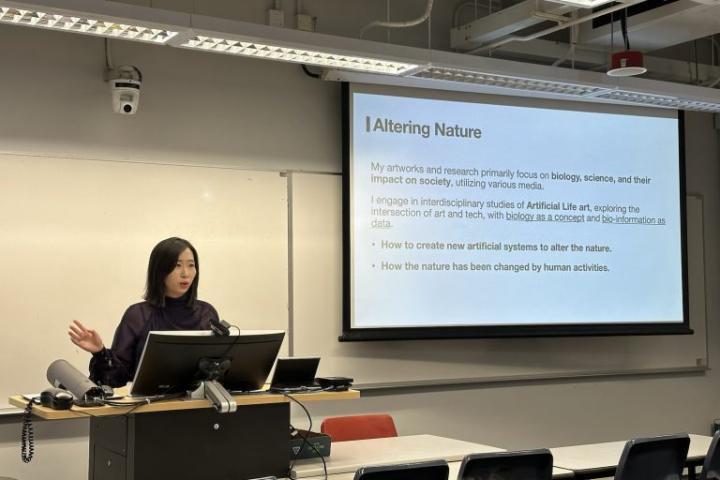
Her artworks and research primarily focus on biology, science, and their impact on society, utilizing various media. She engages in interdisciplinary studies of Artificial Life Art, exploring the intersection of art and research with biology as concepts, bio information as data, and biomaterial as the medium.
She is a Lumen prize; Batsford prize winner, and Longlist in Information is Beautiful Award. Her research was published in the SIGGRAPH Art Program, ISEA, and Artificial Life Journal in MIT Press. She has exhibited at international venues, including Ars Electronica in Linz, CYFEST in Saint Petersburg, ACMI in Australia, Norwegian BioArt Arena (NOBA), Watermans Gallery and Cello Factory in London, NeurIPS AI Art Gallery, Run Run Shaw Creative Media Centre in Hong Kong, and so on.
Danlu FEI
Danlu Fei is a game developer and researcher born in 1999 in Jiangsu, China. She owns a bachelor degree in Computer Science – Computer game from McGill University. She worked as a gameplay programmer intern at several well-known game companies, including Ubisoft, Behaviour Interactive, and Netease.
She is pursuing her Ph.D degree in Computational Media and Arts (CMA) at the Hong Kong University of Science and Technology.
Danlu’s primary research focuses on exploring the potential applications of AI technology in game development. This encompasses the application of AI technology to game agents and AI-based procedural content generation. Simultaneously, Danlu is interested in developing AI games across diverse themes, including artificial life, education, cultural heritage, etc.
Her research has been published in CHI Play and ISEA, and exhibited at international venues such as Ars Electronica, ACMI.
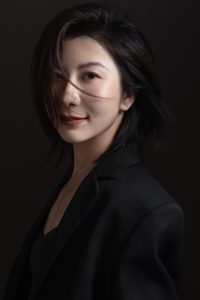
You WANG
She is a PhD candidate in Computational Media and Art at HKUST(GZ), having graduated from the Beijing Film Academy with a bachelor’s degree. Her earlier installations and visual works have garnered prestigious accolades such as the IDA Digital Art Award Academy Award Finalist (2006) and the Yokohama New Media Art Video Festival Nomination Award (2006 \2007). In 2020, she clinched the Hyundai Blue Prize China Young Curator Award for her cutting-edge research in space art and distinctive curatorial achievements.
Her research focuses on the translation of cosmic information to explore more avenues for communication between humanity and the universe. This work bridges modern human technology and spirituality through art, providing insights for the development of human technology. The translational methods and theories she has explored intersect with theoretical physics, astronomy, biology, linguistics, cognitive neuroscience, computer science, energy science, and other fields. The artistic forms she presents include technology art, film, art exhibitions, and festivals.
Hanlu MA
Ma Hanlu is an information designer and researcher, born in 1998 in Qingdao, China. She holds a bachelor’s degree with honors from the Academy of Arts & Design at Tsinghua University and has obtained MFA and MSc degrees from Tsinghua University and Politecnico di Milano. Currently, she is a PhD student at the Interdisciplinary Research Institute of Hong Kong University of Science and Technology and a member of VisLab.
Her research primarily focuses on the role of data in social communication and personal life, including the use of narrative visualization as a digital artifact to improve information imbalance, and creating reflective designs based on personal informatics. Her work has been recognized with awards such as Information is Beautiful, GDC Awards, and Golden Pin Awards, and has been exhibited at venues including the Palace Museum (China) and ADI Design Museum (Italy).
Xinyu MA
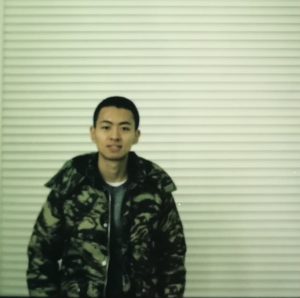
Xinyu Ma (b. 1993) currently lives and works between Shenzhen and Hangzhou.
He received his BFA in Sculpture from China Academy of Art and MFA in Fine Art from Goldsmiths, University of London. He is currently pursuing his PhD in Computational Media and Arts at The Hong Kong University of Science and Technology (Guangzhou).
His practice examines individual participation within public spaces and social systems, observing how technology transforms personal identity in public engagement, and exploring the dialogues between individual fiction and collective memory. His current research focuses on the ludic participation of individuals as “players” through various forms of playing in today’s fragmented daily life. His practice encompasses participation, installation, sculpture, moving images, and fictional writing.
Mimicry
Acknowledgment: Lingdong Huang
Year: 2024
Materials: Flowers, Cameras, Screens, Raspberry Pi, Generative Adversarial Network
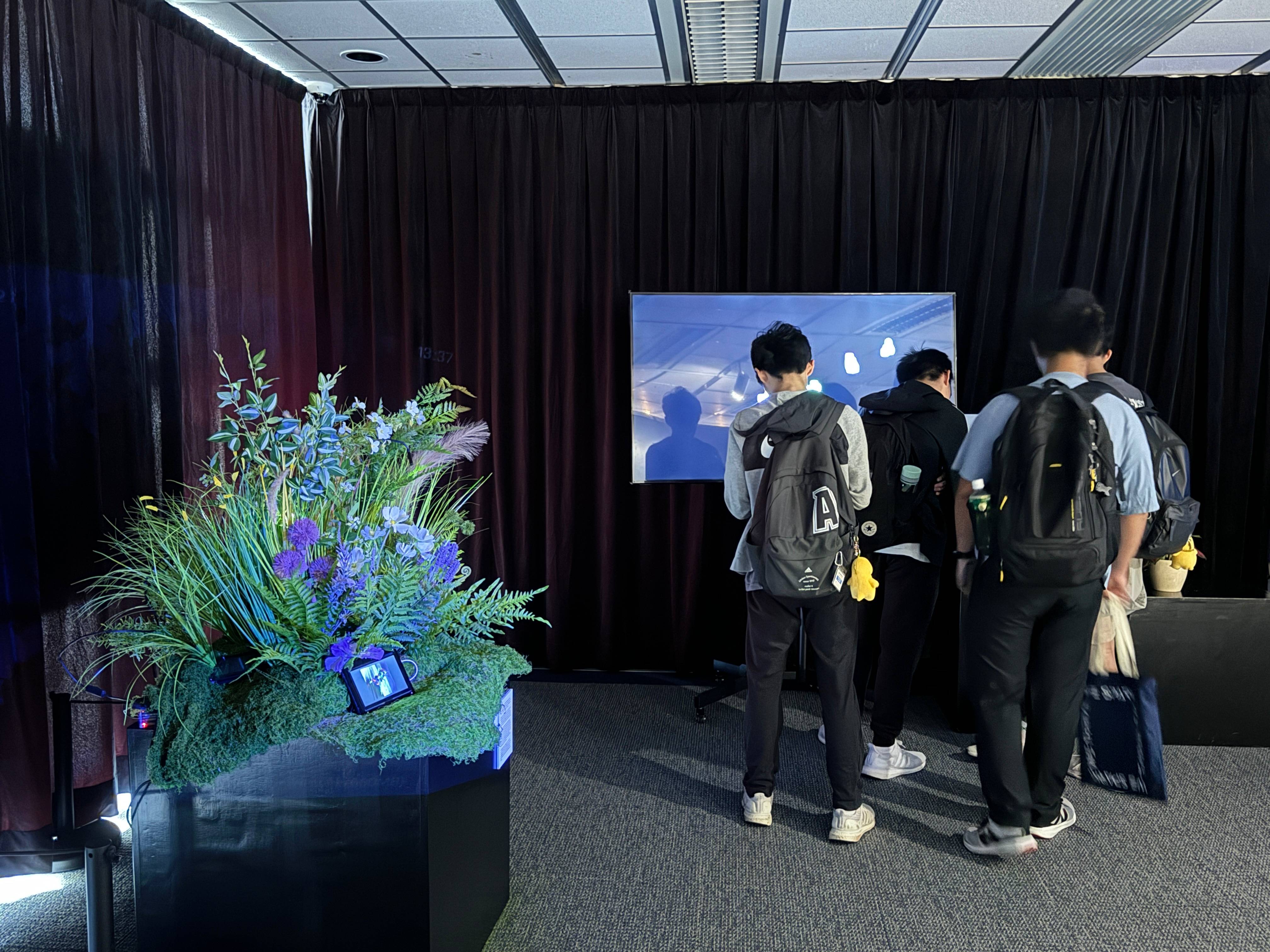
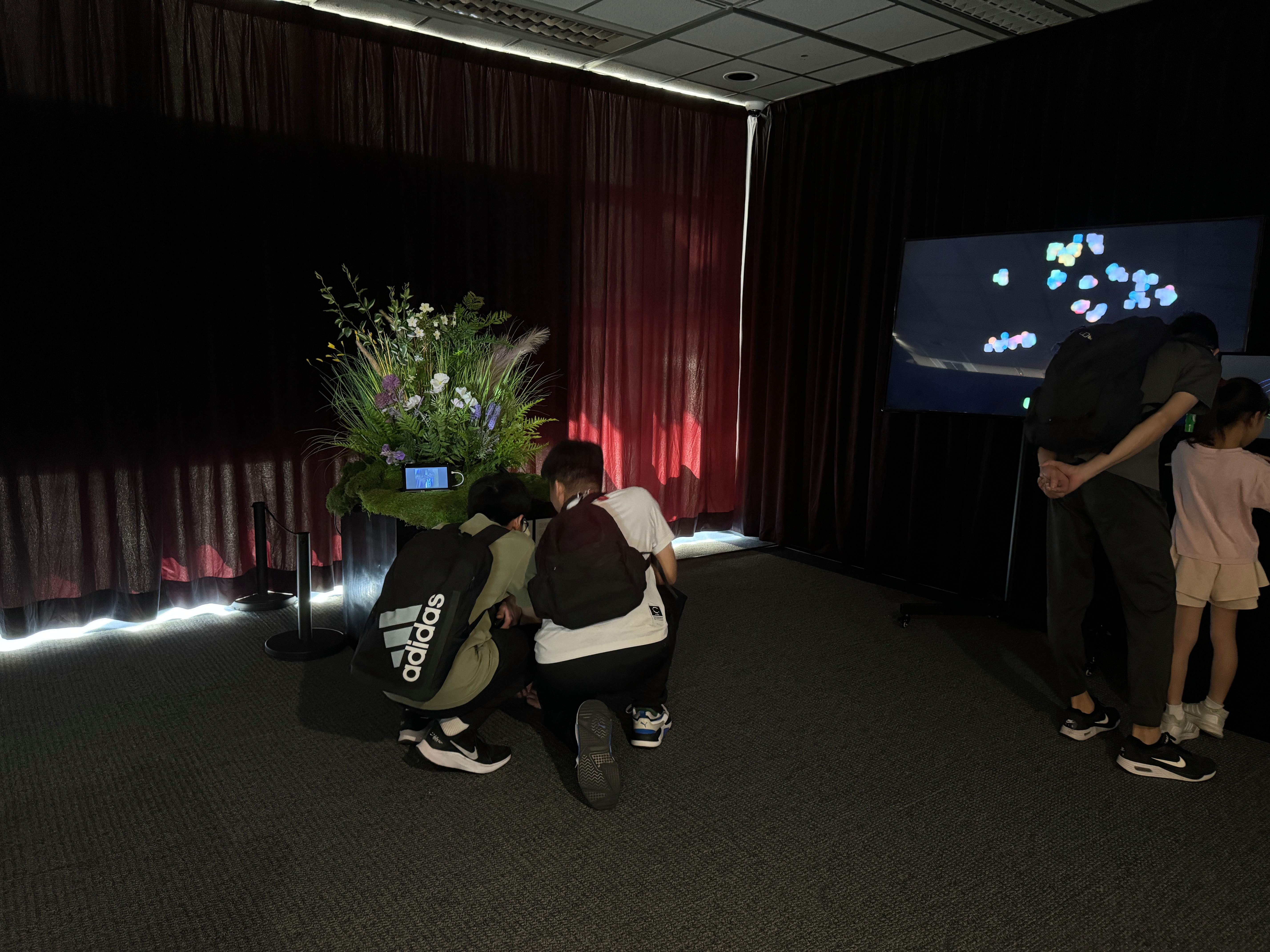
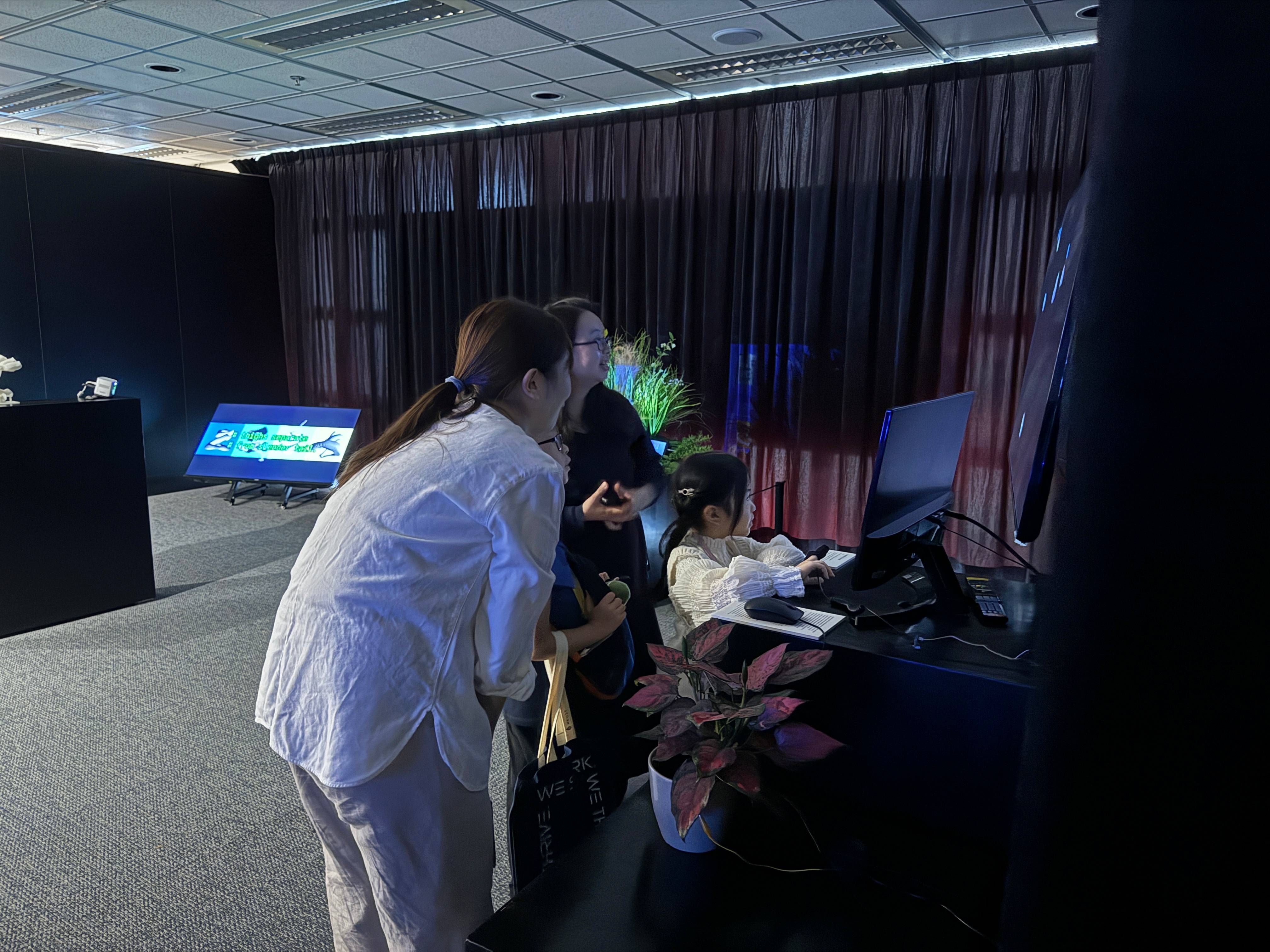
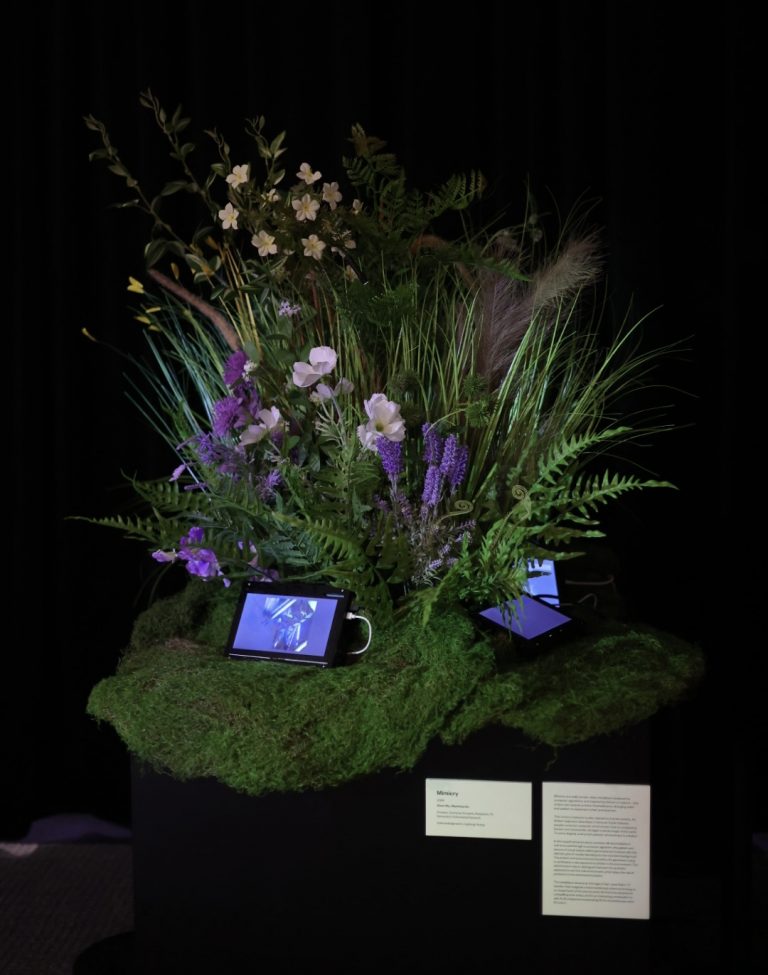
Mimicry is a multi-screen video installation powered by computer algorithms and inspired by mimicry in nature—the unique way species protect themselves by changing color and pattern in response to their environment.
This mimicry behavior is also relevant to human society. As Walter Lippmann describes in his book Public Opinion, people construct a pseudo-environment that is a subjective, biased, and necessarily abridged mental image of the world. To some degree, everyone’s pseudo-environment is a fiction.
In this experimental art piece, cameras will record plants in real-time, and through a computer algorithm, the pattern and texture of virtual insects will be generated and evolved, with the ultimate goal of visually blending into the recorded background. The pattern and texture are produced by the generator, trying to synthesize a new appearance similar to the environment. The discriminator tries to distinguish between the synthetic appearance and the real environment, which plays the role of predators in the adversarial evolution.
The installation setup is an homage to Nam June Paik’s TV Garden. Paik imagined a future landscape where technology is an integral part of the natural world. We find that perspective compelling even today, and it’s an interesting combination to add ALife creatures incorporating AI into the landscape after 50 years.
Becoming Space
Artists: Xinyu Ma, Hengyu Meng, Ziwei Wu
Acknowledgment: Zeyu Wang
Year: 2024
Materials: 3D printing material (polylactic acid), 3D generative AI algorithm, Single-channel video
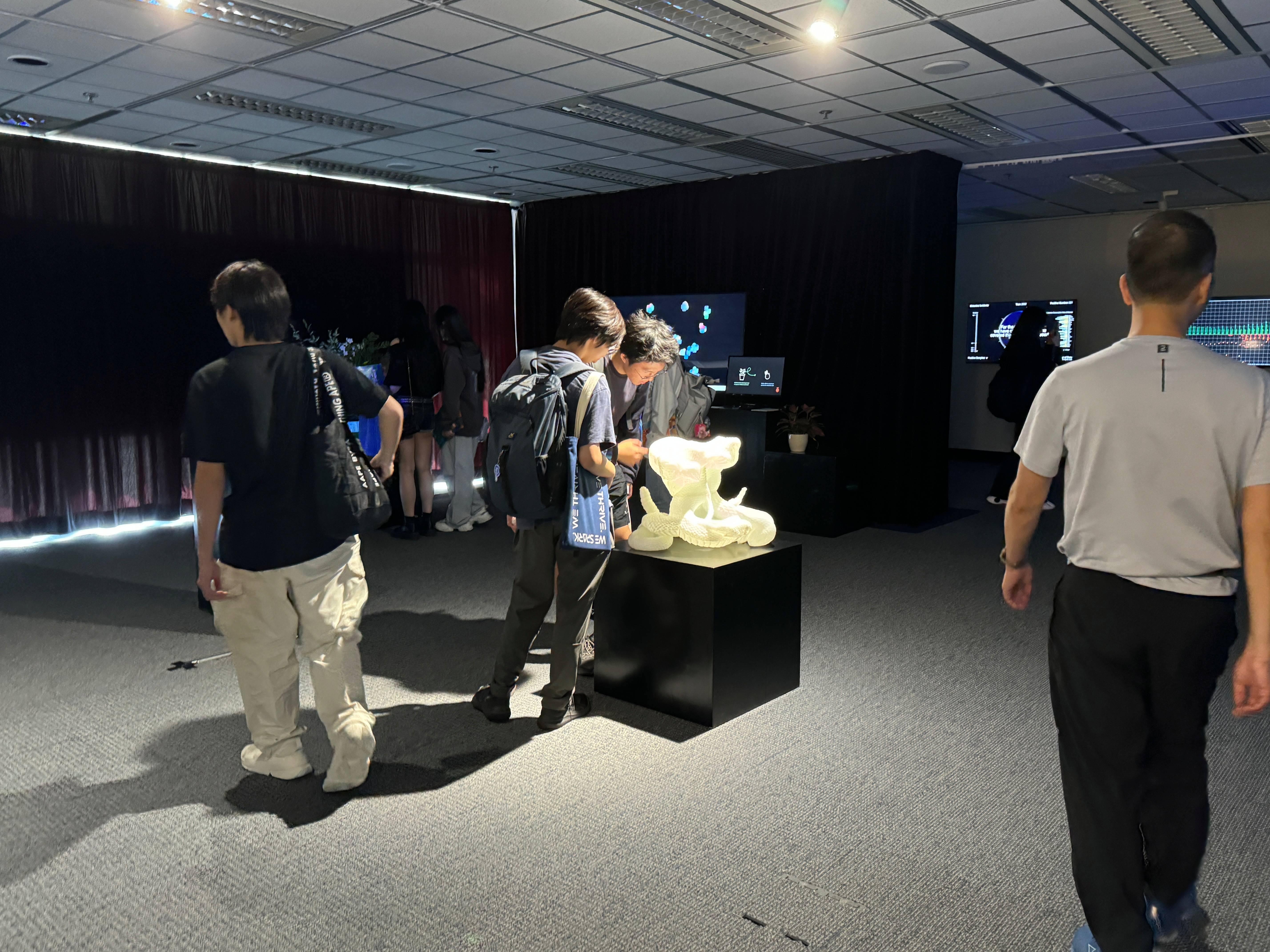
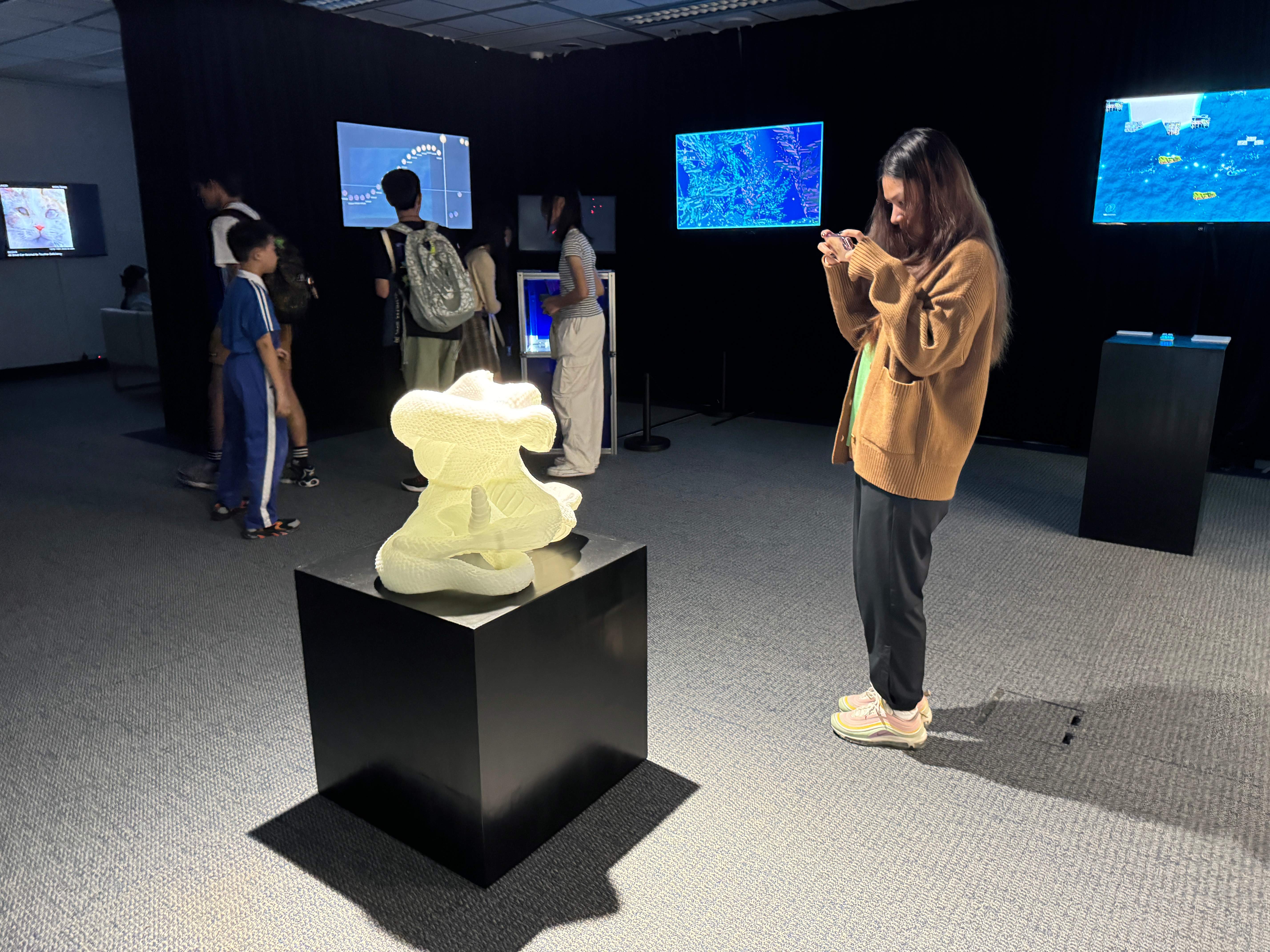
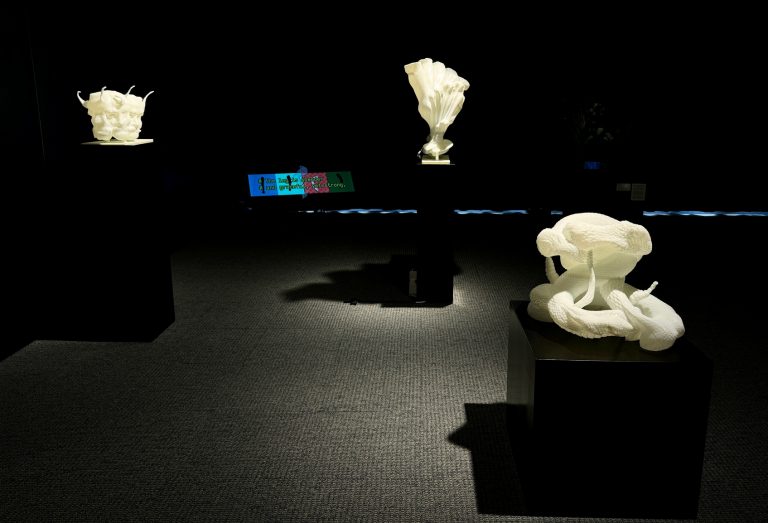
Becoming Spaces explores a series of transformations between humans and animals drawing inspiration from Ovid’s Metamorphoses. This work, comprising sculptures and video, reflects on how this transformation reshapes the relationships between humans and animals. Drawing on Deleuze and Guattari’s concept of “becoming-animals,” those myths reveal that these transformations are processes in which individuals amplify their existing powers and identities or gain new capacities through becoming animals.
Deleuze and Guattari also argue that the becoming process is related to collectives and communities. Humans becoming animals always appear in the form of a collective. The collective is an assemblage of sensations and forces, which in turn influence the characteristics of those individuals. The relationships between humans and animals have changed nowadays. As Azuma Hiroki points out, this relationship has generated new features of “animality” and “database”.
By integrating generative AI techniques, we use the Score Distillation Sampling method to guide the deformation of the original 3D model based on the text information. The 3D generative AI models used in the artwork are active participants in the process of transformation, reflecting on the complex relationship as a continuous process of becoming between human and non-human beings that are influenced by digital technologies.
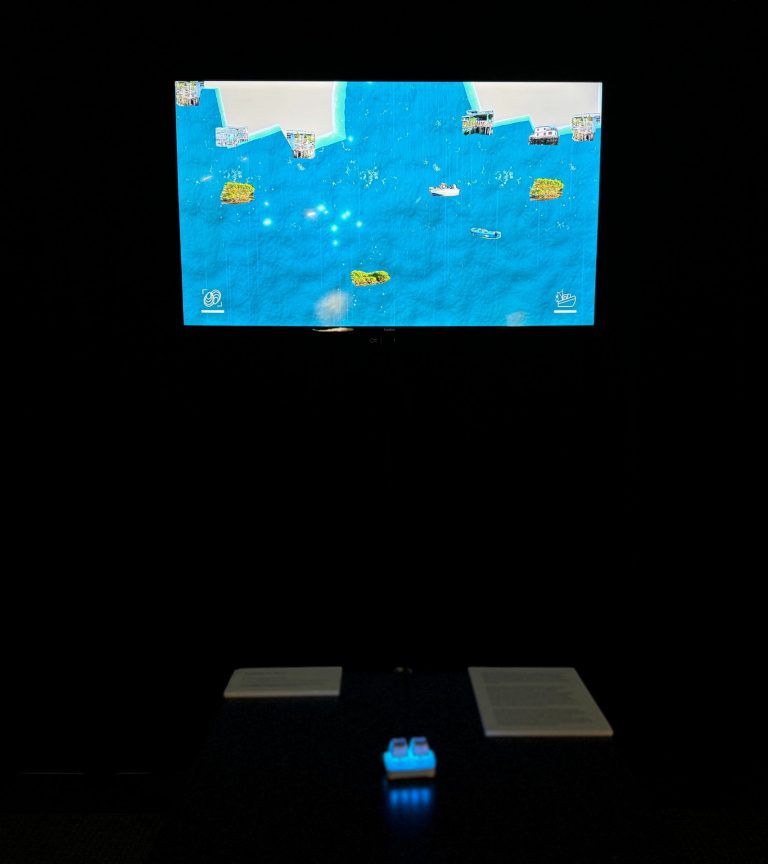
Echoes of Tai O
Artists: Danlu Fei, Xinyu Ma, Ziwei Wu
Acknowledgment: Kam Kwai Wong, Hong Kong Red Cross, A Plastic Ocean Foundation Hong Kong
Year: 2024
Materials: Keyboard Controller, Screens, Reinforcement Learning Agents
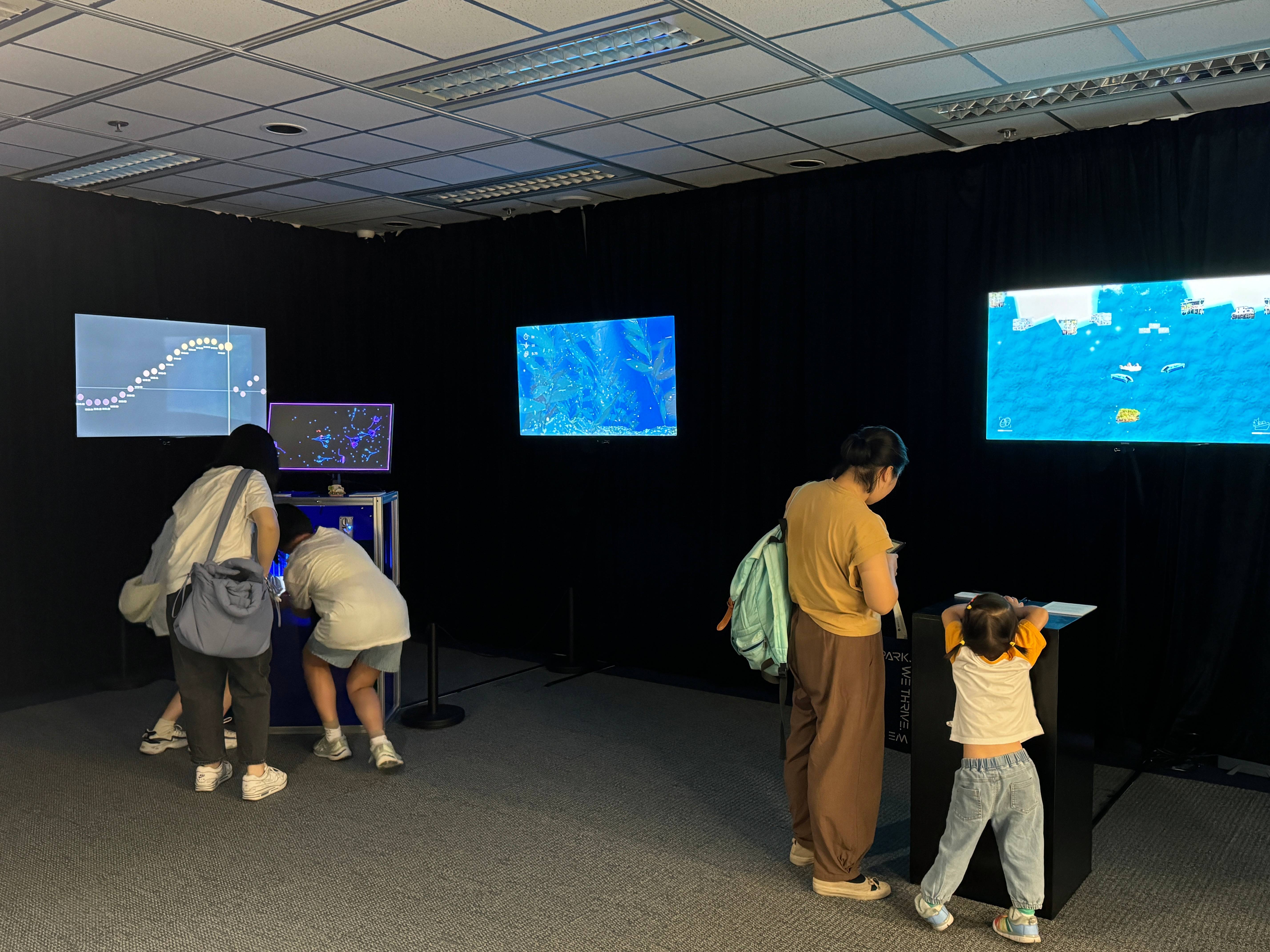
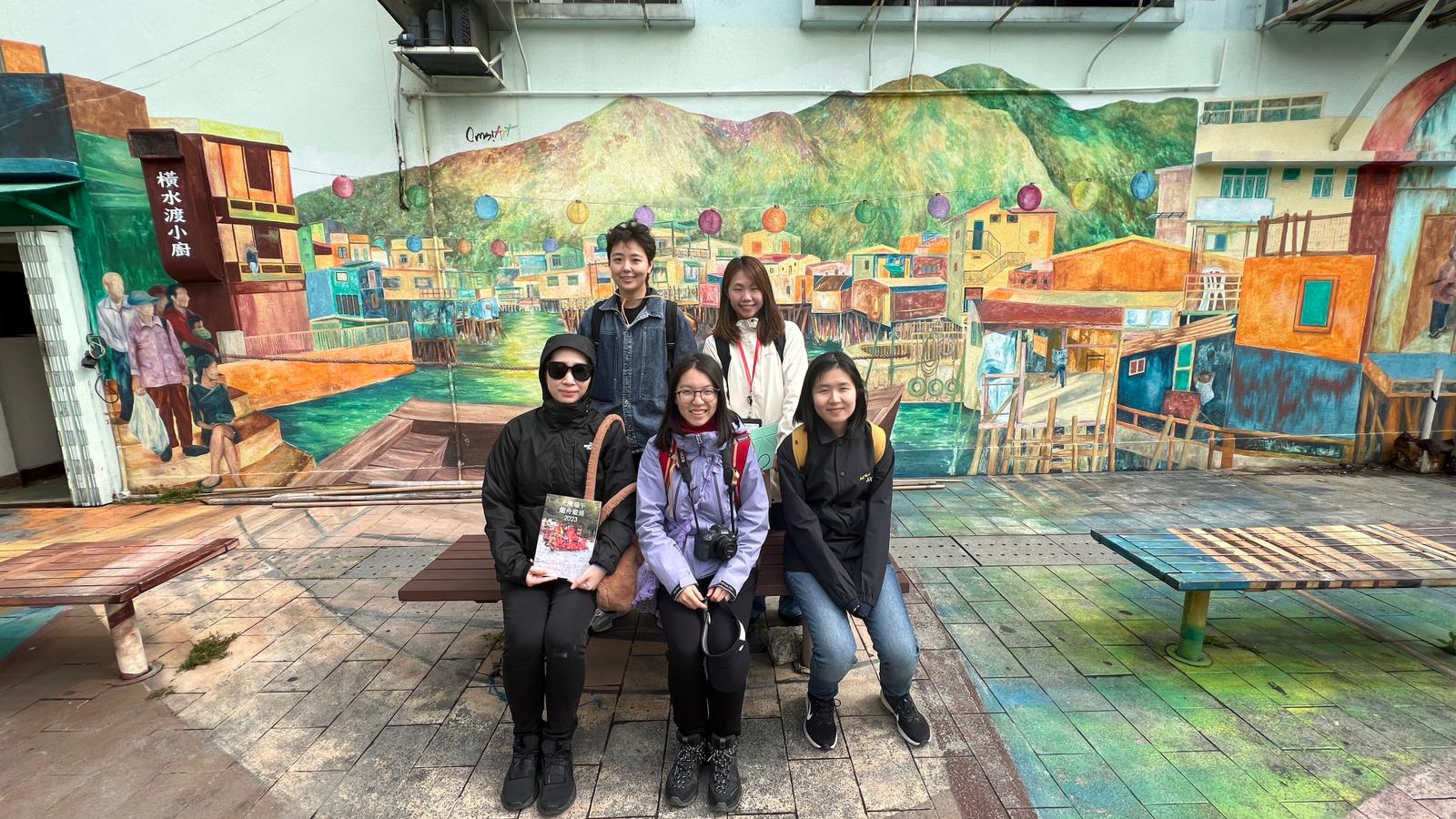
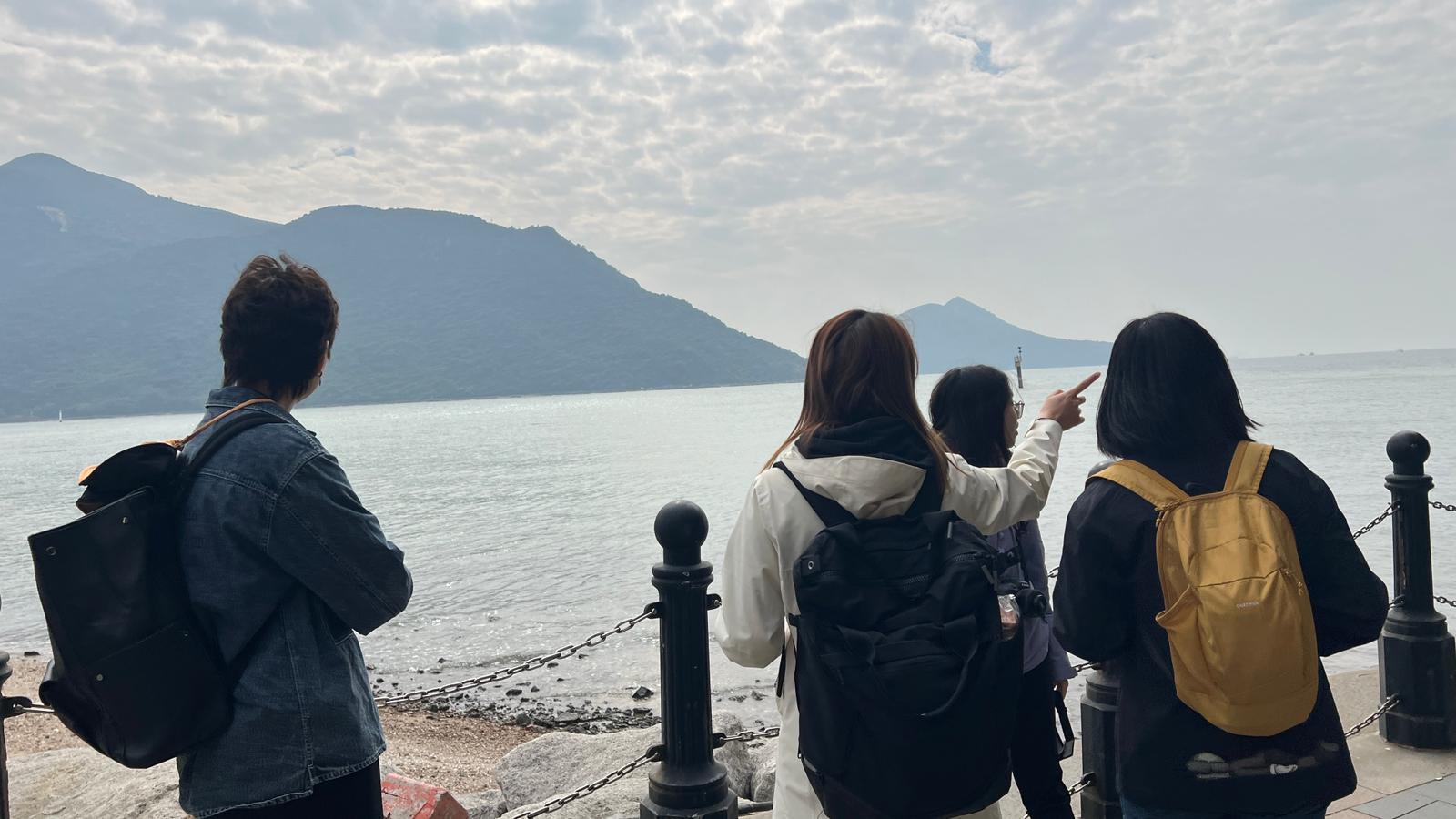
Echoes of Tai O is an interactive game that spans the temporal dimensions of Tai O in Hong Kong. Through game controller interactions, it bridges the virtual and the real. This project is a collaboration with the Hong Kong Red Cross and A Plastic Ocean Foundation Hong Kong. The motivation and inspiration stem from on-site field trips to Tai O and archival research into its history.
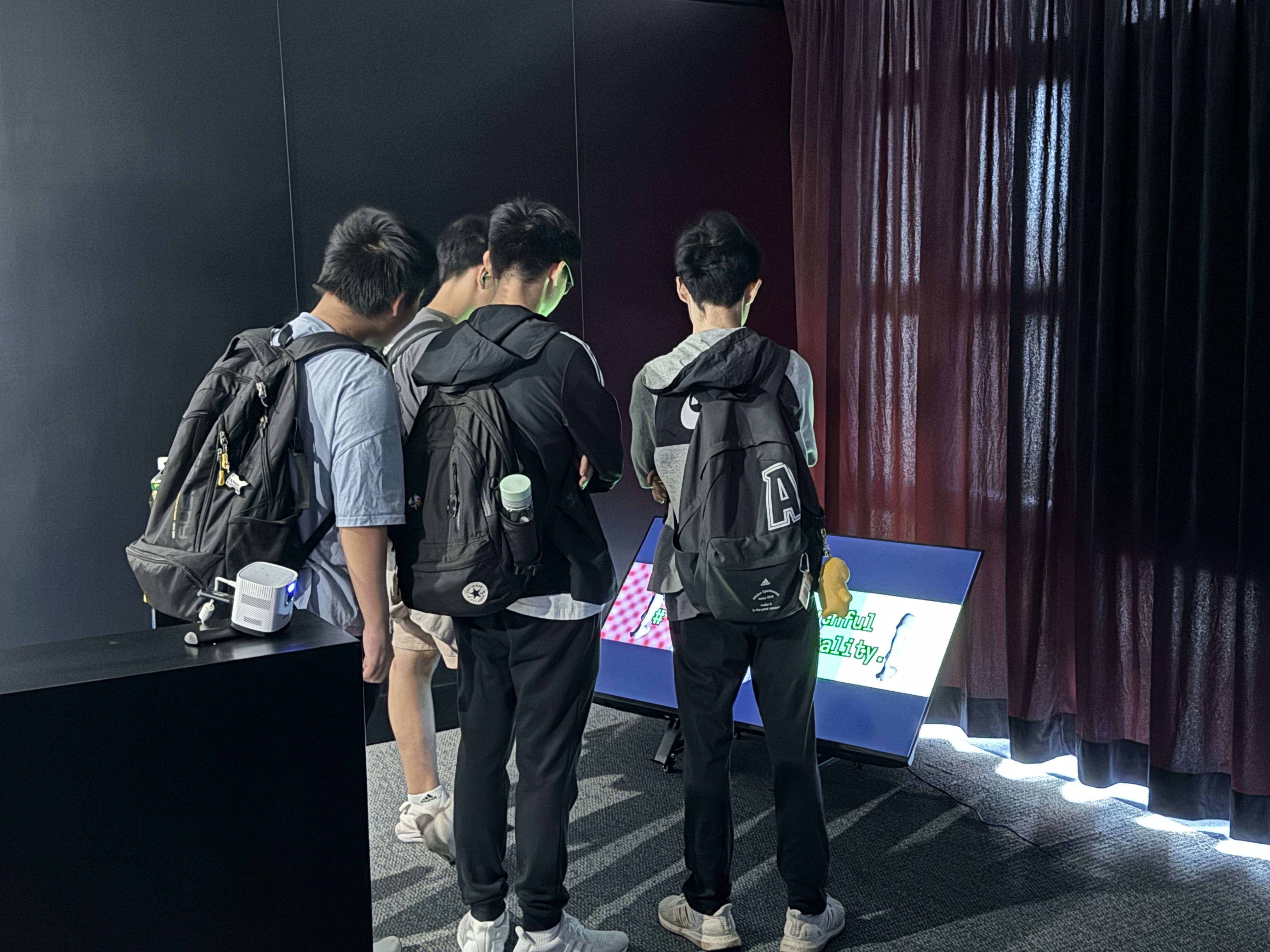
The artwork features reinforcement learning agents that simulate the virtual Tai O ecosystem, allowing viewers to intervene in the virtual ecosystem. The audience’s interactions have a real-time impact on the virtual ecosystem, which is reflected in the sounds of the disappearing species, the large yellow croaker. This sound represents the way experienced fishermen used to listen for fish movements, relying on the unique “fish stone” in the yellow croaker’s head to detect vibrations. The sounds of the yellow croaker are played in real-time, corresponding to the developments in the virtual ecosystem, in real-world Tai O.
Through this work, the artists aim to highlight how human behavior influences the environment, encouraging people to rethink sustainable living. The game interaction conveys the interconnectedness of all entities, both human and non-human, emphasizing Tai O’s fisheries history, economy, flood disasters, and ecology—encompassing fish, mangroves, oyster castles, and the crustaceans that depend on them—all intricately woven into human activities.
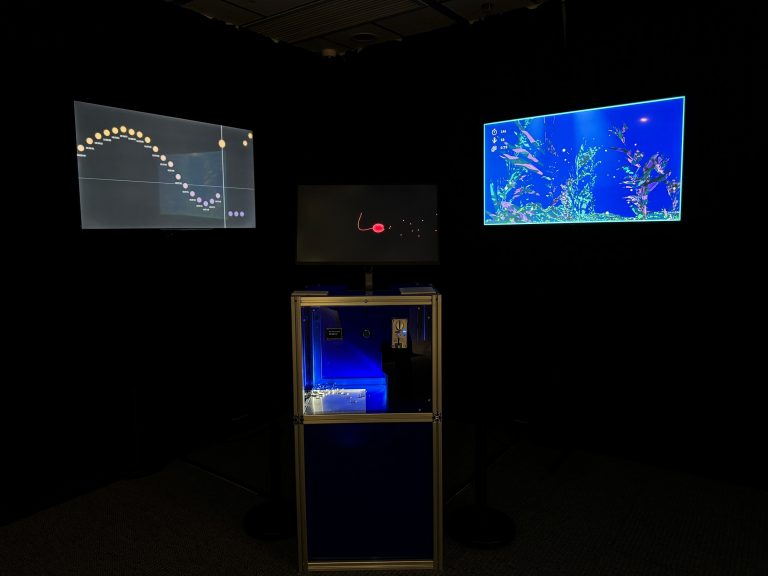
Benefit Game: Alien Seaweed Swarms
Artists: Danlu Fei, Ziwei Wu
Acknowledgment: Kang Zhang, Varvara Guljajeva
Year: 2023 – 2024
Materials: Self-made Game Machine: aluminum alloy, acrylic panel, tinned copper wire; Gashapon Machine: aluminum alloy, glass; Coins: Alloy
Benefit Game: Alien Seaweed Swarms is a real-time artificial life gameplay installation. The work is inspired by Saccharina Latissima, a seaweed species that can be used both for food and skincare products, which has been extensively cultivated by humans around the world for years to gain profits. However, its morphology is prone to mutation due to environmental changes, and the excessive pursuit of profit by humans can also lead to environmental degradation and the decline of this seaweed population.
The artwork features a unique seaweed swarm cybernetic loop, involving an overall system, a sensor, a comparator, a controller, and an effector. The overall system consists of a seaweed swarm system and a symbiotic fungal system, which outputs two types of information in real-time: the profit gained and the “ecological condition”. Humans act as the controller in the loop, with human observation serving as the sensor. The design of the loop places the audience in a pivotal role, encouraging people to observe and reflect on the consequences of their decisions and interactions.
This artwork explores the fragile relationship between human activities and the environment under dynamic climate change, within the context of the “Plantationocene”. It encourages the audience to seek a sustainable ecological balance through an interactive gaming experience.
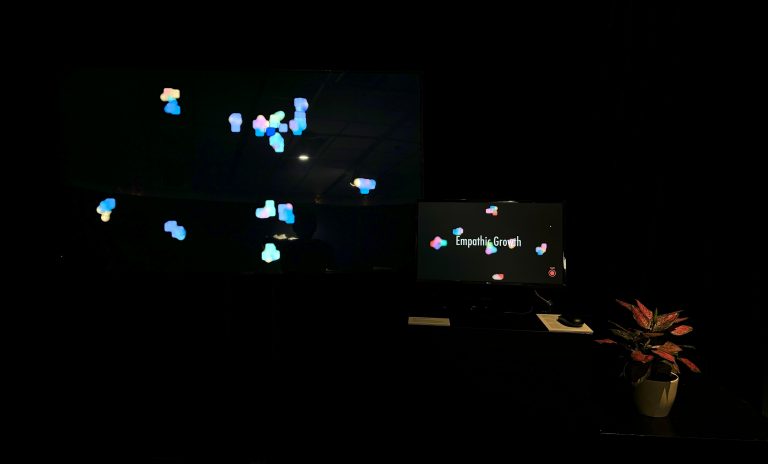
Empathic Growth
Artists: Ziwei Wu, Danlu Fei, Meng Yang, Jiaqi Shi
Acknowledgment: Jon McCormack, Elliott Wilson, Xi Lei, Australian Centre for the Moving Image (ACMI)
Year: 2024
Materials: Screens, Sensors, GSR Data, GSR Affective Computing Model, Machine Learning on Plants Perception Estimation
Empathic Growth is an interspecies interactive art installation that explores plant perception from a more-than-human perspective. Grounded in Jakob von Uexküll’s concept of “Umwelt,” the installation recognizes plants as active participants with their own perceptual worlds. By visualizing the biosignals of both humans and plants in a shared environment, Empathic Growth creates a space of shared perception, encouraging participants to reflect on plant agency and fostering empathy between species.
Ursula K. Le Guin’s science fiction Changing Planes delves into various imaginary worlds, or “planes,” each with its unique societies, cultures, and ways of life. Our work draws inspiration from two of these planes. The first features a society that has pushed genetic engineering to its limits, showcasing a human whose genome is partially composed of plants. The second plane presents a society where dreams are shared telepathically, transforming the unconscious mind into a collective experience.
In this installation, the audience can co-create unique sentient hybrids with the plants, exploring shared emotions and consciousness. Specifically, this work employs supervised learning to transform human Galvanic Skin Response (GSR) signals through affective computing, alongside plant signals using perception estimation. Both humans and plants are invited to experience the same sound environment, with the human-plant interactive interface transforming the data into one emotional hybrid form. This hybrid form will evolve into an artificial creature that roams in digital space, exploring collective emotions and consciousness. Through online live-streaming, audiences from other campuses can witness these collective social dreams.
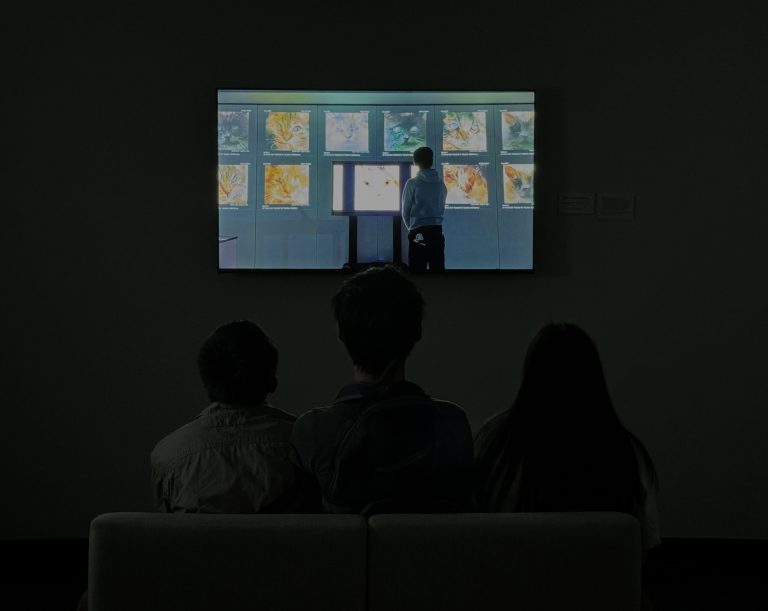
Hidden Incidents of Pet Food
Artists: Ziwei Wu, Danlu Fei, Xiaofu Jin, Burak Korkmaz, You Wen, Yifang Wang
Acknowledgment: Xinyu Ma, Guangda Zhu
Year: 2022 – 2024
Materials: Video
Hidden Incidents of Pet Food is a series of works that integrates artificial intelligence, data visualization, and archival research to reveal the complex and commercialized relationship between humans and pets under the influence of capitalism. The artwork focuses on pet food, representing the significant role of human affection for pets within the service-oriented market economy. The project investigates three chemical elements that affect the health of both pets and humans: Taurine, Melamine, and Pentobarbital.
The artwork utilizes AI to reconstruct truth and visualization to present real incidents with data, memorializing those overlooked and forgotten lives.
Hidden Incidents of Taurine Deficiency
Artists: Ziwei Wu, Xiaofu Jin, Danlu Fei, Yifang Wang
Year: 2022 – 2024
Materials: DCGAN, Blind Cat Portraits
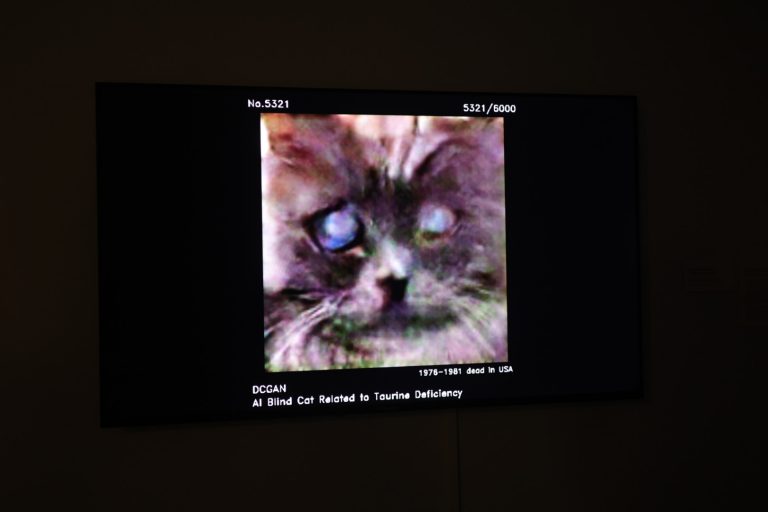
Hidden Incidents of Taurine Deficiency is a digital artwork that combines contemporary art and machine learning to shed light on a relatively unknown yet significant social issue, specifically the taurine deficiency in cat food.
Taurine, an animal protein, is one of the most essential and indispensable elements for cats that can only be obtained from their diet. Despite this, the significance of taurine was not widely recognized by the public until the 1970s, as an increasing number of pets started to suffer from heart disease and blindness after consuming pet food. After systematic clinical studies, they finally found a direct link between Taurine deficiency and cat diseases in 1976. It was, however, not until 1981, that Taurine was first introduced as a standard in pet food quality control, which reflects a huge delay between scientific findings and policy-making.
The artists created the portraits of 6,000 cats who died from taurine deficiency in pet food by training an AI model. The estimation number is related to scientific research. A famous academic article published in Science estimated that at least 1,000 cats die each year in the United States because of insufficient taurine in pet food. This artwork serves as a historical memorial for the forgotten lives of these blind cats.
Behind the Molecules
Artists: Hanlu Ma, Ziwei Wu, Mengying Du, Burak Korkmaz, Xiaofu Jin, Yifang Wang
Acknowledgment: You Wen
Year: 2024
Materials: Incidents Data, News Data, Publication Data, Interactive Web, Screens, Raspberry Pi, Sound
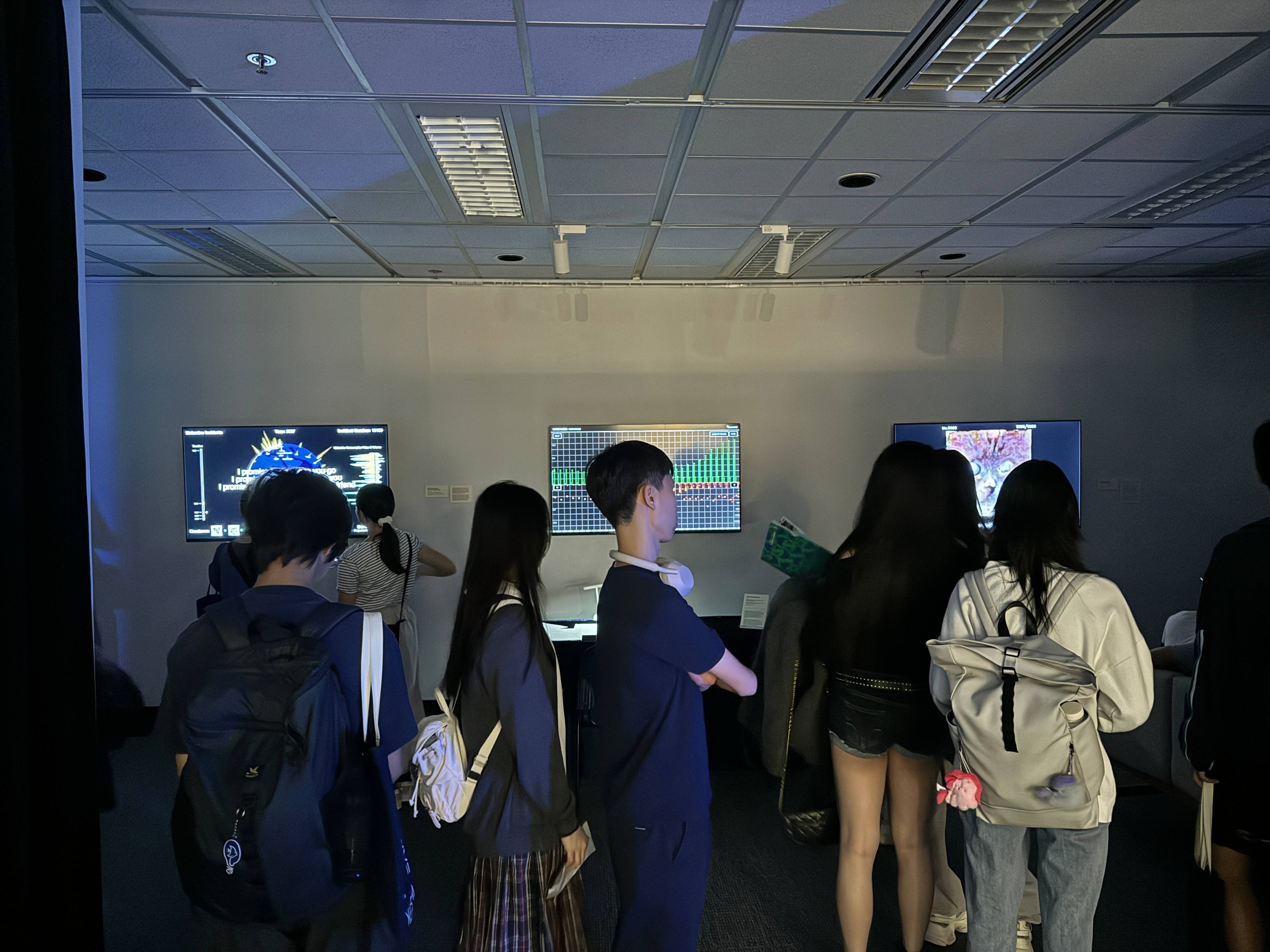
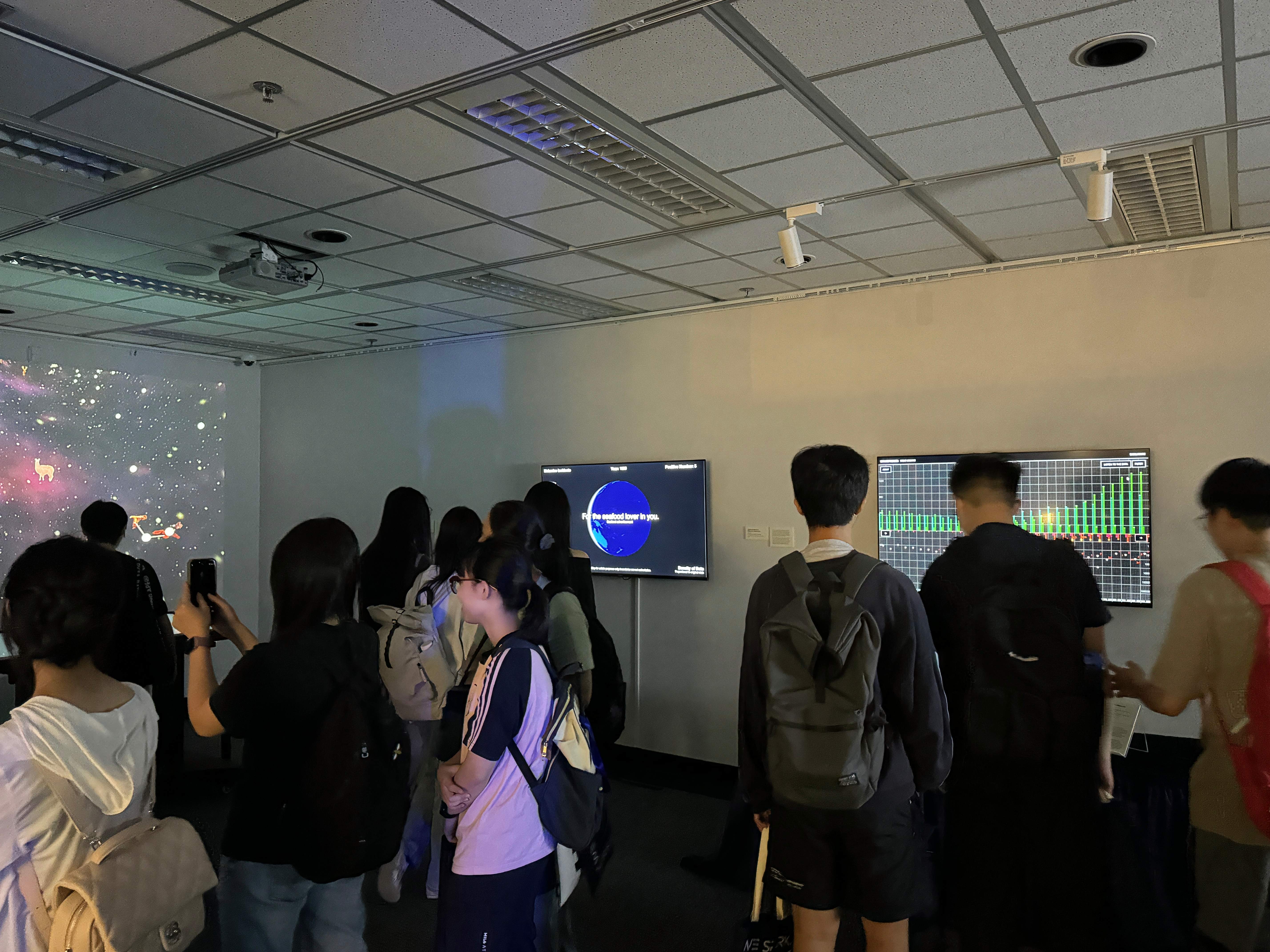
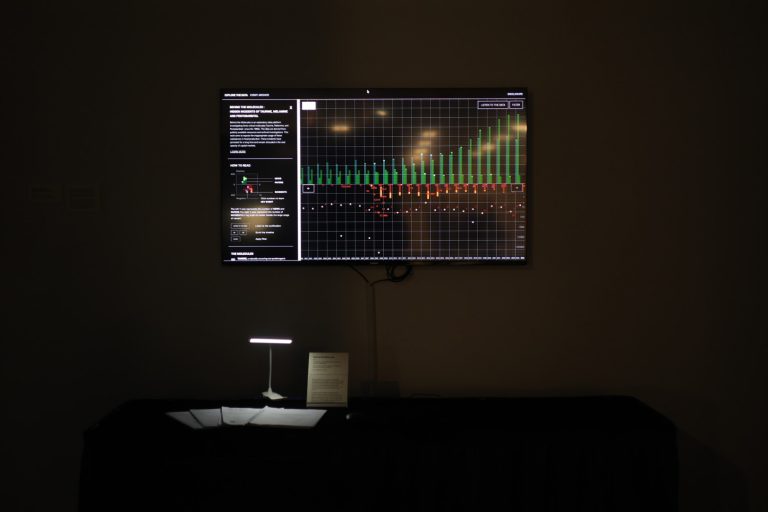
Behind the Molecules is an alternative data visualization platform that critically examines the abuse of chemicals—particularly melamine, taurine, and pentobarbital—in animal feed, pet food, and human food for economic gain. By analyzing historical records dating back to the 1960s, this platform constructs a multi-sensory timeline, using the stock market as a subtle metaphor. Audiences can compare two different facets of the timeline and identify abnormal events within their context, raising questions about the blindness of capital markets. The platform also empowers users to report suspicious incidents of abuse in their lives.
This data-driven narrative sheds light on victims’ voices, which are intentionally marginalized by the food industry. Our work goes beyond charts, leveraging data to archive, memorialize, and advocate for action. It promotes an approach where visualization, as digital artifacts, can serve as powerful tools to challenge informational hegemony.
Hidden Incidents of Melamine Adulteration
Artists: Ziwei Wu, Xiaofu Jin, Danlu Fei, Yifang Wang
Year: 2022 – 2024
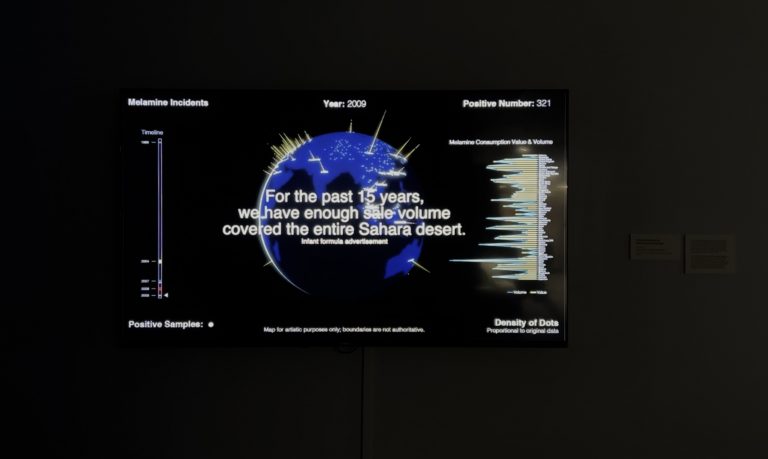
Hidden Incidents of Melamine Adulteration is an artwork that reveals the lives affected by economic and social issues. Melamine adulteration is a long-standing problem in food products, posing significant health risks, including kidney diseases and potential malignancies. Despite its harmful effects, melamine is still being used unethically to falsely increase the protein content in food.
While the 2008 Chinese baby milk scandal is a well-known case, melamine adulteration has been present in foods from other species for a long time. This work compiles incidents and economic data on melamine since the 1980s. The authors aim to increase public awareness of this hidden danger in the food industry by utilizing spatial-temporal visualization to contrast commercial advertising slogans.
Hidden Incidents of Animal Euthanasia
Artists: Ziwei Wu, Danlu Fei, Xiaofu Jin, Burak Korkmaz, You Wen, Yifang Wang
Acknowledgment: Ngaio Richards, Kathleen Wells, Marta Herrero Villar, Robert Jankowski
Year: 2022 – 2024
Materials: Incident Data, 3D AI-generated Mesh, Web-based Interactive Screen, Projector, Sound
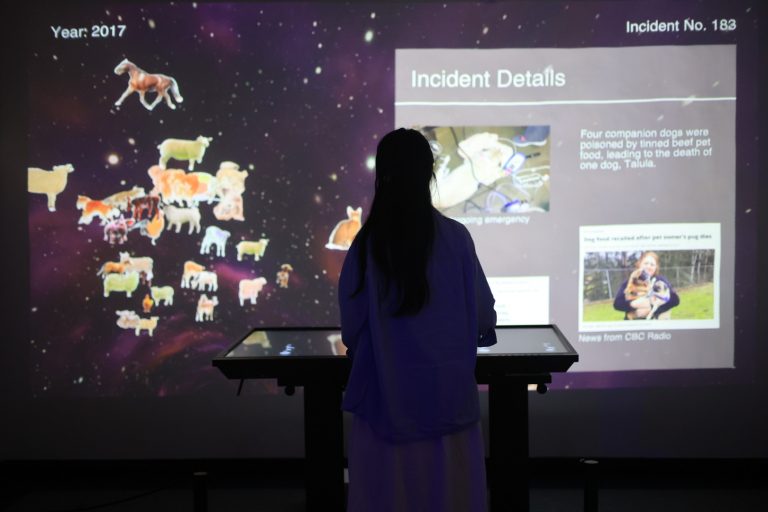
Pentobarbital is a synthetic drug used for euthanasia. Despite its medical legitimacy, pentobarbital also poses significant risks, including secondary poisoning across various species. Collaborating with forensic professionals, the artists have compiled a comprehensive dataset documenting 225 incidents over six months with human-animal interactions (HAIs) categories, spanning from 1967 to 2023. This work transfers the diverse incident data into interactive artwork, highlighting the urgent need for awareness of its dangers.
The artwork is an experimental case with a new approach that blends objective data visualization and sonification with the subjective interactivity of transforming audience identities. It is a dual-screen interactive installation, with a touch information screen and another roaming screen with a projector. The installation integrates incident data with 2D and 3D network visualization, sonification, and AI-generated 3D models to depict the complex food web among animals related to secondary poisoning incidents. In addition, the artwork explores the concept of “kinship” with HAIs, presenting the relationship of dominance and affection between humans and animals. Through this interaction, audiences shift from passive observers to subjective participants, exercising dominance driven by their affection for the animals, gradually unveiling hidden incidents.
| Time | Program | Venue |
|---|---|---|
| 15:00 – 15:15 | Opening Speeches (Video) Speakers: Prof. Huamin Qu, Prof. Kang Zhang and Prof. Hongbo Fu Host: Hui Ye | Library G/F Gallery |
| 15:15 – 15:45 | Gallery Tour | Library G/F Gallery |
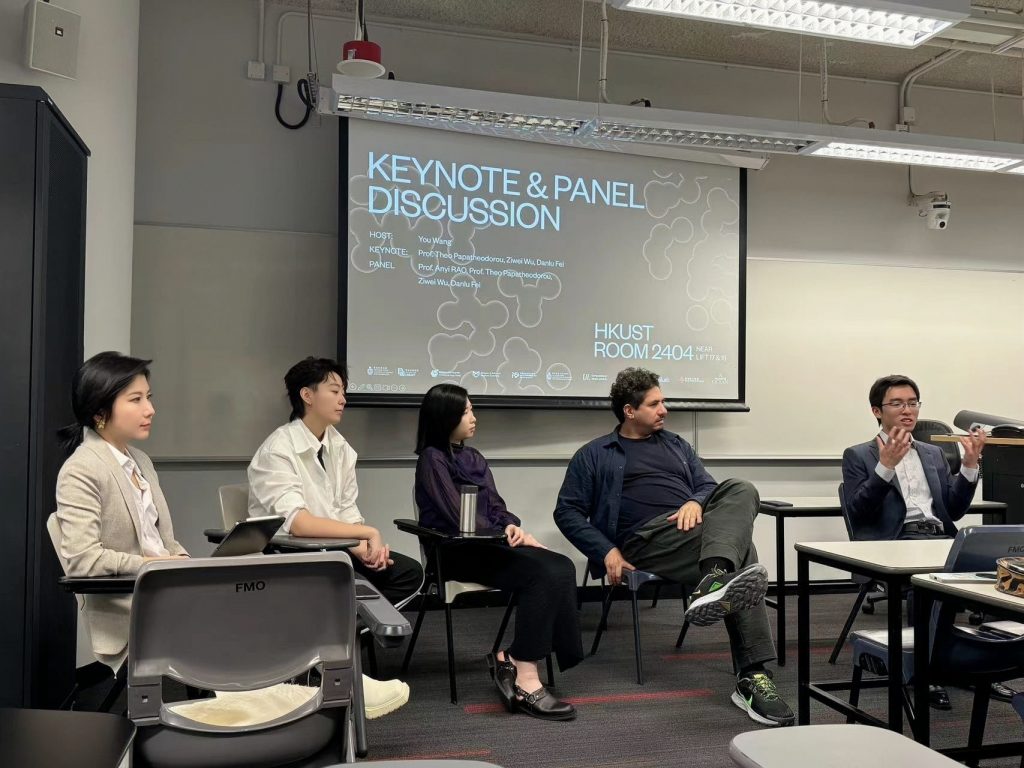
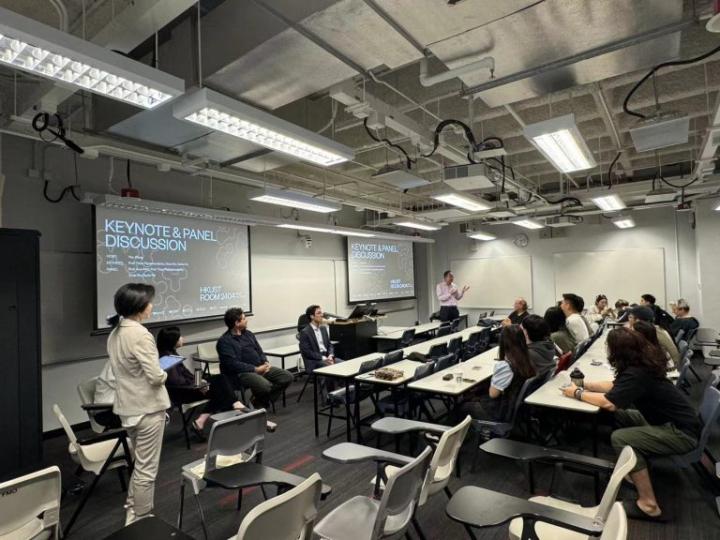
| 15:50 – 17:00 | Keynote Presentation and Panel Discussion (Video) Host: You Wang Keynote: Prof. Theo Papatheodorou, Ziwei Wu, Danlu Fei, Panel: Prof. Anyi Rao, Prof. Theo Papatheodorou, Ziwei Wu and Danlu Fei | HKUST Room 2404 (near Lift 17 & 18) |
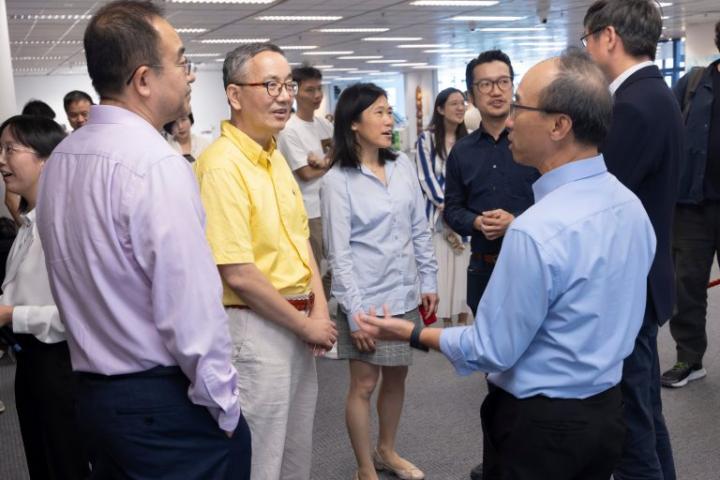
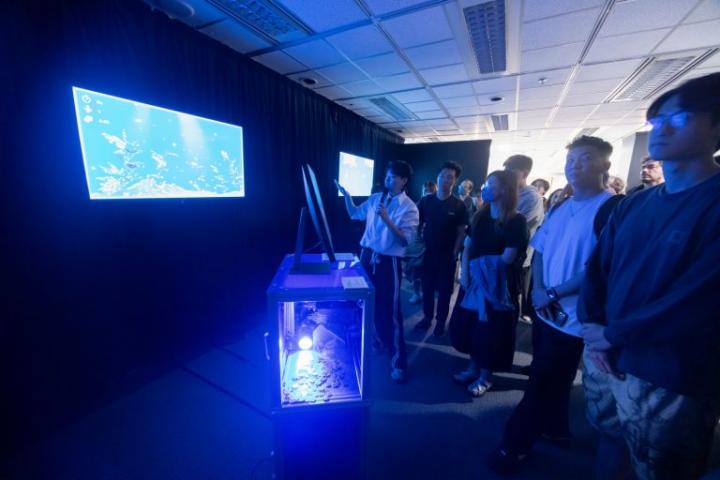
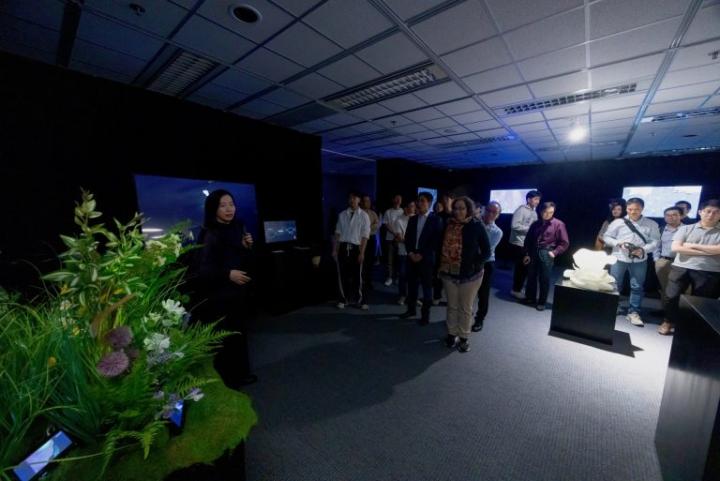
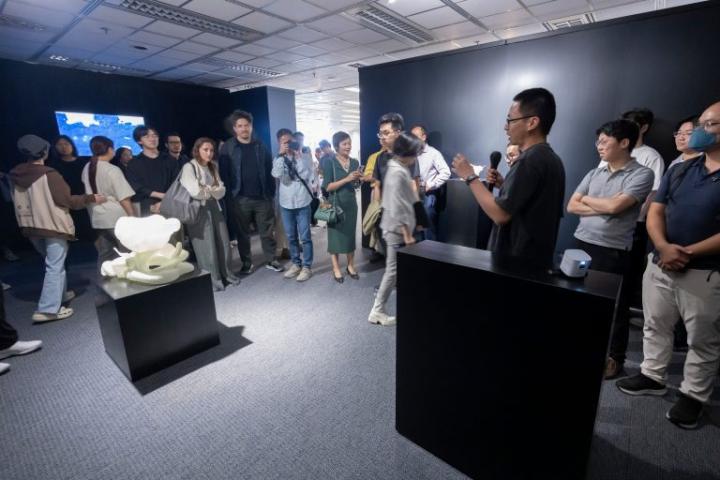
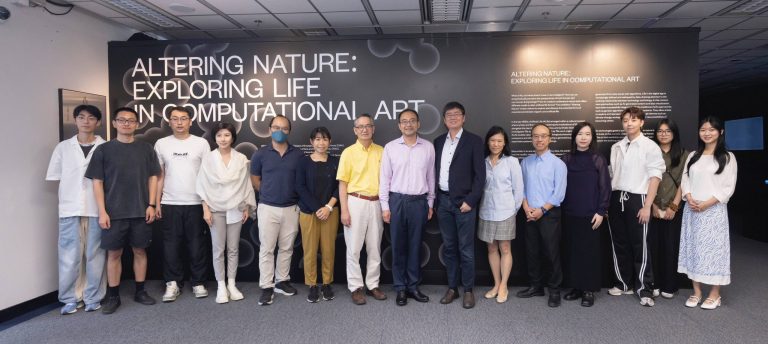
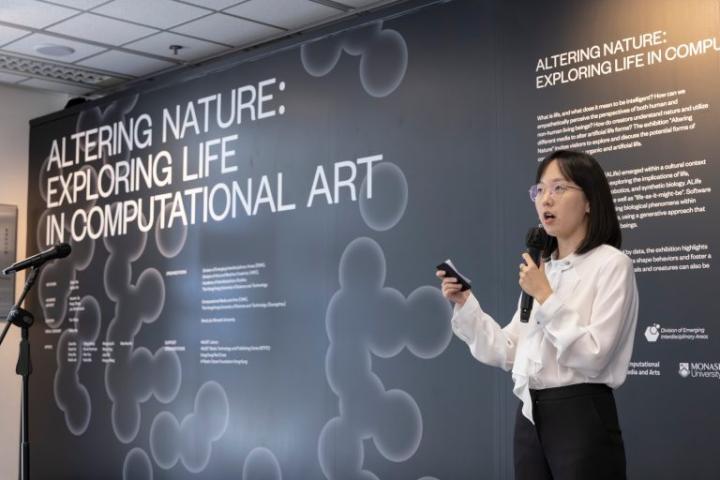
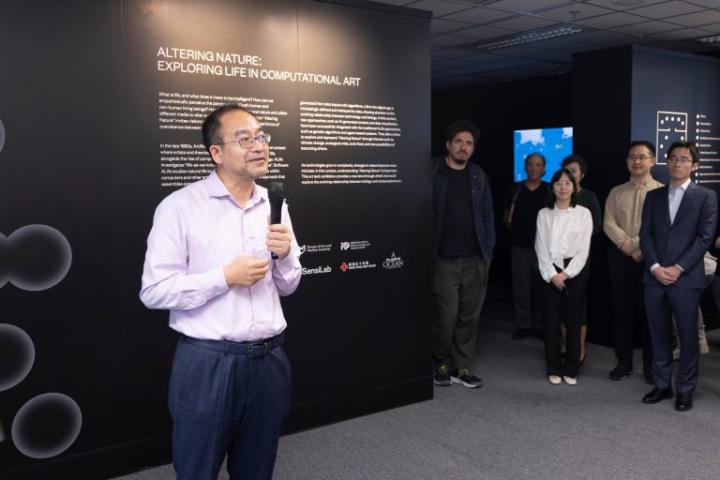
Dr. Hui Ye, a postdoctoral fellow at AMC, served as the MC for the exhibition's opening. She introduced the exhibition theme and concept, acknowledged the organizing institutions, and highlighted the artists involved. She then invited three professors and the curator to deliver their opening remarks.
Professor Huamin Qu began by recounting the development of the Computational Media and Arts (CMA) thrust in Hong Kong University of Science and Technology (Guangzhou), established three years ago, and the recent creation of the Arts and Machine Creativity (AMC) division in Hong Kong University of Science and Technology earlier this year. He emphasized the importance of integrating art education into a university focused on science and technology, underlining that this initiative provides a valuable platform for students and faculty to showcase their work. Professor Qu expressed hopes that this exhibition would become an annual event, fostering ongoing collaboration between the Hong Kong and Guangzhou campuses. He also extended his gratitude to the library, the internal and external collaborating institutions, and especially the students, whom he called the “real heroes” of the event.
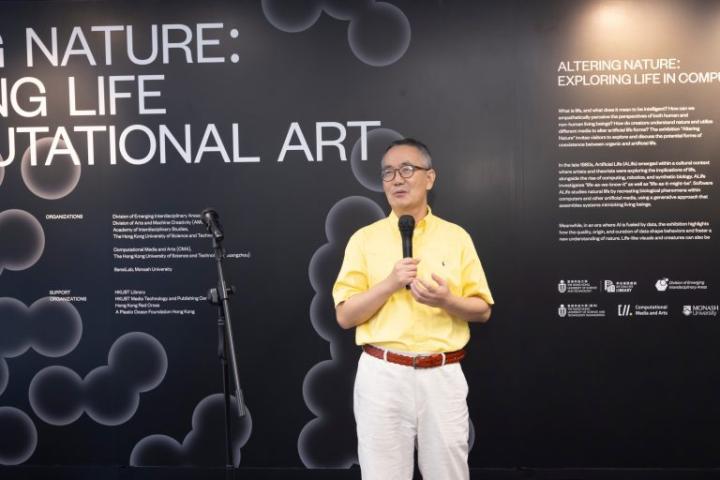
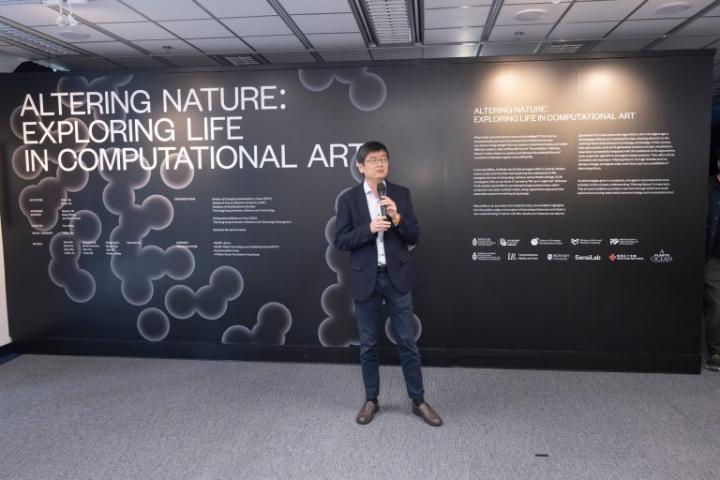
Professor Kang Zhang expressed his excitement for this exhibition opening, the first collaboration of its kind between the Hong Kong and Guangzhou campuses. He praised the remarkable work of the PhD students and colleagues who made the event possible. Professor Zhang viewed this exhibition as a significant starting point, envisioning its expansion to an international stage in the future. He also conveyed heartfelt thanks to the Hong Kong Red Cross and A Plastic Ocean Foundation for providing professional knowledge and support for the artists in creating ecological artwork. Additionally, he mentioned plans to host the exhibition at the Guangzhou campus as a connecting event between the two campuses, with the vision of eventually showcasing it on a global stage.
As the acting head of the newly established Division of Arts and Machine Creativity (AMC), Professor Hongbo Fu introduced the division’s mission and its alignment with the theme of the exhibition. He explored the potential coexistence of organic and artificial life, particularly through the lens of machine-assisted art practices and critical studies. Professor Fu highlighted that the exhibition addresses significant questions, such as the essence of life and the definition of artificial life, especially in the context of utilizing machine creativity to produce new artworks in the era of artificial intelligence. He expressed gratitude to external collaborators, including Monash University, for their contributions, and emphasized the potential for interdisciplinary collaboration to transform researchers into artists. Finally, he wished everyone to enjoy the exhibition.
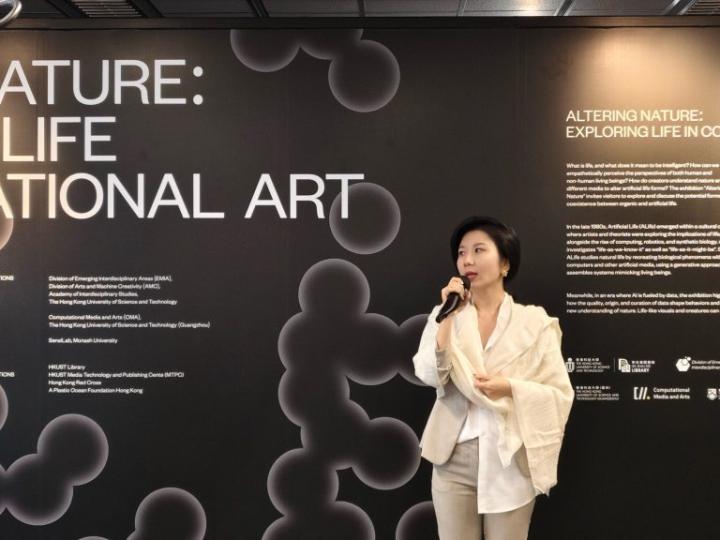
Words by exhibition curator, You Wang
This exhibition, as HKUST's first comprehensive showcase of computational art, holds significance from multiple perspectives. Firstly, each work displayed here is a collaborative endeavor, rather than the product of individual effort, embodying the core collaborative nature of this field. Secondly, the pieces reveal artists’ profound reflections on natural species and societal events—insights that lend a practical dimension often absent in contemporary conceptual art, yet resonate with a level of humanistic sensitivity and aesthetic nuance not commonly found in purely academic research. Most importantly, this exhibition underscores the visionary significance behind HKUST (GZ) and HKUST's establishment of the Computational Media and Arts (CMA) and Arts and Machine Creativity (AMC) division. These creations not only ignite thought and inspire creativity but also hint at the transformative impact this discipline is poised to have on the future.
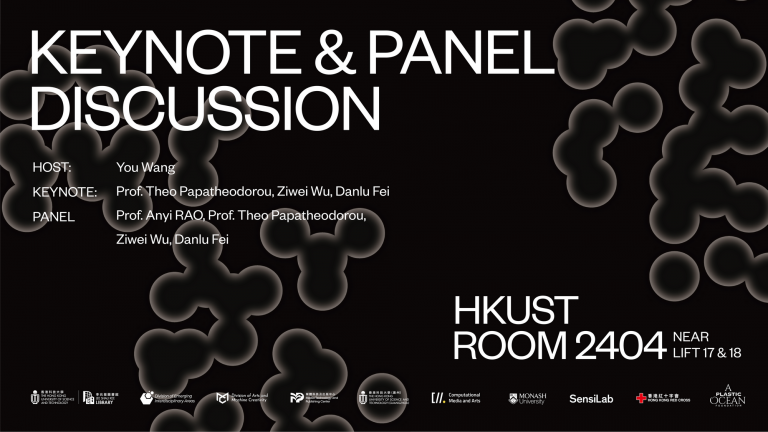
Keynote presentations
- Prof. Theo Papatheodorou, The Art of Discovery: How Computational Art Reveals New Worlds
- Ziwei Wu, Altering Nature with Computational ALife Visual Art
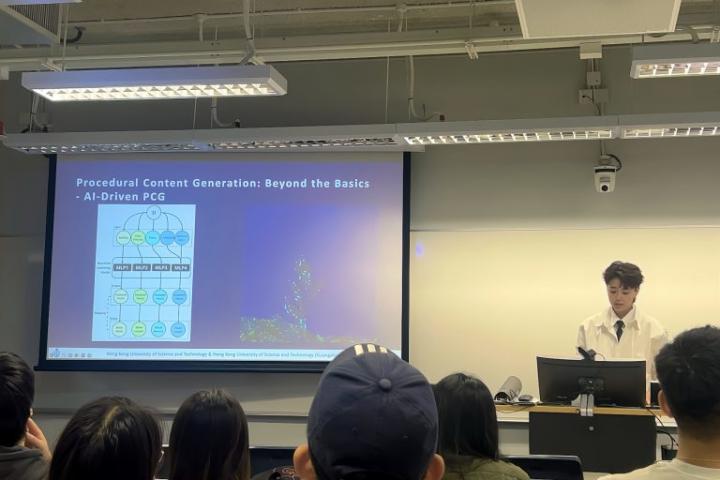
- Danlu Fei, Behind the Scenes: Harnessing Technology to Sculpt Art in Game Development
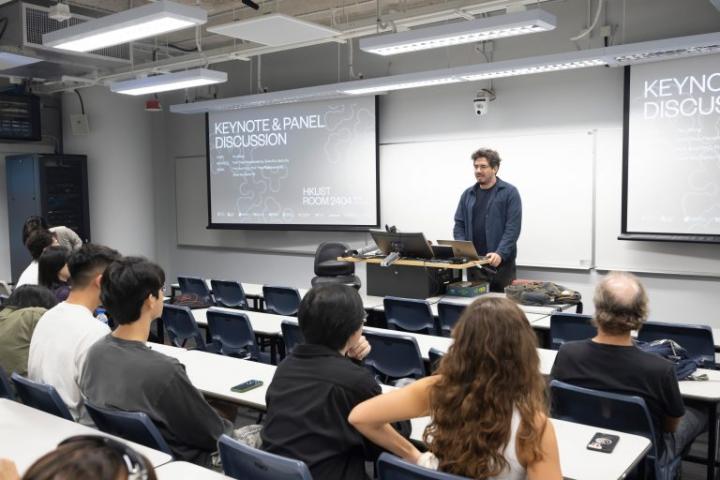
Panel Discussion
After the keynote presentations, a panel discussion was moderated by curator You Wang. In addition to the three keynote speakers, HKUST AMC's Prof. Rao Anyi joined the panel. The discussion covered multiple perspectives, including how to utilize computational technology for artistic creation, how studying the art-making process can drive technological advancement, how to appreciate and understand computational art, and the future prospects of art and technology in the era of AI. The session concluded with engaging responses to several insightful questions from the audience.
Epilogue
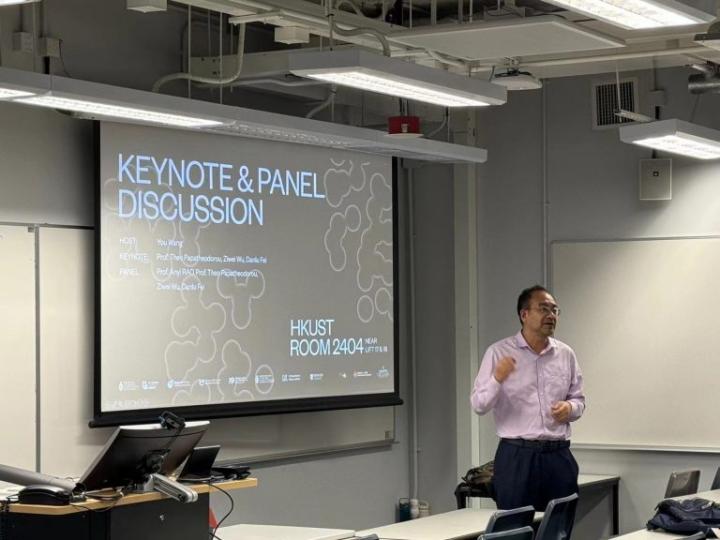
Prof. Huamin Qu concluded the opening event by reiterating the significance of hosting art activities at a science and technology university. He emphasized the collaborative synergy between HKUST's dual campuses, describing CMA and AMC as complementary counterparts, like two sides of a mirror. By integrating art and technology in creative works and academic research, he expressed confidence in achieving greater impact and a promising future.
Monday – Friday:
9 am – 6 pm
Saturday & Sunday:
11 am – 6 pm
- Dec 21, 2024 (Sat):
11 am – 4 pm - Dec 22, 2024 (Sun):
1 pm – 6 pm - Dec 23, 2024 (Mon):
9 am – 6 pm - Dec 24, 2024 (Tue):
9 am – 12:30 pm
