



Library Stories

Library Stories
As ChatGPT celebrates its second birthday, we thought it was a good time to showcase our comprehensive collection of AI-related books that capture this transformative moment in history. Introducing our new book display: “Popular Readings on AI”—a curated selection of around 380 books, available in both print and e-format. From the latest in technology and education to the impact of AI on business, medicine and beyond, this collection is now on display at the G/F of the Library, ready for you to explore. Selecting the Books: A Fun Challenge Curating this display was both fun and challenging. We started with a giant list of over 6,000 AI-related books published after 2020, aiming to narrow it down to the best mix of popular, accessible, and informative reads—not too technical, not overly academic. As the subject librarian responsible for book selection, I spent quite some time digging into bestseller lists, reviews and recommendations from Amazon and other trusted sources. It wasn’t just about picking the top-rated books, but to represent a variety of perspectives and topics. Whether you are a tech newbie, a business leader, or interested in AI ethics, we wanted to make sure there’s something here for you. Setting Up the Display: A Team Effort Bringing this display to life was truly a collaborative effort, with colleagues from multiple teams in the library to make it happen. It all started with our Collection Development team, who compiled a comprehensive list of AI-related books from our collection for me to select the most relevant ones to feature.
CollectionsNewsPeople
Library Stories
Library Stories
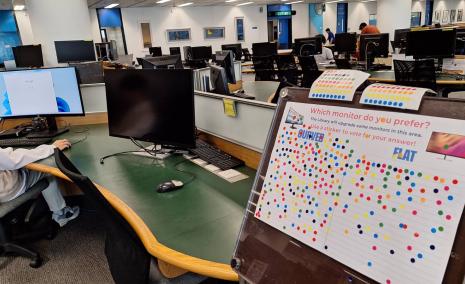
Recently, we conducted a poll of potential monitors on the G/F to see which model you preferred. The Battle: October 28th – November 5th, 2024 On one side, a 34-inch curved monitor; on the other, a 32-inch 4K flat monitor. Both offer larger screen size, higher resolution, and USB-C connectivity. But which shape would dominate? Library users voted for their favorite monitor model using colorful stickers. After a few days, a clear preference began to emerge. AI Assisted Vote Tallying Visually, we could see there was a preference for curved monitors, but what were the exact numbers? It would have been tedious to count them individually. We turned to POE. The results: curved = 314; flat = 166.
FurnitureStudy Space
Library Stories
Library Stories
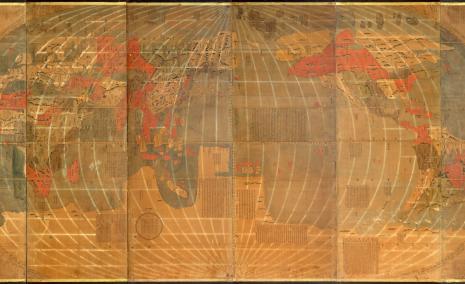
Did you know this is one of the most glamorous items in our Special Collections? Known as 坤輿萬國全圖, in elegant classical Chinese, literally meaning Map of the Ten Thousand Countries of the Earth, it also has a nickname in English – Ricci Map. Why Ricci in English? Why does this map, titled in Chinese, carry an Italian name in the English-speaking world? It’s an attribution to the mapmaker, Matteo Ricci (1552-1610). He was an Italian missionary of the Society of Jesus and one of the first Jesuits to arrive in Ming China. At the imperial court of Emperor Wanli 萬曆, he served as an expert in astronomy, geography, and mathematics. His map is the first world map based on European cartography but positioned China at the center of the world. However, Ricci did not create this map alone. He closely collaborated with Chinese scholars and artisans, including Li Zhizao 李之藻 (1565-1630), a scholar-official from Hangzhou.
CollectionsPeople
Library Stories

Library Stories
Hey everyone! We know that juggling studies and research can be a bit overwhelming, so we’re rolling out a brand-new program called “Grab & Grow”. These quick, 30-minute workshops are perfect for busy students and staff looking to boost their research skills without a huge time commitment. Whether you’re trying to figure out the library’s call number system or explore scientific research using open data, we’ve got you covered. Here is what you can look forward to: you’ll learn how to Manage your references effortlessly Create eye-catching presentations and videos with Canva, and Dive into scientific research using OpenAlex. These sessions are all about making your life easier and enhancing your efficiency in research. Plus, they’re engaging, so you’ll walk away with practical skills and use right away. So, if you want to level up your research capabilities and keep your research on point, join us for “Grab & Grow”. Keep an eye on our announcements for the schedule and grab your spot. Let’s make research fun and effective together!
News
Library Stories
Library Stories
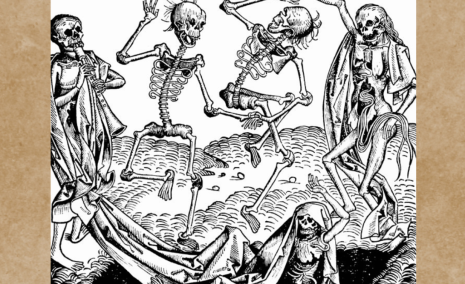
Part 1 discussed how students can fight monsters of anxiety about grades & GPA by laughing and learning with the Wisdom Stone Game. But, some carry around other fears. Since childhood, we’ve become familiar with the idea or cliché of corpses and skeletons coming to life. Others may fear living creatures like spiders or snakes. We get “spooked out” by such things, except when they are silly or pretty. There’s a long tradition of dealing with these fears by confronting or even celebrating them. Here’s an example: Danse Macabre, composed by Camille Saint-Saëns, performed by Lydia Ayers, Andrew Horner, and Stella So. Danse Macabre, also called the Dance of Death, is an allegorical concept said to encapsulate the unconscious fear of death.1 The popularity of the Danse Macabre art such as poetry, music and drama, can be traced back to the 13th century, when Europeans became obsessed with death inspired by the Black Death and the Hundred Years’ War.2 This video of a puppet show, available on DataSpace@HKUST, is part of a collection of the music, and puppet productions of the late Dr. Lydia Ayers, a former professor at HKUST, given by her widower, Dr. Andrew Horner, a professor of Computer Science here.
NewsPeople
