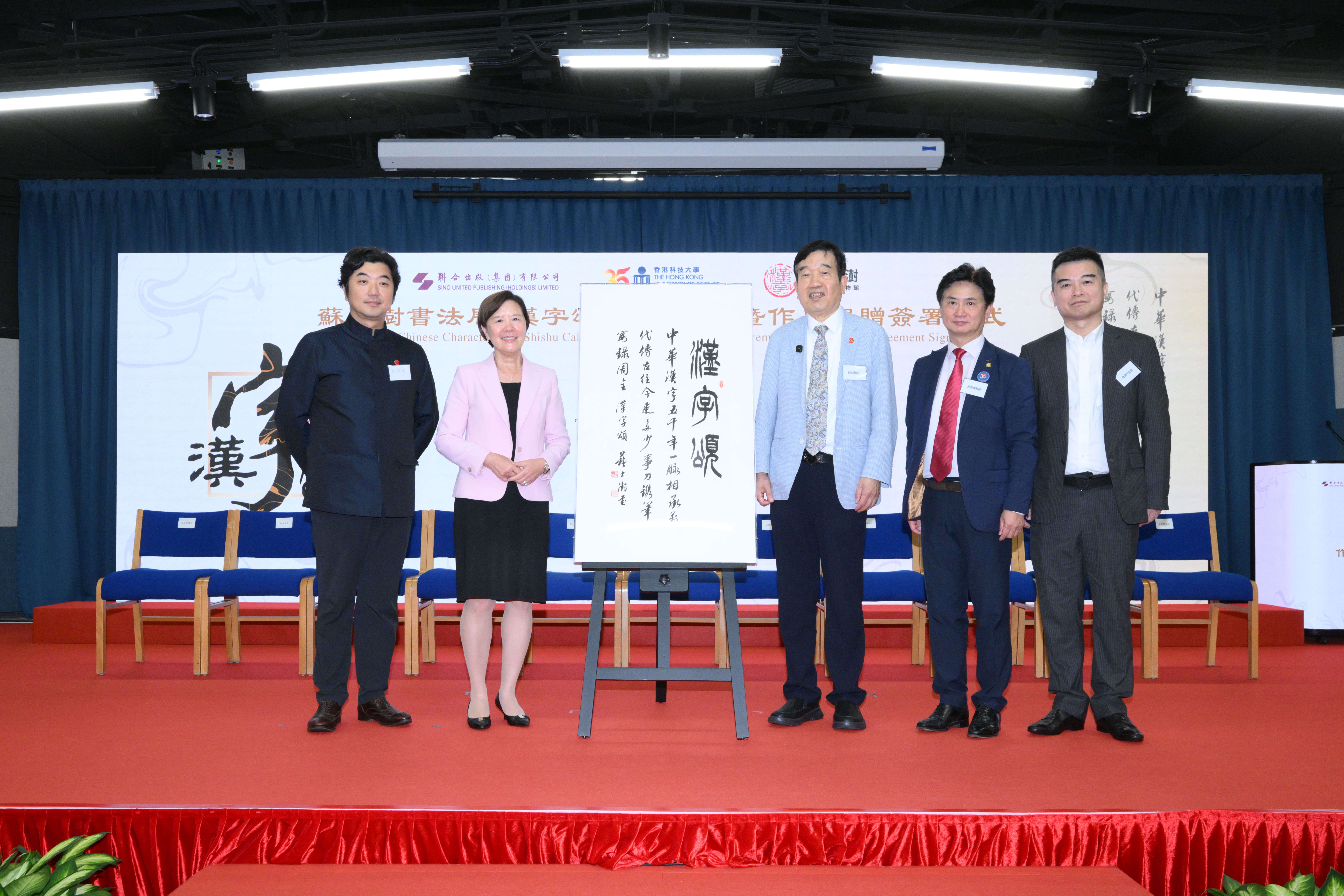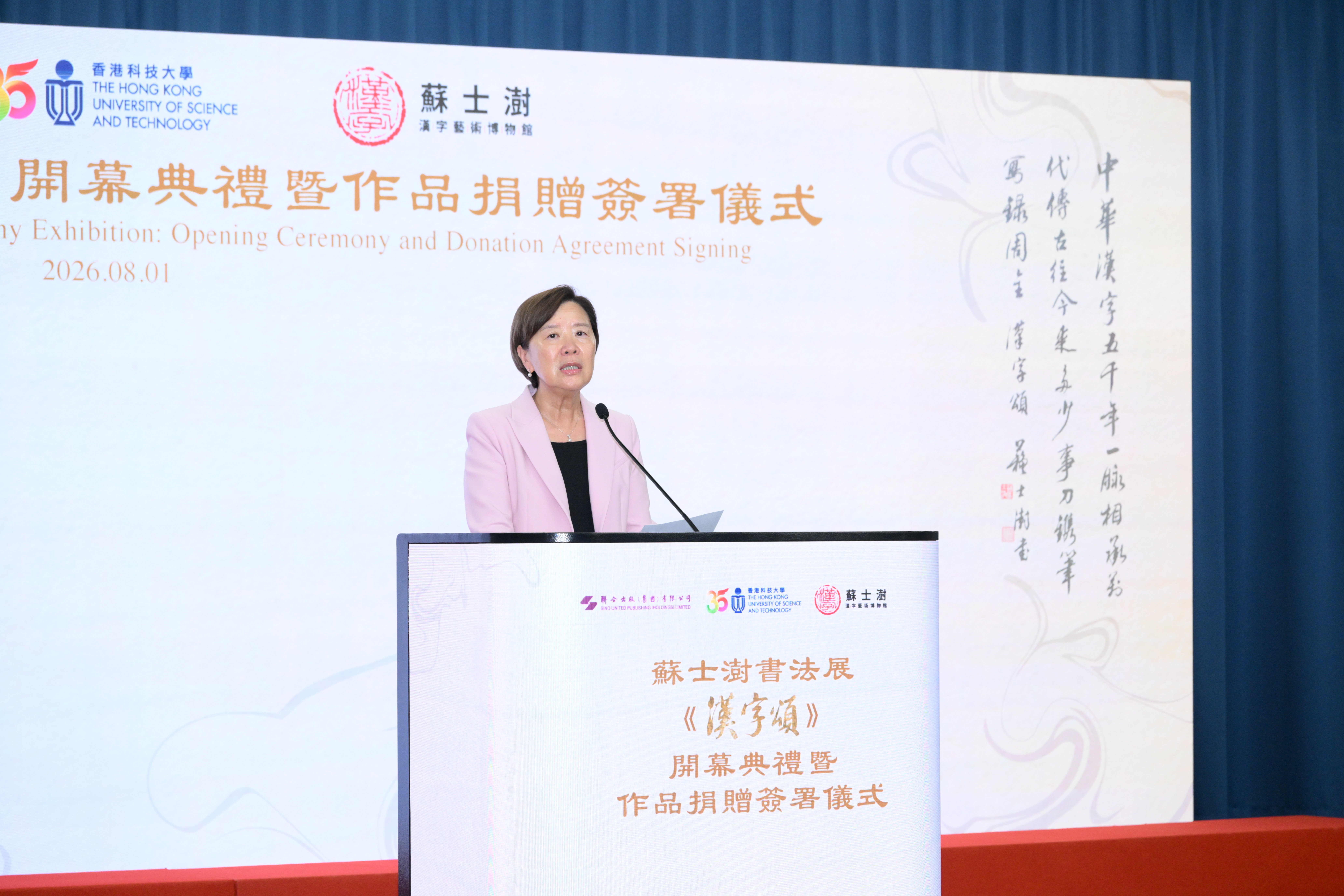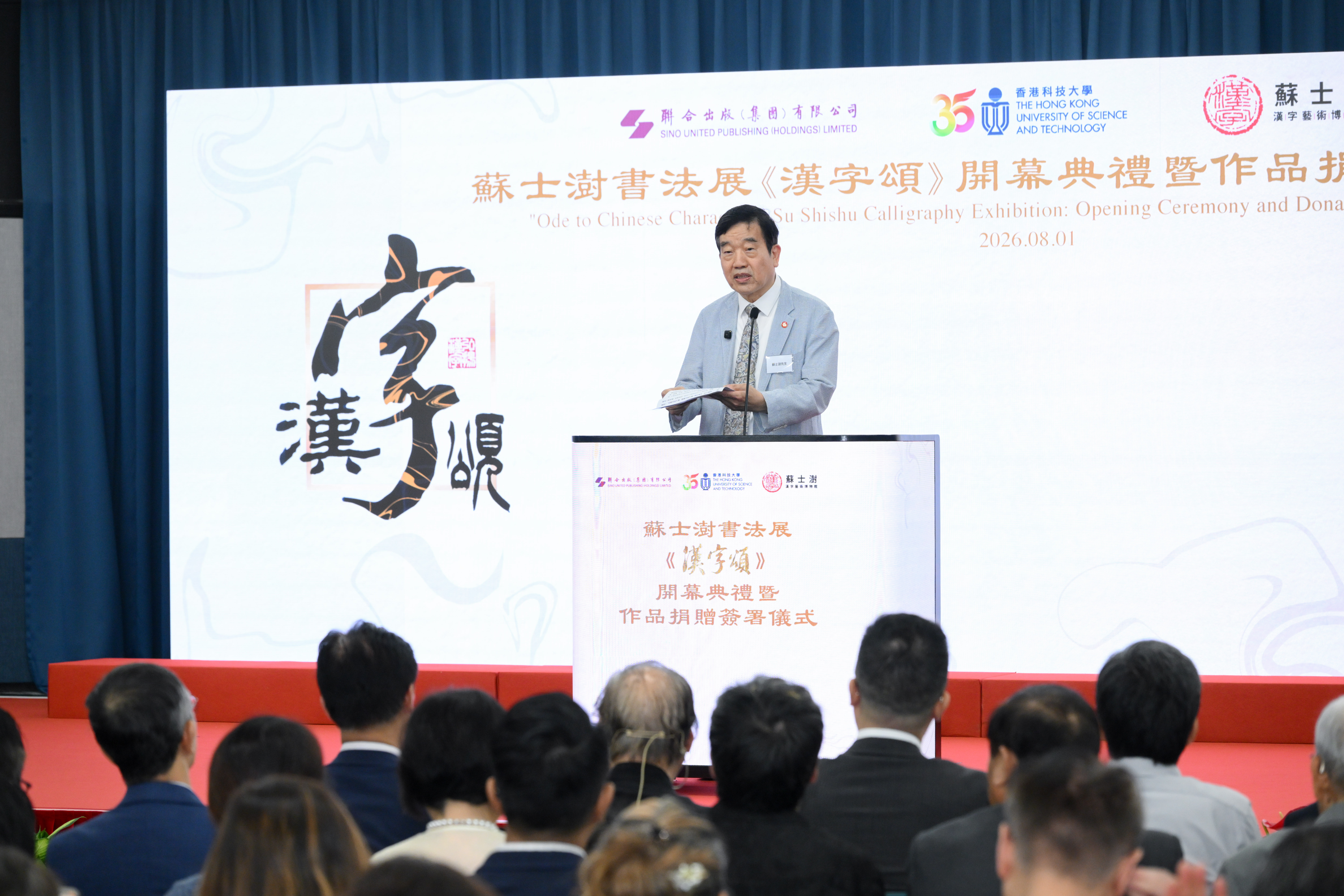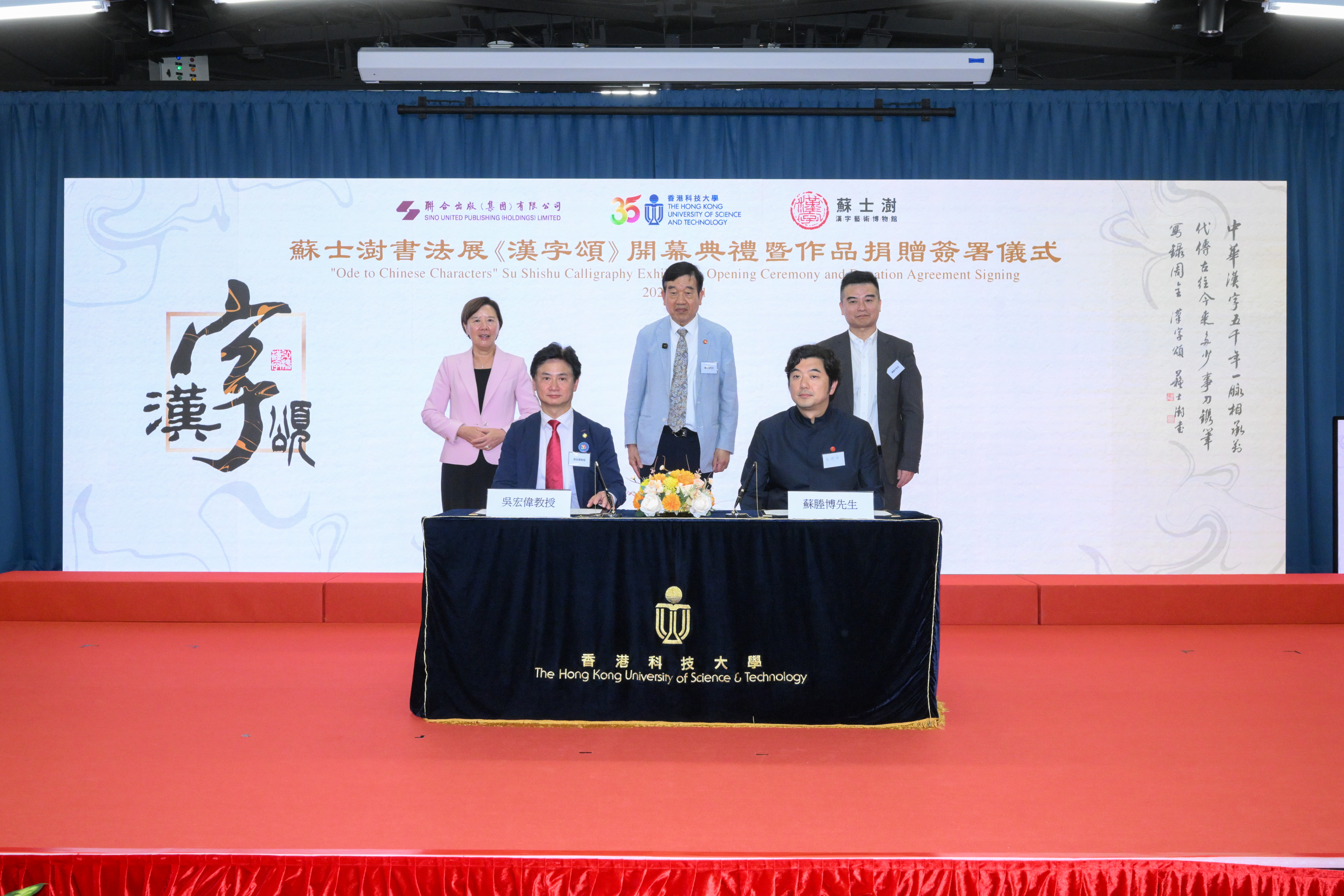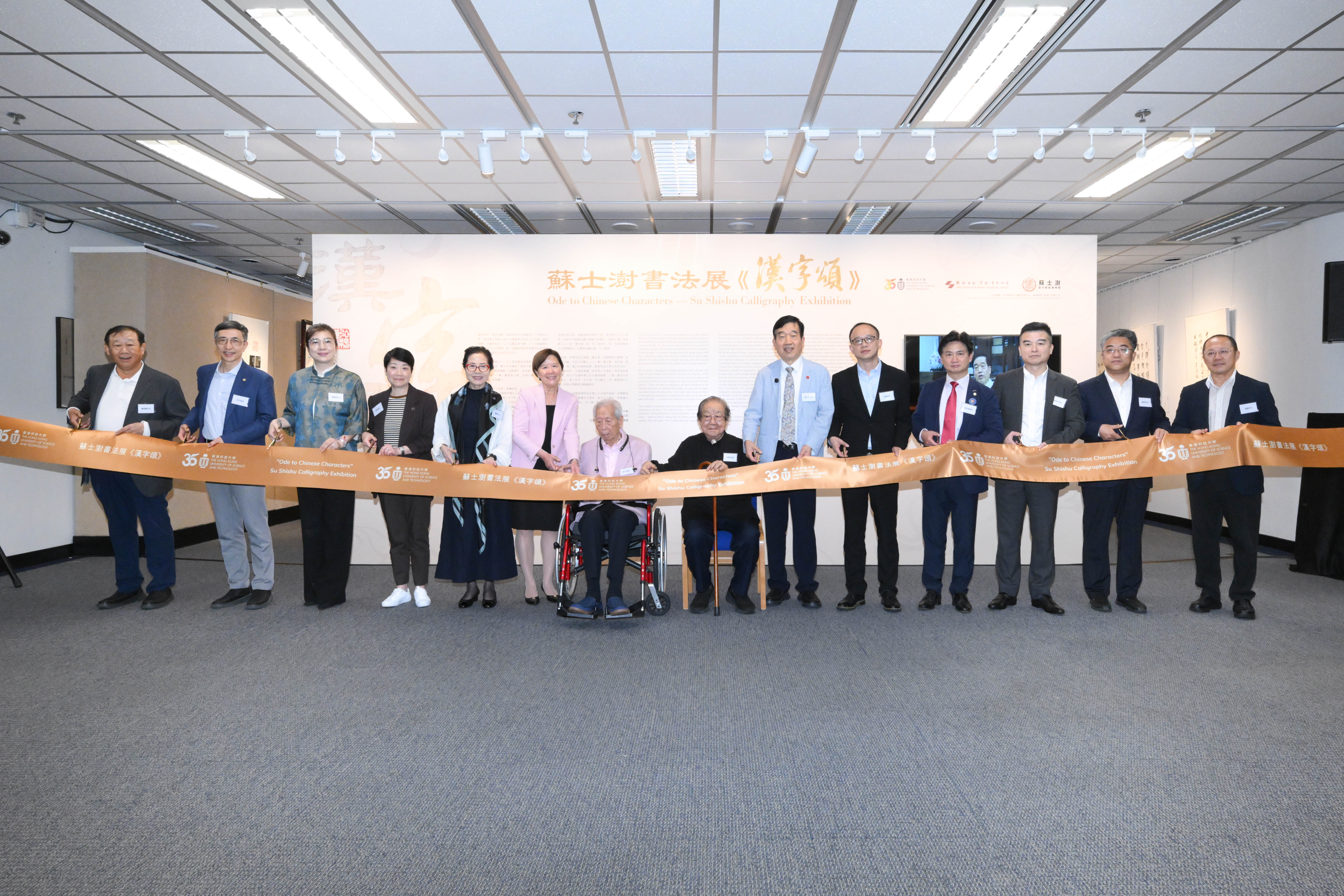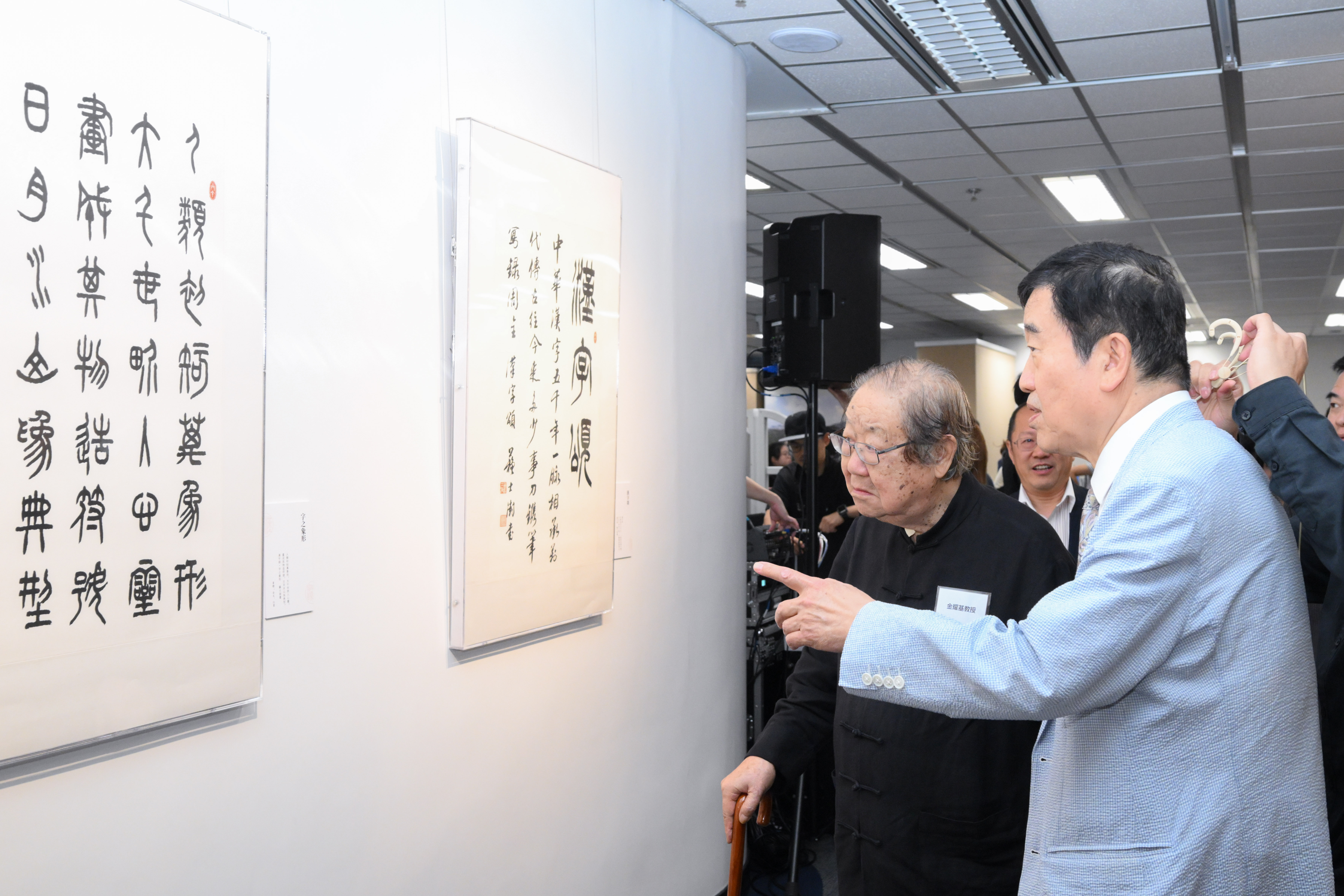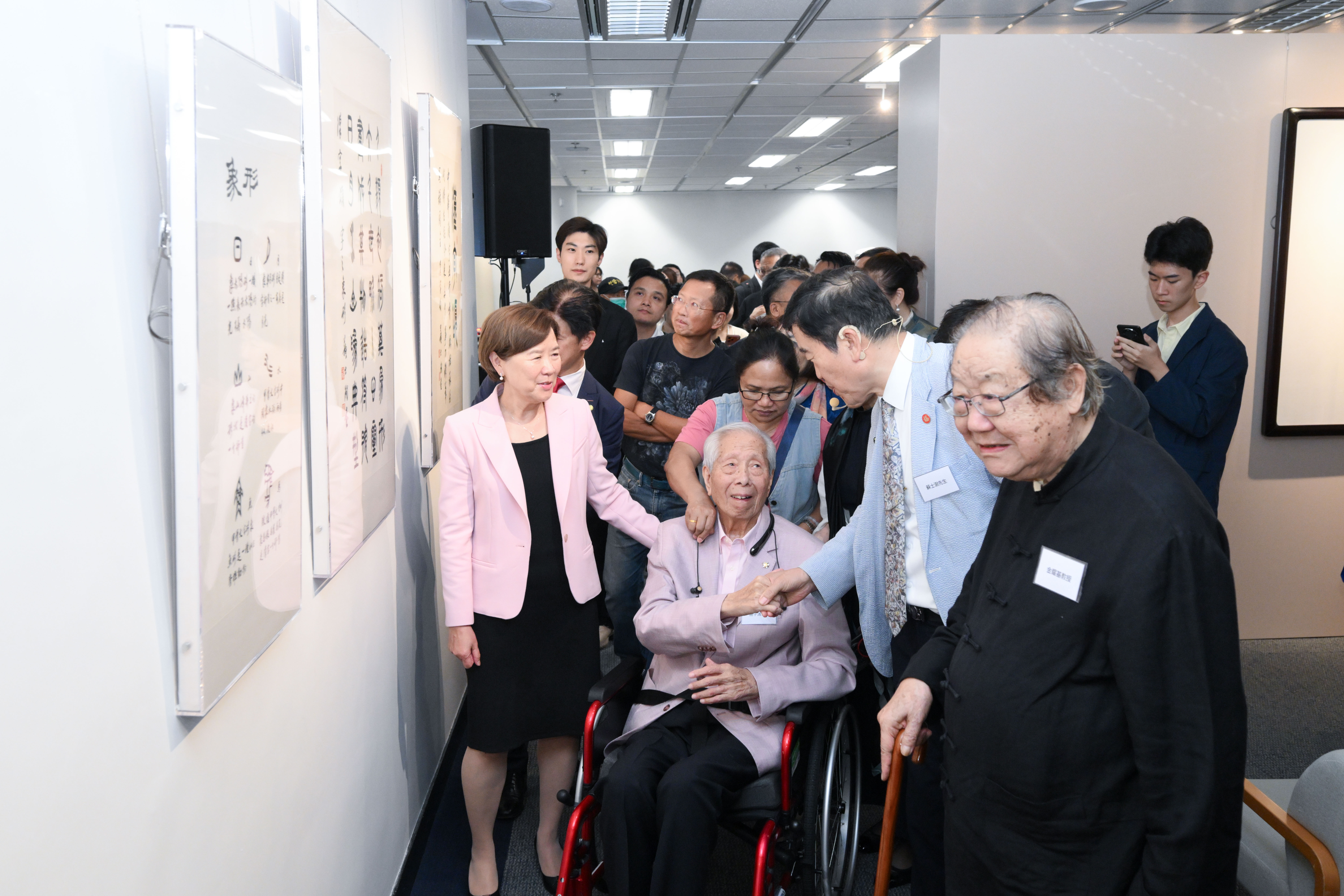


Ode to Chinese Characters - Su Shishu Calligraphy Exhibition 蘇士澍書法展《漢字頌》
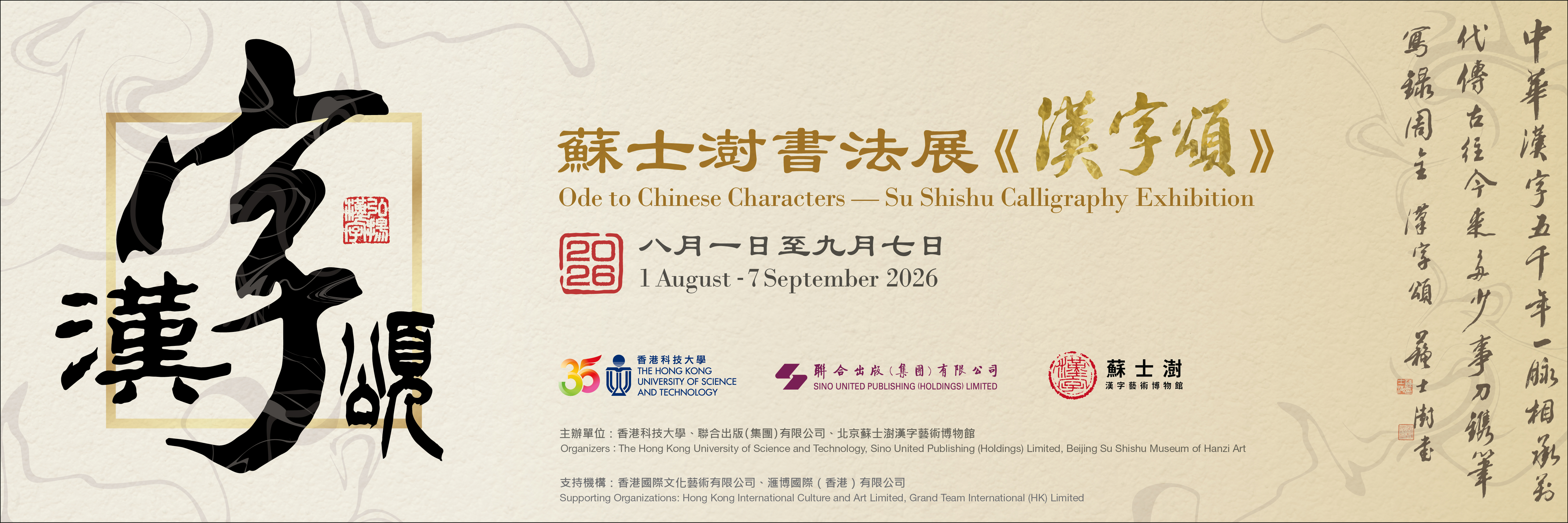
In the bingwu year, as warm tides embrace the shores of Hong Kong, and on the occasion of the 35th anniversary of the founding of The Hong Kong University of Science and Technology, the renowned calligrapher Mr. Su Shishu has selected thirty-five works of calligraphy, generously donated and gathered here for exhibition. Thirty-five years of unbroken learning; thirty-five scrolls radiant with ink — behind this happy coincidence of numbers lies an artist’s deep affection for a great institution of higher learning, and, still more, his pure and childlike devotion to the culture of the Chinese character.
Mr. Su Shishu, Standing Committee member of the 11th and 12th National Committees of the CPPCC and the 7th Chairman of the China Calligraphers Association, has for decades upheld the conviction “Write Chinese characters well; be a good Chinese person.” Tilling the field of calligraphic art and championing the Chinese character, his achievements grace our age and his legacy nourishes those who come after. To his mind, every stroke is a trace of the heart: the character is a painting of the mind, the brushwork a seal of the spirit — to behold the character is to behold the heart.
This exhibition comprises thirty-five works, grand in structure and complete in narrative. The opening three — Ode to the Chinese Character, Championing the Chinese Character, and In Praise of China — lead the whole, setting forth its mission and expressing its sincerity. The main body, “The Evolution of Script,” presents eighteen works: from incised oracle-bone script and the bronze inscriptions of the Shang and Zhou, through the seal script of Qin and the clerical script of Han, the Wei stele script and the regular script of Tang, and on to the free grace of running and cursive — spanning nine forms of script in all. Each script is paired with a verse of praise composed by Mr. Su himself as its “thesis,” and a classic stele or model work as its “proof,” encomium and masterpiece reflecting one another, theory and original in dialogue. To view this one exhibition is to read a condensed history of Chinese calligraphy. The “Six Categories of Characters” section presents twelve works — pictographs, indicatives, compound ideographs, phono-semantic compounds, phonetic loans, and mutually explanatory characters — expounding through verse the wisdom of character creation, and revealing through examples the thought of our forebears, so that the viewer not only beholds the beauty of the Chinese character, but grasps why it is beautiful. The closing works — In Praise of Chinese Calligraphy, surveying a thousand years of history, and In Praise of the Bauhinia, its brush alighting upon Hong Kong — run from “Ode to the Chinese Character” to “the Bauhinia,” resonating with the context of the donation to The Hong Kong University of Science and Technology: literary lineage and sense of place converge, and the heart is moved.
The Chinese character is the taproot of Chinese civilization; calligraphy, the totem of the national spirit. Yet at its deepest, it lies in perceiving the mind through the character — within a single dot or stroke are revealed one’s temperament, one’s cultivation, the very bearing of one’s spirit. The Hong Kong University of Science and Technology, founded upon science and renowned for innovation, now houses these treasures of ink — science and the humanities reflecting one another, reason and poetry in fusion; and should the gaze of modern neuroscience be turned anew upon brush and ink — upon how each stroke takes form in the heart and moves through the hand — it may add an empirical footnote to the truth that “in the character, the mind is seen.” Herein lies a perfect portrait of the spirit of the university.
With this exhibition, we respectfully celebrate the 35th anniversary of The Hong Kong University of Science and Technology; and we wish that all who view it may wander amid brush and ink, discern the origins and currents of the Chinese character, feel the breadth of our culture, awaken to the deep devotion of family and nation, and, through the character, perceive the mind — beholding themselves within a single stroke.
The Hong Kong University of Science and Technology
Sino United Publishing (Holdings) Limited
Beijing Su Shishu Museum of Hanzi Art — respectfully inscribed
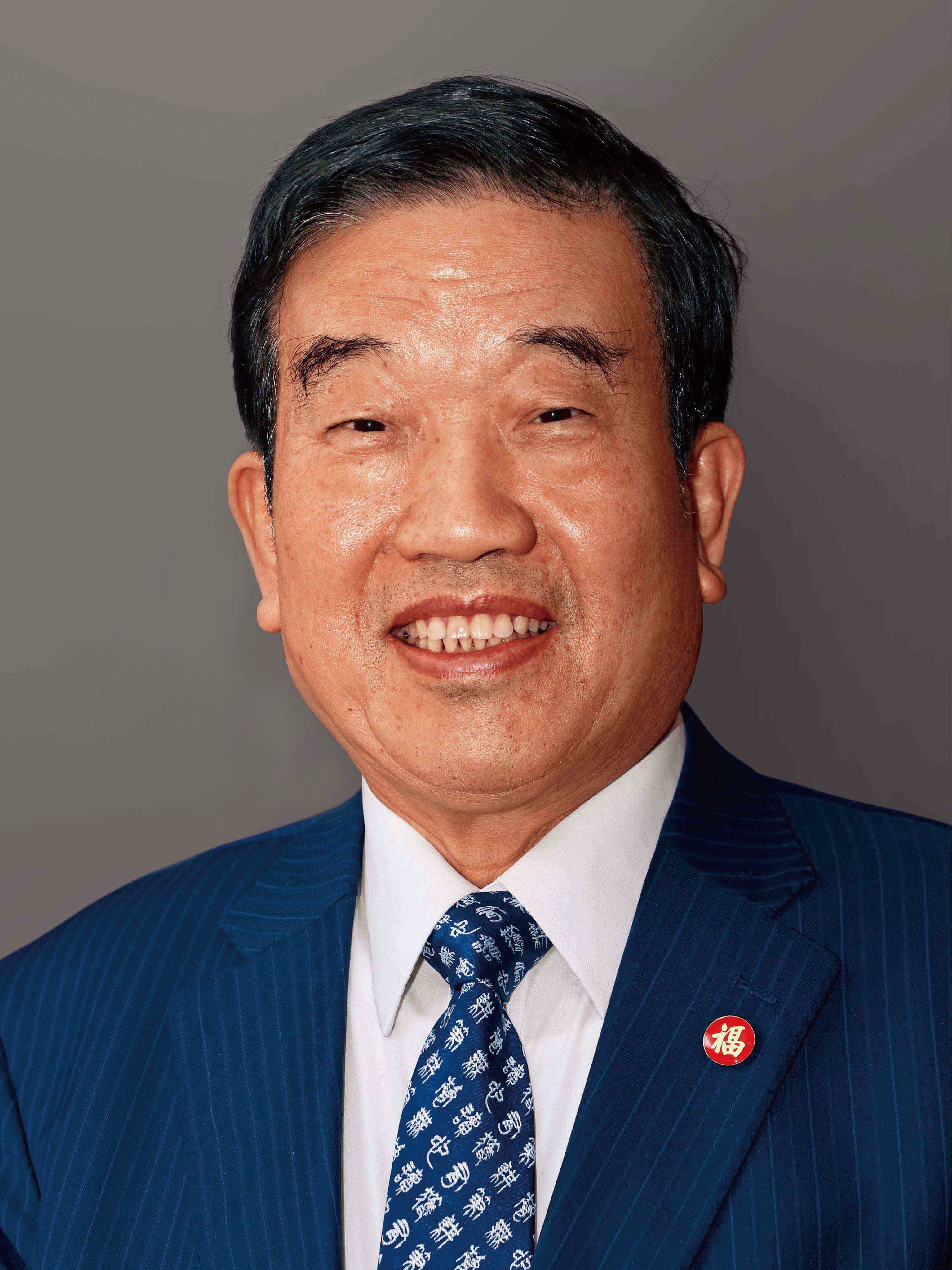
Su Shishu is a Member of the 10th National Committee of the Chinese People’s Political Consultative Conference (CPPCC), a Standing Committee Member of the 11th and 12th CPPCC National Committees, a Member of the Central Research Institute of Culture and History, the 7th President of the China Calligraphers Association, and Honorary President of the Cultural Relics Publishing House. He is also Honorary Director, Doctoral Supervisor and Professor of the Calligraphy Institute at the Academy of Arts & Design, Tsinghua University; Chief Expert of the Center for Innovation in the Integration of Art and Technology at Beijing Normal University; and Honorary Director of the Center for Calligraphy Education and Art Research at Shandong University.
Born in 1949 in Beijing, he developed a passion for calligraphy and seal carving from an early age. In his youth he studied under Liu Boqin, and later under the renowned master Qi Gong.
During his tenure at the Cultural Relics Publishing House, he planned, organized, edited and published a large body of influential works, including the Sino-Japanese collaboration A Grand View of Chinese Calligraphy (7 volumes), The Complete Collection of Chinese Calligraphy (18 volumes), and A Grand View of Masterpieces of Chinese Calligraphy Through the Ages (100 volumes). The series Selected Steles and Model Calligraphy Through the Dynasties has published over a hundred titles, with cumulative distribution reaching tens of millions of copies and wide-ranging social impact. In 2008 he was awarded the “Taofen Publishing Award,” the highest honor in China’s publishing industry.
In calligraphy, Su Shishu is versed in all script styles and excels at rendering seal and clerical scripts with the chicken-feather brush; in seal carving, he takes the Qin and Han schools as his model, infusing his own sensibility into an ancient style. Since 2007 he has held more than ten exhibitions of epigraphy and calligraphy and Chinese-character cultural promotion at the National Committee of the CPPCC, the National Art Museum of China, the China Millennium Monument, as well as in Hong Kong, Japan, France, and at the United Nations Headquarters in New York. In September 2019, he held the solo exhibition “Promoting Chinese Characters, Singing of China — A Report Exhibition of Su Shishu’s Epigraphy and Calligraphy” at the CPPCC Museum of Culture and History. In May 2024 he held the “Passing the Torch of Ink” China-Japan Calligraphy Exchange Exhibition in Beijing, and in February 2025 the exhibition traveled to the National Art Center, Tokyo.
Accomplished in poetry and prose and gifted in connoisseurship, he has conducted in-depth research on ancient painting, calligraphy, and epigraphic rubbings, and has taken part on many occasions in the authentication of such works. He has published numerous scholarly works, including The Art of Chinese Calligraphy: Qin and Han Volume, An Introduction to the Calligraphic Art of the Qin and Han Periods, The Calligraphic Art of the Sui, Tang and Five Dynasties, and Selected Issues in Calligraphic Creation.
He has long been devoted to the development and cultivation of young people, and has repeatedly submitted proposals at the National Two Sessions on promoting Chinese-character culture and calligraphy education. Since 2015 he has traveled across every province of China as well as Hong Kong, Macao and Taiwan, visiting more than a hundred primary and secondary schools on the ground to survey the delivery of calligraphy curricula. For over a decade he has dedicated himself to popularizing and promoting calligraphy education in primary and secondary schools, personally leading the way and tirelessly advocating for the transmission of China’s outstanding traditional culture.
Inscriptions in Chinese only
開篇 Opening
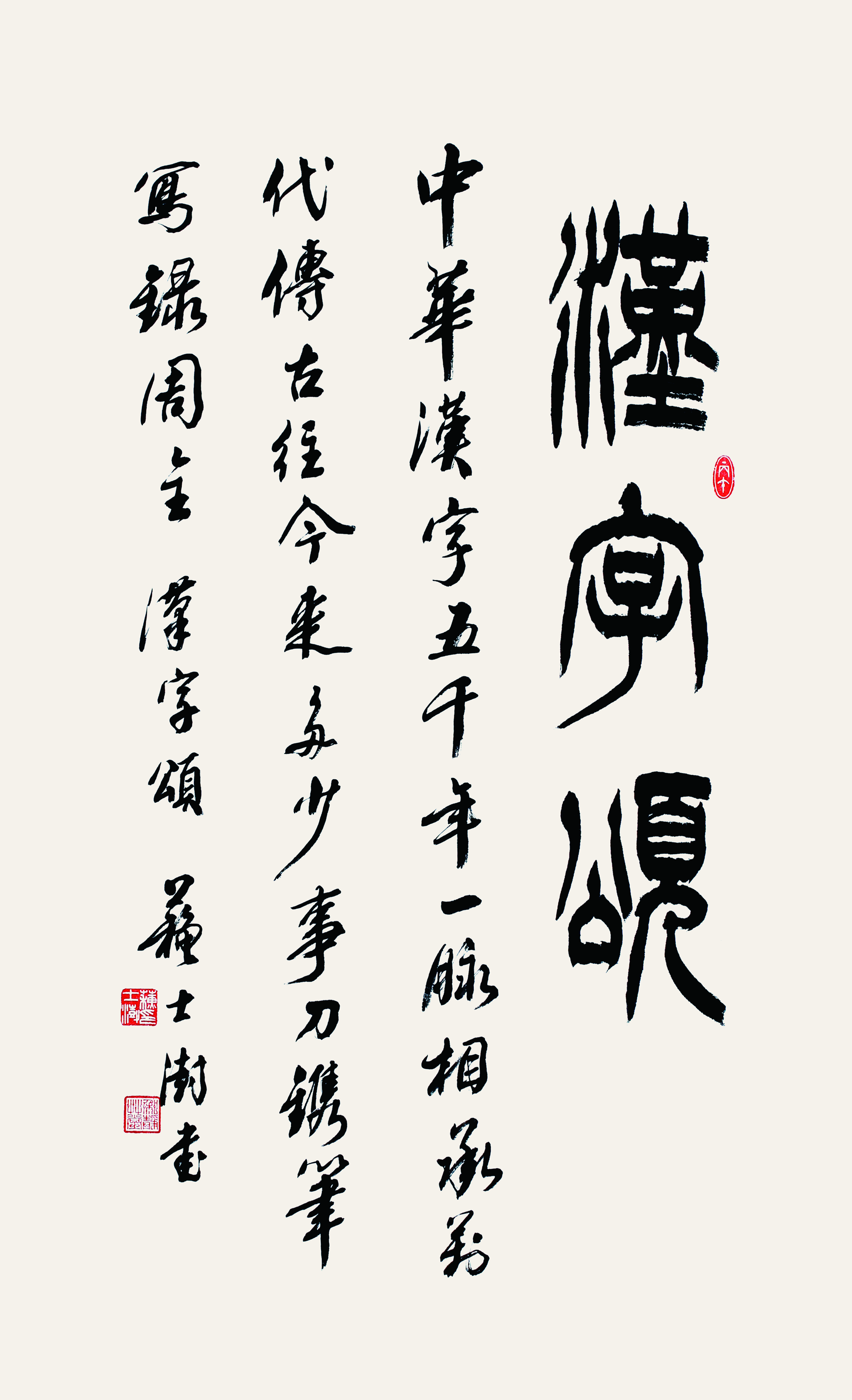
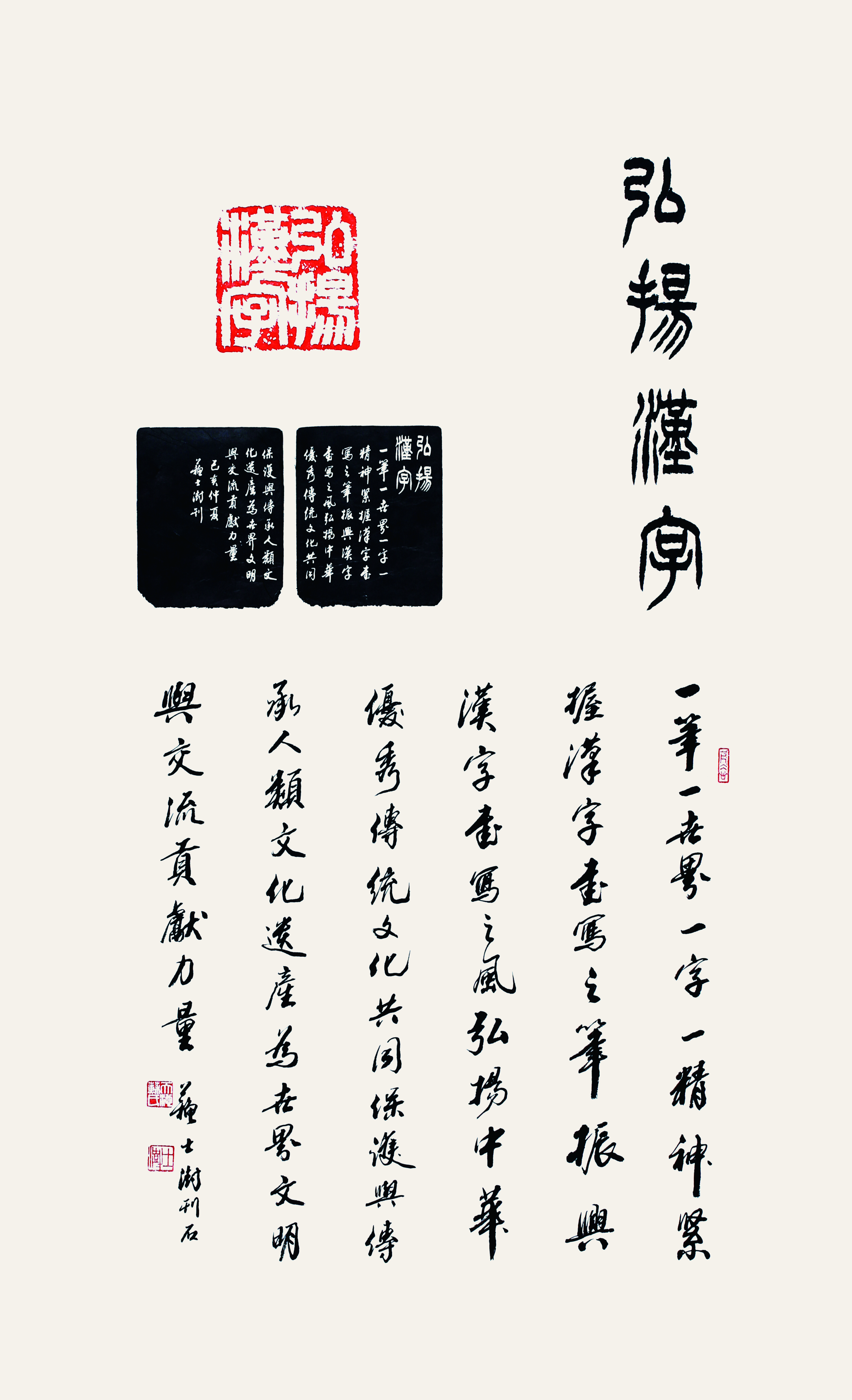
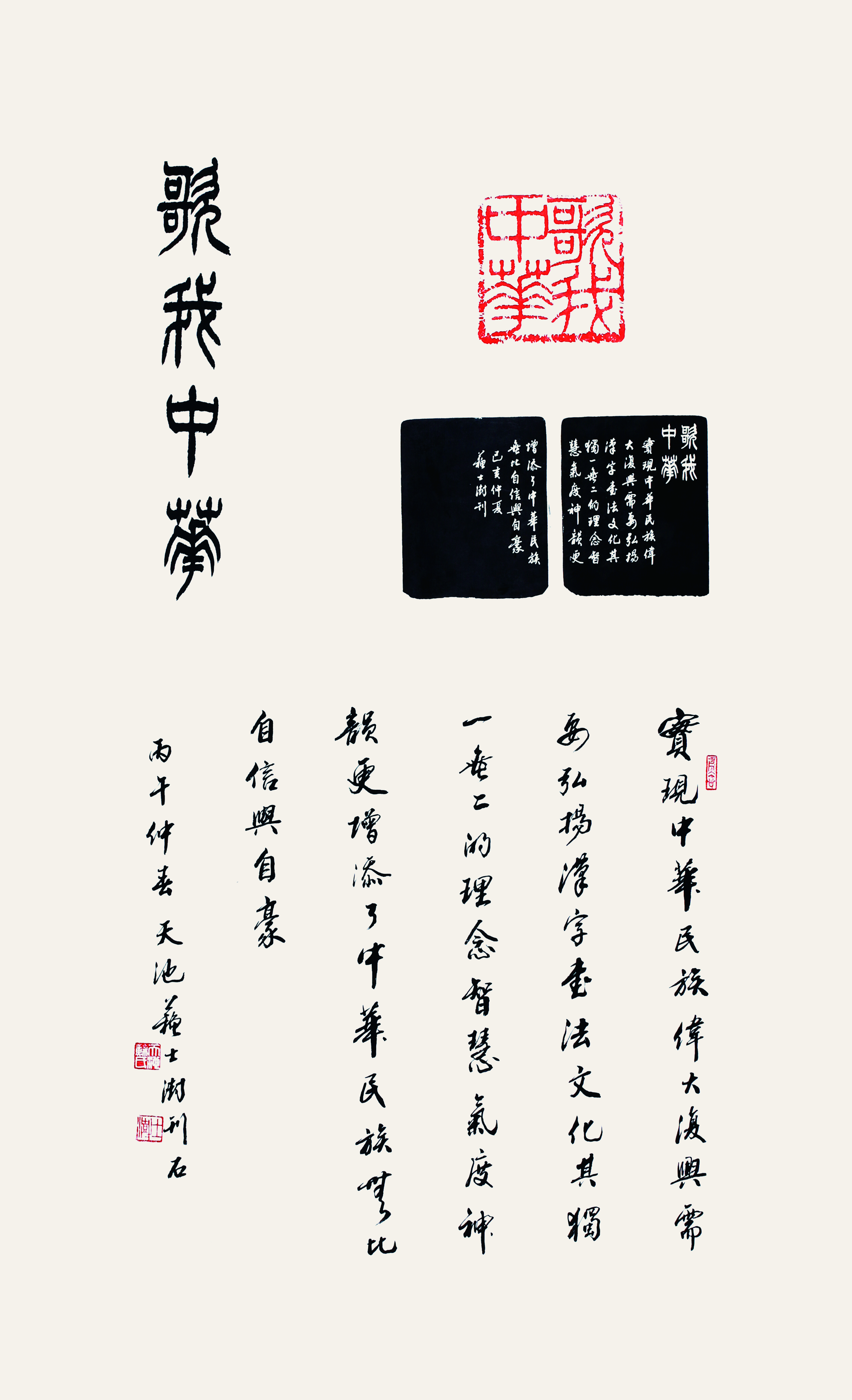
| 釋文 | 漢字頌 中華漢字五千年,一脈相承萬代傳。古往今來多少事,刀鐫筆寫錄周全。 漢字頌 蘇士澍書 |
| 鈐印 | 右上:丙午(白) 左下:蘇士澍印(白)、和靜草堂(朱) |
| 書體 | 篆書、行書 |
| 釋文 | 弘揚漢字 一筆一世界,一字一精神。緊握漢字書寫之筆,振興漢字書寫之風,弘揚中華優秀傳統文化,共同保護與傳承人類文化遺產,為世界文明與交流貢獻力量。 蘇士澍刊石 刻印:弘揚漢字(白) |
| 鈐印 | 右上:一片冰心(朱) 左下:天池蘇氏(白)、士澍(朱) |
| 書體 | 篆書、行書 |
| 釋文 | 歌我中華 實現中華民族偉大復興,需要弘揚漢字書法文化,其獨一無二的理念、智慧、氣度、神韻,更增添了中華民族無比自信與自豪。 丙午仲春 天池蘇士澍刊石 刻印:歌我中華(朱) |
| 鈐印 | 右上:一片冰心(朱) 左下:天池蘇氏(白)、士澍(朱) |
| 書體 | 篆書、行書 |
書體演變 The Evolution of Script
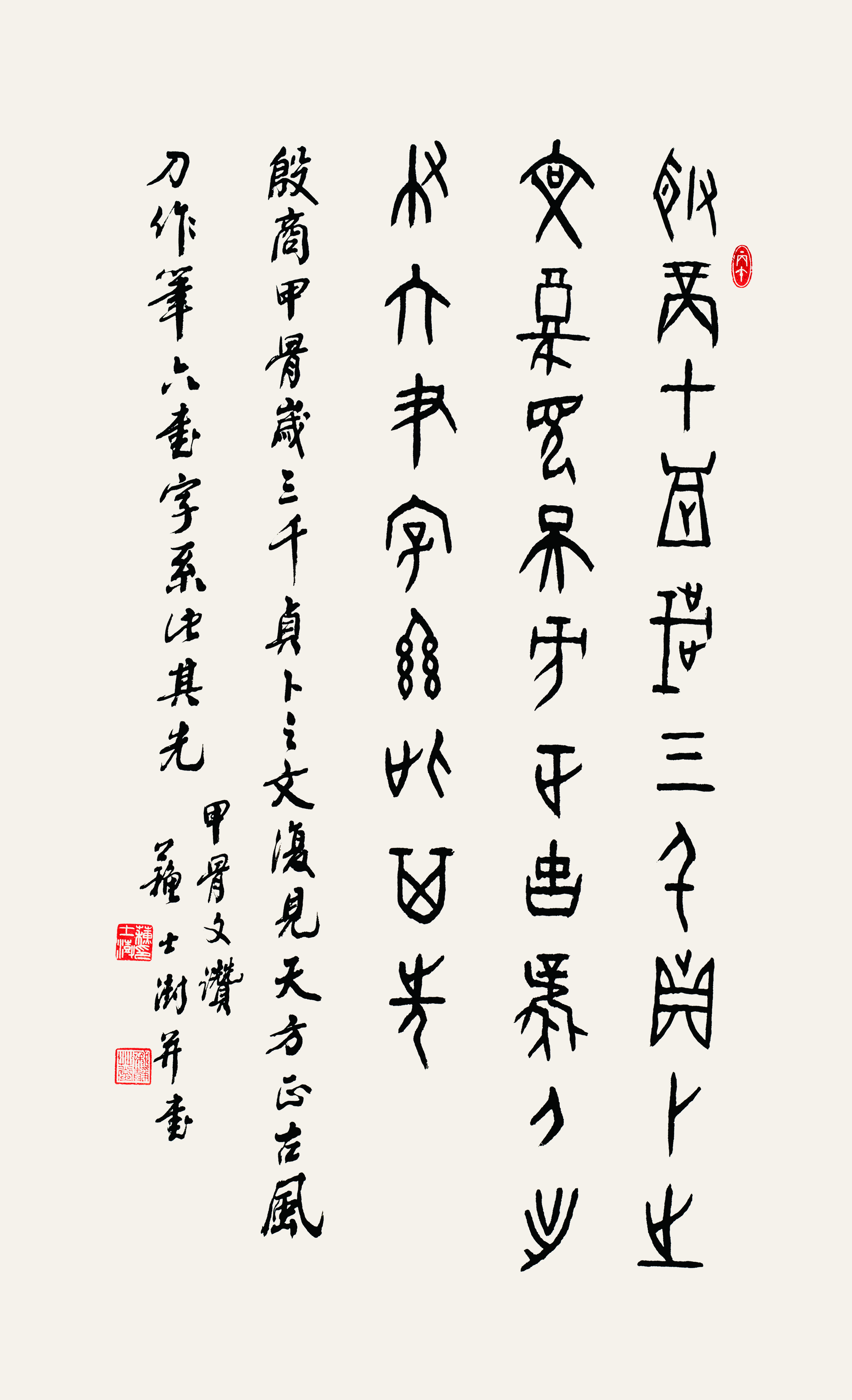
| 釋文 | 殷商甲骨歲三千,貞卜之文復見天。方正古風刀作筆,六書字系此其先。 甲骨文讚 蘇士澍并書 |
| 鈐印 | 右上:丙午(白) 左下:蘇士澍印(白)、和靜草堂(朱) |
| 書體 | 甲骨文、行書 |
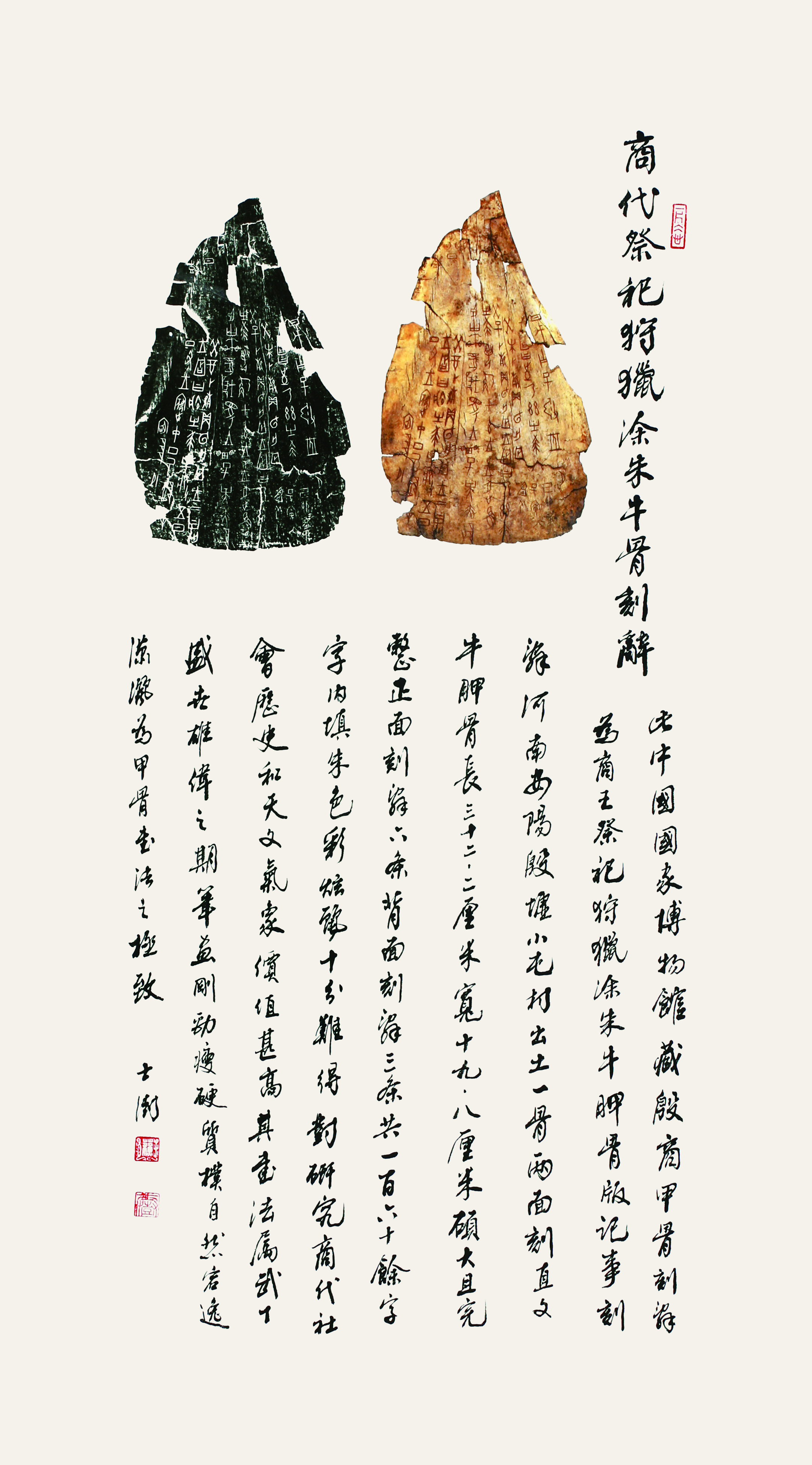
| 釋文 | 此中國國家博物館藏殷商甲骨刻辭,為商王祭祀狩獵塗朱牛胛骨版記事刻辭。河南安陽殷墟小屯村出土,一骨兩面刻直文。牛胛骨長三十二點二釐米,寬十九點八釐米,碩大且完整,正面刻辭六條,背面刻辭三條,共一百六十餘字。字內填朱,色彩炫麗,十分難得,對研究商代社會歷史和天文氣象價值甚高。其書法屬武丁盛世雄偉之期,筆畫剛勁瘦硬,質樸自然,宕逸瀟灑,為甲骨書法之極致。 士澍 |
| 鈐印 | 右上:一片冰心(朱) 左下:蘇(白)、士澍(朱) |
| 書體 | 行書 |
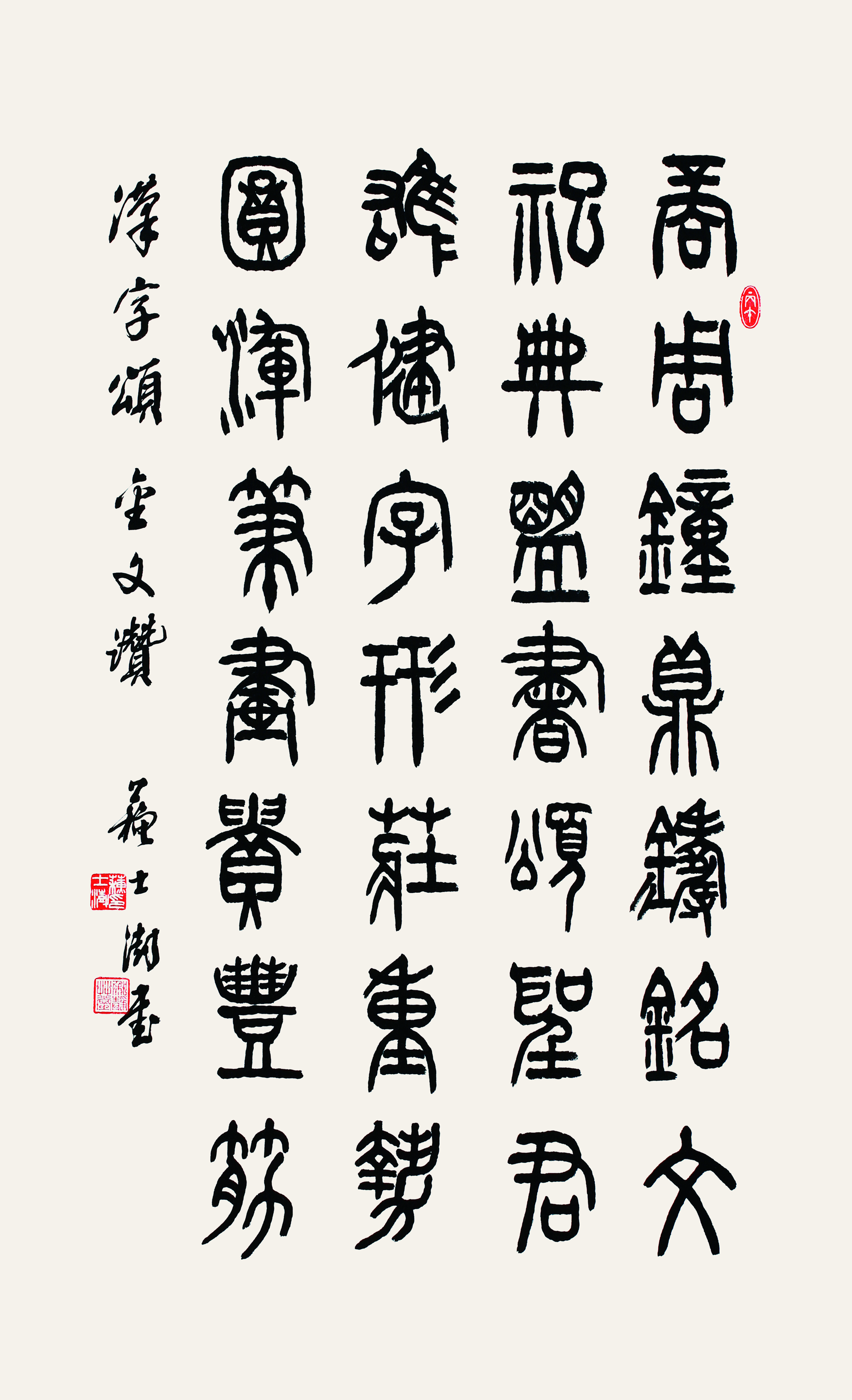
| 釋文 | 商周鐘鼎鑄銘文,祀典盟書頌聖君。雄健字形莊重勢,圓渾筆畫貴豐筋。 漢字頌·金文讚 蘇士澍書 |
| 鈐印 | 右上:丙午(白) 左下:蘇士澍印(白)、和靜草堂(朱) |
| 書體 | 金文、行書 |
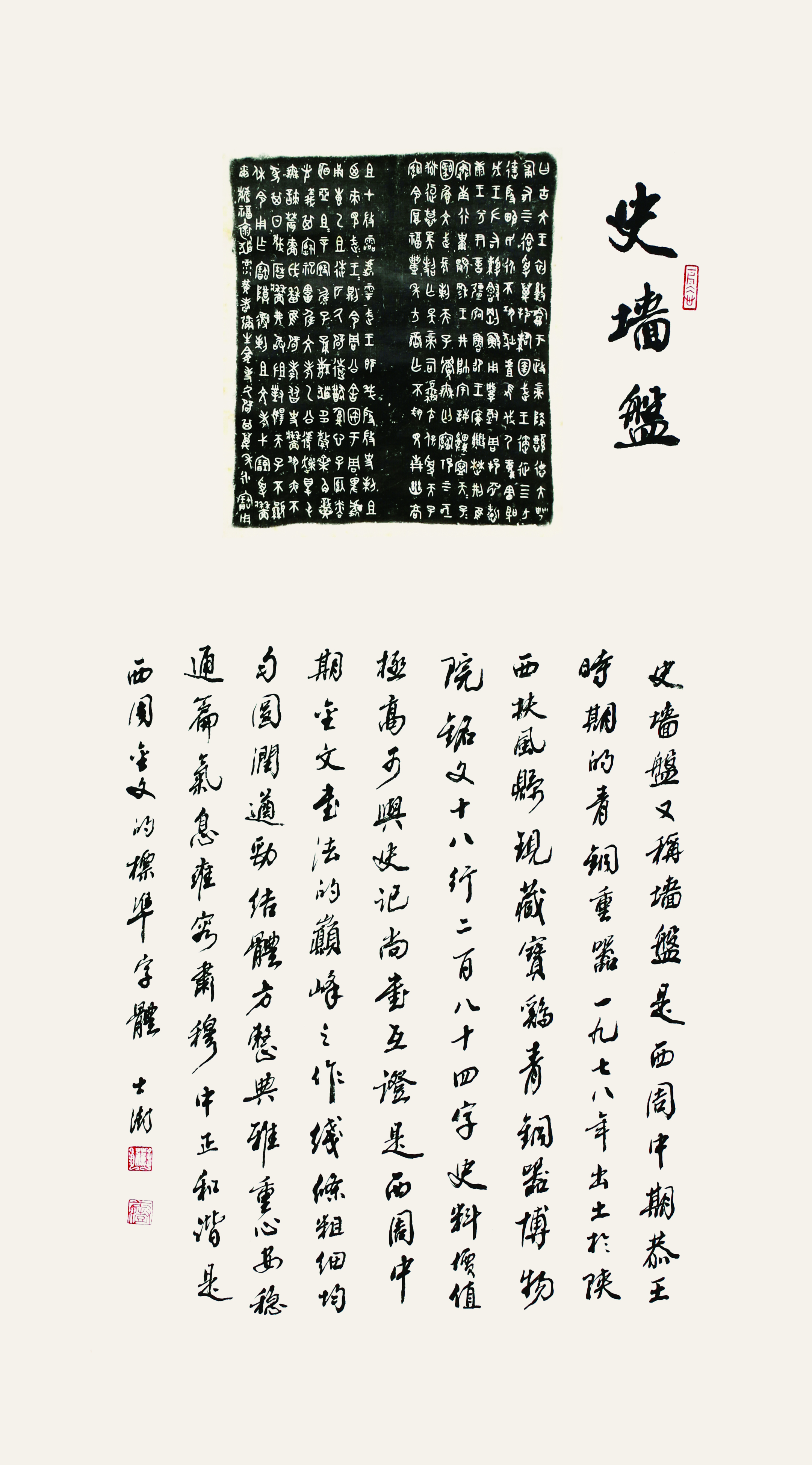
| 釋文 | 《史牆盤》又稱《牆盤》,是西周中期恭王時期的青銅重器,一九七八年出土於陝西扶風縣,現藏寶雞青銅器博物院。銘文十八行二百八十四字,史料價值極高,可與《史記》《尚書》互證,是西周中期金文書法的巔峰之作。綫條粗細均勻,圓潤遒勁,結體方整典雅,重心安穩,通篇氣息雍容肅穆,中正和諧,是西周金文的標準字體。 士澍 |
| 鈐印 | 右上:一片冰心(朱) 左下:蘇(白)、士澍(朱) |
| 書體 | 行書 |
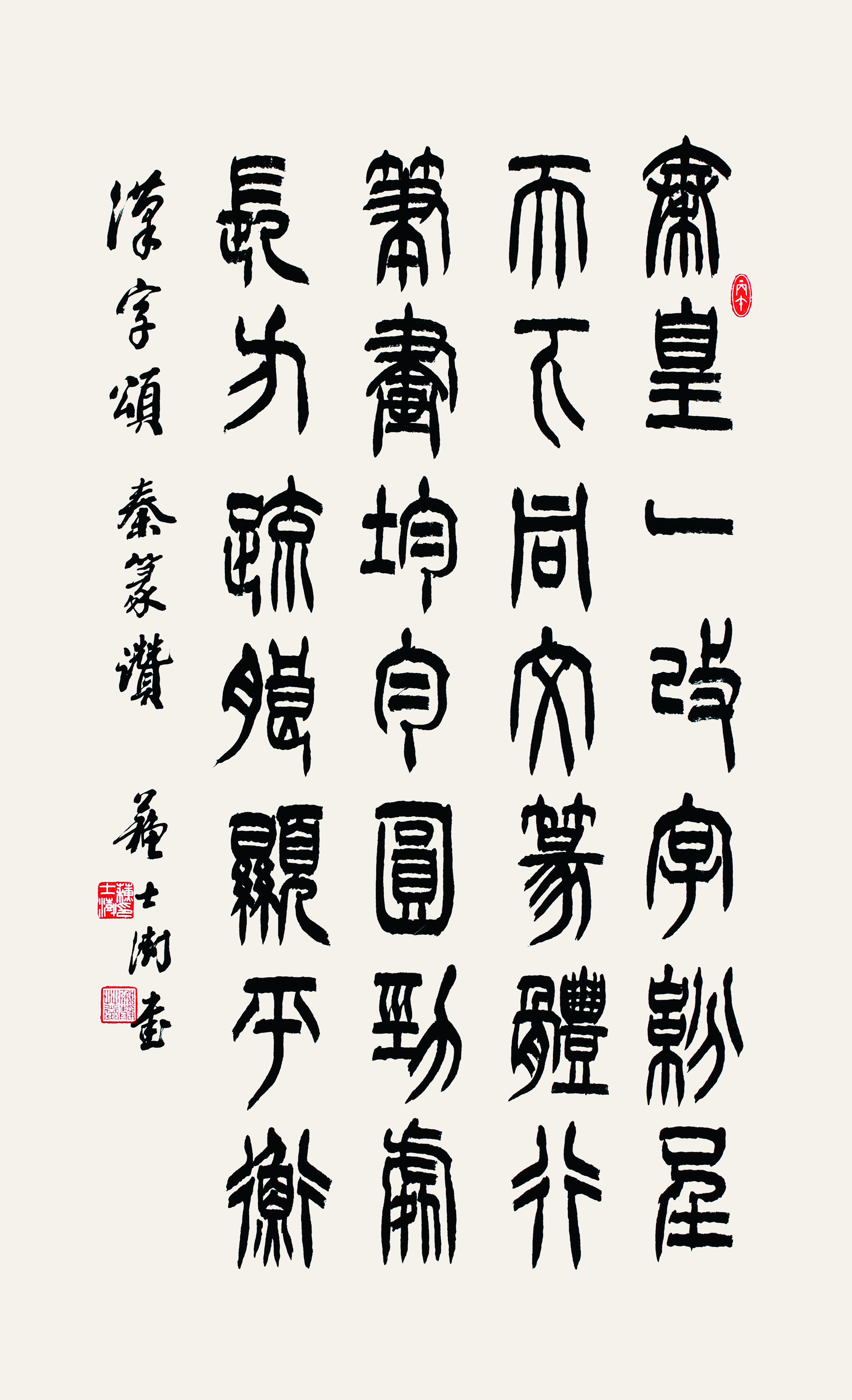
| 釋文 | 秦皇一改字紛呈,天下同文篆體行。筆畫均勻圓勁處,長方疏朗顯平衡。 漢字頌·秦篆讚 蘇士澍書 |
| 鈐印 | 右上:丙午(白) 左下:蘇士澍印(白)、和靜草堂(朱) |
| 書體 | 小篆、行書 |
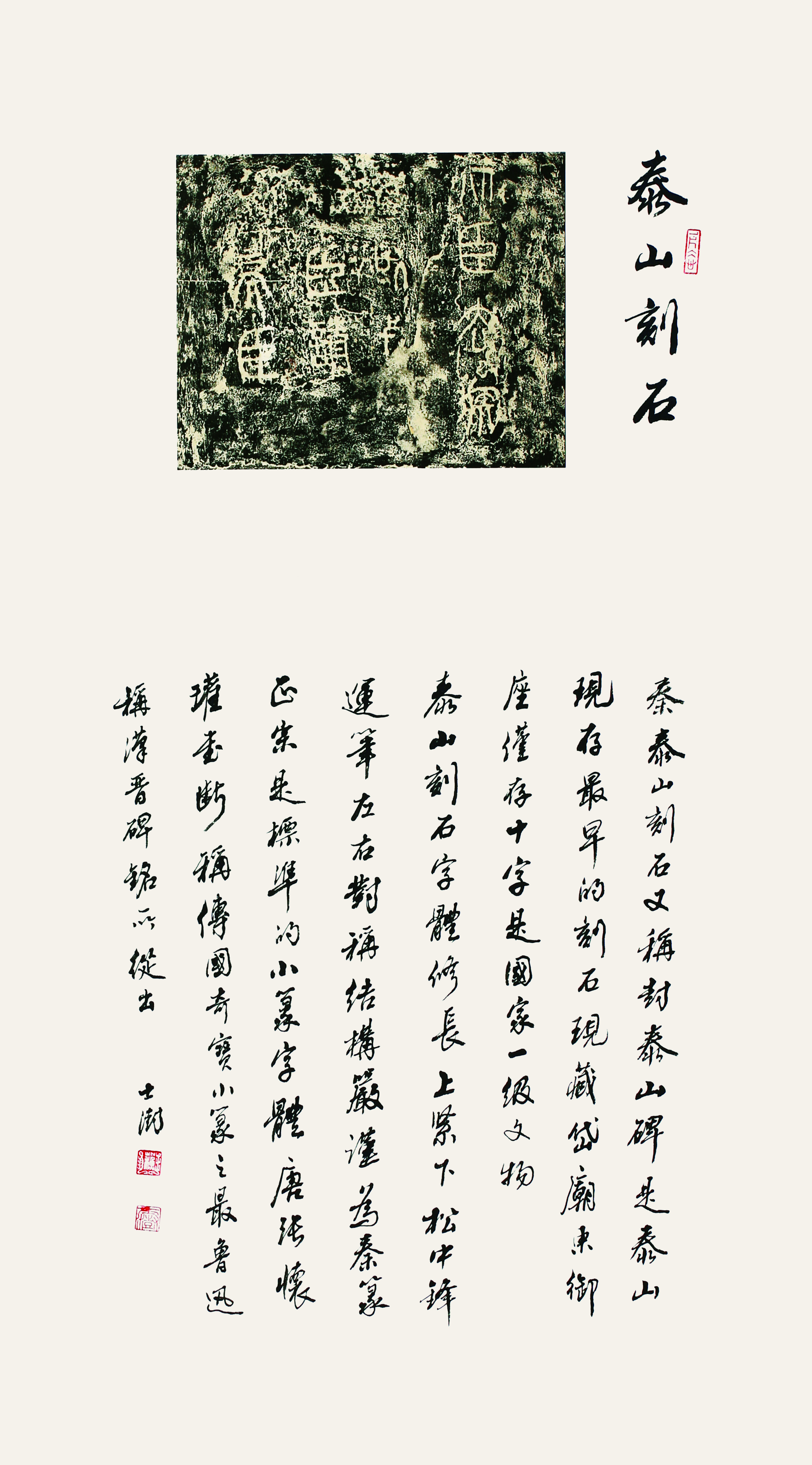
| 釋文 | 《秦泰山刻石》又稱《封泰山碑》,是泰山現存最早的刻石,現藏岱廟東御座,僅存十字,是國家一級文物。 泰山刻石字體修長,上緊下松,中鋒運筆,左右對稱,結構嚴謹,為秦篆正宗,是標準的小篆字體。唐張懷瓘《書斷》稱:「傳國奇寶,小篆之最。」魯迅稱:「漢晉碑銘所從出。」 士澍 |
| 鈐印 | 右上:一片冰心(朱) 左下:蘇(白)、士澍(朱) |
| 書體 | 行書 |
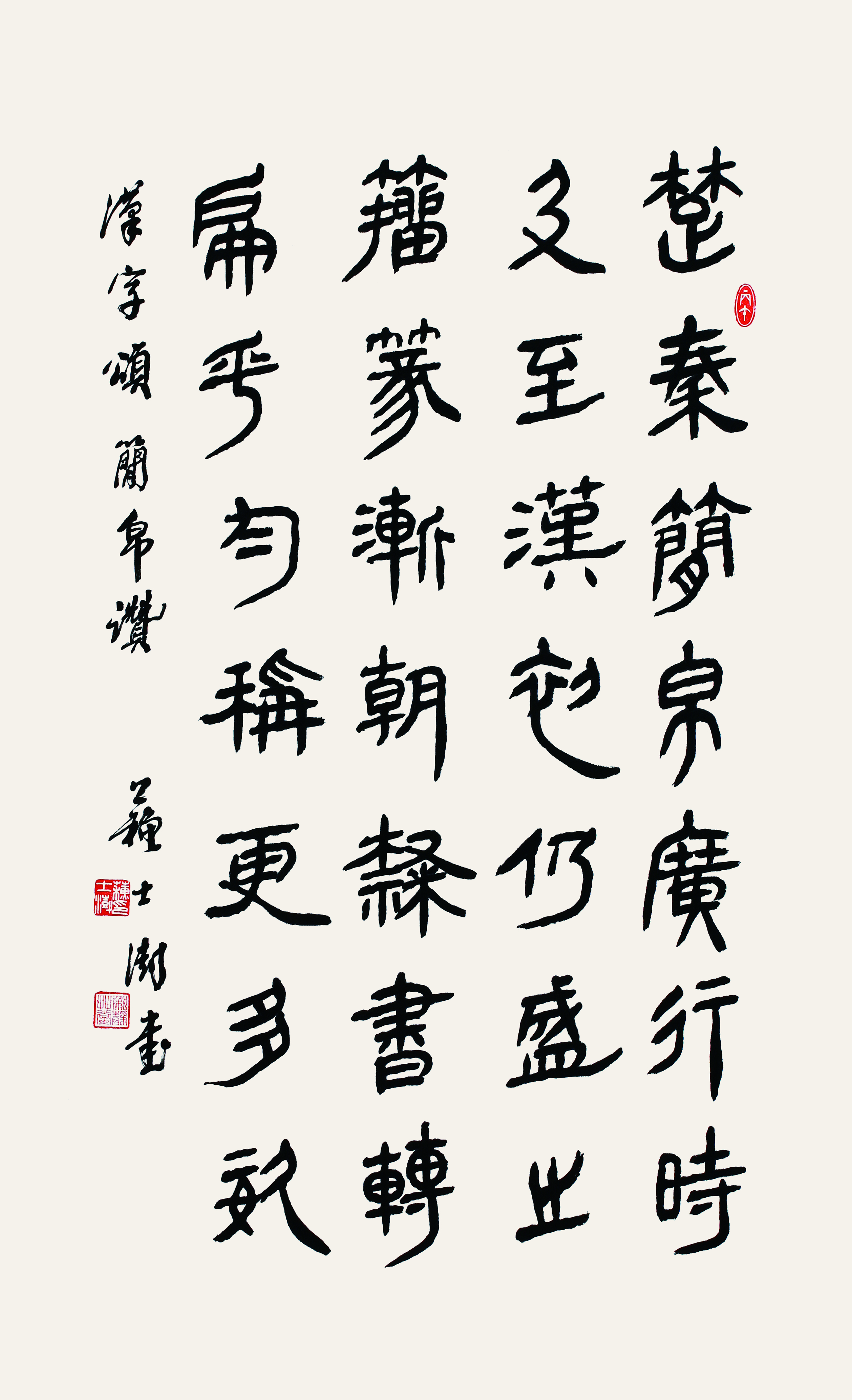
| 釋文 | 楚秦簡帛廣行時,及至漢初仍盛之。籀篆漸朝隸書轉,扁平勻稱更多姿。 漢字頌·簡帛讚 蘇士澍書 |
| 鈐印 | 右上:丙午(白) 左下:蘇士澍印(白)、和靜草堂(朱) |
| 書體 | 楚簡、行書 |
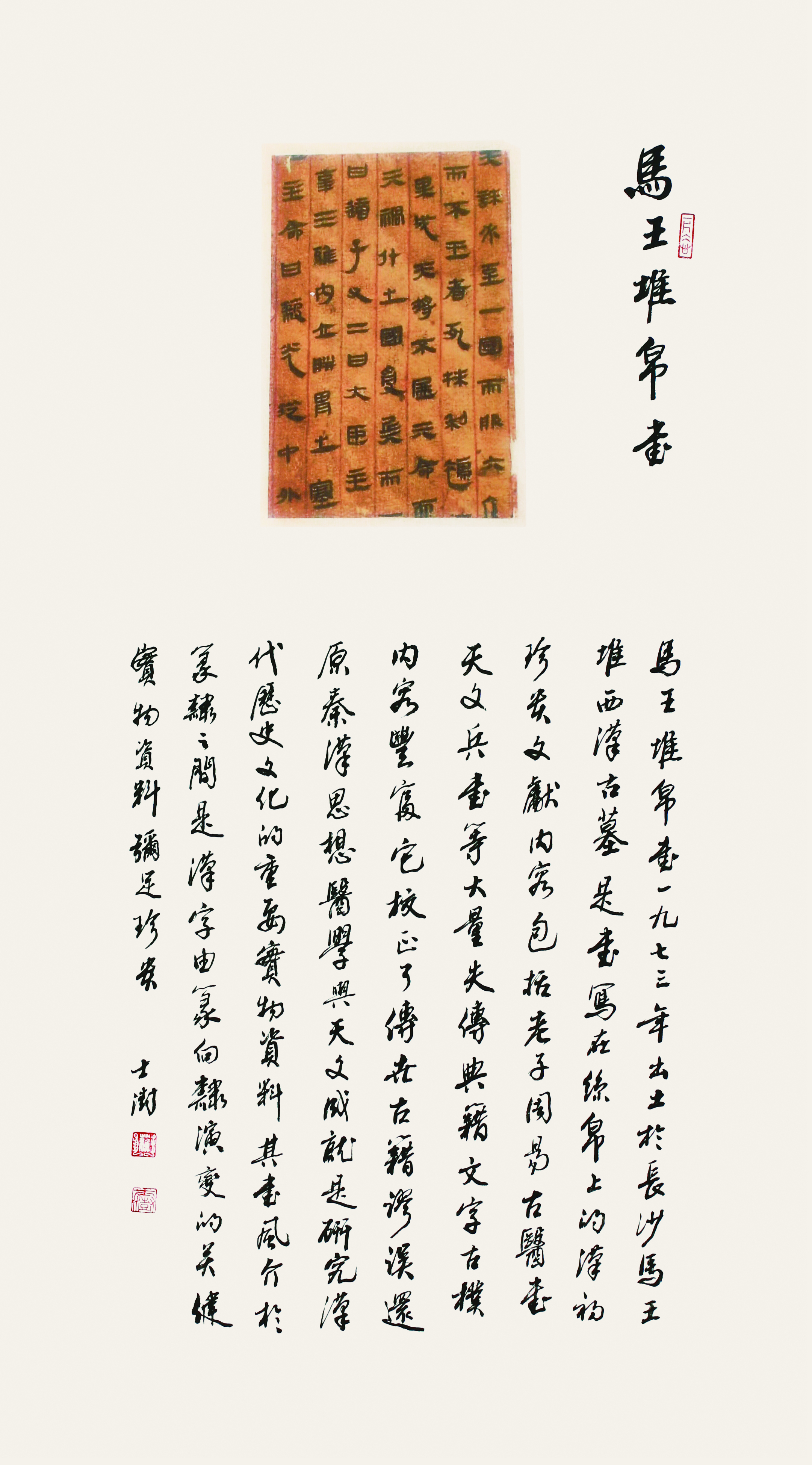
| 釋文 | 《馬王堆帛書》,一九七三年出土於長沙馬王堆西漢古墓,是書寫在絲帛上的漢初珍貴文獻。內容包括《老子》《周易》、古醫書、天文兵書等大量失傳典籍,文字古樸,內容豐富,它校正了傳世古籍謬誤,還原秦漢思想、醫學與天文成就,是研究漢代歷史文化的重要實物資料。其書風介於篆隸之間,是漢字由篆向隸演變的關鍵實物資料,彌足珍貴。 士澍 |
| 鈐印 | 右上:一片冰心(朱) 左下:蘇(白)、士澍(朱) |
| 書體 | 行書 |
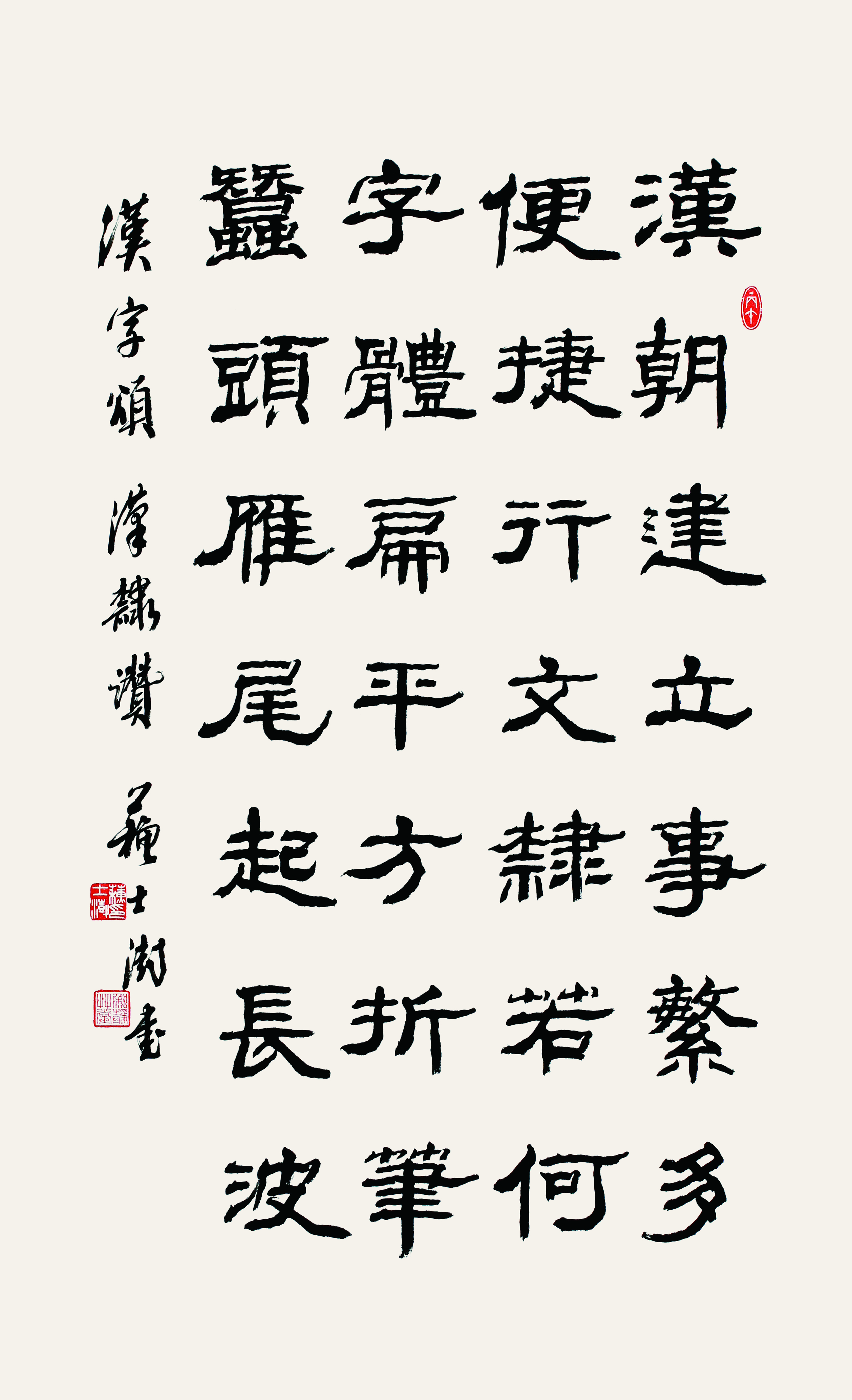
| 釋文 | 漢朝建立事繁多,便捷行文隸若何。字體扁平方折筆,蠶頭雁尾起長波。 漢字頌·漢隸讚 蘇士澍書 |
| 鈐印 | 右上:丙午(白) 左下:蘇士澍印(白)、和靜草堂(朱) |
| 書體 | 隸書、行書 |
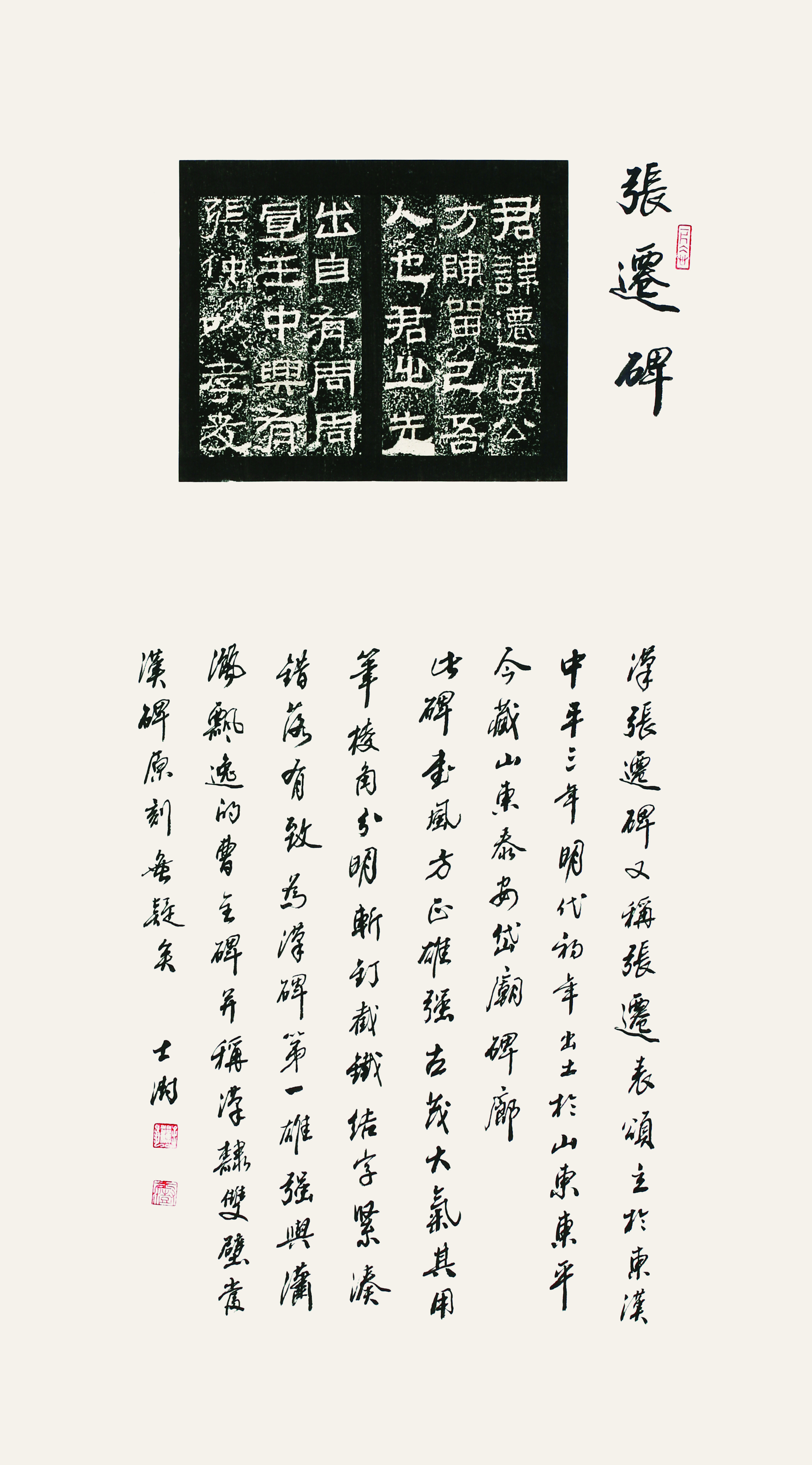
| 釋文 | 《漢張遷碑》又稱《張遷表頌》,立於東漢中平三年,明代初年出土於山東東平,今藏山東泰安岱廟碑廊。 此碑書風方正雄強、古茂大氣,其用筆棱角分明、斬釘截鐵,結字緊湊,錯落有致,為漢碑第一雄強,與瀟灑飄逸的《曹全碑》並稱「漢隸雙璧」,當漢碑原刻無疑矣。 士澍 |
| 鈐印 | 右上:一片冰心(朱) 左下:蘇(白)、士澍(朱) |
| 書體 | 行書 |
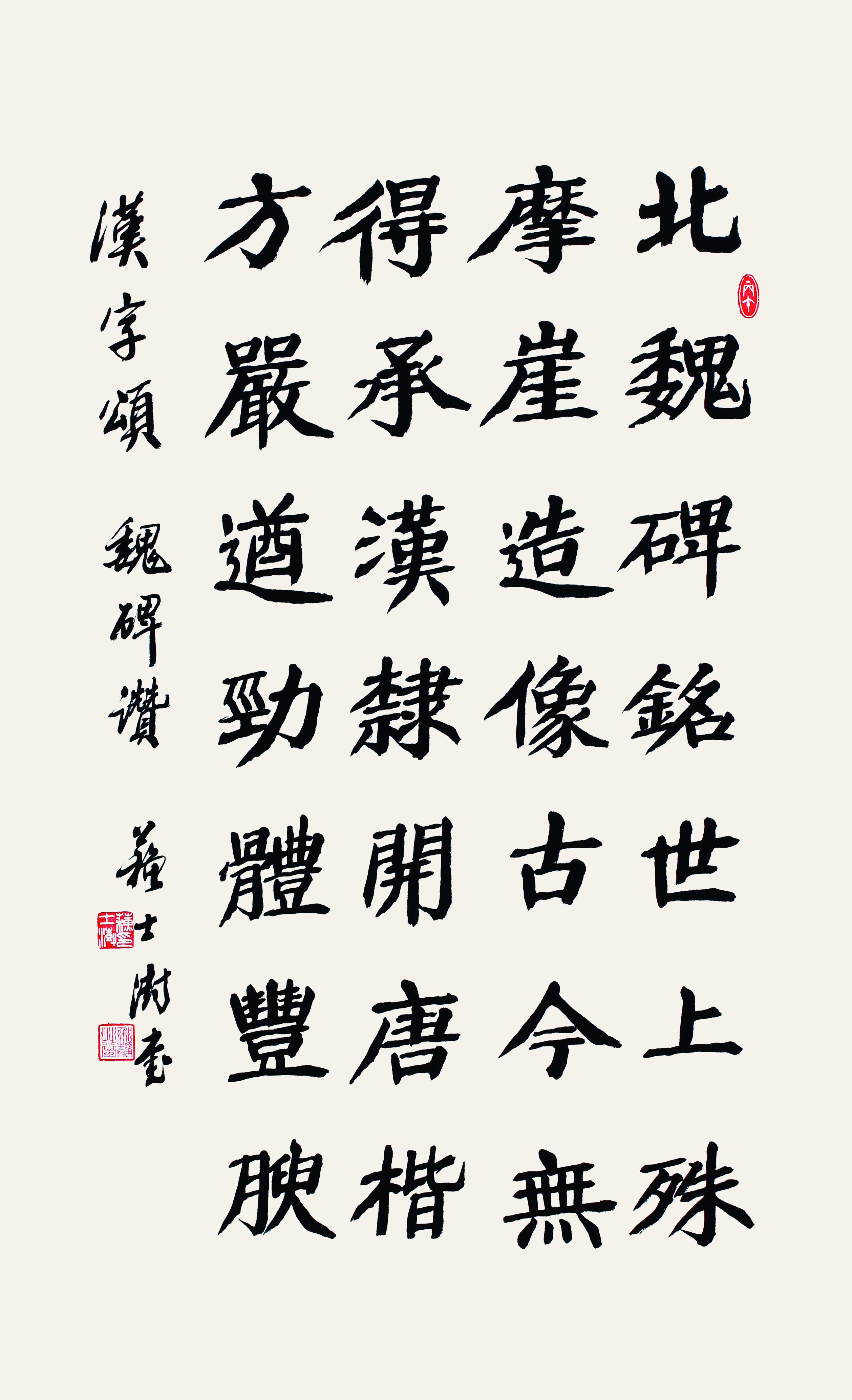
| 釋文 | 北魏碑銘世上殊,摩崖造像古今無。得承漢隸開唐楷,方嚴遒勁體豐腴。 漢字頌·魏碑讚 蘇士澍書 |
| 鈐印 | 右上:丙午(白) 左下:蘇士澍印(白)、和靜草堂(朱) |
| 書體 | 魏碑、行書 |
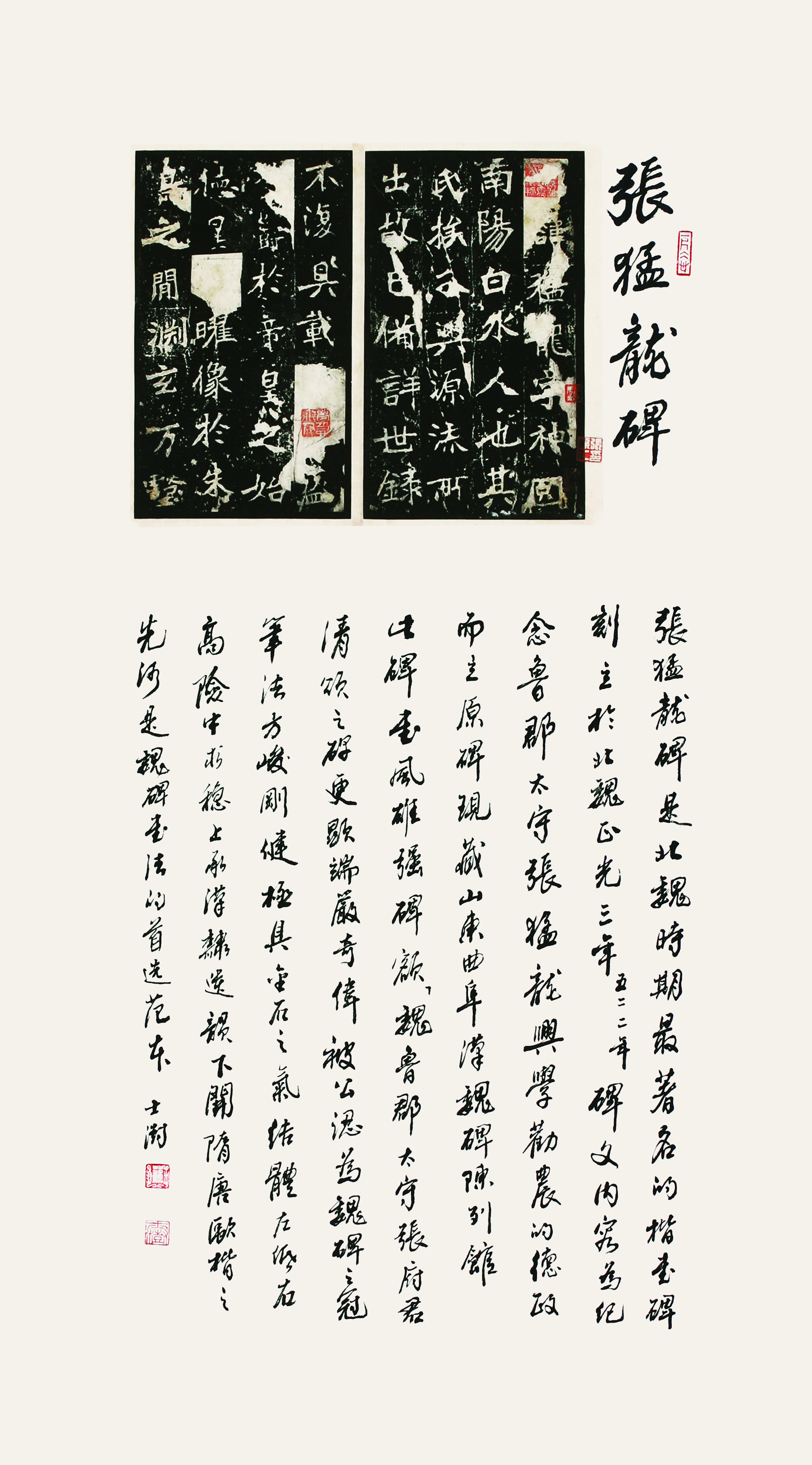
| 釋文 | 《張猛龍碑》是北魏時期最著名的楷書碑刻,立於北魏正光三年(五二二年)。碑文內容為紀念魯郡太守張猛龍興學、勸農的德政而立,原碑現藏山東曲阜漢魏碑陳列館。此碑書風雄強,碑額「魏魯郡太守張府君清頌之碑」更顯端嚴奇偉,被公認為「魏碑之冠」。筆法方峻剛健,極具金石之氣;結體左低右高,險中求穩,上承漢隸遺韻,下開隋唐歐楷之先河,是魏碑書法的首選範本。 士澍 |
| 鈐印 | 右上:一片冰心(朱) 左下:蘇(白)、士澍(朱) |
| 書體 | 行書 |
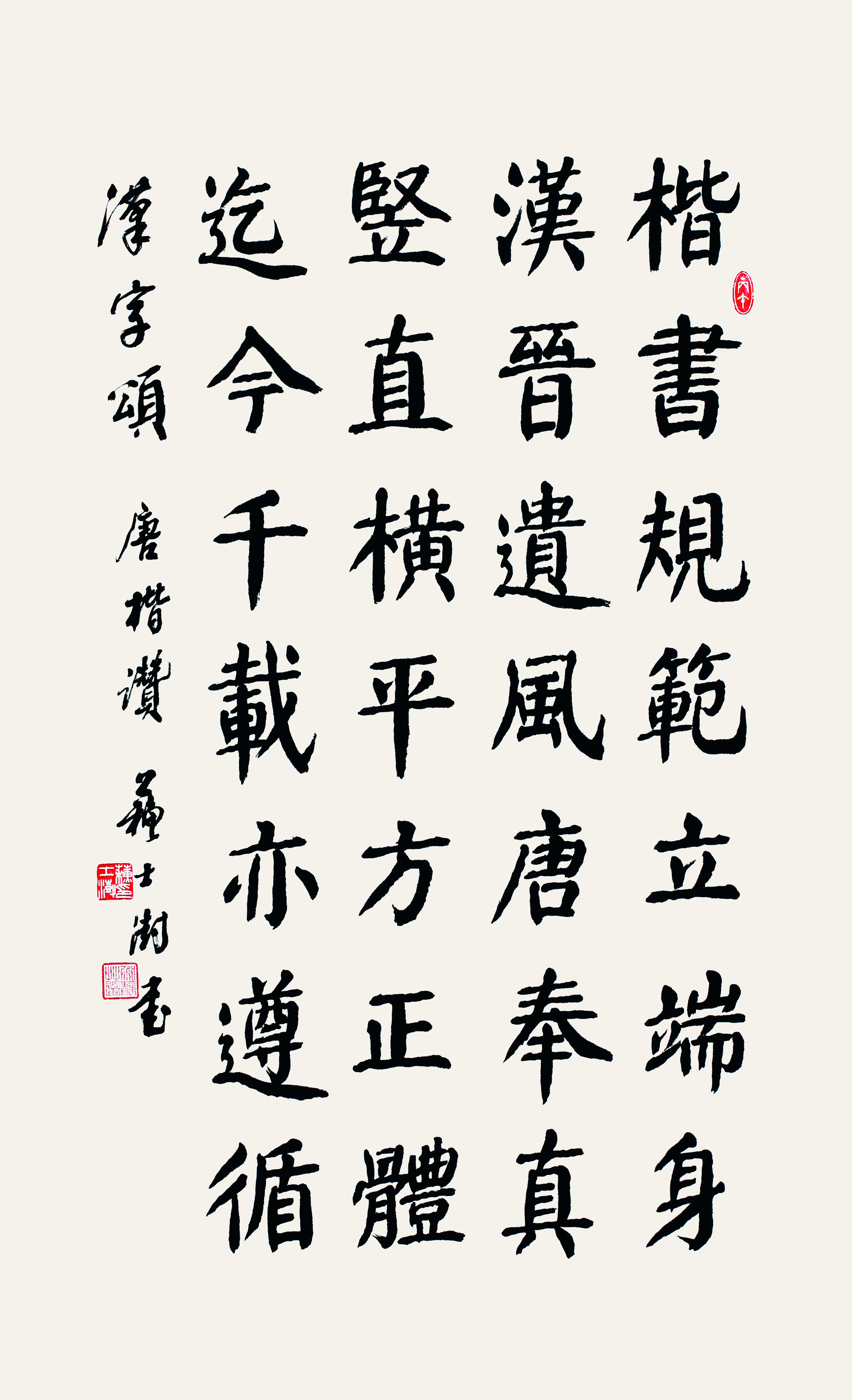
| 釋文 | 楷書規範立端身,漢晉遺風唐奉真。豎直橫平方正體,迄今千載亦遵循。 漢字頌·唐楷讚 蘇士澍書 |
| 鈐印 | 右上:丙午(白) 左下:蘇士澍印(白)、和靜草堂(朱) |
| 書體 | 楷書、行書 |
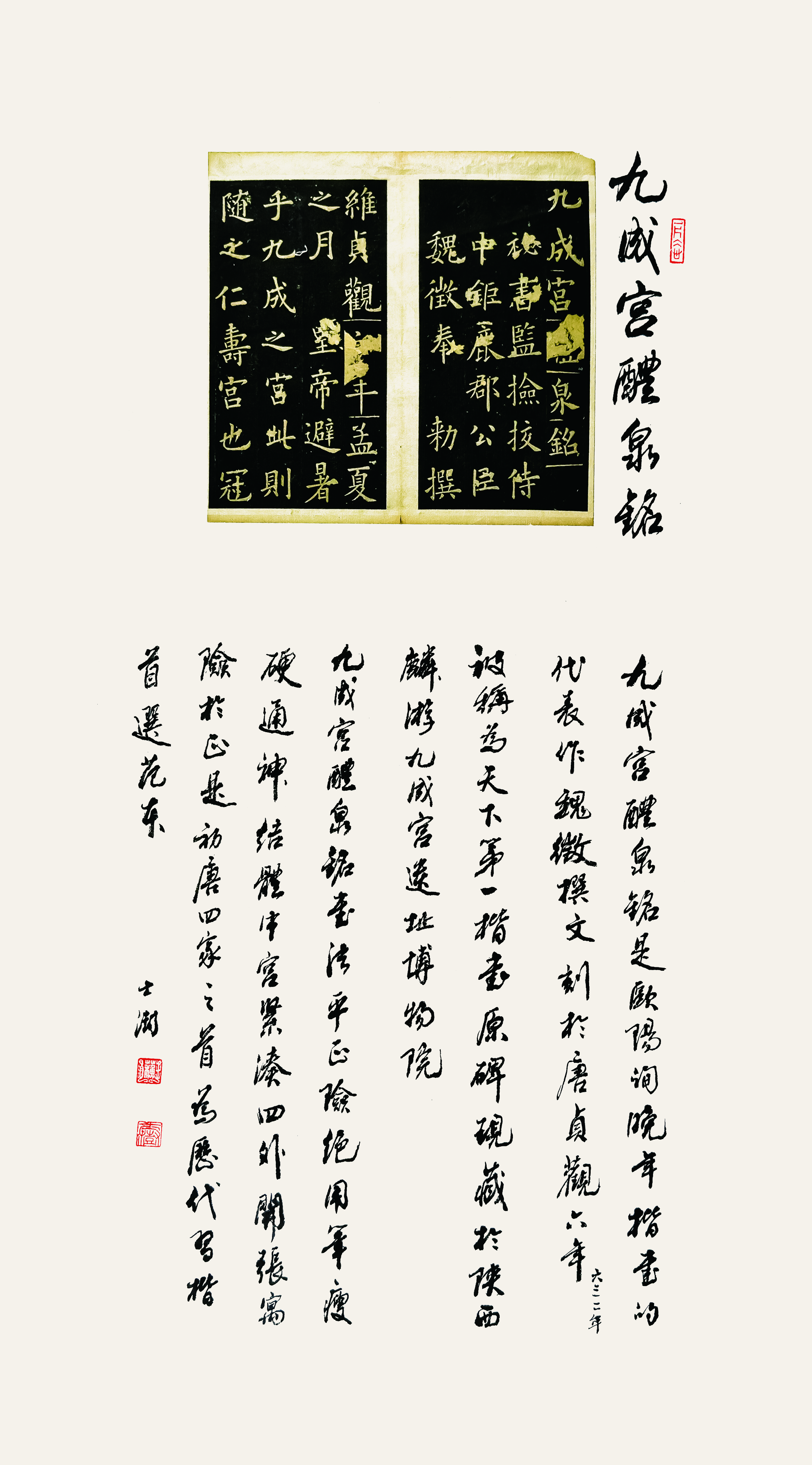
| 釋文 | 《九成宮醴泉銘》是歐陽詢晚年楷書的代表作,魏徴撰文,刻於唐貞觀六年(六三二年),被稱為「天下第一楷書」。原碑現藏於陝西麟游九成宮遺址博物院。 《九成宮醴泉銘》書法平正險絕,用筆瘦硬通神,結體中宮緊湊,四外開張,寓險於正,是初唐四家之首,為歷代習楷首選範本。 士澍 |
| 鈐印 | 右上:一片冰心(朱) 左下:蘇(白)、士澍(朱 ) |
| 書體 | 行書 |
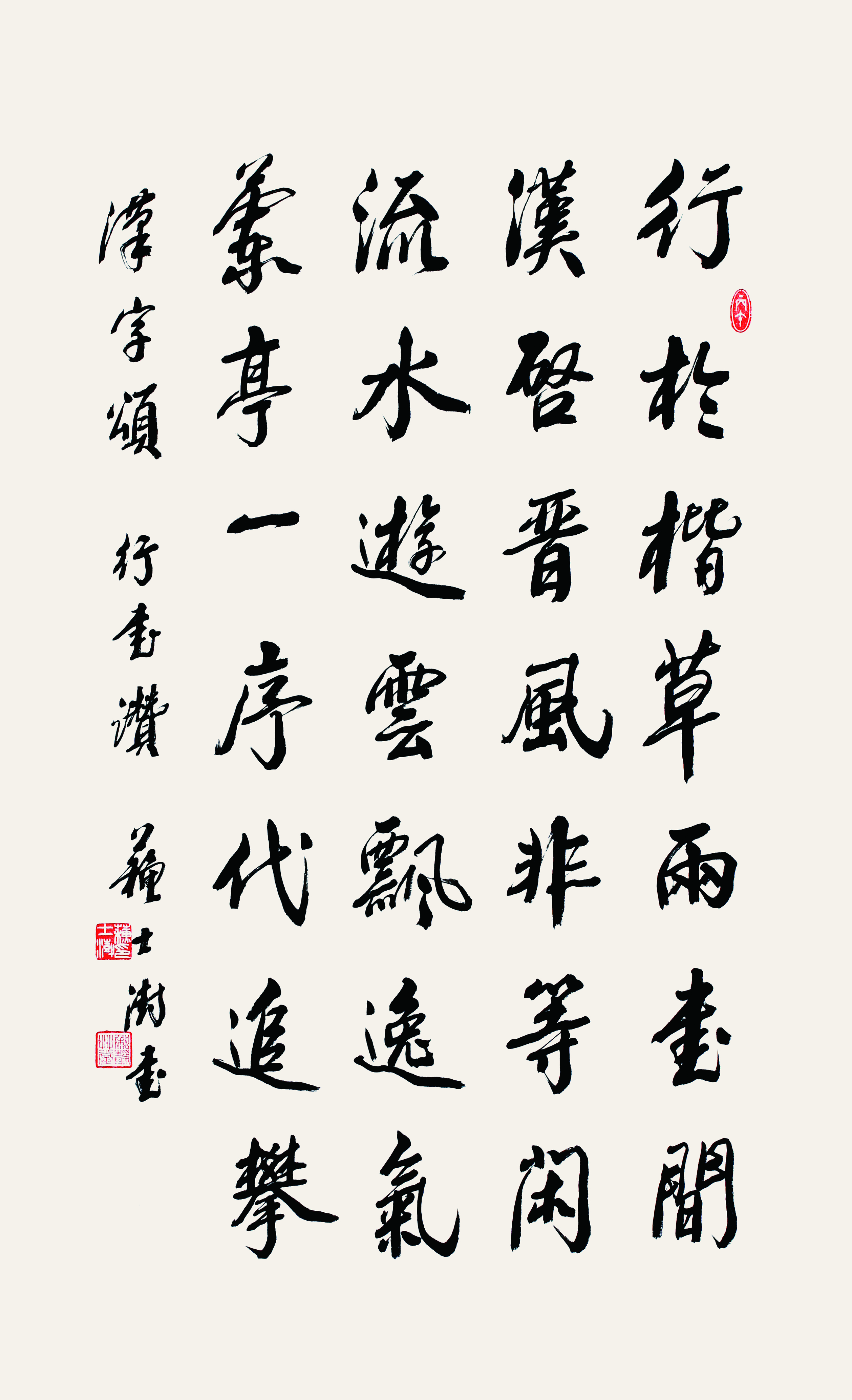
| 釋文 | 行於楷草兩書間,漢啟晉風非等閑。流水遊雲飄逸氣,蘭亭一序代追攀。 漢字頌·行書讚 蘇士澍書 |
| 鈐印 | 右上:丙午(白) 左下:蘇士澍印(白)、和靜草堂(朱) |
| 書體 | 行書 |
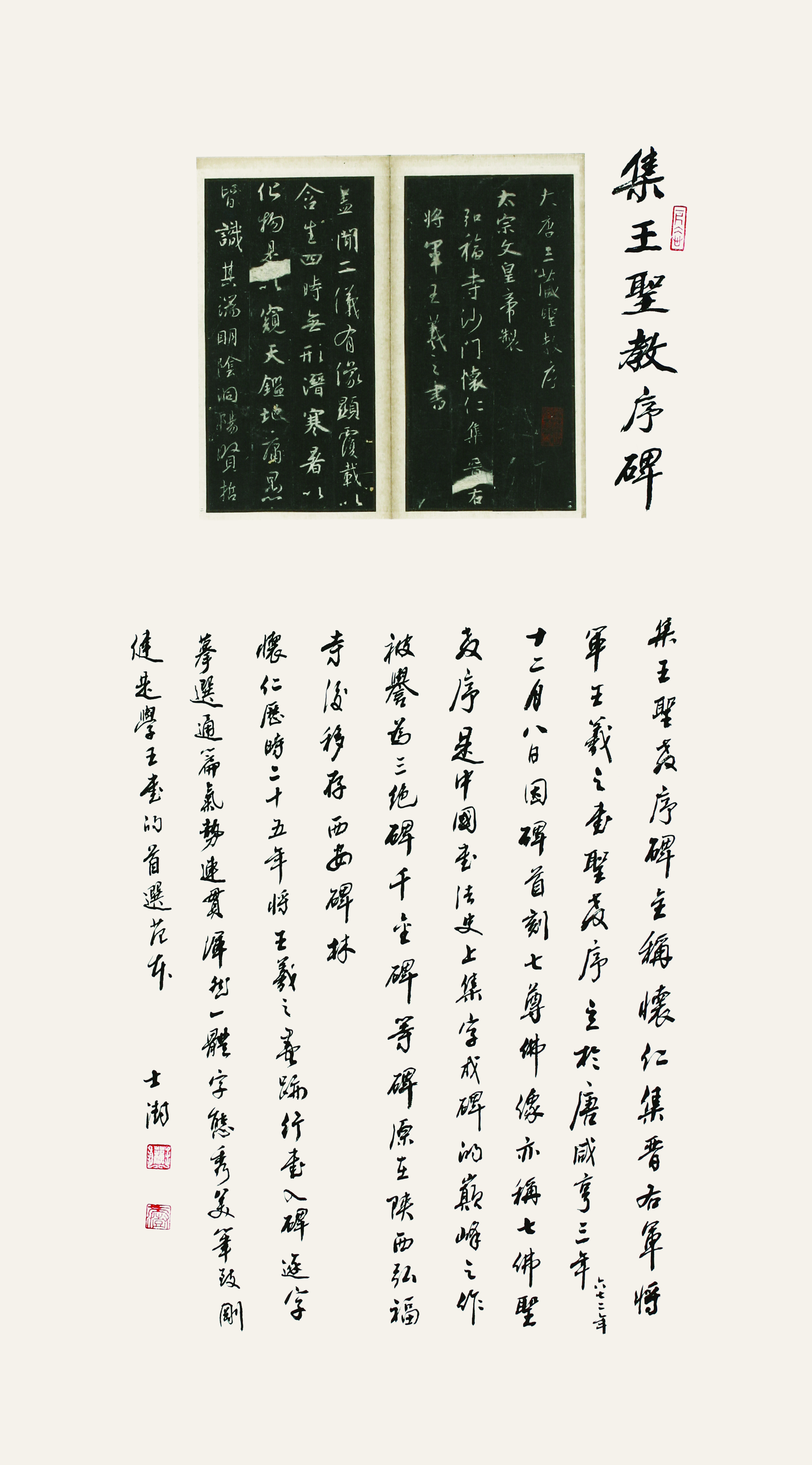
| 釋文 | 《集王聖教序碑》全稱《懷仁集晉右軍將軍王羲之書聖教序》,立於唐咸亨三年(六七二年)十二月八日,因碑首刻七尊佛像,亦稱《七佛聖教序》,是中國書法史上集字成碑的巔峰之作,被譽為「三絕碑」「千金碑」等。碑原在陝西弘福寺,後移存西安碑林。 懷仁歷時二十五年,將王羲之墨跡行書入碑,逐字摹選,通篇氣勢連貫,渾然一體,字態秀美,筆致剛健,是學王書的首選範本。 士澍 |
| 鈐印 | 右上:一片冰心(朱) 左下:蘇(白)、士澍(朱) |
| 書體 | 行書 |
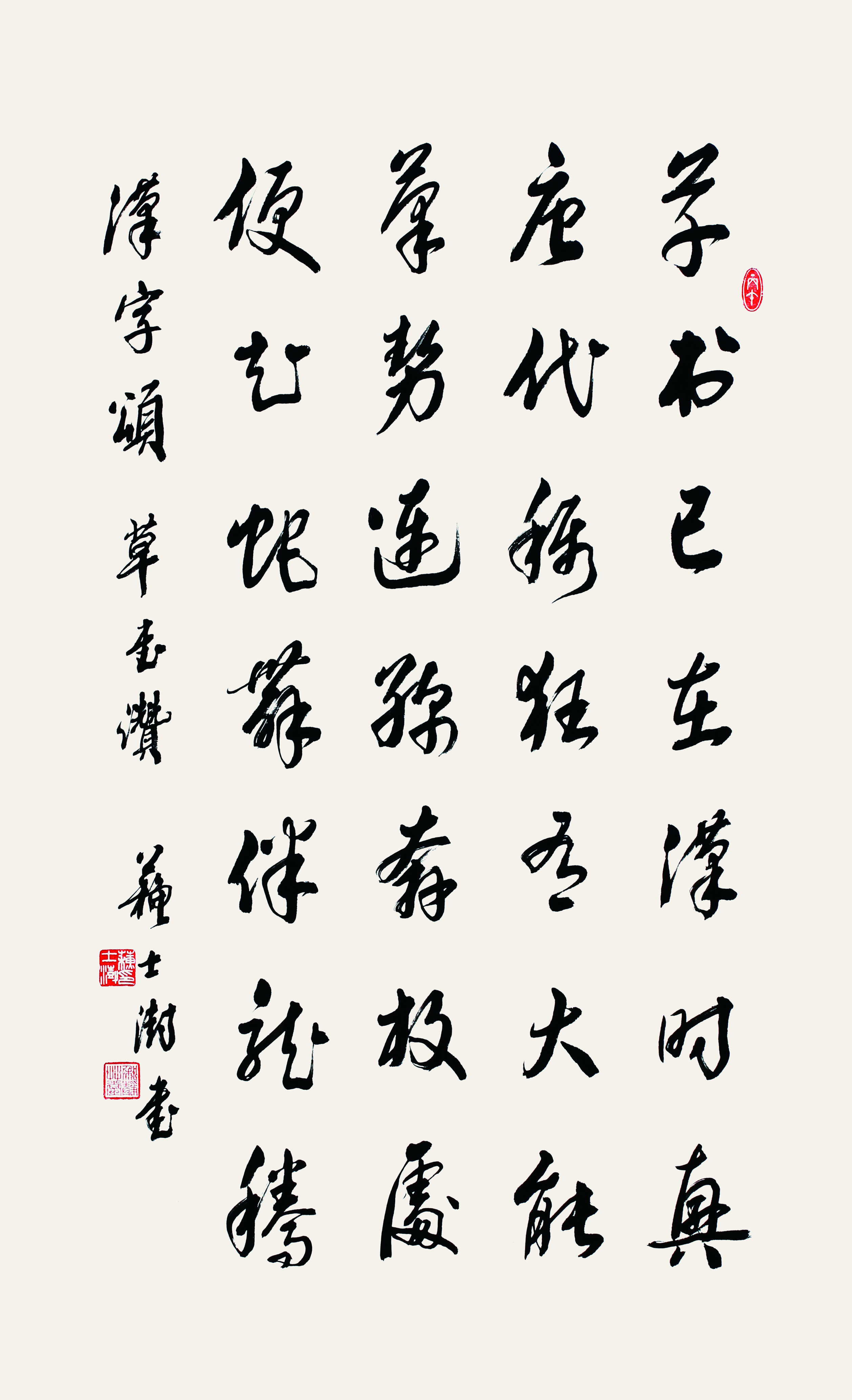
| 釋文 | 草書已在漢時興,唐代稱狂有大能。筆勢連綿奔放處,便知蛇舞伴龍騰。 漢字頌·草書讚 蘇士澍書 |
| 鈐印 | 右上:丙午(白) 左下:蘇士澍印(白)、和靜草堂(朱) |
| 書體 | 草書、行書 |
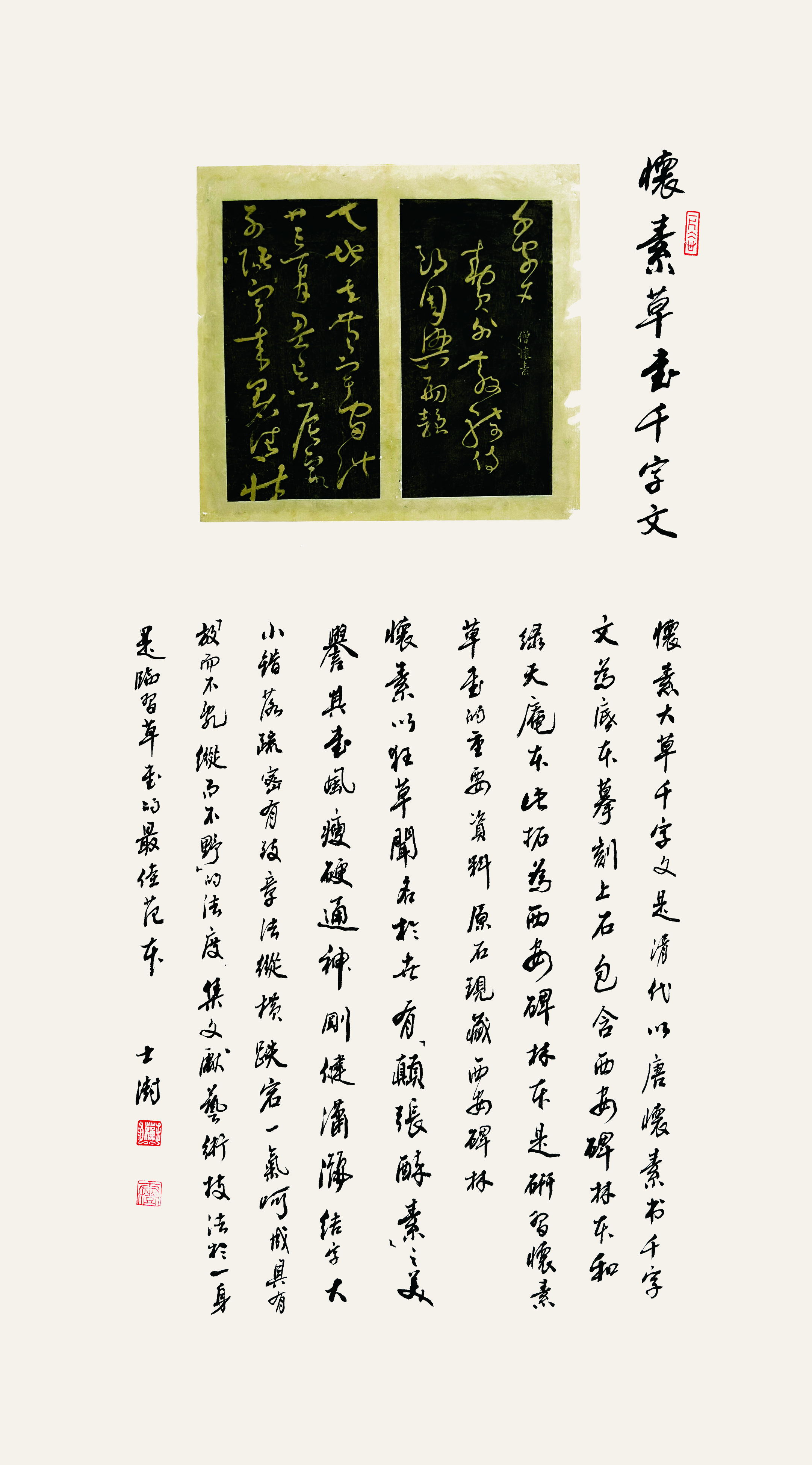
| 釋文 | 懷素《大草千字文》,是清代以唐懷素書千字文為底本,摹刻上石,包含西安碑林本和綠天庵本,此拓為西安碑林本,是研習懷素草書的重要資料,原石現藏西安碑林。懷素以狂草聞名於世,有「顛張醉素」之美譽。其書風瘦硬通神、剛健瀟灑,結字大小錯落,疏密有致,章法縱橫跌宕,一氣呵成,具有「放而不亂、縱而不野」的法度,集文獻、藝術、技法於一身,是臨習草書的最佳範本。 士澍 |
| 鈐印 | 右上:一片冰心(朱) 左下:蘇(白)、士澍(朱) |
| 書體 | 行書 |
六書專題 Six Categories of Characters
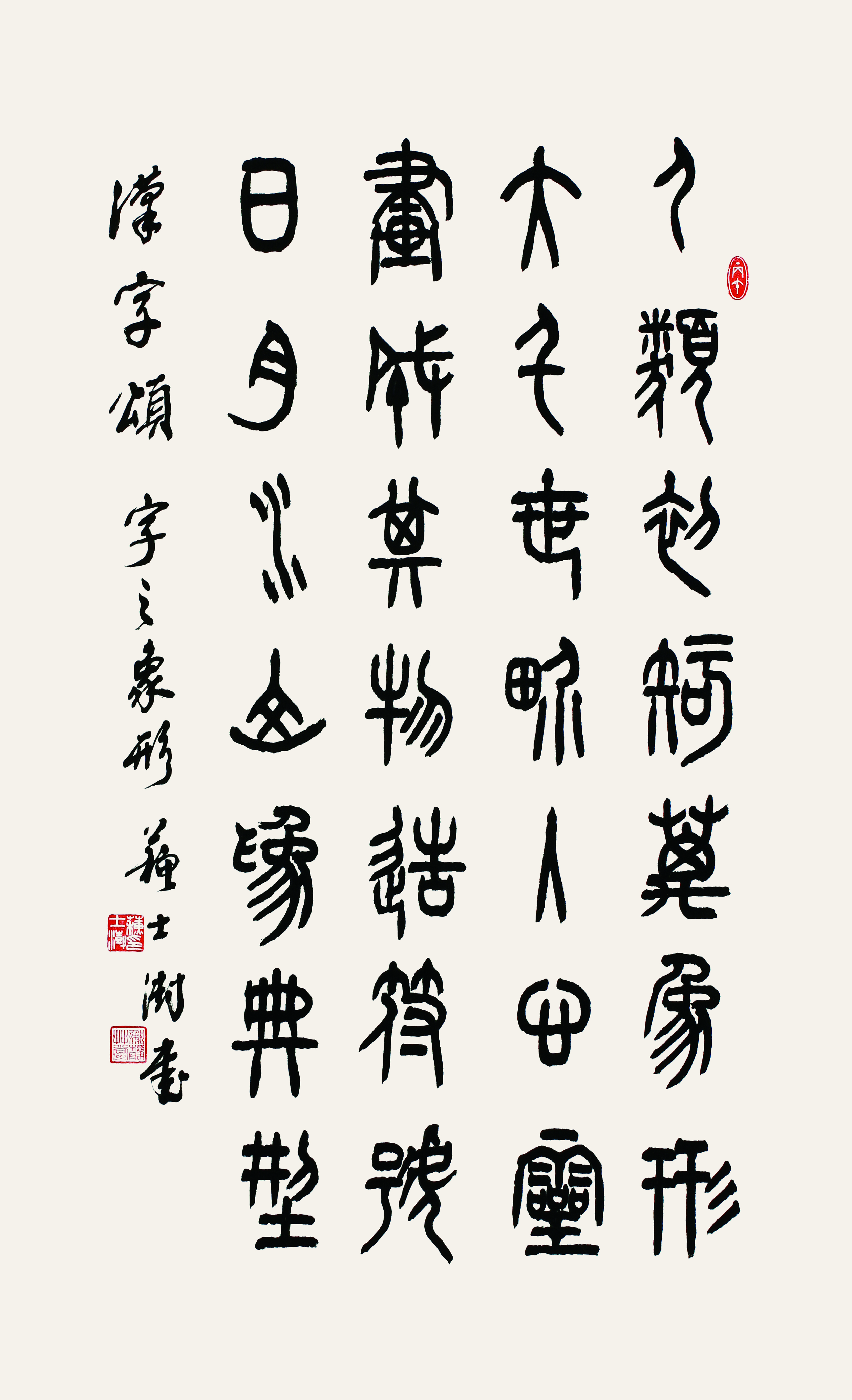
| 釋文 | 人類初知萬象形,大千世界入心靈。畫成其物造符號,日月水山為典型。 漢字頌·字之象形 蘇士澍書 |
| 鈐印 | 右上:丙午(白) 左下:蘇士澍印(白)、和靜草堂(朱) |
| 書體 | 金文、行書 |
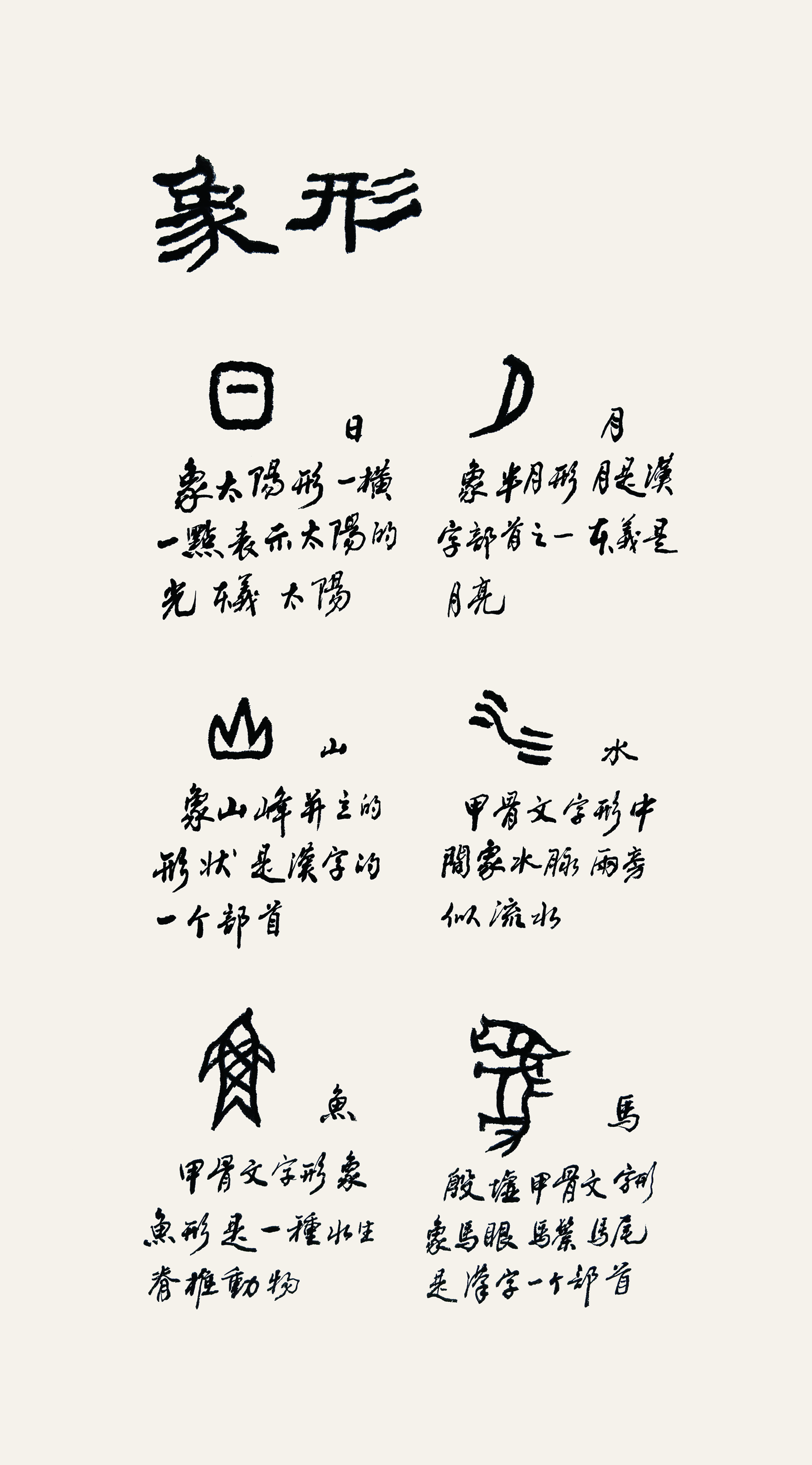
| 釋文 | 象形 日 象太陽形,一橫一點表示太陽的光,本義太陽。 月 象半月形,月是漢字部首之一,本義是月亮。 山 象山峰并立的形狀,是漢字的一個部首。 水 甲骨文字形中間象水脈,兩旁似流水。 魚 甲骨文字形象魚形,是一種水生脊椎動物。 馬 殷墟甲骨文字形象馬眼、馬鬃、馬尾,是漢字一個部首。 |
| 書體 | 隸書、甲骨文、行書 |
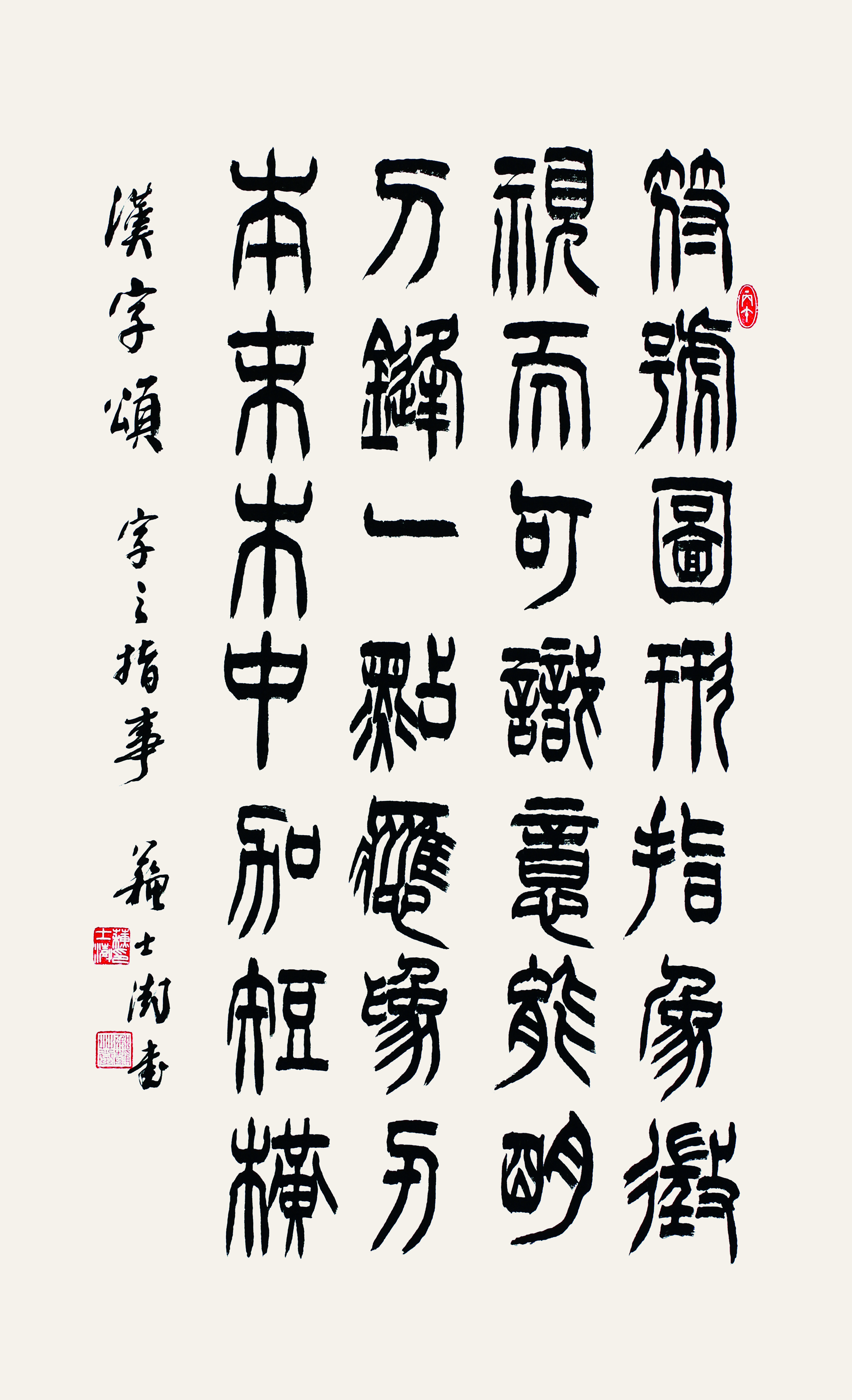
| 釋文 | 符號圖形指象徵,視而可識意能明。刀鋒一點應為刃,本末木中加短橫。 漢字頌·字之指事 蘇士澍書 |
| 鈐印 | 右上:丙午(白) 左下:蘇士澍印(白)、和靜草堂(朱) |
| 書體 | 小篆、行書 |
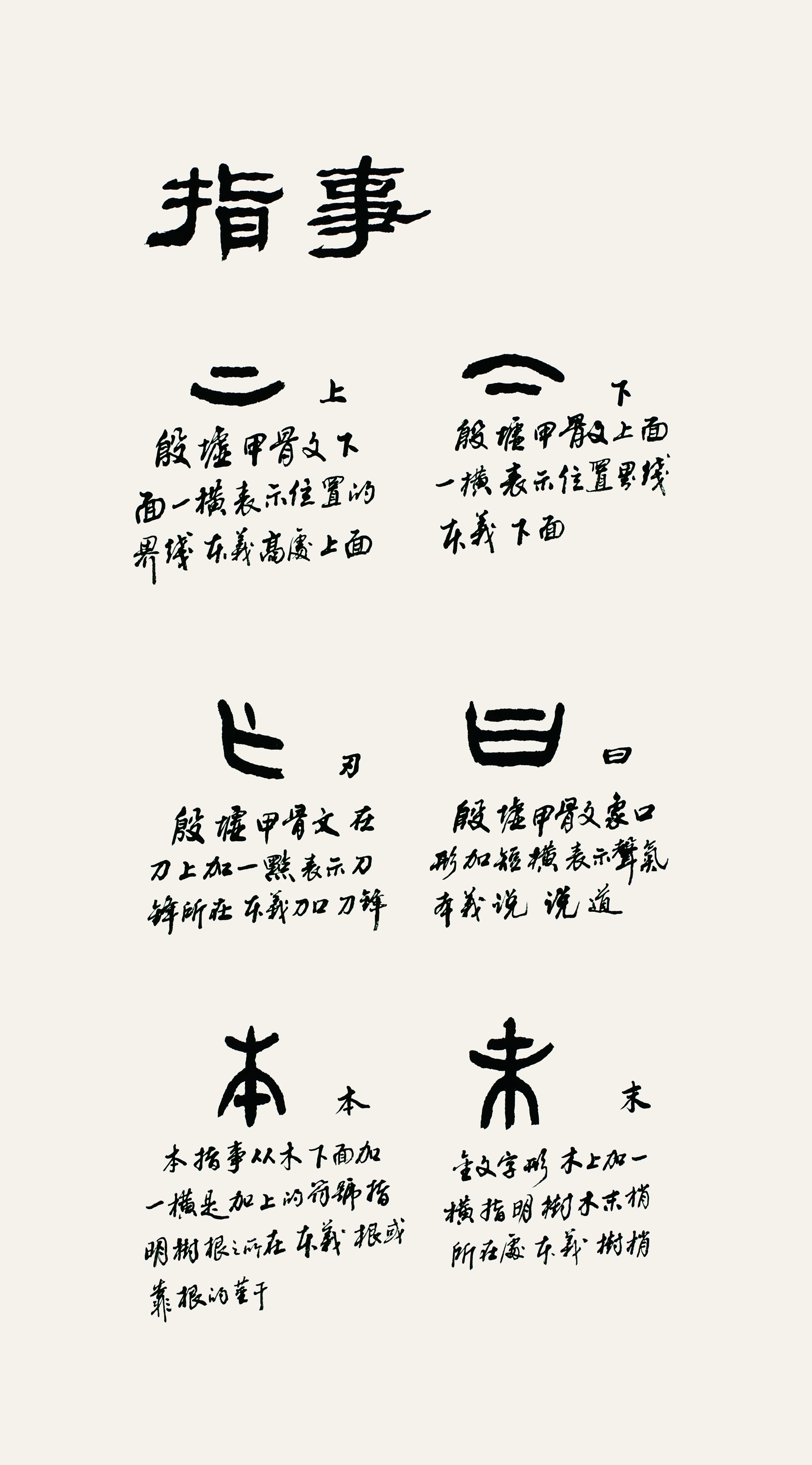
| 釋文 | 指事 上 殷墟甲骨文下面一橫表示位置的界綫,本義高處、上面。 下 殷墟甲骨文上面一橫表示位置的界綫,本義下面。 刃 殷墟甲骨文在刀上加一點,表示刀鋒所在,本義刀口、刀鋒。 曰 殷墟甲骨文象口形加短橫,表示聲氣,本義說、說道。 本 本指事从木,下面加一橫是加上的符號,指明樹根之所在,本義根或靠根的莖干。 末 金文字形木上加一橫指明樹木末梢所在處,本義樹梢。 |
| 書體 | 隸書、甲骨文、篆書、行書 |
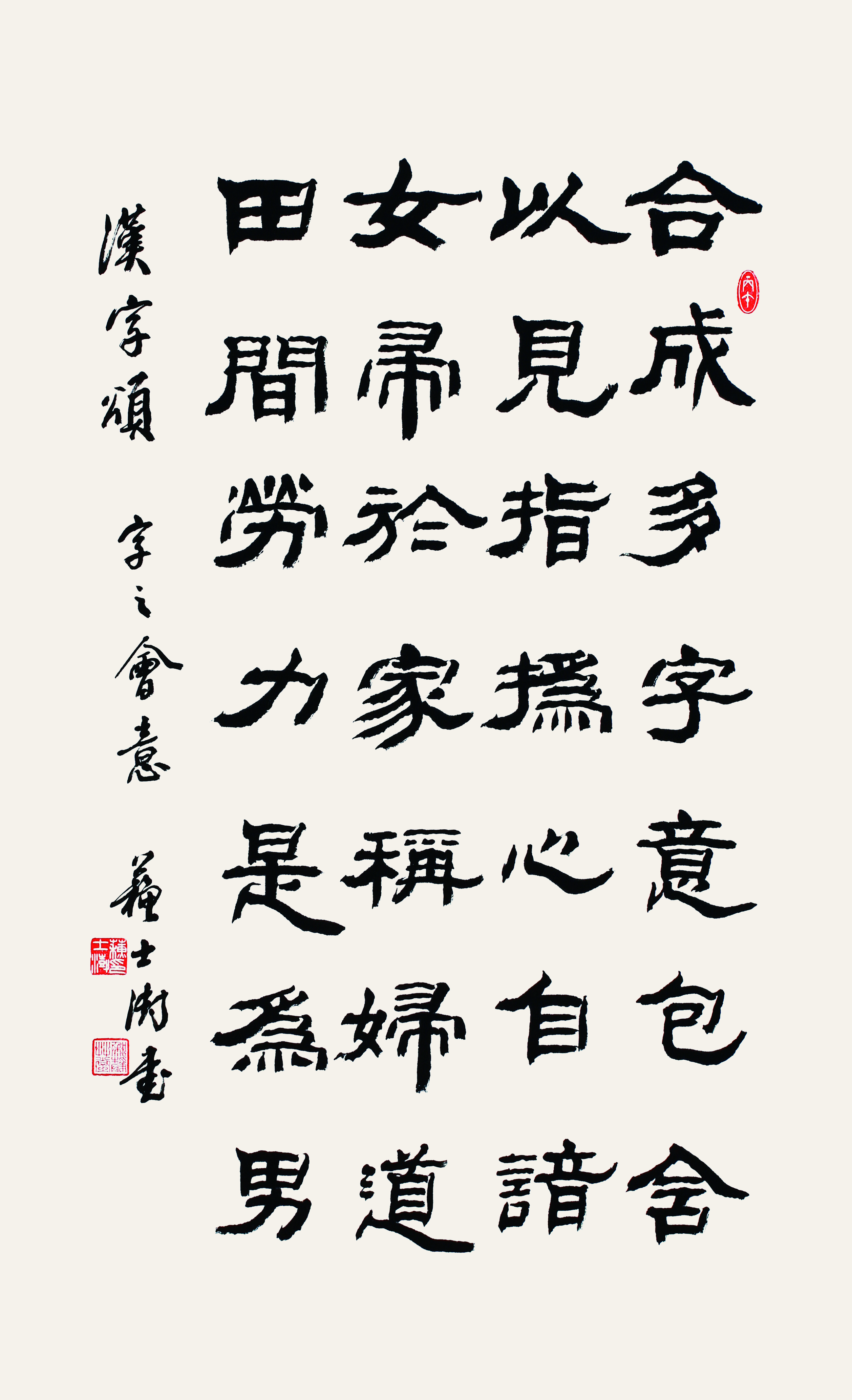
| 釋文 | 合成多字意包含,以見指偽心自諳。女帚於家稱婦道,田間勞力是為男。 漢字頌·字之會意 蘇士澍書 |
| 鈐印 | 右上:丙午(白) 左下:蘇士澍印(白)、和靜草堂(朱) |
| 書體 | 隸書、行書 |
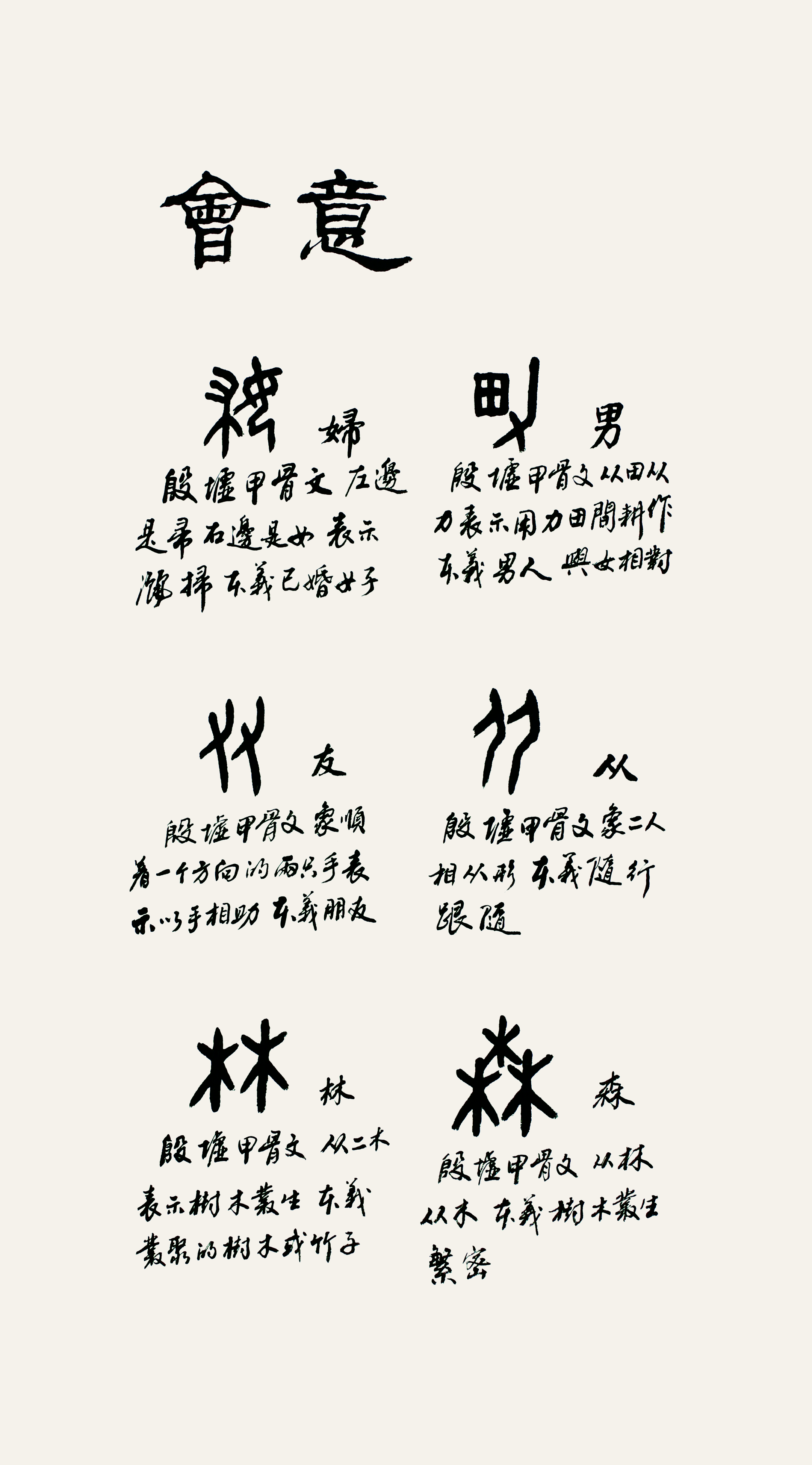
| 釋文 | 會意 婦 殷墟甲骨文左邊是帚,右邊是女,表示灑掃,本義已婚女子。 男 殷墟甲骨文从田从力,表示用力田間耕作,本義男人,與女相對。 友 殷墟甲骨文象順著一個方向的兩只手,表示以手相助,本義朋友。 从 殷墟甲骨文象二人相从形,本義隨行、跟隨。 林 殷墟甲骨文从二木,表示樹木叢生,本義叢聚的樹木或竹子。 森 殷墟甲骨文从林从木,本義樹木叢生、繁密。 |
| 書體 | 隸書、甲骨文、行書 |
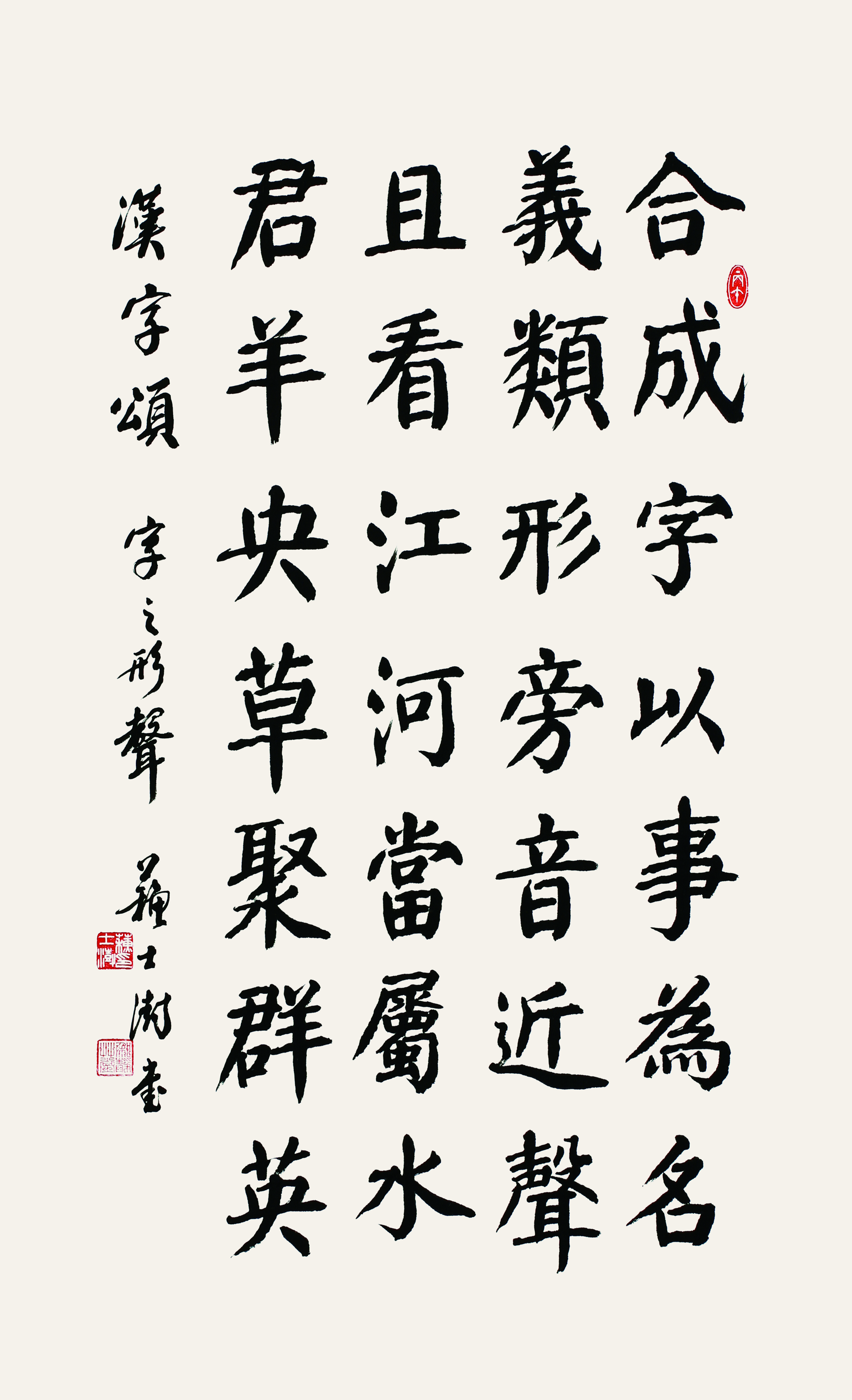
| 釋文 | 合成字以事為名,義類形旁音近聲。且看江河當屬水,君羊央草聚群英。 漢字頌·字之形聲 蘇士澍書 |
| 鈐印 | 右上:丙午(白) 左下:蘇士澍印(白)、和靜草堂(朱) |
| 書體 | 楷書、行書 |
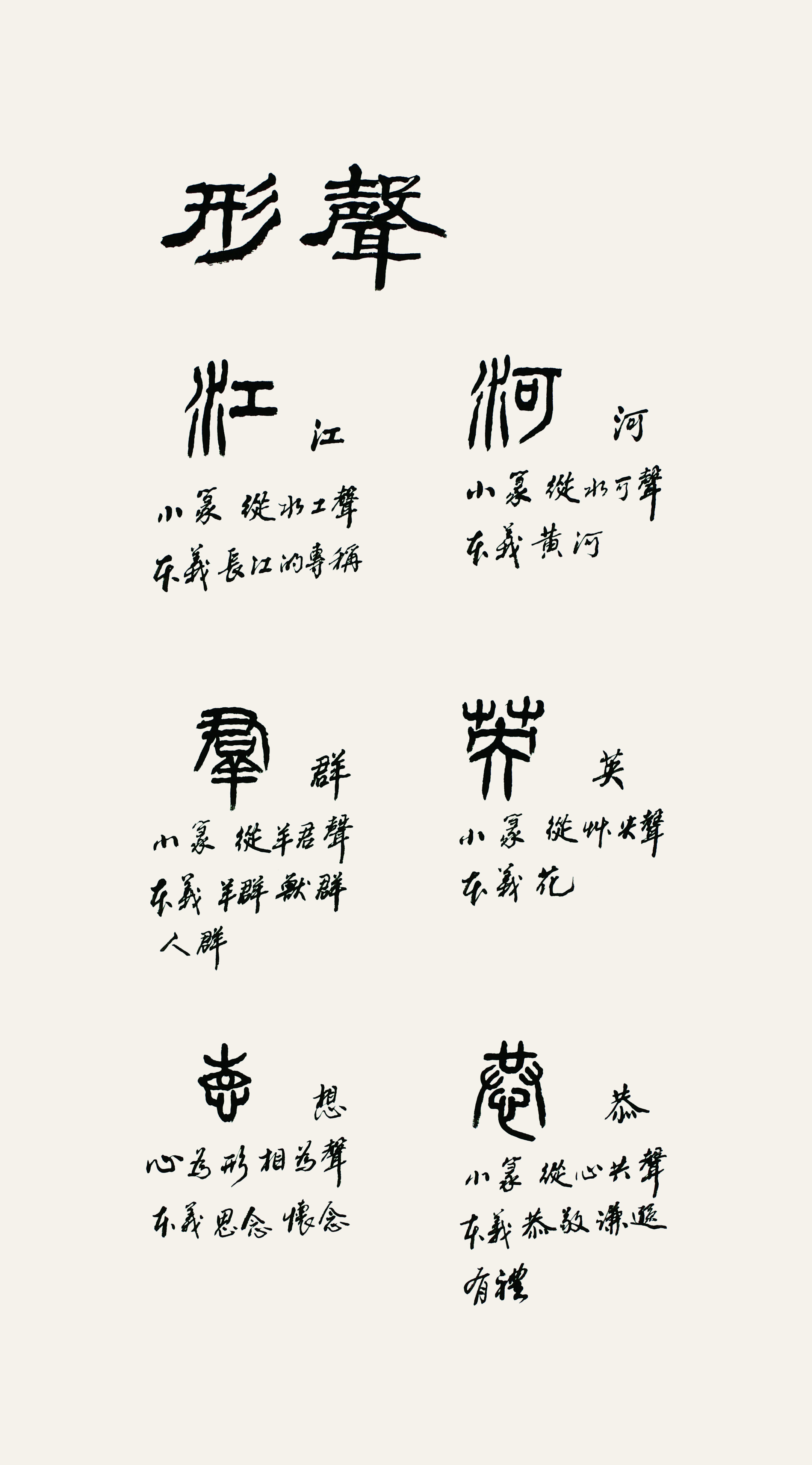
| 釋文 | 形聲 江 小篆從水工聲,本義長江的專稱。 河 小篆從水可聲,本義黃河。 群 小篆從羊君聲,本義羊群、獸群、人群。 英 小篆從草央聲,本義花。 想 心為形,相為聲,本義思念、懷念。 恭 小篆從心共聲,本義恭敬、謙遜有禮。 |
| 書體 | 隸書、篆書、行書 |
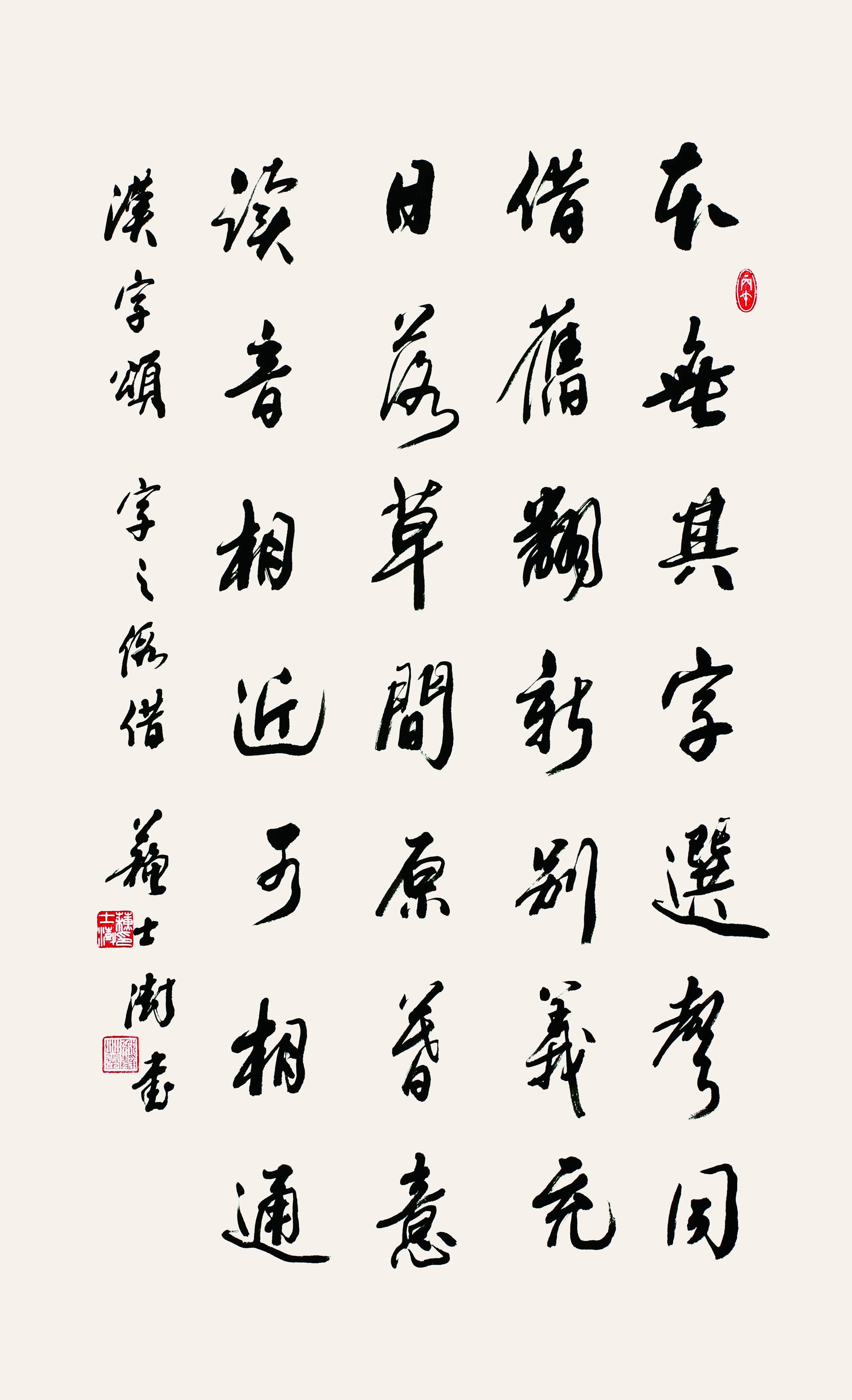
| 釋文 | 本無其字選聲同,借舊翻新別義充。日落草間原暮意,讀音相近可相通。 漢字頌·字之假借 蘇士澍書 |
| 鈐印 | 右上:丙午(白) 左下:蘇士澍印(白)、和靜草堂(朱) |
| 書體 | 行草、行書 |
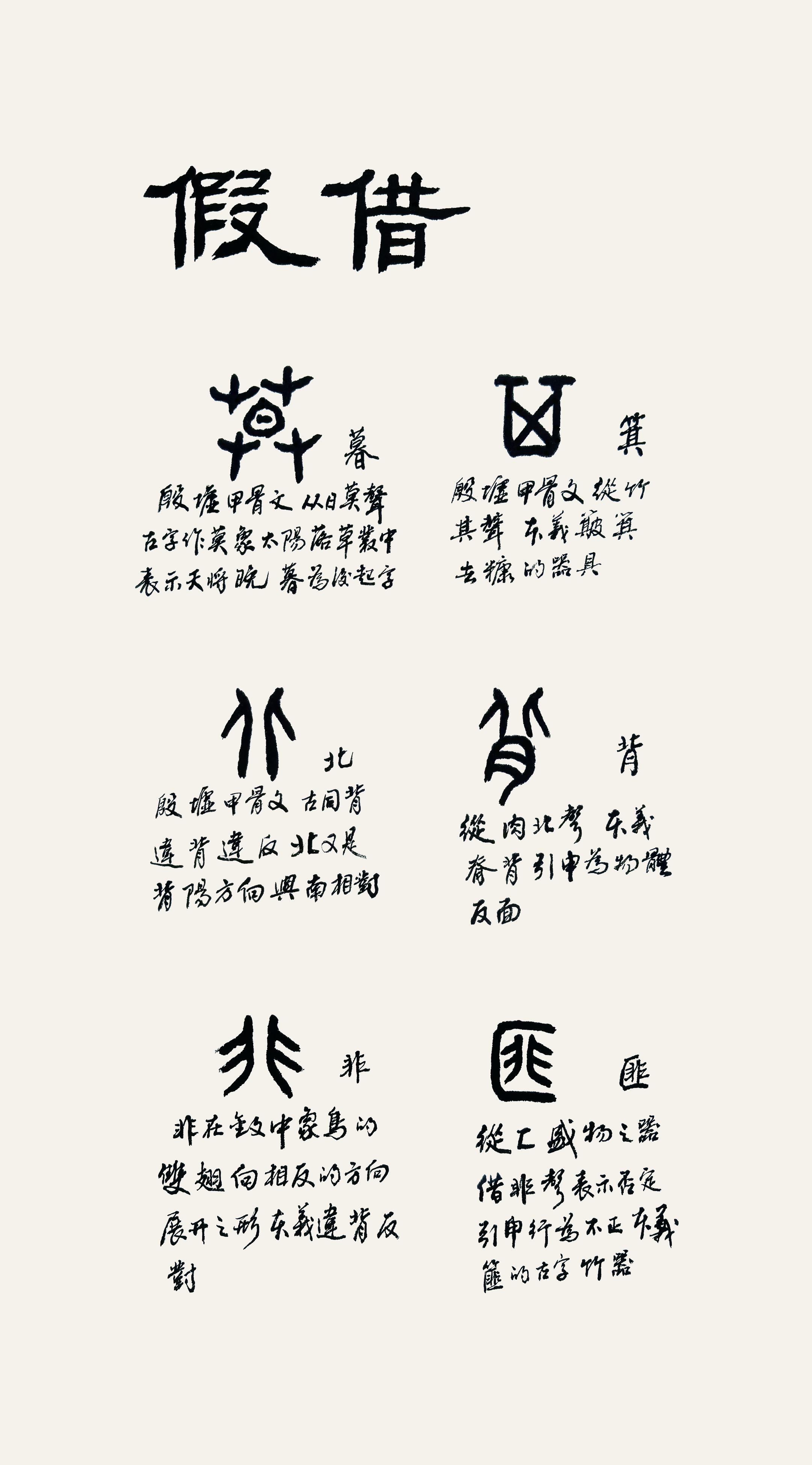
| 釋文 | 假借 暮 殷墟甲骨文從日莫聲,古字作莫,象太陽落草叢中,表示天將晚,暮為後起字。 箕 殷墟甲骨文從竹其聲,本義簸箕,去糠的器具。 北 殷墟甲骨文古同背、違背、違反,北又是背陽方向,與南相對。 背 從肉北聲,本義脊背,引申為物體反面。 非 非在金文中象鳥的雙翅向相反的方向展開之形,本義違背、反對。 匪 從匚,盛物之器,借非聲,表示否定,引申為不正,本意篚的古字,竹器。 |
| 書體 | 隸書、甲骨文、篆書、行書 |
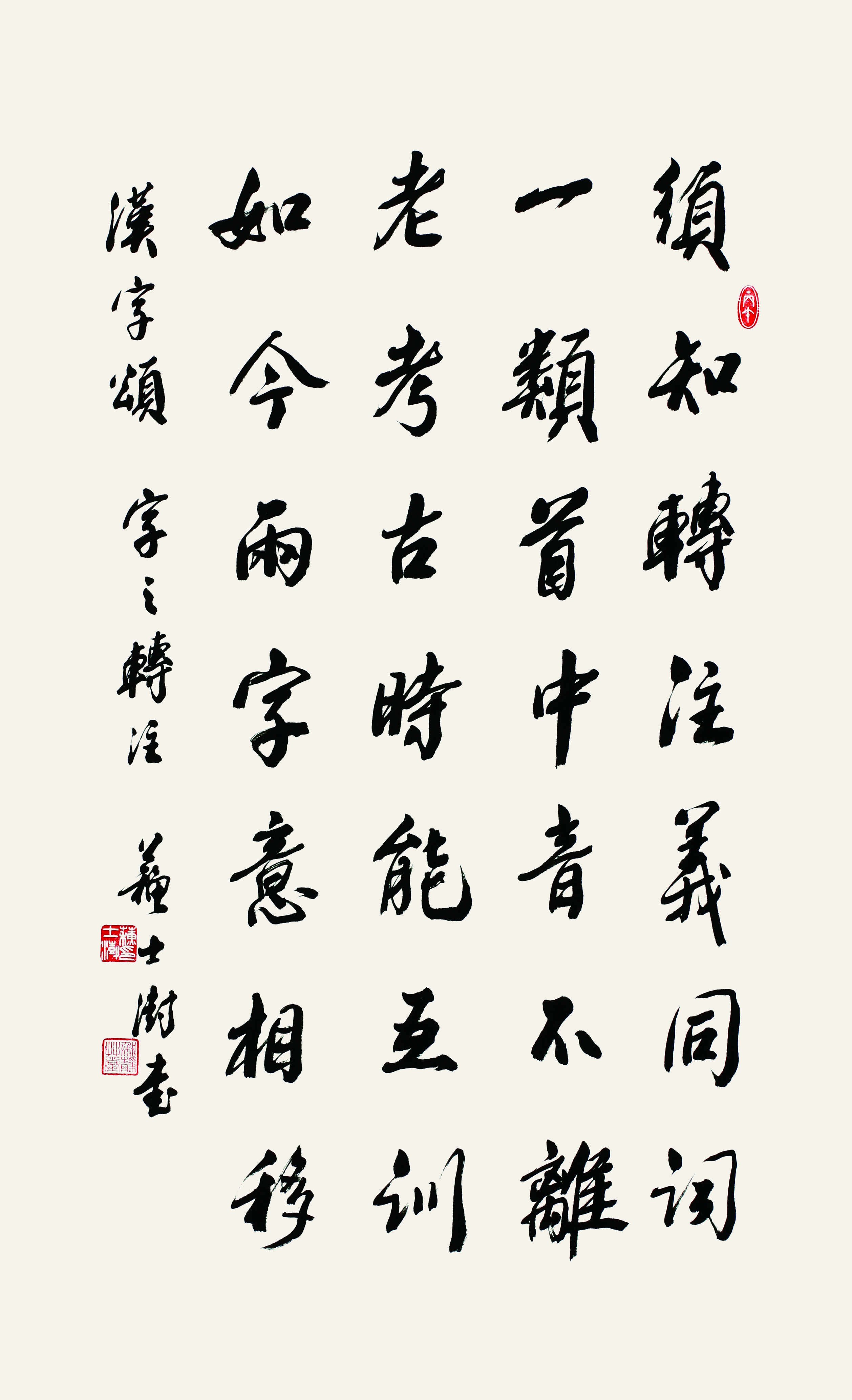
| 釋文 | 須知轉注義同詞,一類首中音不離。老考古時能互訓,如今兩字意相移。 漢字頌·字之轉注 蘇士澍書 |
| 鈐印 | 右上:丙午(白) 左下:蘇士澍印(白)、和靜草堂(朱) |
| 書體 | 行書 |
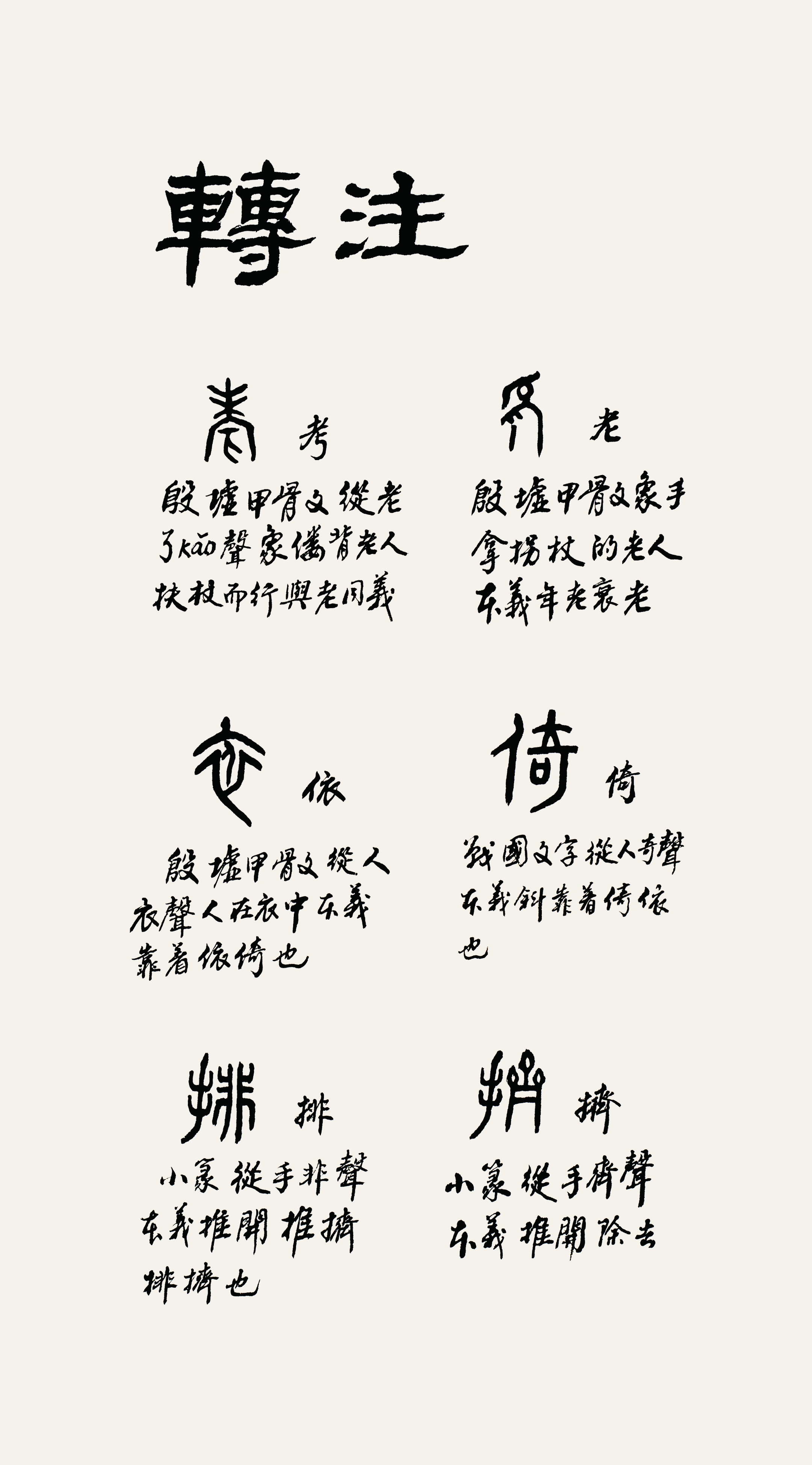
| 釋文 | 轉注 考 殷墟甲骨文從老丂聲,象僂背老人扶杖而行,與老同義。 老 殷墟甲骨文象手拿拐杖的老人,本義年老、衰老。 依 殷墟甲骨文從人衣聲,人在衣中,本義靠著、依、倚也。 倚 戰國文字從人奇聲,本義斜靠著、倚、依也。 排 小篆從手非聲,本義推開、推擠、排擠也。 擠 小篆從手齊聲,本義推開、除去。 |
| 書體 | 隸書、甲骨文、篆書、行書 |
結語 Closing
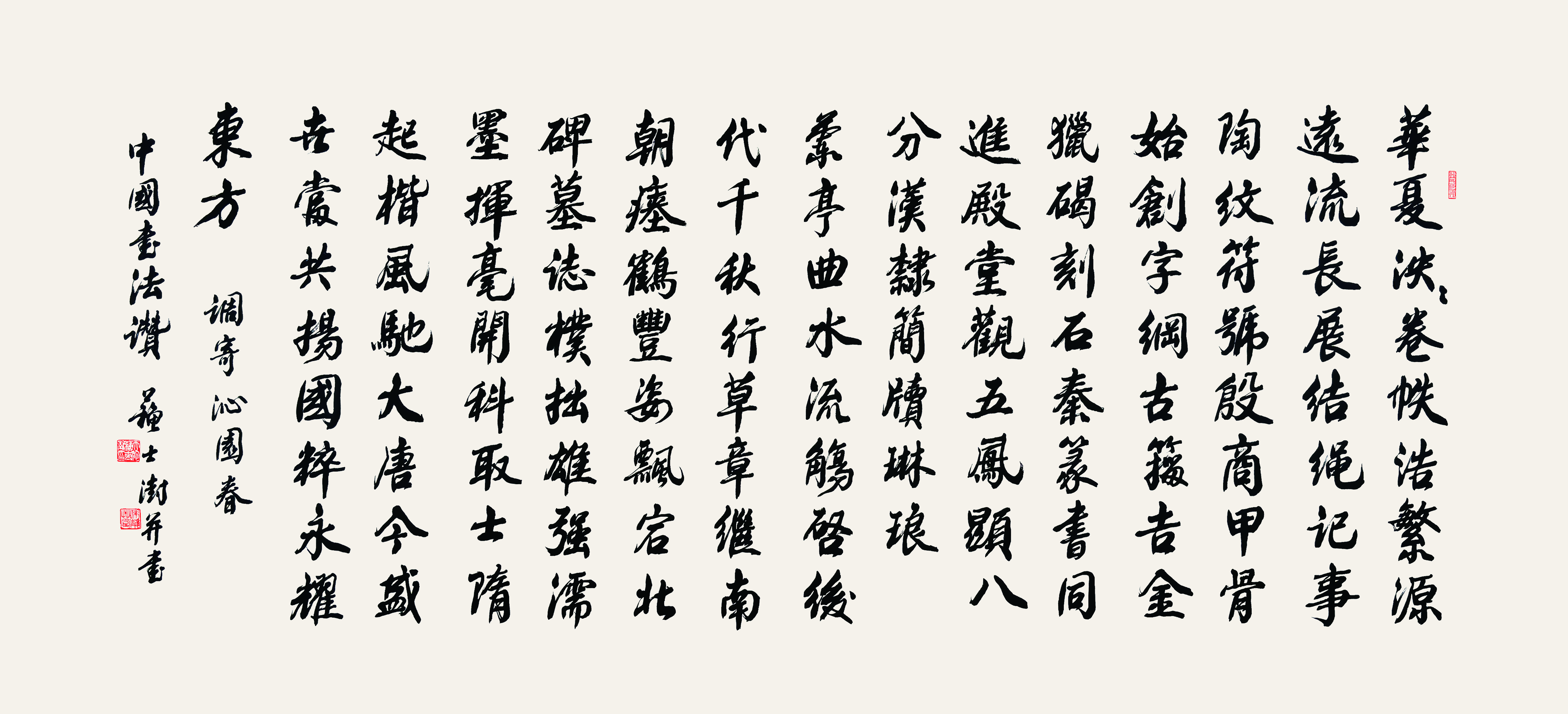
| 釋文 | 華夏泱泱,卷帙浩繁,源遠流長。展結繩記事,陶紋符號;殷商甲骨,始創字綱。古籀吉金,獵碣刻石,秦篆書同進殿堂。觀五鳳,顯八分漢隸,簡牘琳琅。 蘭亭曲水流觴,啟後代千秋行草章。繼南朝瘞鶴,豐姿飄宕;北碑墓誌,樸拙雄強。濡墨揮毫,開科取士,隋起楷風馳大唐。今盛世,當共揚國粹,永耀東方。 調寄沁園春·中國書法讚 蘇士澍并書 |
| 鈐印 | 右上:丙午大吉又日利(白) 左下:天池蘇士澍印(白)、味靜草堂(朱) |
| 書體 | 行書 |
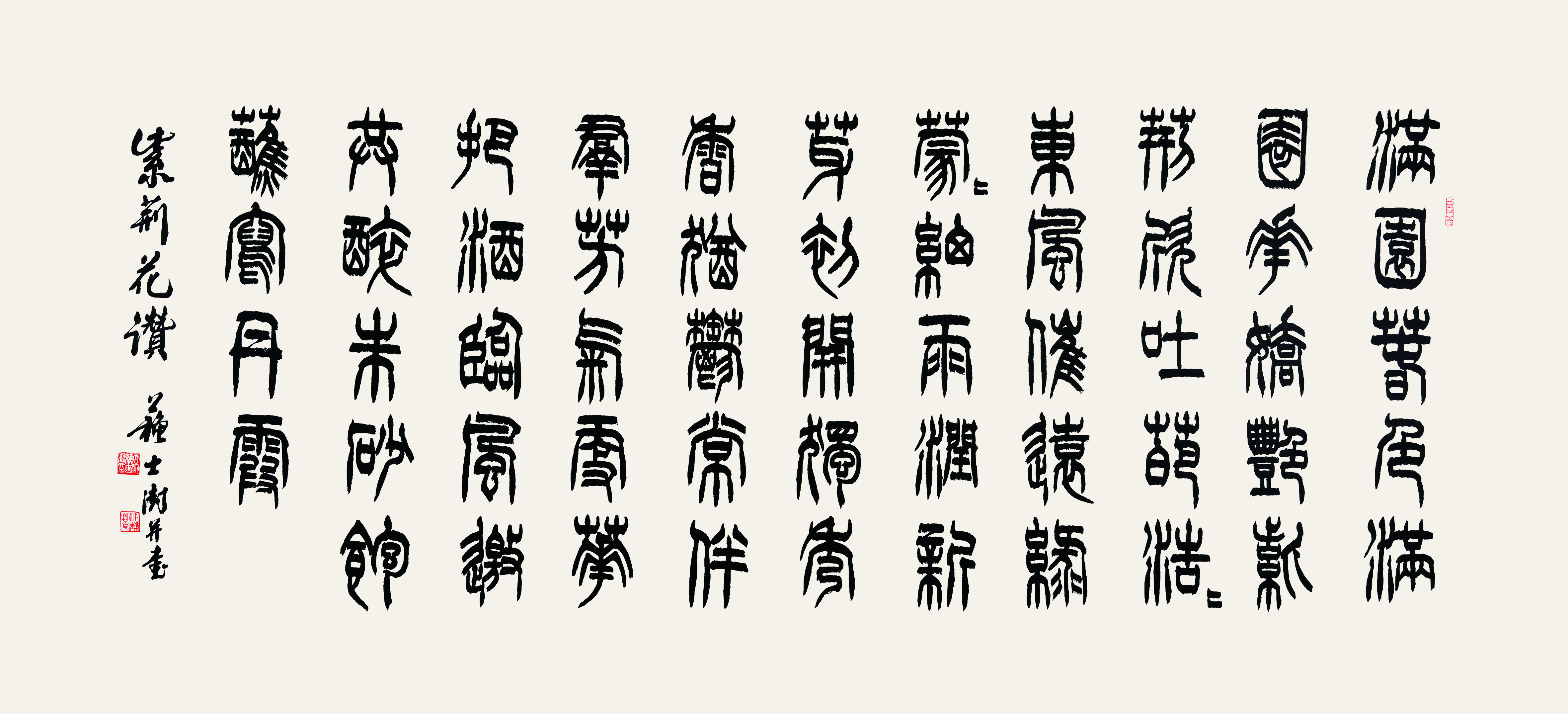
| 釋文 | 滿園春色滿園花, 嬌艷紫荊欣吐葩。 浩浩東風催遠綠, 蒙蒙細雨潤新芽。 初開獨秀香猶鬱, 常伴群芳氣度華。 把酒臨風邀共醉, 朱砂飽蘸寫丹霞。 紫荊花讚 蘇士澍并書 |
| 鈐印 | 右上:丙午大吉又日利(白) 左下:天池蘇士澍印(白)、味靜草堂(朱) |
| 書體 | 篆書、行書 |
4:30 pm
Tsang Shiu Tim Art Hall
Putonghua