



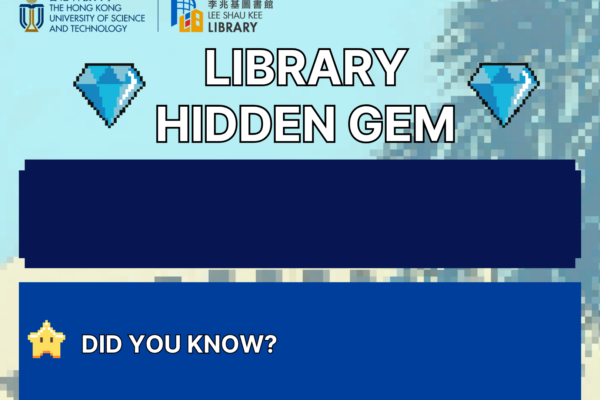
This past November, you may have noticed some curious posters inside lifts or beside notice boards, inviting you to “discover a library hidden gem.” These posters were part of a quiet, experimental campaign by the Library to explore two key questions: 1. Can we spark curiosity about lesser-known Library services through storytelling? 2. Which physical spaces are most effective for prompting interaction in a passive campaign?
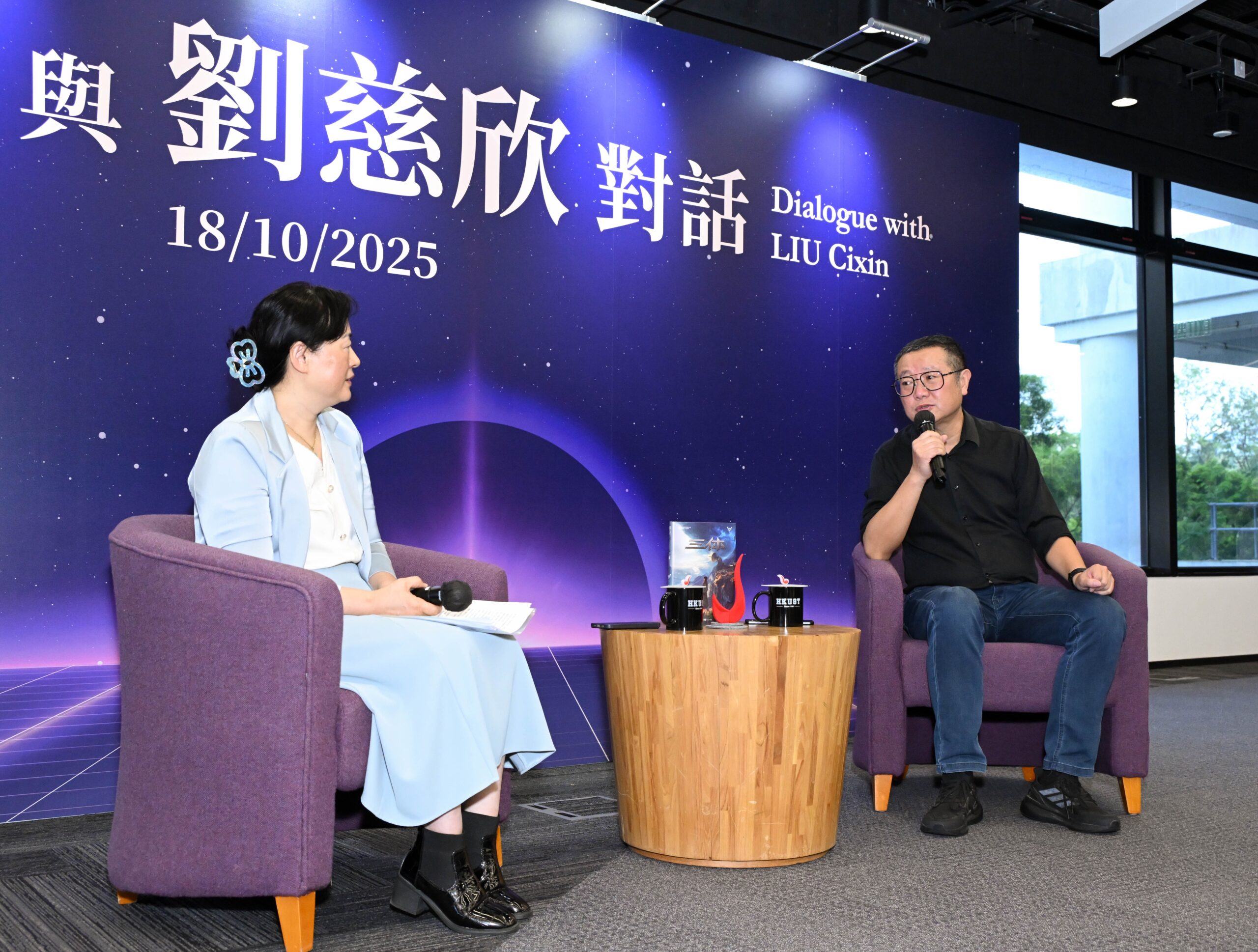
As a staff member at the HKUST Library and a devoted fan of The Three-Body Problem since my student days, I never imagined that one day I would meet Liu Cixin (劉慈欣) in person, and right here at my workplace. From Ancient Maps to Galactic Orbits. On October 18, HKUST held its Congregation 2025, awarding an honorary doctorate to Mr. Liu Cixin, the first Asian writer to win the prestigious Hugo Award. The same afternoon, Dr. Liu came to our library for a talk. I had the privilege of accompanying him together with a few of my colleagues as he explored our exhibitions, rooftop garden, and special collections. He showed genuine curiosity and appreciation, particularly towards our displays of ancient Chinese maps. A Dialogue on Technology, Human Civilization, and the Future. The highlight of the library visit was of course the talk, held in dialogue-format and moderated byProfessor Liu Jianmei. The venue was packed. As an “insider”, I firsthand knew how overwhelming the demand was: Over 700 registered for just over a hundred available seats. It was harder to get than concert tickets The discussion covered a broad range of topics from how AI is shaking up creative writing, to the future of virtual worlds, and to the sociological implications of the Dark Forest theory. When asked about AI’s growing ability to write fiction, Dr. Liu candidly admitted that even he had experienced a decline in creative passion. AI-generated texts now often surpass human writing in fluency and style, making it difficult to evaluate student work or feel unique as a writer. Yet he also pointed out that human cognition itself is data-driven, much like large language models. As a science fiction author, Dr. Liu remains calmly optimistic. He doesn’t see AI as a threat, but as a potential guide for humanity’s future. “If one day we can’t leave the solar system, but artificial intelligence can,” he said, “then perhaps it can carry our dreams into the stars.” One of the final questions of the talk came from an audience member who asked how Dr. Liu comes up with such vast and original ideas. I was particularly interested in this question myself. His answer was refreshingly honest: most people assume that sci-fi writers effortlessly generate ideas like “laying eggs,” but in truth, it is extremely difficult. Even with intense effort, he said, it can take more than a decade for a good idea to surface. As both a reader and a librarian, I was deeply moved. It reminded me that true creativity isn’t the product of calculation, but of vulnerability of being shaken by the unknown and daring to imagine beyond it. As a Three-Body fan, I was most eager to hear his thoughts on the Dark Forest theory. Dr. Liu clarified that it’s not a metaphor for human society, but an extreme hypothetical model for cosmic sociology. When civilizations are separated by light-years and unable to communicate, “shoot first to survive” becomes a plausible strategy. He emphasized that humans, unlike alien civilizations in such scenarios, can communicate and cooperate. Applying the Dark Forest model directly to humankind is a misinterpretation.
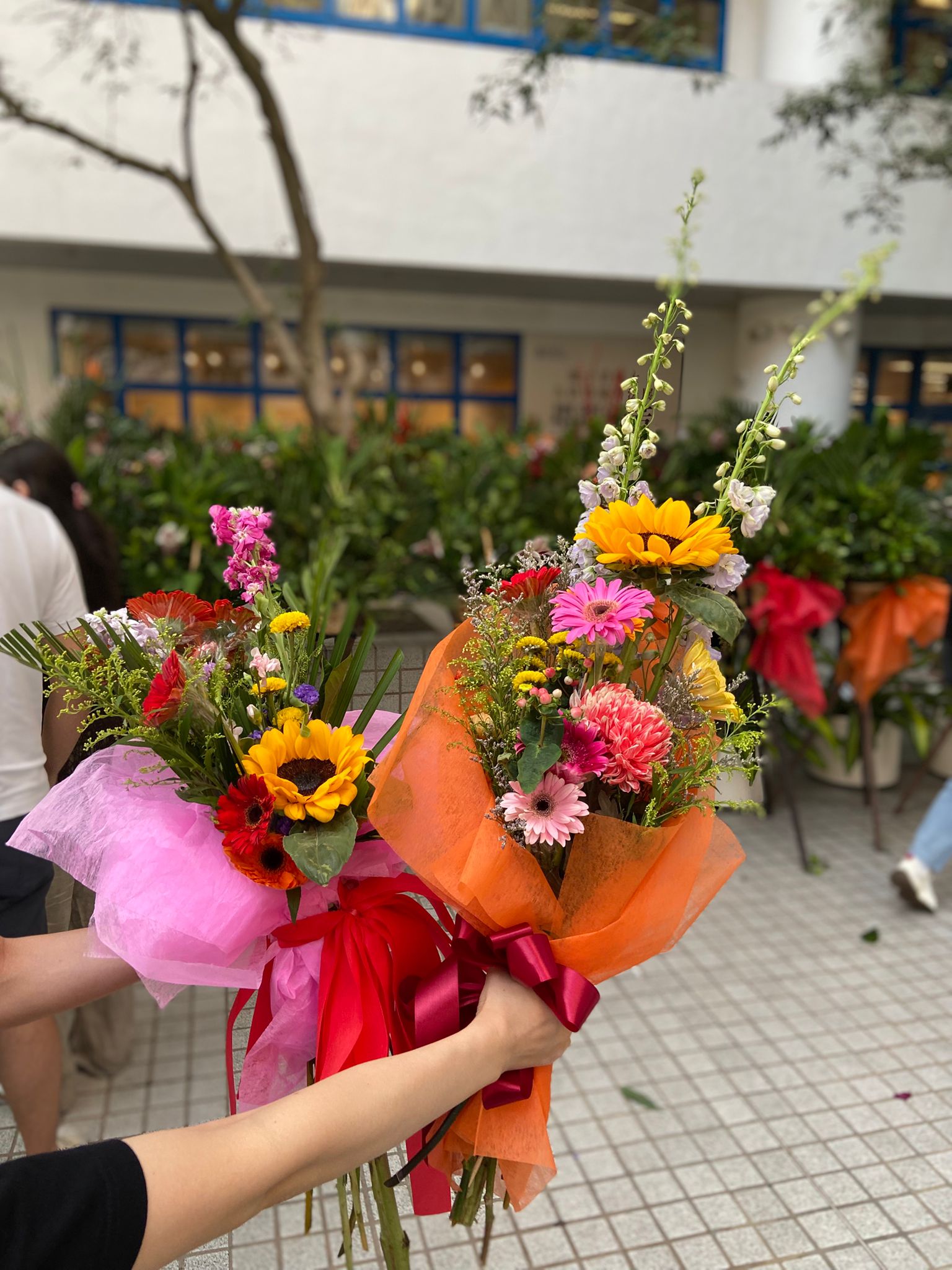
On 12 May, the Library hosted a vibrant exhibition opening that drew in art lovers. In a heartwarming show of support, friends of Dr Sze Chi Ching sent in 90 beautiful flower baskets, creating a stunning display outside the Library. While the flowers added charm to the event, the Library team saw an opportunity to extend their beauty and their purpose. Rather than letting the blooms go to waste, the Library reached out to the Sustainability/Net-Zero Office the next day with an idea: invite the campus community to take home the flowers and recycle the wooden frames. The Sustainability/Net-Zero Office enthusiastically supported the initiative and helped spread the word within 3 hours. The Campus Management Office also played a key role by sending the housekeeping team and cleaners to help tidy up the space, ensuring everything was neat and welcoming for the community. The response was overwhelming. Students, staff, and faculty came together to give the flowers a second life, brightening homes and offices across campus. It was a joyful moment of sharing, sustainability, and community spirit. This simple yet impactful gesture not only reduced waste but also reminded everyone that small actions can make a big difference.
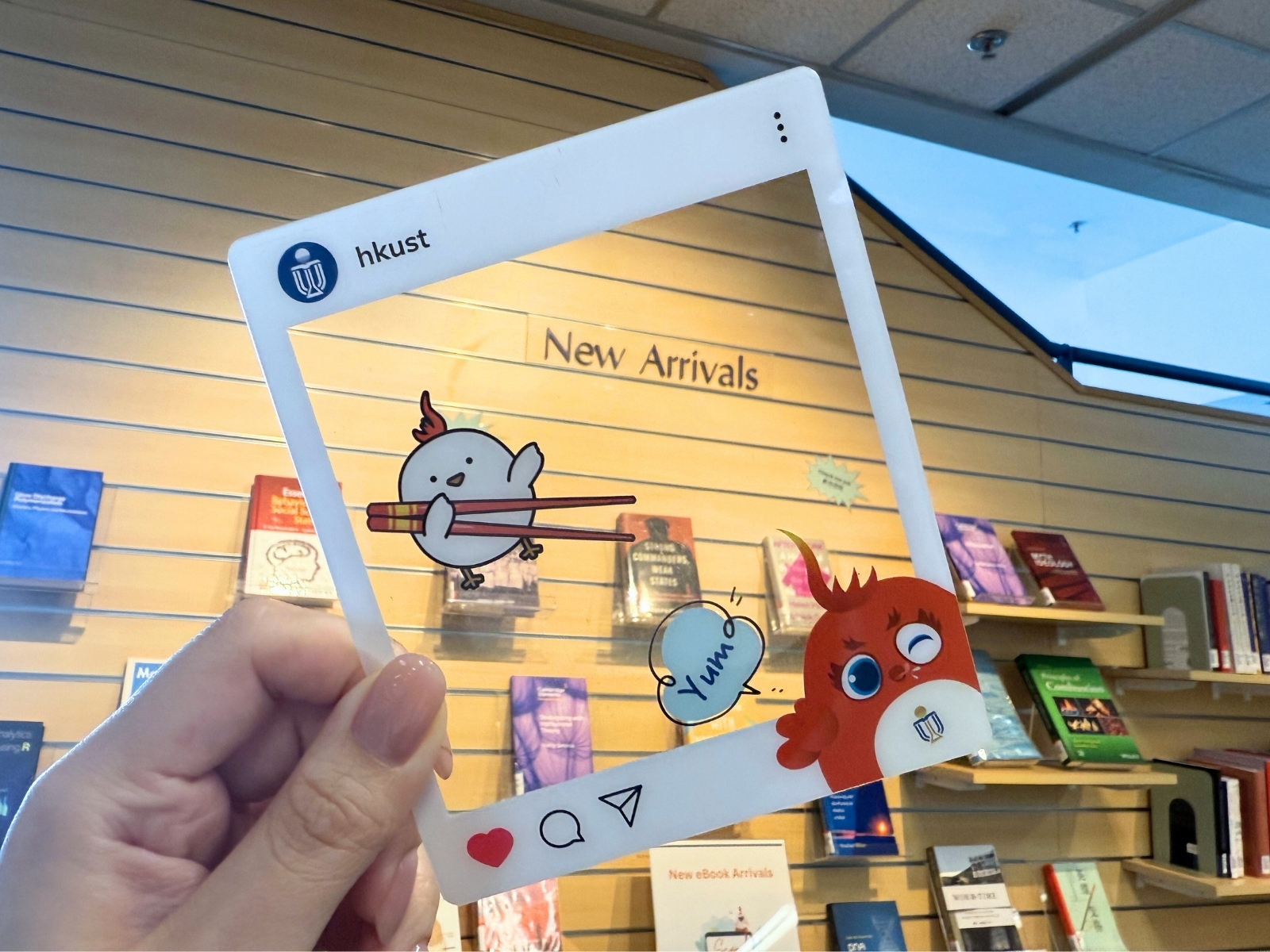
When was the last time you read a book? Flipping through pages, tapping on an e-reader, or scrolling on your phone, you are immersed in a dimension of personal thoughts and sentiments, unconsciously forging a connection to the other or the collective. French literary theorist Roland Barthes (1915 - 1980) introduced the concept of The Death of the Author, arguing that a text’s meaning is not dictated by the author’s intentions but is instead shaped by the reader’s interpretation and emphasizing the text’s independence. Whether you project your experiences and ideologies onto the text or engage your ability to reason and feel, reading is a process of communicating with yourself, and a mirror reflecting your thoughts and beliefs. What we bring to a book shape what we take from it, as who we are determines how we understand it. Do you recall the thrill of encountering a book that speaks to your soul and mind? The excitement of discovering a favourite book is a cherished moment of many readers— scanning through lines of text, exploring unknown worlds, and connecting with stories that resonate deeply. World Reading Day is the perfect opportunity to rekindle that joy. Celebrated annually on April 23, the World Reading Day is a global tribute to the joy of books and reading. Established by UNESCO in 1995, this special day holds symbolic significance in literary history, commemorates the passing of iconic writers such as William Shakespeare (1564 - 1616) and Miguel de Cervantes (1547 - 1616).
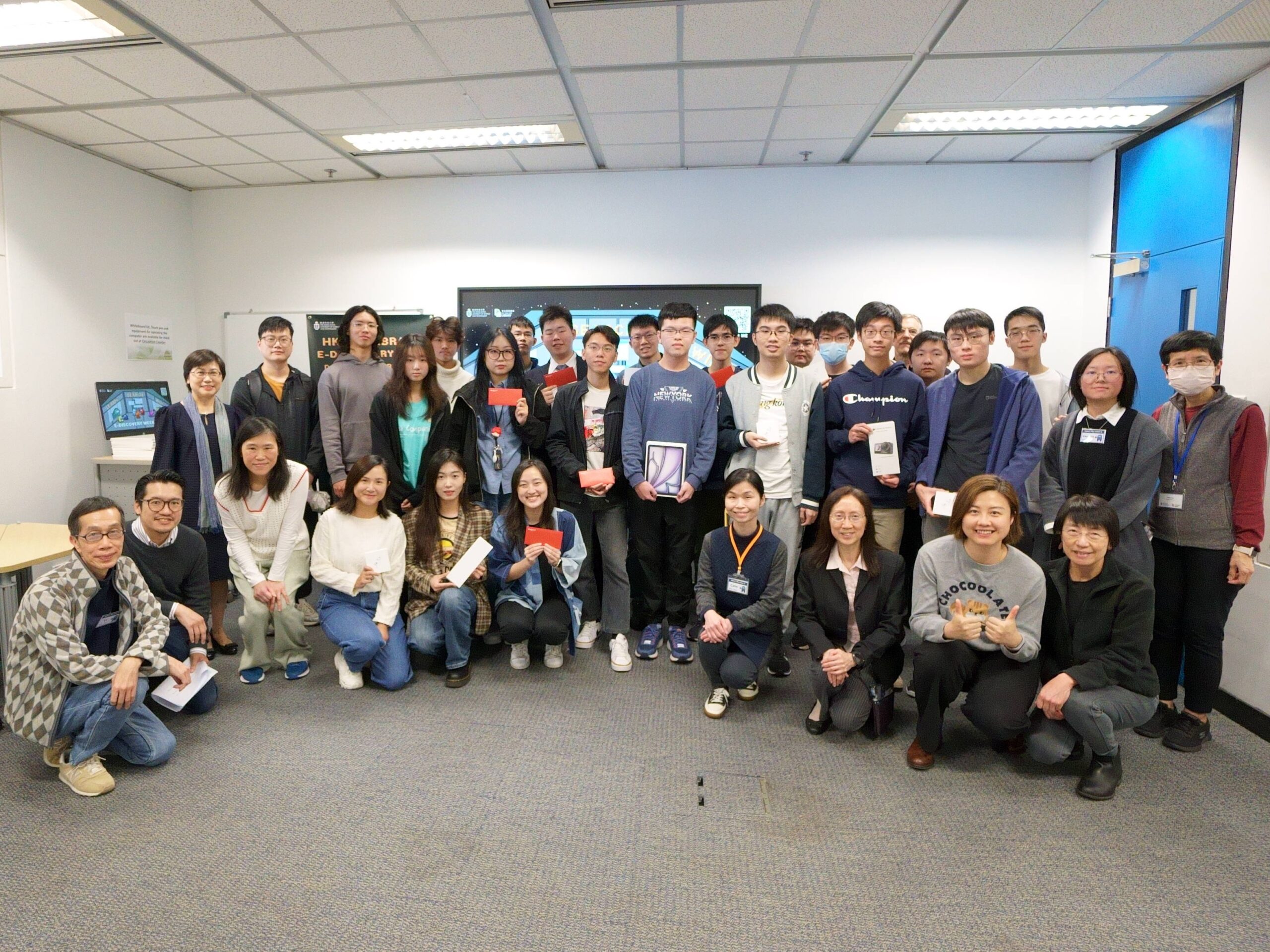
Library E-Discovery Week 2025, held from February 17 to 21, was a great success! Over 2,000 students and staff participated in our E-Discovery Week Exhibition, Online Workshops, and Online Challenge. Each activity included quizzes to keep everyone engaged and learning. One of the coolest highlights was our new stamp collection game at the exhibition, where participants visited various booths to explore our featured e-resources and collect stamps, earning up to nine Lucky Draw chances. All valid stamp collections and quiz submissions were entered into the Big Lucky Draw. On March 12, we celebrated with a prize presentation ceremony in the Library’s IC Learning Space. Lucky Draw winners received their prizes from Dr. Gabrielle Wong, Director of Library Services, and Mr. Edward Spodick, Associate Director of Library Services, while Active Participation Winners were awarded by Ms. Venia Mak, Head of Access Services.
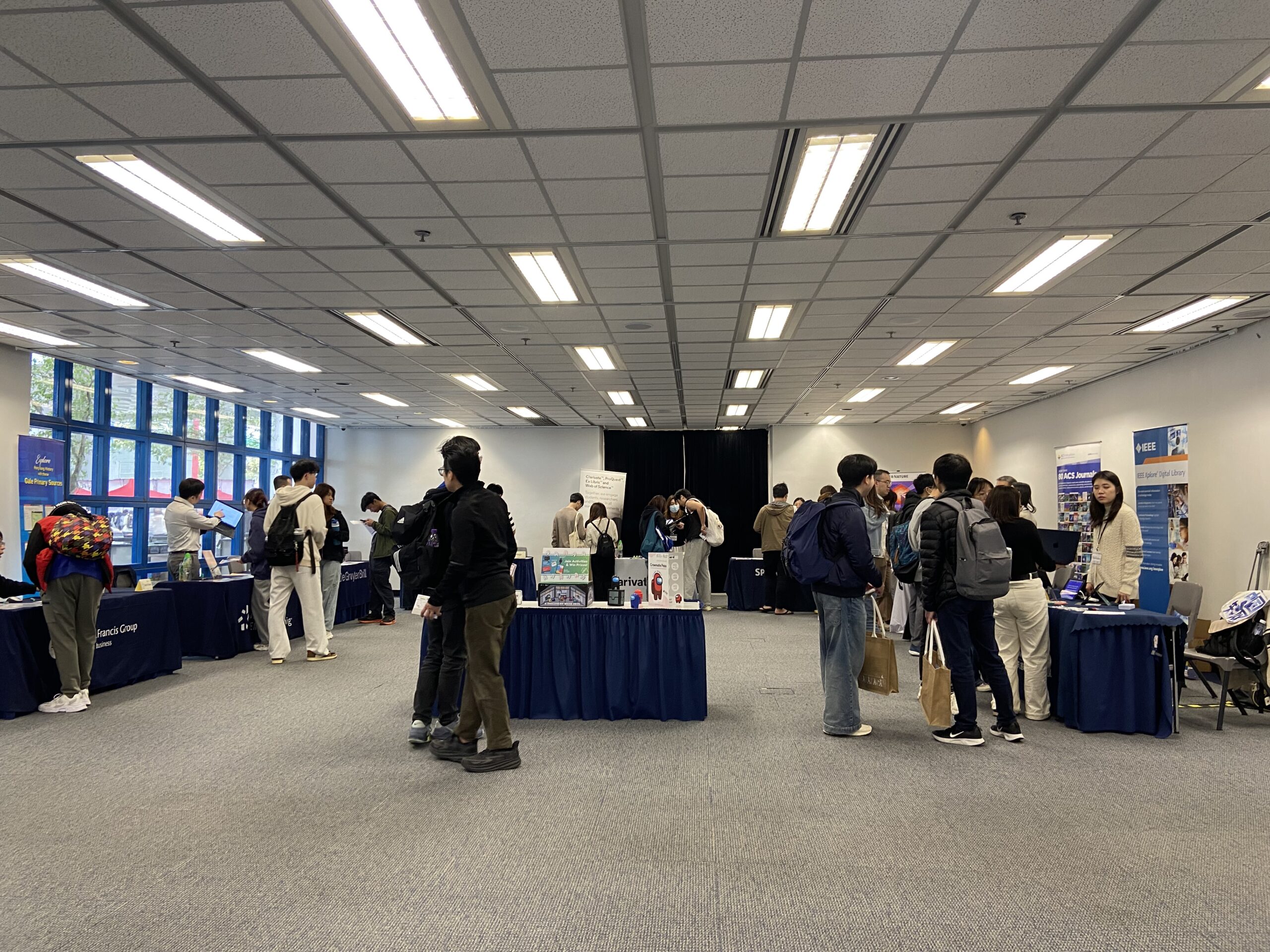
I joined the first day of E-Discovery Week Exhibition. The experience proved to be nothing short of enriching. Designed to unveil the wealth of databases accessible through the HKUST Library, it blended learning with playful engagement—a combination that left me both informed and inspired. The concept was simple yet clever: Participants received a “Crewmate Pass” to collect stamps by exploring booths hosted by ten leading database providers. Spanning disciplines from Business and Science to Humanities, each booth offered a deep dive into specialized resources. What impressed me most was the hosts’ expertise—not only did they demystify their platforms, but they also shared tailored tips for navigating them through HKUST’s Library portal. It felt like unlocking cheat codes for academic success! The real adventure began with stamp hunting. With just three stamps, participants could enter a lucky draw brimming with enticing prizes. Yet, as I gathered more stamps, I realized the greater reward lay in the discoveries themselves: databases I’d never considered for assignments, now bookmarked as secret weapons for future research.
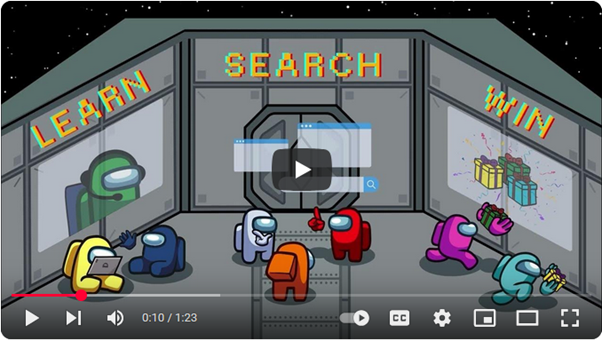
Hey there! Get ready for E-Discovery Week 2025 at the HKUST Library, happening next week from Feb 17–21. This will be our 6th time hosting this event, and this year, we’re bringing in the fun with the popular game “Among Us” to spice things up!
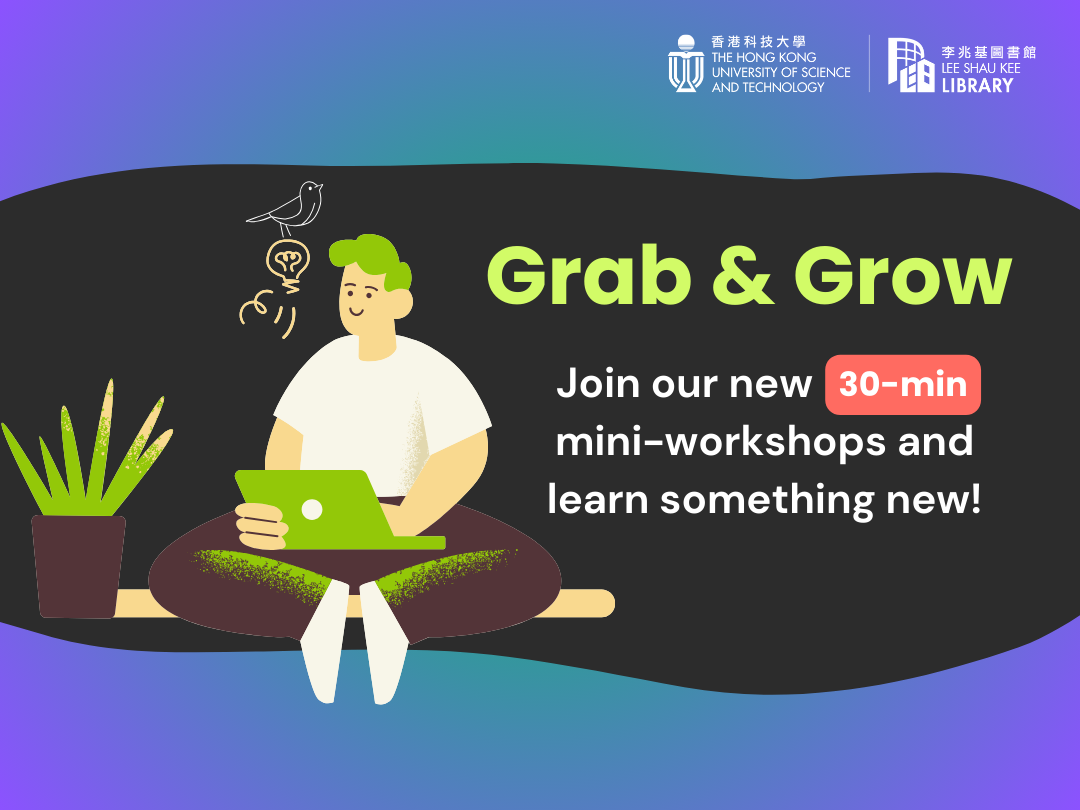
Hey everyone! We know that juggling studies and research can be a bit overwhelming, so we’re rolling out a brand-new program called “Grab & Grow”. These quick, 30-minute workshops are perfect for busy students and staff looking to boost their research skills without a huge time commitment. Whether you’re trying to figure out the library’s call number system or explore scientific research using open data, we’ve got you covered. Here is what you can look forward to: you’ll learn how to Manage your references effortlessly Create eye-catching presentations and videos with Canva, and Dive into scientific research using OpenAlex. These sessions are all about making your life easier and enhancing your efficiency in research. Plus, they’re engaging, so you’ll walk away with practical skills and use right away. So, if you want to level up your research capabilities and keep your research on point, join us for “Grab & Grow”. Keep an eye on our announcements for the schedule and grab your spot. Let’s make research fun and effective together!
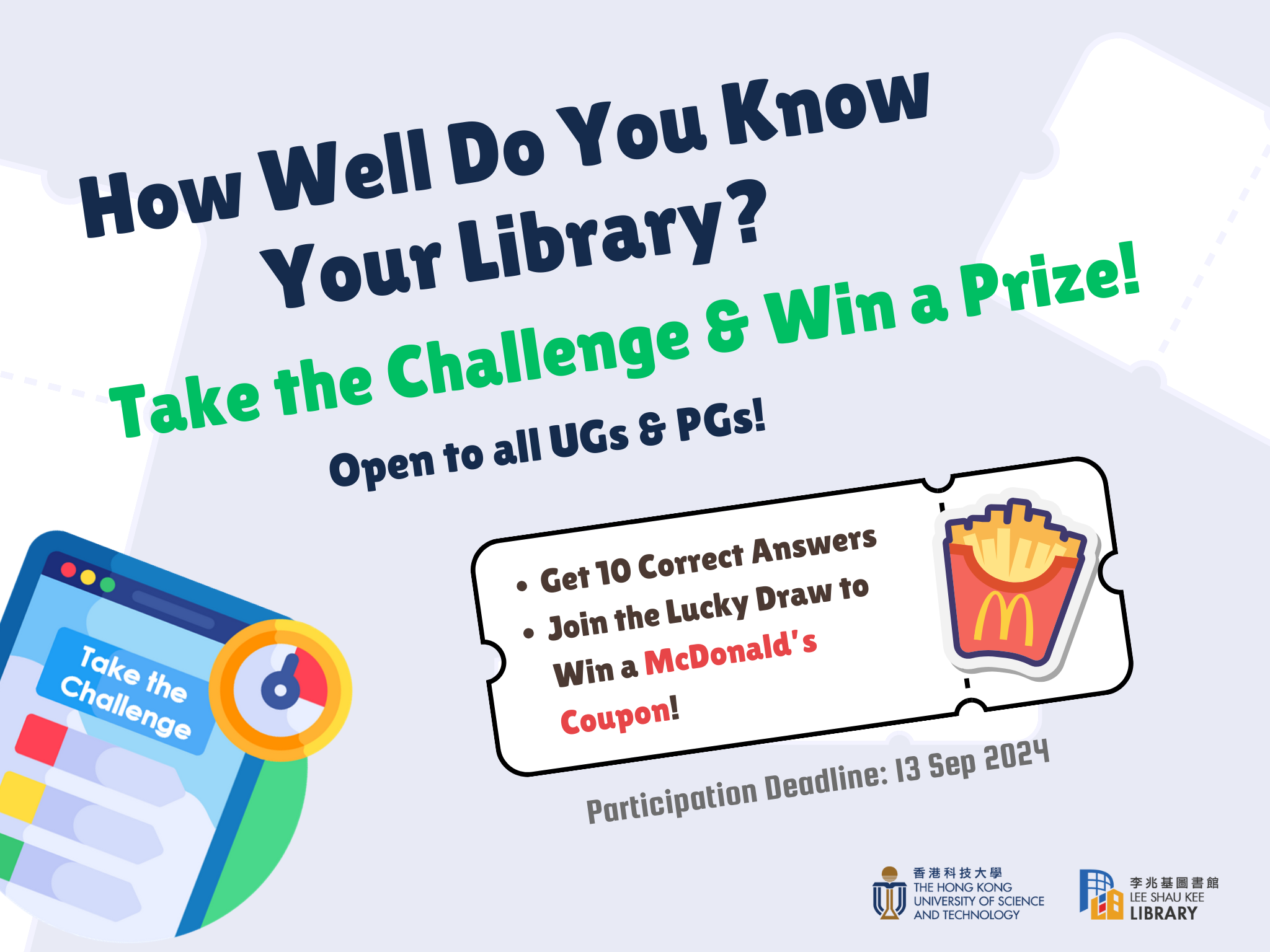
This book is working out in a gym. It wants to be a “fit” member of the library collection. Recently, we ran a "How Well Do You Know Your Library Challenge" to let users test their fitness in using various library resources and services. This 10-question online quiz introduces a full range of resources from the less known treasures of our archives and special collections to cutting-edge technology offerings. Did you know? All self-learning videos created by us are available at E-learning Videos & Games? You can unleash your creativity at our Adobe Creative Cloud Workstations on G/F and LC Creative Media Zone on LG1? We have perfect spots for video chats or online interviews? Try our Study Pods and Library Outdoor Areas – Library Garden or Terraces. Congratulations to our winners and a big thank you to all of you who participated!
