




News
Library Stories

Library Stories
This summer, we are thrilled to present a collection of 100 iconic Hong Kong films, each offering stunning visuals and captivating stories. For crime dramas enthusiasts, the Infernal Affairs I , II, III; (無間道I, II, III 終極無間) directed by Andrew Lau and Alan Mak is a must-see. Wong Kar-wai’s masterpieces, In the Mood for Love (花樣年華) and Chungking Express (重慶森林), highlight his distinctive artistic vision. Stephen Chow’s beloved comedies, such as Shaolin Soccer (少林足球), A Chinese Odyssey part I and II (西遊記第壹佰零壹回之月光寶盒 及 西遊記大結局之仙履奇緣), showcase the playful humour that defines late 20th-century Hong Kong cinema. Recent films like 29 1, Tomorrow Is Another Day (黃金花), Tracey (翠絲), and Still Human (淪落人) explore various social themes and resonate deeply with audiences. This collection offers a fantastic opportunity to enjoy diverse Hong Kong cinema during your term break. If you need a DVD drive, feel free to borrow one from the G/F Service Counter or LG1 Tech Item Kiosk. Don’t miss out on the excitement of Hong Kong films this summer! Vanessa Yu Officer (Collection Development) lbvanessa@ust.hk
Collection Highlights
Library Stories

Library Stories
On 12 May, the Library hosted a vibrant exhibition opening that drew in art lovers. In a heartwarming show of support, friends of Dr Sze Chi Ching sent in 90 beautiful flower baskets, creating a stunning display outside the Library. While the flowers added charm to the event, the Library team saw an opportunity to extend their beauty and their purpose. Rather than letting the blooms go to waste, the Library reached out to the Sustainability/Net-Zero Office the next day with an idea: invite the campus community to take home the flowers and recycle the wooden frames. The Sustainability/Net-Zero Office enthusiastically supported the initiative and helped spread the word within 3 hours. The Campus Management Office also played a key role by sending the housekeeping team and cleaners to help tidy up the space, ensuring everything was neat and welcoming for the community. The response was overwhelming. Students, staff, and faculty came together to give the flowers a second life, brightening homes and offices across campus. It was a joyful moment of sharing, sustainability, and community spirit. This simple yet impactful gesture not only reduced waste but also reminded everyone that small actions can make a big difference.
Staff StoriesSustainability
Library Stories
Library Stories
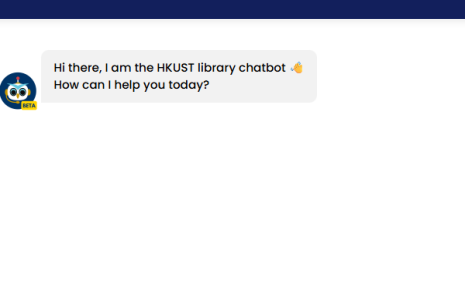
You may notice that starting from May 6, 2025, a little owl-like icon appears on our Library homepage. This is our new HKUST Library Chatbot (beta)! It is now on a two-month pilot program until the end of June. Developed through our DS CoLab initiative—where students team up with the Library staff to explore digital tools and AI applications—the chatbot uses ChatGPT technology to answer your general questions about library services.
Digital Transformation
Library Stories
Library Stories
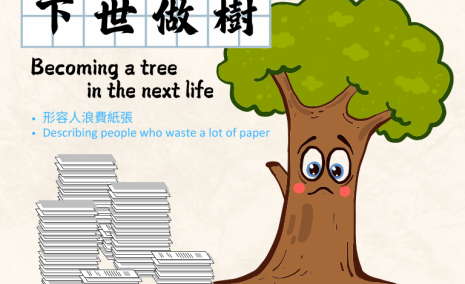
The Spring term exam period is approaching. Are you considering printing all your notes for revision again? Hold on! Let's reconsider this after reviewing our collective printing habits from the Fall term exam period.
Sustainability
Library Stories
Library Stories
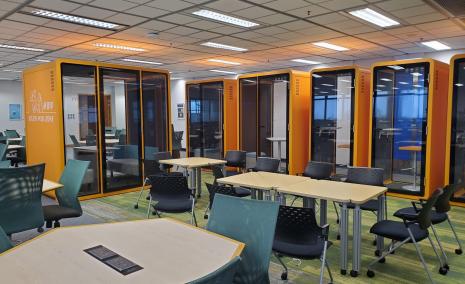
Have you checked out the 9 awesome study pods on LG1 of the library? Installed in 2024, these study pods provide a welcoming and quiet space with seating, work surfaces, good lighting and ventilation, as well as power/USB sockets to keep your devices juiced up. We've noticed that users often study in the dark, and sometimes they keep the door open ajar to let air flow. They might not be aware that they can turn on the light and the ventilation function while using the study pods. To protect your eyesight and stay cool and comfortable while studying, let's make sure to turn on the lights and ventilation so that you can focus on your studies without any distractions. It's super easy to find the switch in the Duo Pods and Quad Pods. For the Solo Pods, here's a little challenge: the switch is hiding under the table! Some people may think the fan is a bit noisy... but it really helps to keep the air fresh. Let’s prioritize your eye health and create a comfortable and efficient study environment.
Facilities & Space
