
Past Events
Library iTalks
4
9
10
About the TalkPhilip spoke to a packed and enthusiastic audience about how to improve writing by taking cues from advertising. He reminded the audience that at the university level, it is not enough to know grammar. Instead, we need to recover from "clutter disease": writing long, windy sentences without focus or impact.To improve our writing he taught from successful, clever, and memorable ads and slogans. He highlighted their virtues of brevity and creativity, helping us to enter the minds native English speakers. He also suggested learning from English language sports writers and broadcasters to write and speak with enthusiasm, wit, and precision.The audience enjoyed his amusing and interesting examples and explanations, and will surely benefit from his proposed medicine to cure the "clutter disease". Video of the talk: Make every word count: stealing the secrets of better writing from advertising (PN181 .Y49 2013) About the AuthorMr Philip Yeung is speechwriter to the President of HKUST and Senior Communication Manager at Public Affairs Office. He was formerly a freelance speechwriter to many Hong Kong leaders, including the current Financial Secretary and the Secretary for Financial Services and the Treasury. He was a frequent contributor to the South China Morning Post on English language, education and social issues. He has delivered effective writing workshops to undergraduate and postgraduate students.Mr Yeung completed his undergraduate and graduate education at the University of Toronto and studied briefly at Exeter College, Oxford University on a scholarship.For enquiry, please contact Victoria Caplan at 2358-6756.
Details
Library iTalks
4
10
16
About the TalkDavid Mole, HKUSTs Associate Provost (Teaching and Learning) spoke about some histories that he has enjoyed, and his reflections on them. The thread of his discussion was a quote from Francis Bacons The Advancement of Learning on why people seek knowledge:"For men have entered into a desire of learning and knowledge, Sometimes upon a natural curiosity and inquisitive appetite;Sometimes to entertain their minds with variety and delight; Sometimes for ornament and reputation;And sometimes to enable them to victory of wit and contradiction;And most times for lucre and profession;And seldom sincerely to give a true account of their gift of reason to the benefit and use of men: As if there were sought in knowledge a couch whereupon to rest a searching and restless spirit;Or a terrace for a wandering and variable mind to walk up and down with a fair prospect; Or a tower of state, for a proud mind to raise itself upon; Or a fort or commanding ground, for strife and contention; Or a shop, for profit or sale; And not a rich storehouse for the glory of the Creator and the relief of mans estate."Admitting to the vice of often seeking "a couch" or a "terrace"; and trying to attain the virtue of a "rich storehouse" to the delight and enjoyment of the audience, he spoke about and read from a number of books, the library copies listed below. Video of the talk: Reading history: some virtues and vices (D16.2 .M65 2013)Return to Dragon Mountain: Memories of a Late Ming Man / by Jonathan SpenceReformation: Europes House Divided / Diarmaid MacCullochAfter Tamerlane : the global history of empire since 1405 / by John DarwinThe corruption of angels : the great inquisition of 1245-1246 / Mark Gregory PeggThe Reformation / Diarmaid MacCullochWaterloo : Napoleons last gamble/ Andrew RobertsThe coming of the Third Reich / Richard J. EvansOther books recommended are:The Third Reich in power, 1933-1939 / Richard J. EvansThe Third Reich at war / Richard J. EvansA history of histories : epics, chronicles, romances and inquiries from Herodotus and Thucydides to the twentieth century / John Burrow About the SpeakerDr. David Mole received his BA from Cambridge University before moving to Canada for Post-graduate study. There, he earned a Masters degree from the University of British Columbia and a PhD at the University of Toronto.After teaching at a number of universities in Canada and working as an economist for the Ontario government, he moved to Hong Kong in 1989.David joined HKUST in 2005, where his main role has been to support the development of undergraduate education, especially the implementation of the four-year degree. In addition to a keen interest in sport and physical fitness, David has a life-long addiction to the pleasures and rewards of reading.For enquiry, please contact Victoria Caplan at 2358-6756.
Details
Library iTalks
4
10
11
16
About the Talk Dr. ZHU has been reading for many years about the history and culture of Jewish people. It is an interest that he developed while living in Canada and first meeting and getting to know Jewish people. He likes to ponder what he sees as similarities and differences between Jewish and Chinese cultures, especially in regard to family values, educational achievement, preserving traditions, and civic responsibility (repairing the world).Among the books he discussed were:The Jewish Century by Yuri SlezkineJewish literacy : the most important things to know about the Jewish religion, its people, and its history by Joseph TelushkinEmpires of the Word by Nicholas Ostler About the SpeakerDr. Zhu Lijing brings an interesting mixture of education and career background to both his work and his reading. Born and reared in Mainland China, he studied International Relations at Beijing University (1978-80) before moving overseas in 1980 and studying American History at Carleton University and University of London. Finding a home-from-home in Canada, he settled in at the University of Western Ontario, where he received his B.A. and M.A., in addition to his PhD in Economics (1991). After teaching economics at University of Windsor, he returned to Asia, where he taught economics for several years at HKUST, the National University of Singapore, and at HKU.For the past 10 years, Dr. Zhu has worked in an administrative capacity at HKUST: first recruiting non-local UG students and then providing advice and support to both PG and UG students from the Mainland. Since 2005, Dr. Zhu has served as Chairman, Vice Chairman (Internal Affairs), and EXCO Member of the HKUST Staff Association; was a a Member of HKUST Court for six years (2005-2011) and as a member of the HKUST Council (2009-2012). He is currently an Associate Director for Student Life in the Student Affairs Office (SAO).Experiencing different cultures and sub-cultures in a variety of social, institutional, and professional contexts has sparked Dr. Zhus interest in reading about them on his own. He is fascinated by considering similarities and differences between different cultures, and wishes to share this joy with others.For enquiry, please contact Victoria Caplan at 2358-6756.
Details
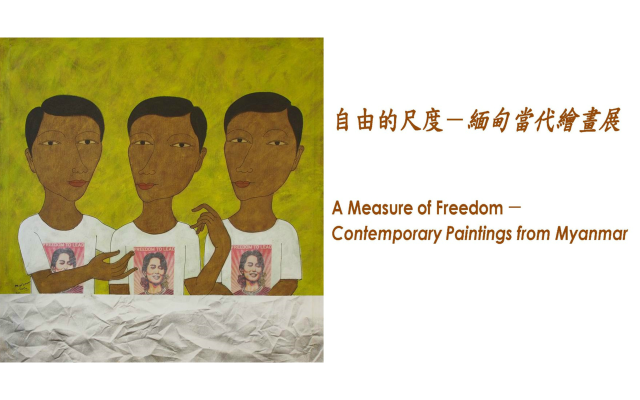
Exhibitions
Details
-
Library Opening Hours
Library iTalks
3
10
16
About the TalkThe Lahu are a small ethnic minority in China. About 470,000 of them live in the mountains in Yunnan, near Burma, Laos, and northern Thailand. This group is mostly Buddhist, and have a long history of resistance to the Chinese Han majority. The Lahu now face the collapse of their traditional social system, suffering from the highest suicide rate in the world, large scale trafficking of Lahu women, alcoholism, and poverty.Dr. Ma did long-term anthropological research among the Lahu for years. In this talk, he will give an overview of the Lahus traditional way of life, the difficulties they face, and how the Lahus situation provides an example of how the Chinese government approaches relatively small ethnic minorities in China. The Lahu minority in Southwest China Streaming Video of talkThe book, The Lahu minority in Southwest China: a response to ethnic marginalization on the frontier, is available in the Library. About the SpeakerProfessor Ma developed his interest in cultural anthropology growing up in Yunnan, Southwest China. In 1997, he received his M.A. degree in ethnology at Yunnan Nationalities University, and completed his MPhil (2002) and PhD (2007) here at HKUST. His research interests include: ethnicity, kinship, the anthropology of borderlands, and ethnic minorities in China and highland Southeast Asia.As an Assistant Professor in the Division of Humanities, this spring he is teaching HUMA 2621, "Culture and Environment" which explores the relationship between "culture" and the "environment" and how cultural mechanisms impact resource management, population and health practices in different cultural settings.For enquiry, please contact Victoria Caplan at 2358-6756.
Details