



DS Project P005
2025 Fall - 2026 Summer
This project is funded by Kingrich Charitable Foundation Association Limited.
About the PROJECT
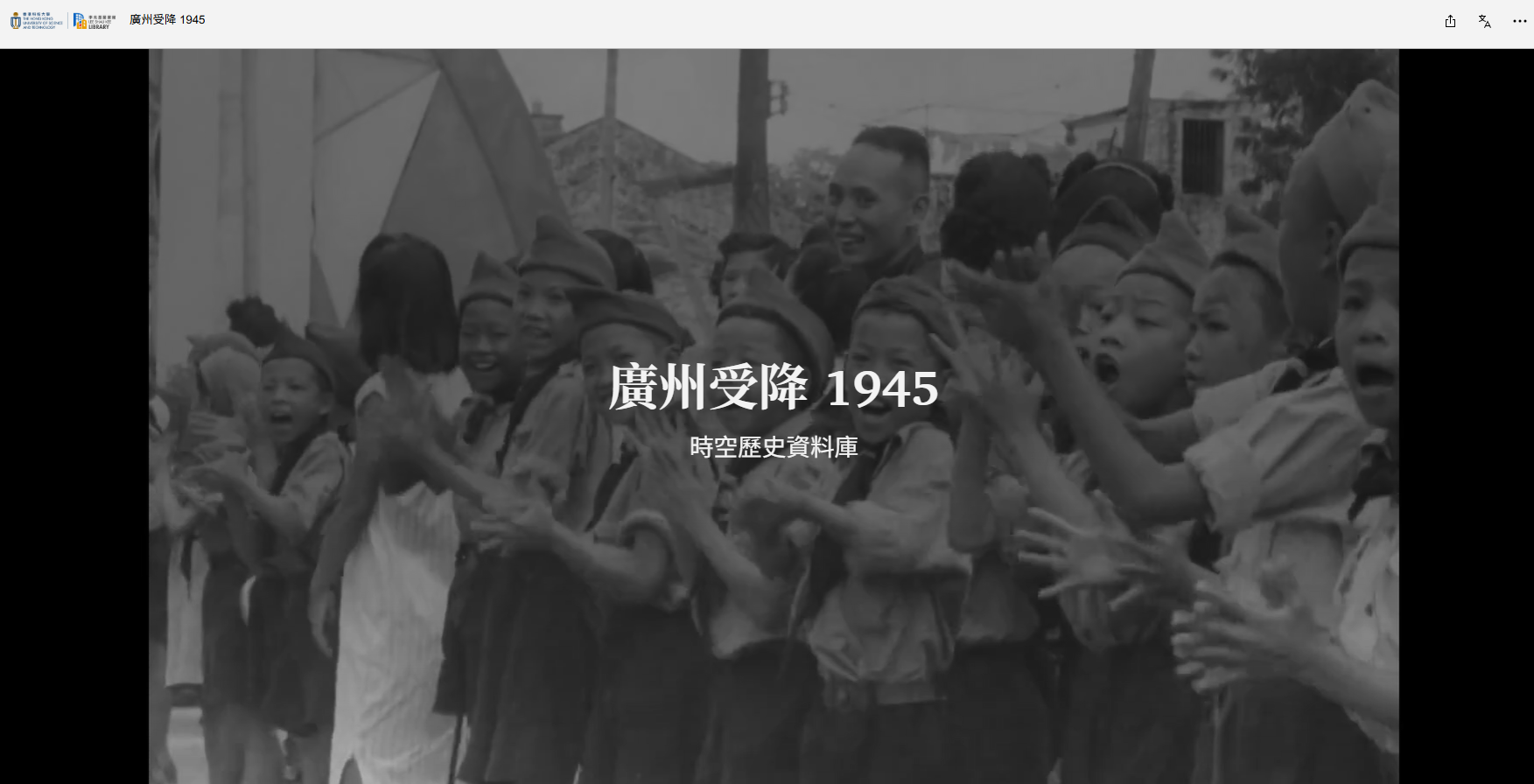
"Japan's Surrender in Guangzhou (Canton)" is a digital humanities project generously funded by Dr. Ko Pui Shuen. The project originated from an idea by Professor David Cheng CHANG (Division of Humanities, HKUST), author of The Hijacked War: The Story of Chinese POWs in the Korean War, an expert on the Cold War, US-China relations, and the social history of war and revolution as experienced by ordinary people. Through close collaboration, Prof. CHANG’s vision is now brought to life by a dedicated team of digital humanists from the Library and the Division of Humanities.
The project tells a spatio-documentary story of an important historical moment. After eight years of resistance, China emerged victorious in its war against Japan as a member of the Allied forces in World War II. In Guangzhou, which had fallen to Japanese occupation in October 1938, residents witnessed the return of Chinese troops for the first time in eight years — smartly dressed, splendidly equipped, proud, and confident. Drawing on two historical maps of Guangzhou from the HKUST Library Special Collections and a wide range of primary sources, including archival documents, newspapers, memoirs, photographs, and moving images, the project employs ArcGIS and its StoryMaps tools to reconstruct a vivid digital historical scene.
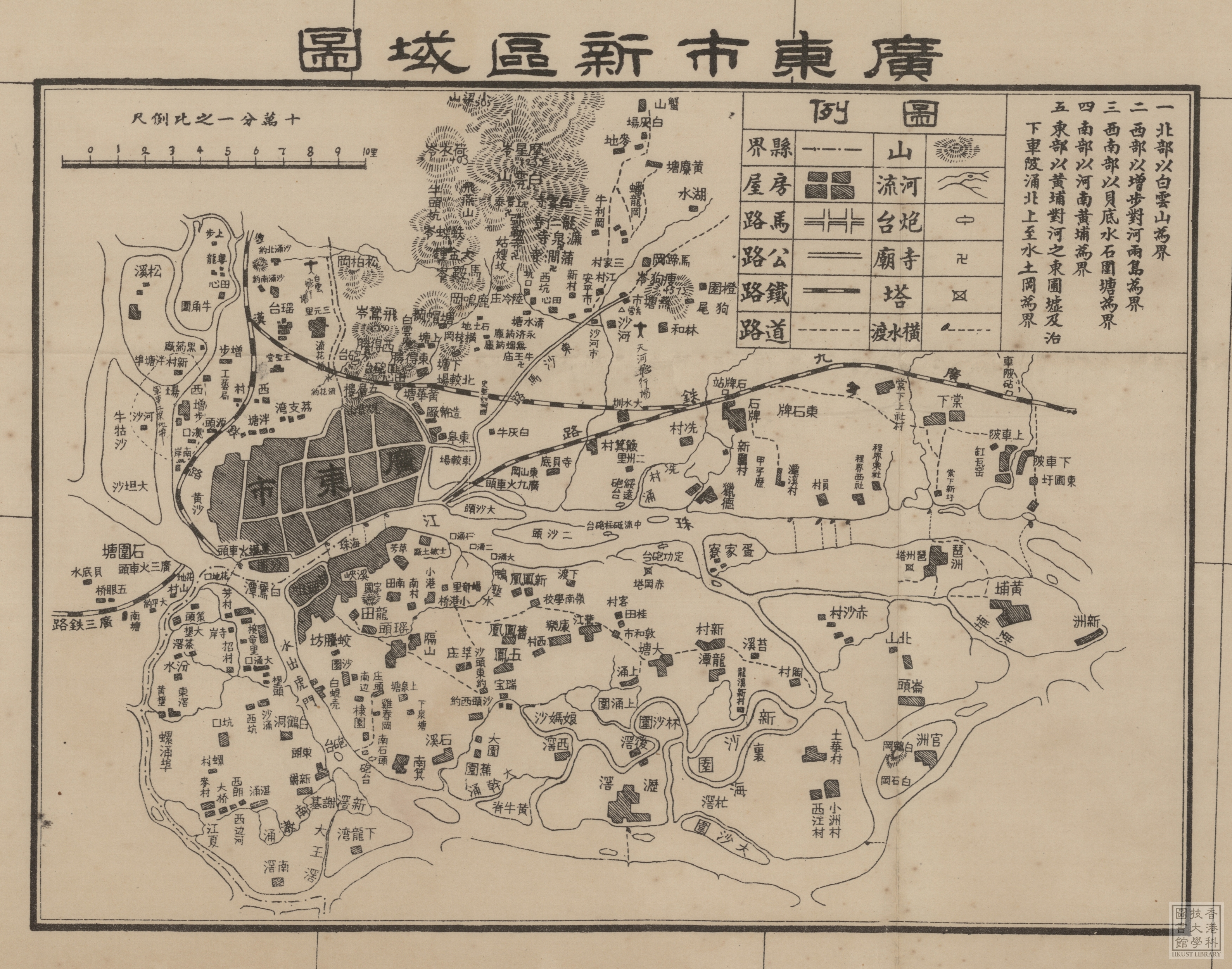
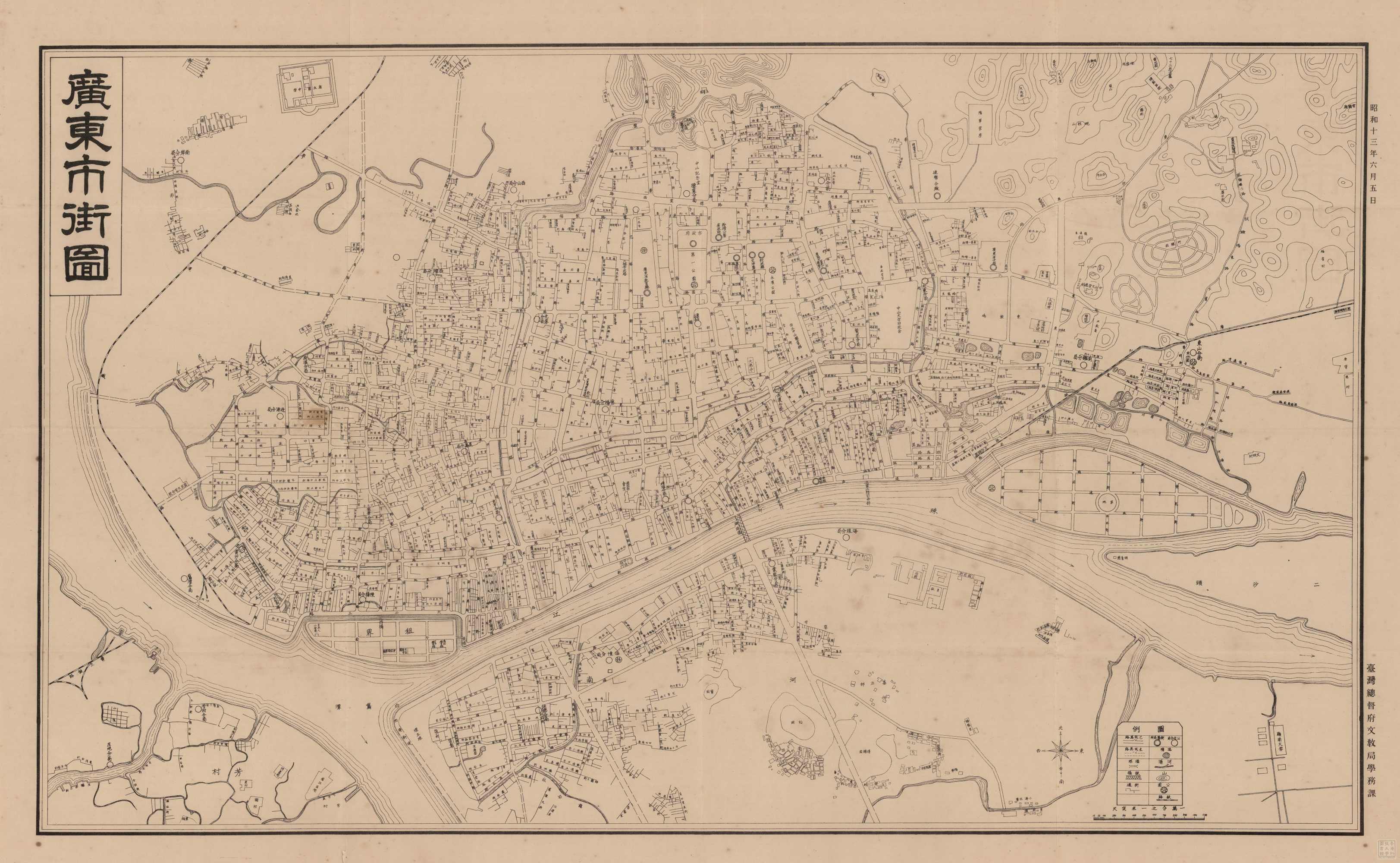
We invite you to explore this digital story, to revisit the old Canton city by following the parade route of Chinese soldiers, and to experience history — lingering over people’s faces, imagining their thoughts, and feeling their emotions.
Project Deliverables
Explore our StoryMaps ↴
1940s Chinese Newspaper AI-OCR Test
We adopted several MLLMs (Multimodal Large Language Models) to support Optical Character Recognition (OCR) in the digitization of 1940s Chinese newspapers for our research. This process revealed the value of evaluating different AI models from the perspectives of Low-Code/No-Code and minimal computing in Digital Humanities. We examined both the affordances and limitations of VLLMs (Vision-Language Large Language Models) in reading complex 1940s Chinese newspapers. (Read the detailed field report here.)
This study served not only as a benchmark of model performance, but also a critical workflow for digital historians. It provided a framework for evaluating accuracy, preserving historical fidelity, and redesigning workflows for responsible human-AI collaboration. By testing the constraints of AI tools, we identified where human expertise remains essential to historical accuracy.
Behind the Scenes
YU Xiaocong
…empowered me to take a step further and explore beyond the boundaries of a humanities student. Engaging with digital tools has “vitalized” static historical archives and, surprisingly, has “vitalized” another part of me as well. This collaboration has broadened my academic horizons, and provided new methodologies for digital storytelling in my future historical research.
”
LI Cherry
Working on this project has allowed me to see historical materials from a different perspective. Through creating promotional videos for the project, I found it rewarding to see how newspapers, photographs and maps could be brought together to tell a clear and engaging story for a wider audience. It also gave me a better understanding of the process of developing a digital history project.
”
Acknowledgement
We would like to express our sincere appreciation to Mr. Lo Kuang-Jen for granting us permission to use the photographic works of his late father, Mr. Lo Chao-Chun. A journalist with the Guangzhou newspaper Da Guang Bao, Mr. Lo Chao-Chun accompanied the New 1st Army and documented through his camera the historic moment of Japan’s surrender in Guangzhou. We are deeply grateful for the opportunity to present these invaluable historical materials, which Mr. Lo and his family have carefully preserved for more than eight decades. These photographs form the core primary sources of the story presented on this website.
The project is funded by Kingrich Charitable Foundation Association Limited; we thank Dr. Ko Pui Shuen for her continuous support.
鳴謝
我們謹此向羅廣仁先生致以誠摯謝意,感謝他慷慨允許本項目使用其父羅超群先生的攝影作品。羅超群先生曾任廣州《大光報》攝影記者,戰後隨新一軍採訪廣州受降實況,並以鏡頭記錄孫立人將軍於廣州主持興建「新一軍遠征印緬陣亡將士公墓」的過程。他的攝影作品構成本網站所呈現故事之核心一手史料。我們深切感謝羅超群先生及其家人八十多年來悉心保存這批彌足珍貴的歷史文獻,並惠允我們得以向公眾呈現。
本項目蒙意德慈善基金有限公司慷慨捐助,謹此致以誠摯謝意,並感謝高佩璇博士長期以來對香港科技大學圖書館的支持。
PROJECT Team
- Prof. David Cheng CHANG (Co-PI, Global China Center and Division of Humanities, HKUST)
- Dr. Shirley ZHANG (Co-PI, HKUST Library)
- Xiaocong YU (Research Assistant, MPhil student in Humanities, HKUST)
- Yifan WANG (HKUST Library)
- Adrian LAI (HKUST Library)
- Winki YUEN (HKUST Library)
- Victoria Caplan (HKUST Library)
- Cherry LI (Video Editor, Year 2 student in Humanities, HKUST)
Collaborating Units