




Discovering Umberto Eco: How Serious Ideas Found Popular Audiences
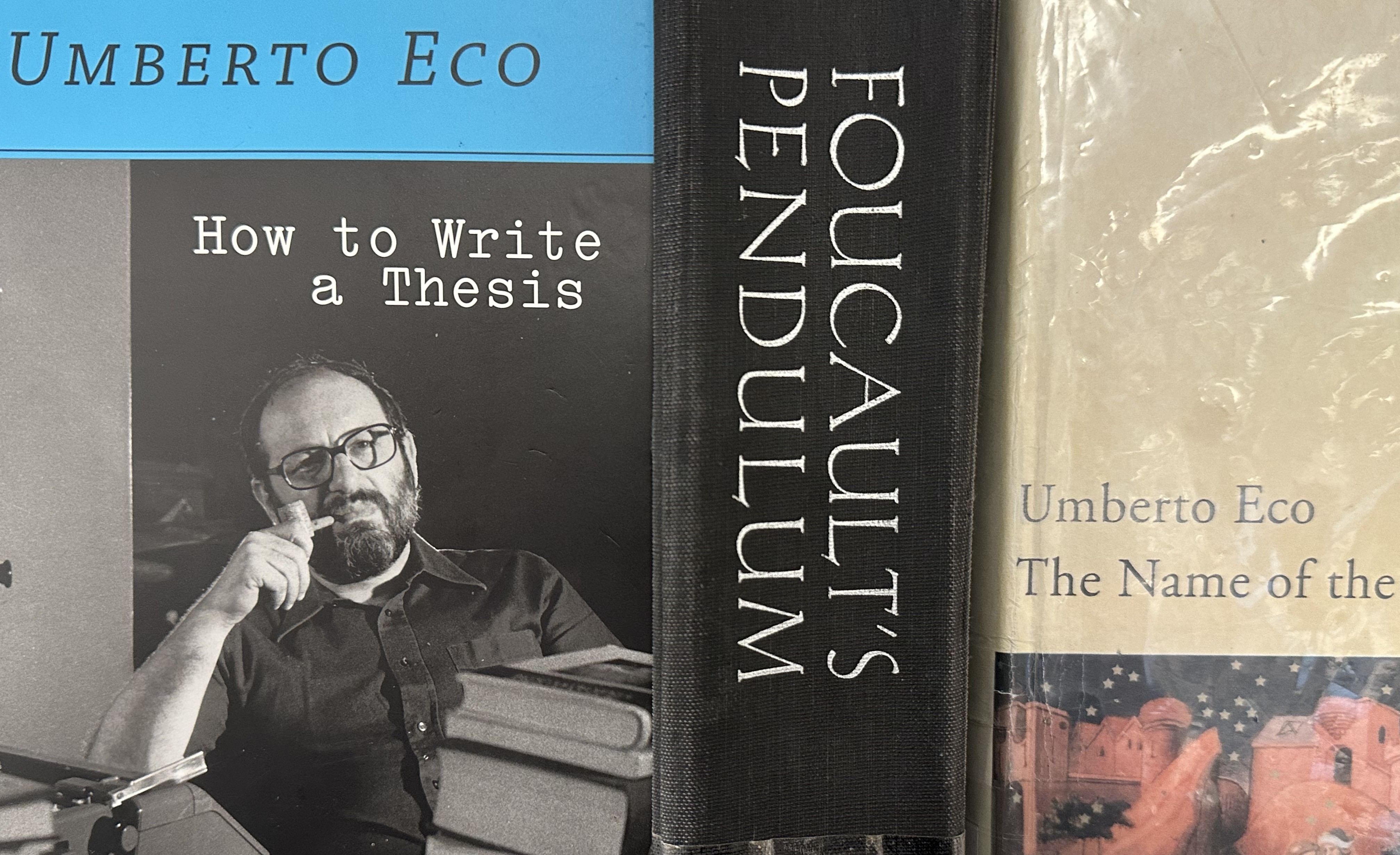
Among the many research guides available, Umberto Eco's How to Write a Thesis (originally published in Italian in 1977, English translation 2015) remains remarkably relevant. When I first encountered this book, I was struck by how clearly it addresses real research challenges. Although Eco’s examples lean toward the humanities and social sciences, and some of his preferred tools—like index cards—now feel dated, the core principles transcend both discipline and time. His advice on developing a work plan, reading thoroughly, documenting sources carefully, cultivating originality, and structuring clear arguments still resonates today. Over the years, in my own research and when talking about literature searching, I have returned to Eco's insights again and again.
But who was Umberto Eco?
Eco (1932–2016) was one of the twentieth century’s most influential intellectuals. Trained as a semiotician and aesthetician, he studied how signs and symbols create meaning. At the heart of his work was a careful, balanced approach to interpretation. Readers may generate multiple interpretations of a text, but interpretation has limits: we should not force meanings onto a work or chase connections that the text itself does not reasonably support. Instead, our conclusions should remain grounded in evidence and attentive to context.
Not only reference book
What fascinated me most was discovering how Eco wove these ideas into popular fiction. The Name of the Rose (1980), a medieval murder mystery steeped in semiotics and philosophy, dramatizes the dangers of overinterpretation. The brilliant Franciscan William of Baskerville, solves a series of gruesome deaths by carefully reading physical clues, footprints, and signs within rare manuscripts, while another fanatical monk forces apocalyptic secret meanings onto every event and scripture, unleashing only more death, fear, and ruin. This fiction, eventually adapted into a major film, introduced millions to complex ideas about interpretation and truth.
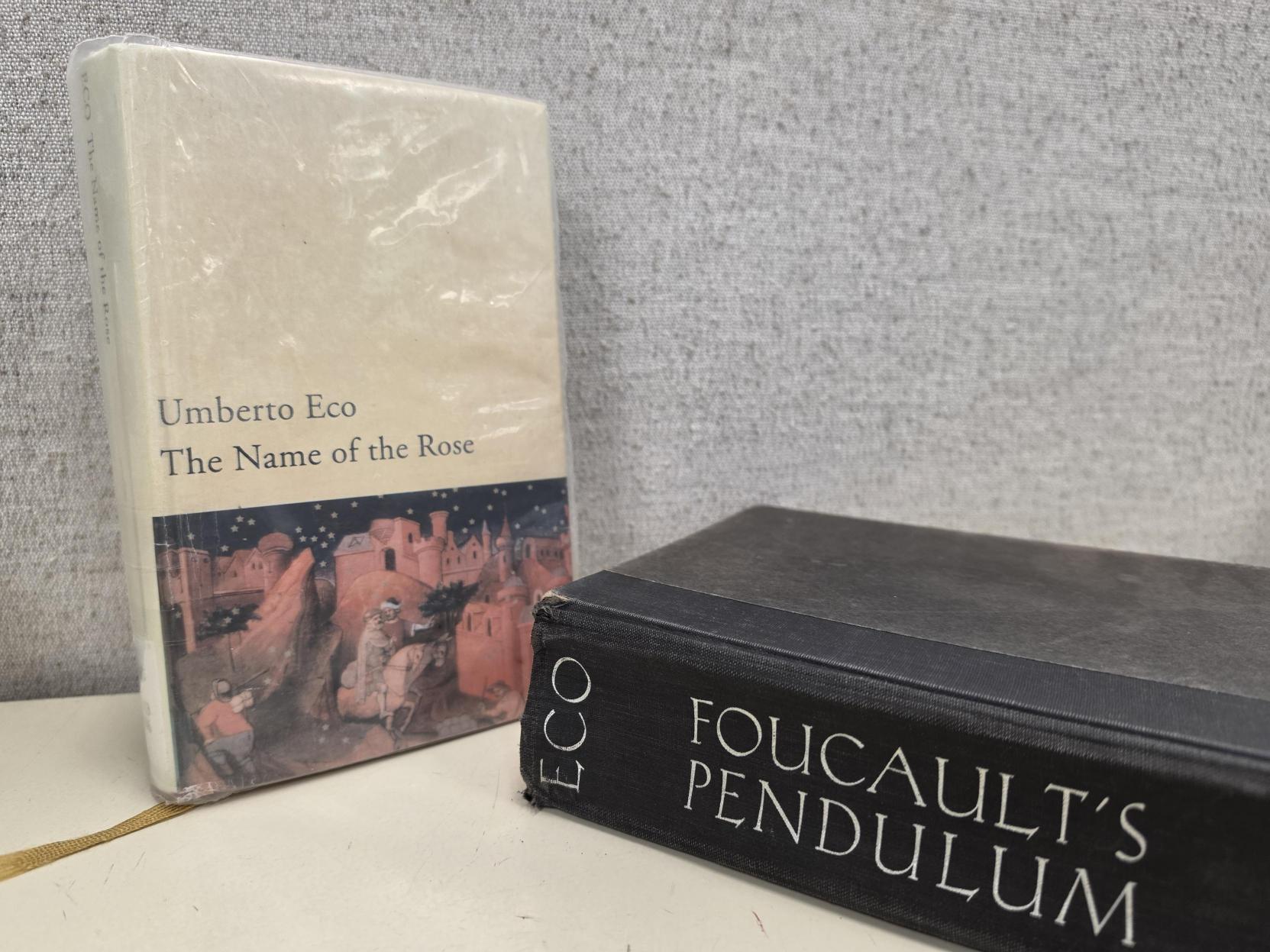
Foucault's Pendulum (1988) followed, exploring how three intellectuals invent an all-encompassing conspiracy by stitching together fragments of Western esotericism—Templars, Rosicrucians, Kabbalah, alchemy, Hermeticism, Masonic rites, and countless occult symbols—into a single, sweeping “Plan” that secretly governs the course of European history. Their game consists of rearranging historical coincidences, obscure texts, and symbolic systems until everything appears connected. Eco’s brilliance lies in showing how the accumulation of references, when arranged suggestively enough, can create the illusion of coherence. The novel wove information overload and profound questions about truth and belief into a thriller that feels remarkably prescient in our age of misinformation.
Returning to Eco’s work has been a rewarding reminder that the most serious scholarly ideas—about evidence, interpretation, and truth—sometimes find their largest audiences not through academic journals, but through novels that make those ideas matter.
Lester Chan
Librarian (Resource Management)
lblester@ust.hk
